
Loading, please wait...

LOT 2157
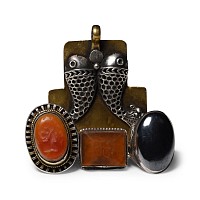
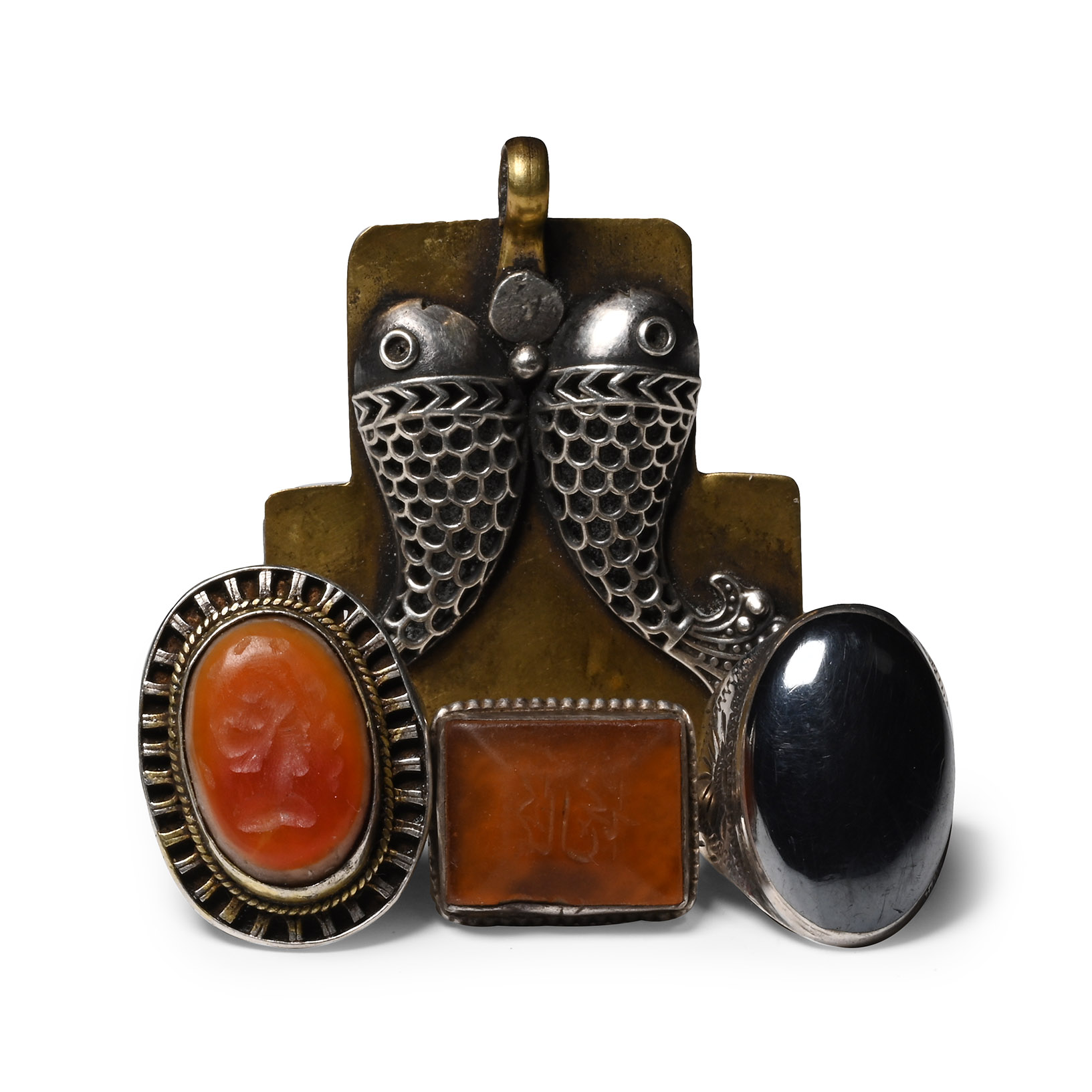
Mixed Ring and Pendant Group
20TH CENTURY A.D.
1 - 2 in. (49 grams total, 25-50 mm).
Mixed group of silver-coloured metal finger rings with inset agate and other cabochons, some with intaglio motifs, and a pendant. [4, No Reserve]
ProvenanceEx property of a South West London gentleman.
This lot is accompanied by an illustrated lot declaration signed by the Head of the Antiquities Department, Dr Raffaele D’Amato.
TimeLine Auctions follows a vetting process to ensure the authenticity and legality of all items, reinforcing our commitment to integrity and responsible trading. Each antiquity, antique, and coin lot undergoes thorough examination by a vetting committee of at least ten external specialists, professional trade association members, scientists, and archaeologists: Our Vetting Process
AUCTIONS:
TimeLine is a leading auction house specialising in antiquities, ancient art, collectables, natural history, coins, medals, and books. Our auctions offer museums, collectors, historians, and enthusiasts the opportunity to acquire unique and historically significant pieces.
-
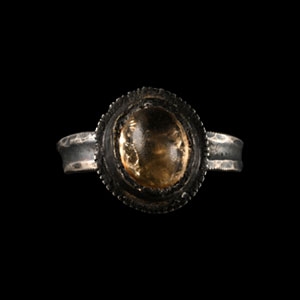
Silver Ring with Rock Crystal Cabochon
Circa 17th century A.D.Estimate: £100 - 140 (+bp*)
Opening Bid: £50
With a stocky, grooved band, oval bezel with decorative border and deep cell set with rock crystal cabochon. 5.34 grams, 29.49 mm overall, 20.86 mm internal diameter (approximate size British S 1/2, USA 9 1/4, Europe 20.63, Japan 19)
Ex private collection, 1970s. Property of a Nottinghamshire gentleman. This lot is accompanied by an illustrated lot declaration signed by the Head of the Antiquities Department, Dr Raffaele D’Amato. -
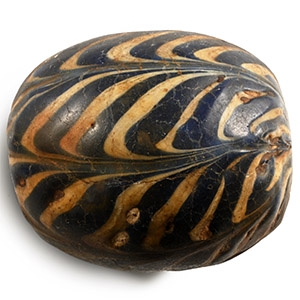
Massive Western Asiatic Style Glass Bead
20th century A.D.Sold for (Inc. bp): £65
A substantial oblate bead with dragged trails to the surface. 1.24 kg, 10.6 cm
Acquired 1970-1999. London collection of the late Mr S.M., thence by descent. This lot is accompanied by an illustrated lot declaration signed by the Head of the Antiquities Department, Dr Raffaele D’Amato. -
.jpg)
Gemstone Collection
20th century AD.Sold for (Inc. bp): £20
Mainly ellipsoid carnelian cloisons with incuse animal imagery. 15 grams total, 14-22 mm
Acquired on the UK art market. Property of a North London, UK, gentleman. This lot is accompanied by an illustrated lot declaration signed by the Head of the Antiquities Department, Dr Raffaele D’Amato.
