
Loading, please wait...
LOT 2356
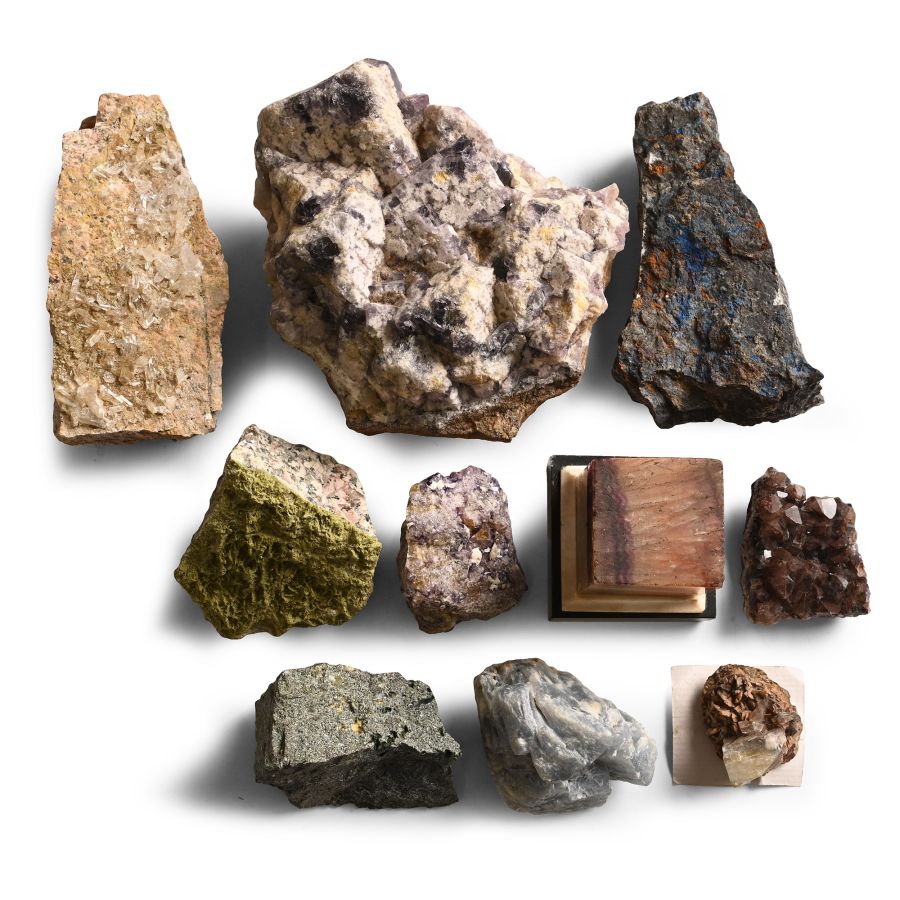
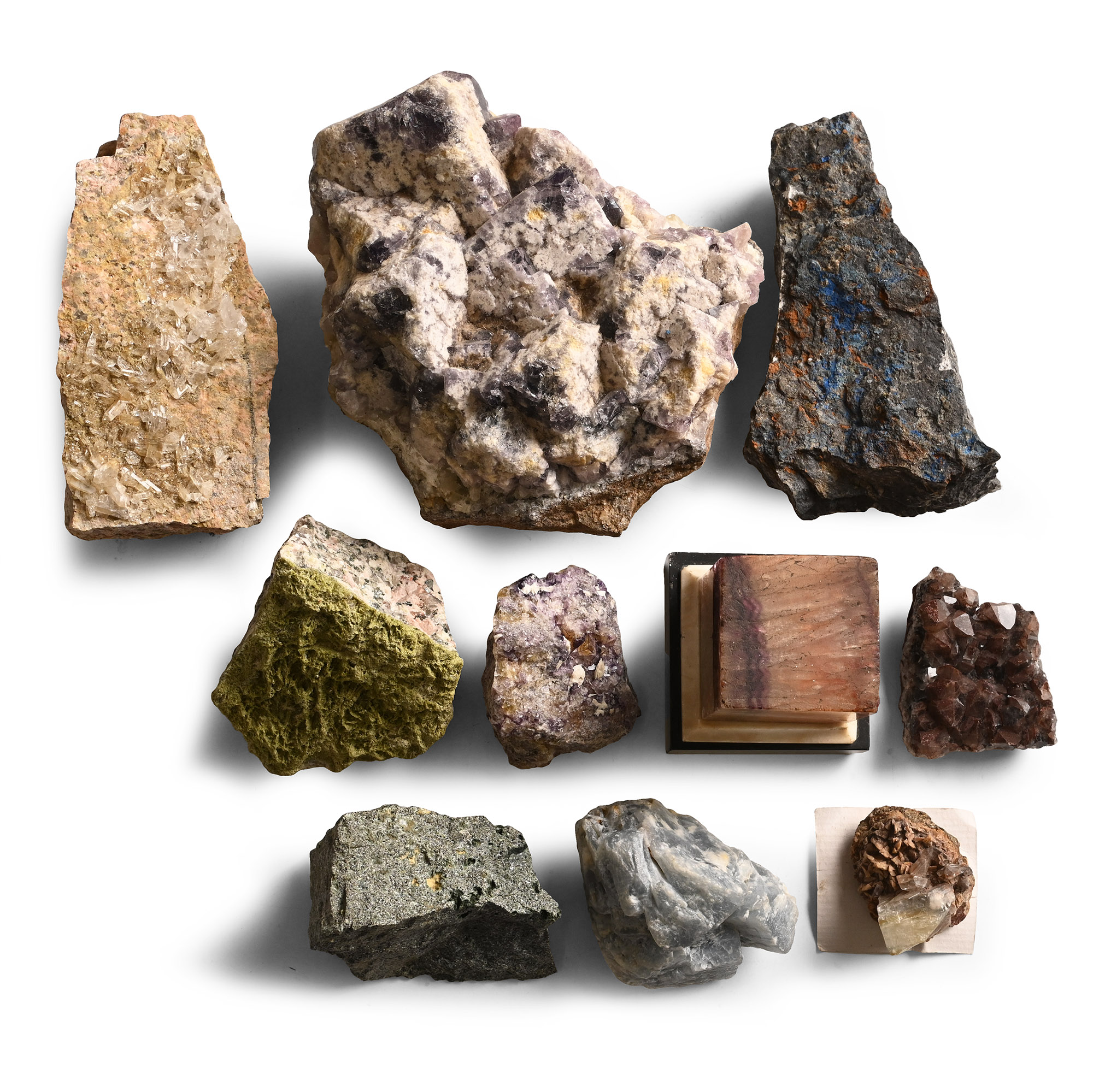
Mixed Ireland, Scotland and English Crystal and Mineral Specimen Group
1 1/2 - 4 3/4 in. (3.35 kg total including box, 3.8-12.3 cm).
Comprising: quartz from Cloghmore Quarry, Costelloe, Galway, Ireland; smoky quartz and hematite from Auchinloch Quarry, Dalbeattie, Dumfries, Scotland; baryte from Mowbray Mone, Frizington, Cumbria; pumpellyite from Creag Brimishgan, Isle of Mull, Scotland; fluorite from Mildam Mine, Great Hucklow, Derbyshire; fluorite from Greenlaws Mine, Daddry Sheild, Weardale, Durham; epidote from Cloghmore Quarry, Costelloe, Galway, Ireland; baryte and dolomite from Frizington, Cumbria; azurite from Gortdrum Mine, Monard, Tipperar, Ireland; Blue John on a display stand from Treak Cliff, Castleton, Derbyshire. [10, No Reserve]
ProvenanceFrom the property of a Cornwall, UK, gentleman.
CONDITIONTimeLine Auctions follows a vetting process to ensure the authenticity and legality of all items, reinforcing our commitment to integrity and responsible trading. Each antiquity, antique, and coin lot undergoes thorough examination by a vetting committee of at least ten external specialists, professional trade association members, scientists, and archaeologists: Our Vetting Process
AUCTIONS:
TimeLine is a leading auction house specialising in antiquities, ancient art, collectables, natural history, coins, medals, and books. Our auctions offer museums, collectors, historians, and enthusiasts the opportunity to acquire unique and historically significant pieces.
LOT 2356
Mixed Ireland, Scotland and English Crystal and Mineral Specimen Group
Sold for (Inc. bp): £39
-
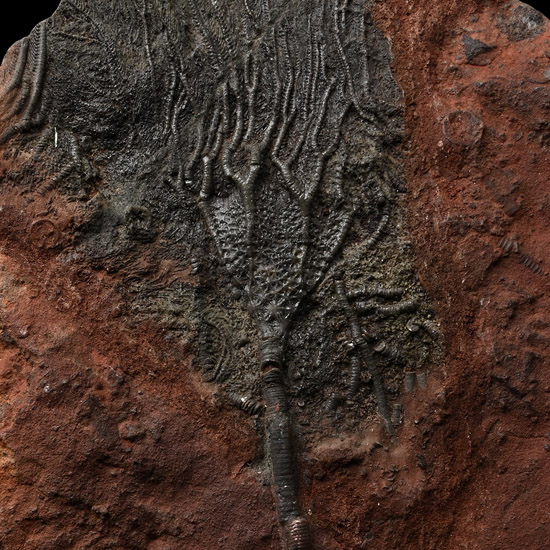
Fossil Crinoid Plate
Silurian Period, 445-416 million years B.P.Sold for (Inc. bp): £156
Tongue-shaped matrix with a fossil crinoid, possibly Scyphocrinites elegans. 473 grams, 16.5 cm
From a Cambridgeshire, UK, collection. -
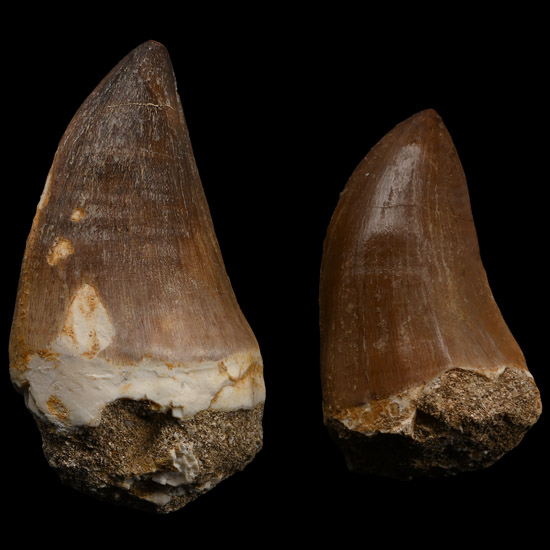
Fossil Mosasaur 'Marine Dinosaur' Teeth
Cretaceous Period, circa 145-65 million years B.P.Sold for (Inc. bp): £260
Comprising two thick teeth with dark brown enamel. 77 grams total, 51-65 mm
From a Lincolnshire, UK, collection.
The Mosasaur is an extinct, large marine reptile dinosaur with an elongated body, long snout and paddle-like limbs. Found worldwide, they competed with other well-known sea predators of the Late Cretaceous, such as plesiosaurs and ichthyosaurs, for food, existing primarily on a diet of ammonoids, cuttlefish and fish. -
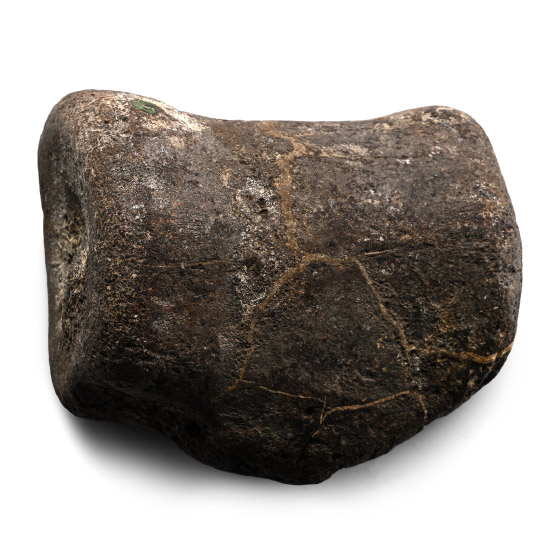
Fossil Iguanadon Dinosaur Vertebra
Early Cretaceous Period, circa 126-122 million years B.P.Sold for (Inc. bp): £20
Caudal vertebra with an elongated body. 880 grams, 94 mm
From Wealden, Bedfordshire, UK. From the private collection of Kenneth Machin (1936-2020), Buckinghamshire, UK; his collection of antiquities and natural history was formed since 1948; thence by descent.
Iguanadon was a large herbivore with a distinctive thumb-spike and long prehensile fifth fingers that helped with foraging for food. It was the second dinosaur to be formally named based on fossil specimens, and was one of the three genera originally used to define dinosauria.
