
Loading, please wait...
LOT 1818
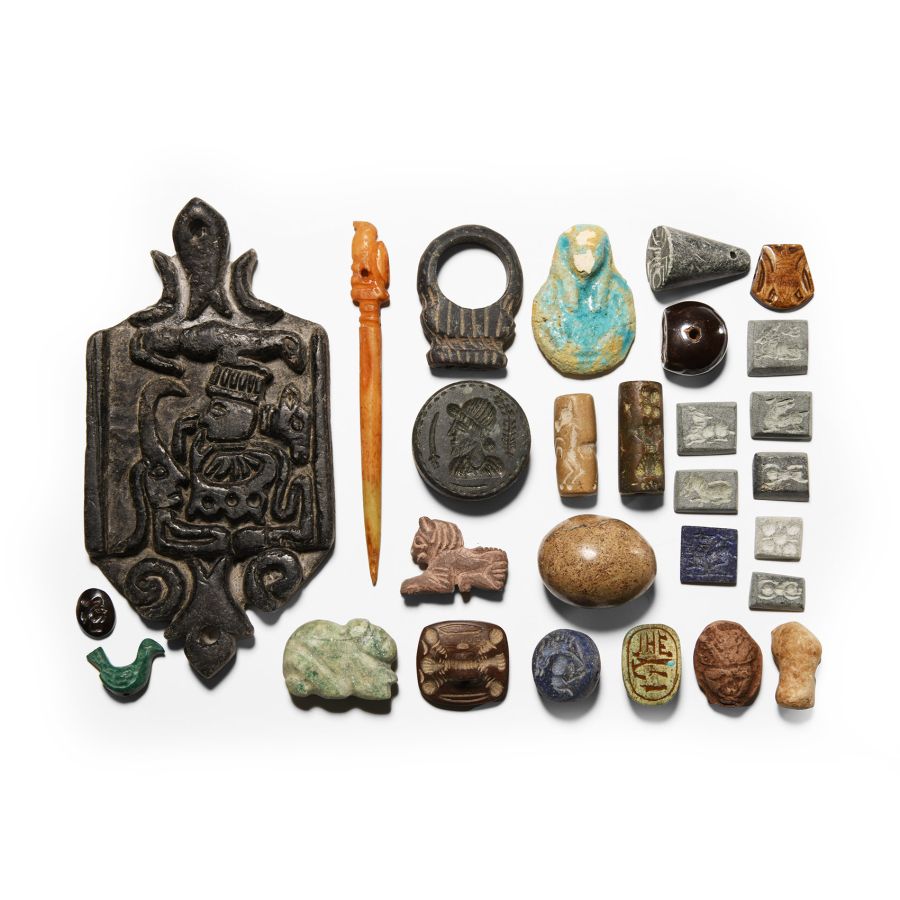
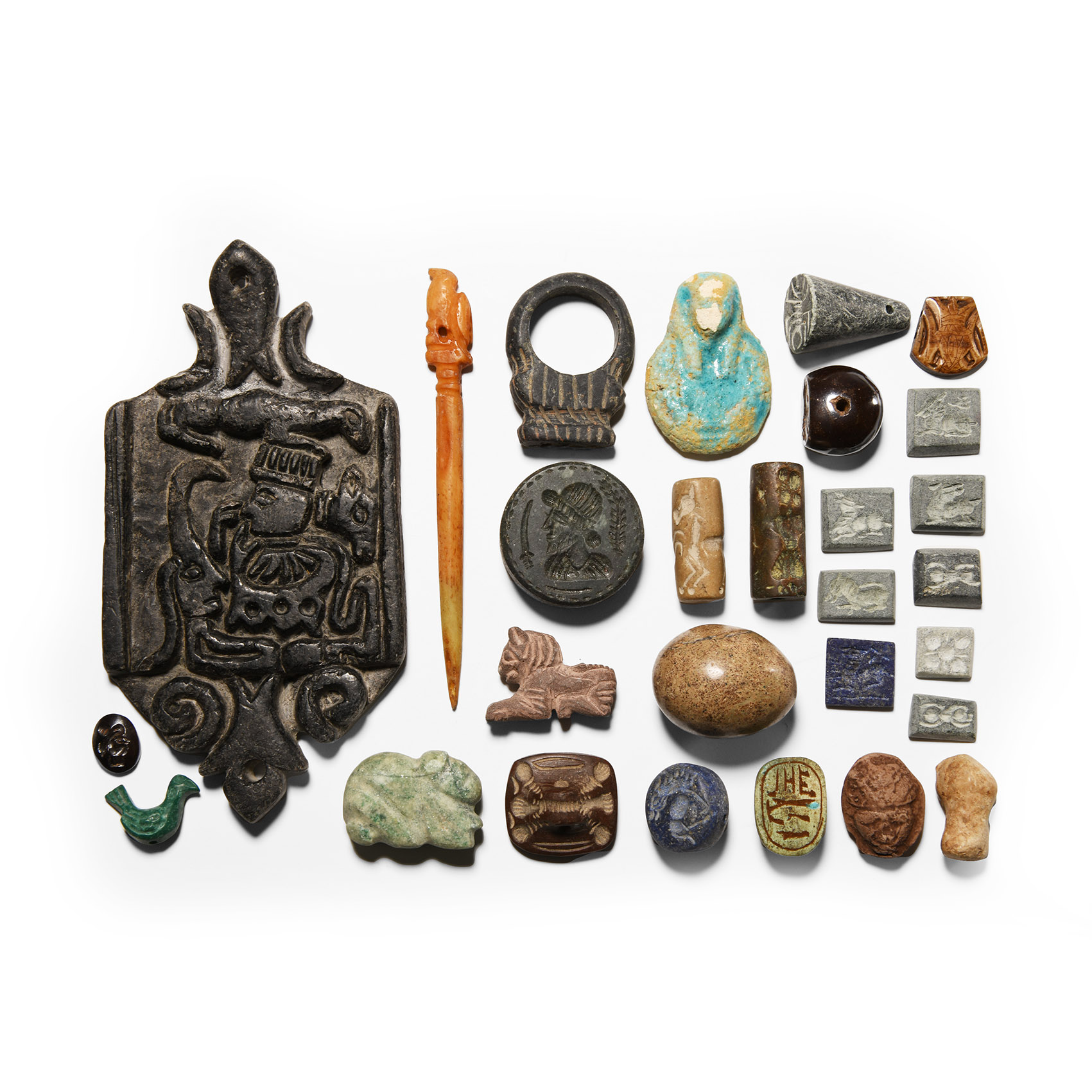
Mixed Artefact Replica Group
20TH CENTURY A.D.
1/2 - 5 1/8 in. (310 grams total, 1.3-12.9 cm).
Composed of items replicating ancient artefacts from a variety of time periods and cultures, including Egyptian faience scarab and shabti amulet; Near Eastern stone stamp and cylinder seals, animal amulets and figural beads; Roman eagle pin with eagle finial; together with other items including a finger ring, model head and large figural plaque. [28, No Reserve]
ProvenanceAcquired on the UK art market.
Property of a Ruislip, UK, gentleman, by inheritance.
TimeLine Auctions follows a vetting process to ensure the authenticity and legality of all items, reinforcing our commitment to integrity and responsible trading. Each antiquity, antique, and coin lot undergoes thorough examination by a vetting committee of at least ten external specialists, professional trade association members, scientists, and archaeologists: Our Vetting Process
AUCTIONS:
TimeLine is a leading auction house specialising in antiquities, ancient art, collectables, natural history, coins, medals, and books. Our auctions offer museums, collectors, historians, and enthusiasts the opportunity to acquire unique and historically significant pieces.
-
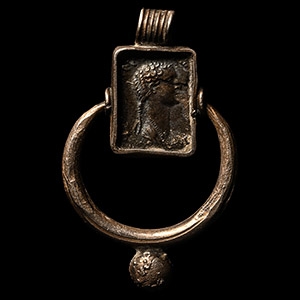
Silver Swivel Pendant with Roman Coin
20th century A.D. and earlierSold for (Inc. bp): £111
Composed of a tapering round-section hoop supporting a recessed rectangular plaque displaying a Roman coin fragment: obverse presenting the bust of a Roman emperor, the goddess Fortuna standing holding a cornucopia and rudder to reverse; ribbed suspension loop above. 7.63 grams, 40 mm
Acquired on the UK art market. Property of a Ruislip, UK, gentleman, by inheritance. -
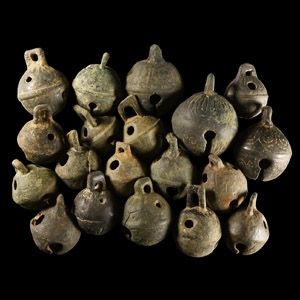
Post Medieval Bronze Crotal Bell Collection
16th-18th century A.D.Sold for (Inc. bp): £91
Most retaining their pea, suspension loop and with decorative fluting to the upper and/or lower body. 637 grams total, 32-42 mm
Found Berkshire, UK. -
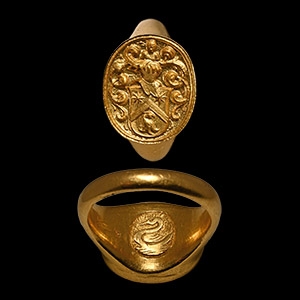
Elizabethan Gold Heraldic 'Swan Family' Signet Ring
16th century A.D.Sold for (Inc. bp): £14,300
Very heavy high-carat merchants ring with oval bezel bearing heraldic helmet and shield design with a chevron below two mullets and an eagle's head at the base; the helmet with luxurious looped mantle and crest of a human bust; to the underside, an incuse panel with reserved swan on a textured field probably a device alluding to the family name. 17.61 grams, 23.28 mm overall, 17.93 mm internal diameter (approximate size British P 1/2, USA 7 3/4, Europe 16.86, Japan 16)
From a 1990s private collection. Property of a European gentleman. This lot has been checked against the Interpol Database of stolen works of art and is accompanied by search certificate no.11909-207247.
The arms appear to be a variant of those used by Adam de Cretinge in the Dering Roll of the late 13th century.
