
Loading, please wait...

LOT 1173
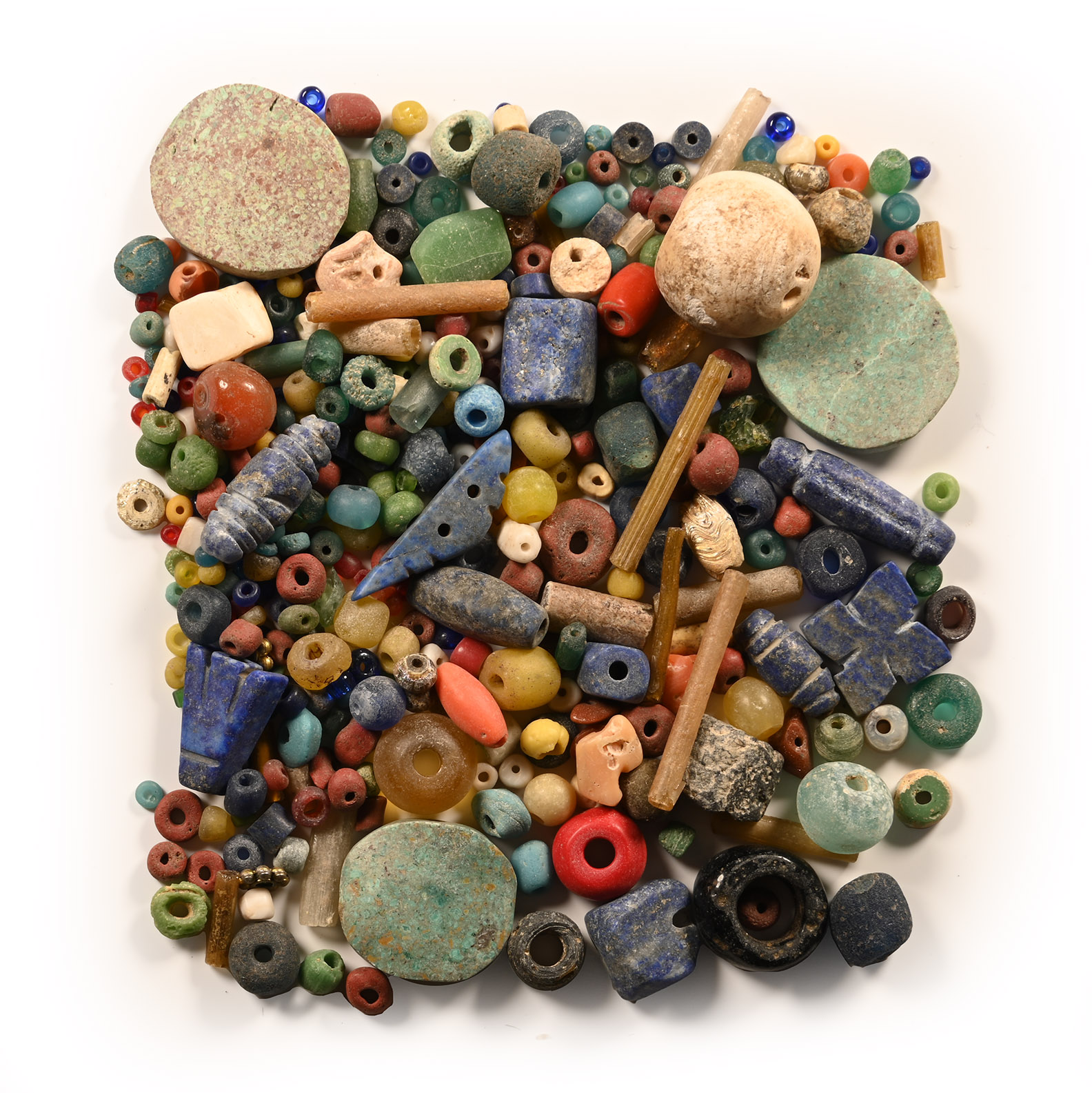
Mixed Ancient Necklace Bead Group
1ST MILLENNIUM B.C. AND LATER
1/8 - 1 in. (78 grams total, 2-27 mm).
Comprising variously shaped beads in lapis lazuli, glass and faience, including some large tabular and amuletic beads. [No Reserve]
ProvenanceFrom a bead collection formed in the 1990s.
CONDITIONTimeLine Auctions follows a vetting process to ensure the authenticity and legality of all items, reinforcing our commitment to integrity and responsible trading. Each antiquity, antique, and coin lot undergoes thorough examination by a vetting committee of at least ten external specialists, professional trade association members, scientists, and archaeologists: Our Vetting Process
AUCTIONS:
TimeLine is a leading auction house specialising in antiquities, ancient art, collectables, natural history, coins, medals, and books. Our auctions offer museums, collectors, historians, and enthusiasts the opportunity to acquire unique and historically significant pieces.
-

Bactrian Black Stone Ritual Object
Circa 3rd-early 2nd millennium B.C.Sold for (Inc. bp): £5,460
Carved black marble disc with flat edge and biconical faces; mounted on a custom-made stand. 57.7 kg total, 58.5 cm including stand
with Gallery Rosen Ancient Art, Tel Aviv, 1969. Ex London, UK, gallery, 1971-early 2000s. London, UK, collection. This lot has been checked against the Interpol Database of stolen works of art and is accompanied by a search certificate number no.12403-225384. -
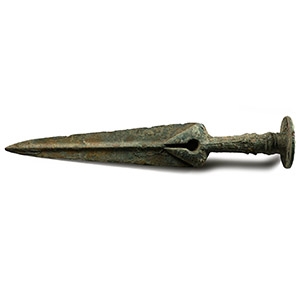
North-Western Luristan Bronze Dagger
Late 2nd-early 1st millennium B.C.Sold for (Inc. bp): £351
The hilt decorated with three ridges set above incised chevrons, guard with round shoulders forming two arms that overlap the blade, cast into a tapering triangular blade with round mid-rib. 505 grams, 33 cm
Acquired 1980-2015. Ex Abelita family collection.
This very rare typology of dagger is related in type with those with crescent guard, while the pommel is related to the daggers with disc pommel. A similar parallel came from Tepe Hissar in North Iran. According to Muscarella, it is highly probable that the daggers with such rare hilt had an origin in an area north of Luristan. -
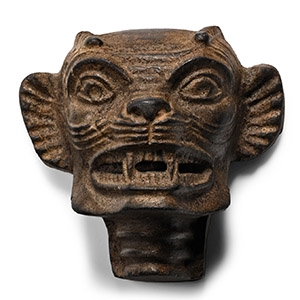
Neo Assyrian Pazuzu Head with Lamashtu
1st millennium B.C.Sold for (Inc. bp): £3,640
Modelled in the half-round with grotesque features and fierce teeth exposed; reverse with low-relief engraved image of Lamashtu advancing holding a trident. 26 grams, 36 mm
From an important collection formed before 1988, London and Geneva. This lot has been checked against the Interpol Database of stolen works of art and is accompanied by search certificate number no.12253-221916.
In Babylonian mythology the demon Pazuzu was the son of the god Hanpa. His consort, the demon Lamaštu, carried fever and preyed upon children and pregnant women. She could be neutralised with appropriate spells and amulets, which also protected against other demons. For this reason, women wore an amulet with the effigy of Pazuzu around their necks during pregnancy.
