
Loading, please wait...
LOT 0244
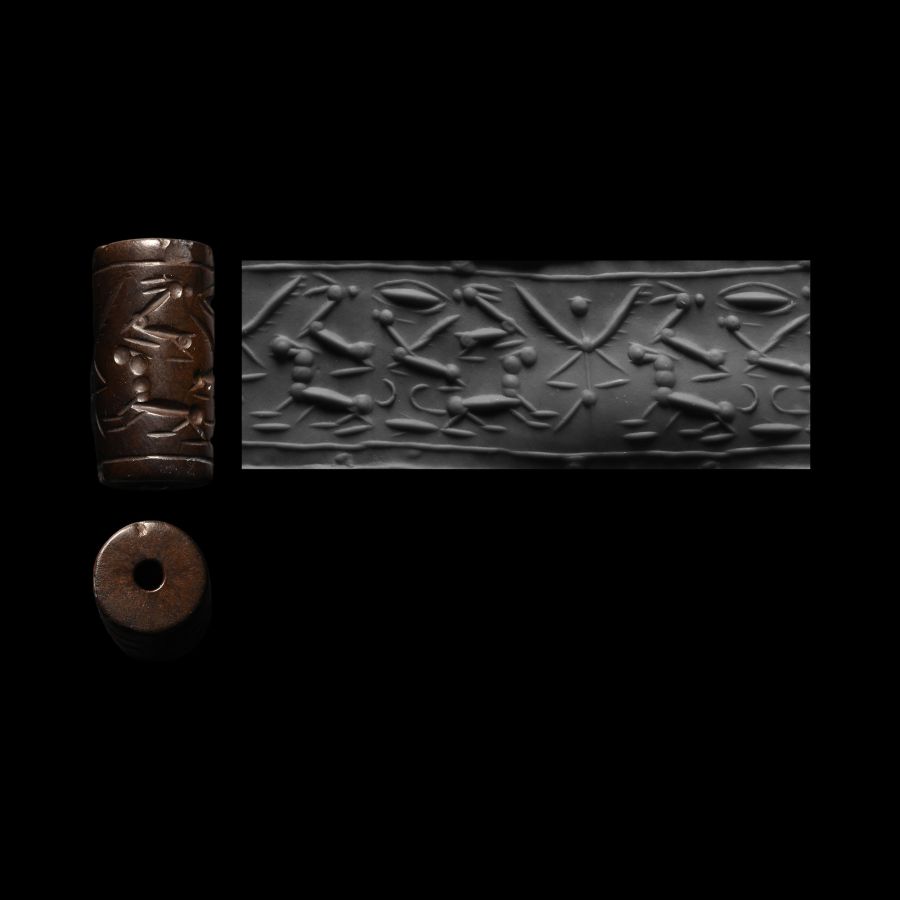
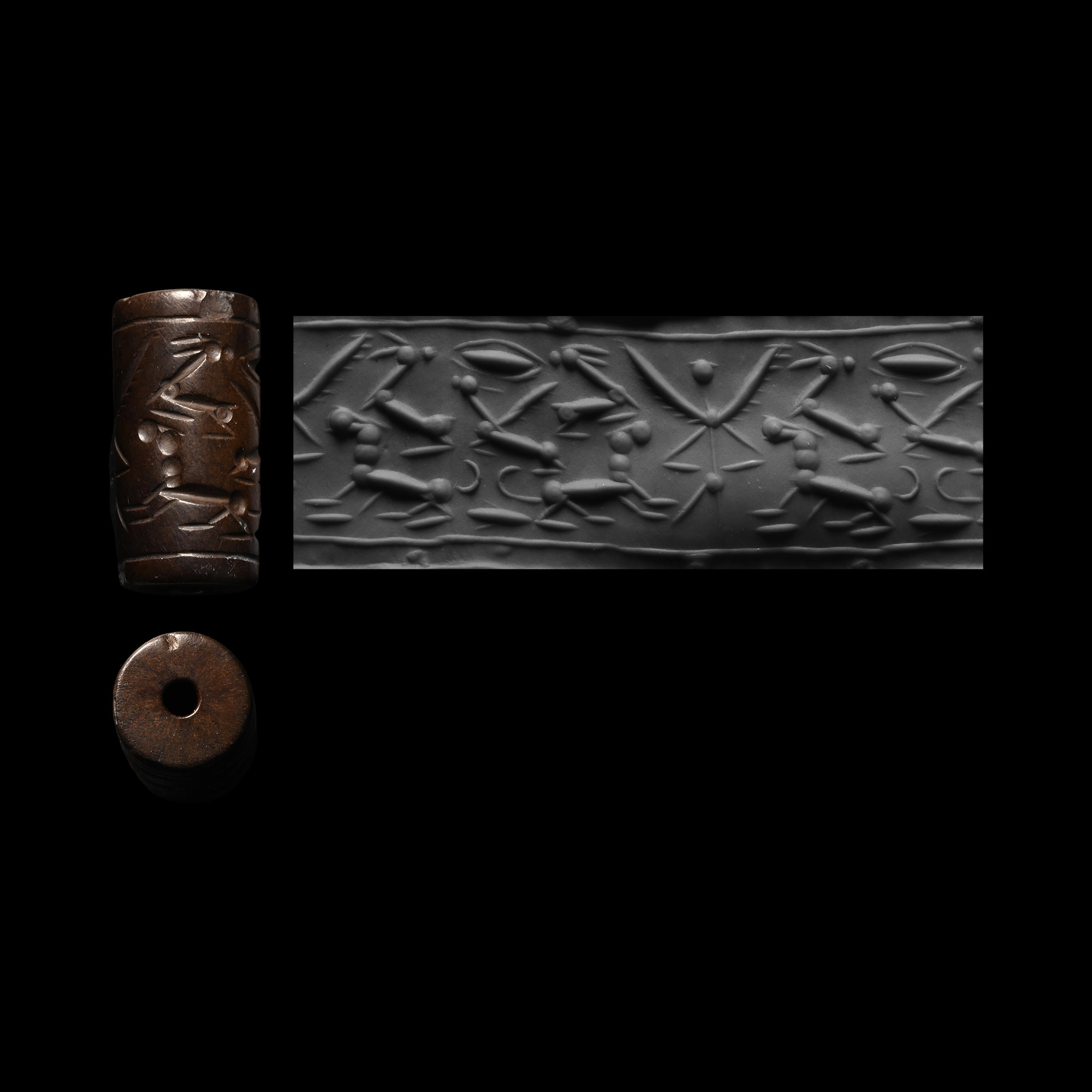
Mitanni Hematite Cylinder Seal with Mythical Bird
CIRCA 1500-1350 B.C.
7/8 in. (11 grams total, seal: 24.3 mm).
Cylinder with animals, restrung red stone bead to each end; accompanied by a copy of an old scholarly note, typed and signed by W.G. Lambert, late Professor of Assyriology, University of Birmingham, 1970-1993, which states: 'Description of Cylinder Seal of brown hematite, 24 x 12 mm. Condition fine. In the centre a mythical bird figure stands while to either side are arranged symmetrically a horned animal above a lion. The remaining space is filled with a lozenge shape above a horned animal with wings above a fish. The whole design is enclosed by a horizontal line above and below. This seal in a typical Mitanni "elaborate style" specimen, c.1500-1350 B.C., from anywhere between the edges of Kurdistan in the East and the Mediterranean in the West. The identity of the bird-figure is unknown, and the symbolism of the animals and fishes is similarly not known. As usual with most Mitanni seals, the whole design was cut with mechanical means the drill and the cutting wheel.'; supplied with a museum-quality impression.
ProvenancePrivate collection, London, UK.
Accompanied by a copy of an old scholarly note, typed and signed by W.G. Lambert, late Professor of Assyriology, University of Birmingham, 1986.
TimeLine Auctions follows a vetting process to ensure the authenticity and legality of all items, reinforcing our commitment to integrity and responsible trading. Each antiquity, antique, and coin lot undergoes thorough examination by a vetting committee of at least ten external specialists, professional trade association members, scientists, and archaeologists: Our Vetting Process
AUCTIONS:
TimeLine is a leading auction house specialising in antiquities, ancient art, collectables, natural history, coins, medals, and books. Our auctions offer museums, collectors, historians, and enthusiasts the opportunity to acquire unique and historically significant pieces.
LOT 0244
Mitanni Hematite Cylinder Seal with Mythical Bird
Estimate £1,200 - 1,700€1,390 - 1,970 (for guidance only)$1,620 - 2,300 (for guidance only)
Opening Bid
£600 (EUR 696; USD 810) +BP*
-
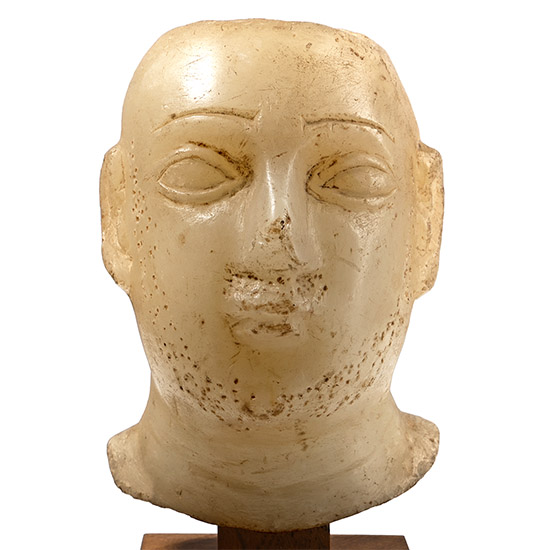
South Arabian Alabaster Head of a Man
3rd-2nd century B.C.Estimate: £3,000 - 4,000 (‡+bp*)
Opening Bid: £1,650
Oval face with pointed chin, stippled beard and elongated ears; incised eyebrows above large almond-shaped eyes, protruding nose and mouth; mounted on a custom-made stand; with old label reading 'N 3268'. 903 grams total, 18.6 cm including stand
Ex Laurin, Guilloux, Buffetaud et Tailleur, Paris, 20 May 1987, no.389. with Tajan Auction, Paris, 28 March 2003, no.192. This lot has been checked against the Interpol Database of stolen works of art and is accompanied by search certificate no.13537-263100.
Within southern Arabia, the ancient tradition of carving beautiful funerary sculptures from alabaster was long-lasting. The eyes and eyebrows of these stone sculptures were usually inlaid or highlighted with red or black pigment. -
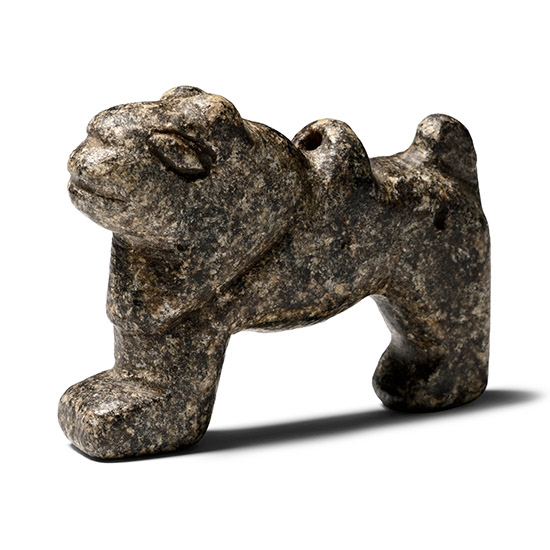
Seljuk Standing Stone Lion Figurine
12th-13th century A.D.Estimate: £150 - 200 (+bp*)
Opening Bid: £75
Modelled in the round as a stylised, stocky lion with almond-shaped eyes, a short tail, a suspension loop on the back. 57 grams, 58 mm
Acquired on the UK art market, 1980s-1990s. The Woodbridge Collection of Indo-Persian Art. Private collection, UK. -
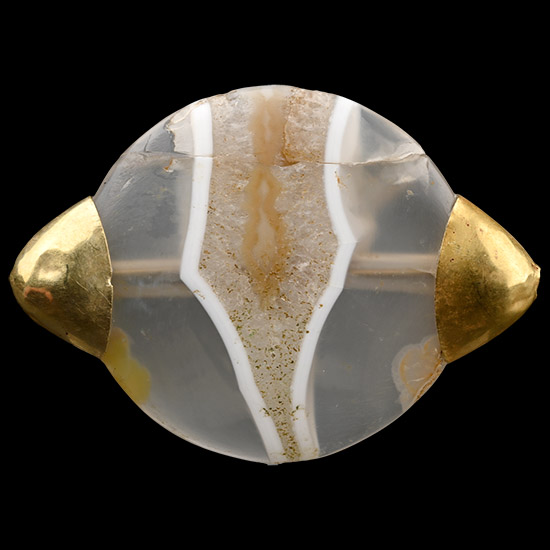
Exceptional Western Asiatic Banded Agate Bead with Gold Caps
2nd-1st millennium B.C.Estimate: £1,800 - 2,400 (‡+bp*)
Opening Bid: £1,000
Discoid in plan and pierced transversely with D-shaped gold caps at each end; mounted on a custom-made stand. 88 grams total, 84 mm wide including stand
Private collection, acquired on the UK art market, 2000. Private collection, Switzerland. This lot has been checked against the Interpol Database of stolen works of art and is accompanied by a search certificate number no.12877-241681.
The Sumerians used agate for beads and even for making ceremonial axe-heads. The engraving of agate, especially to produce cameos and intaglios, is an art which was principally cultivated by the Greeks and the Romans. In addition to the artistic excellence of the engravings, many of the early works show great skill in using the different colourings of the agate for decorating the figures.
