
Loading, please wait...
LOT 0213
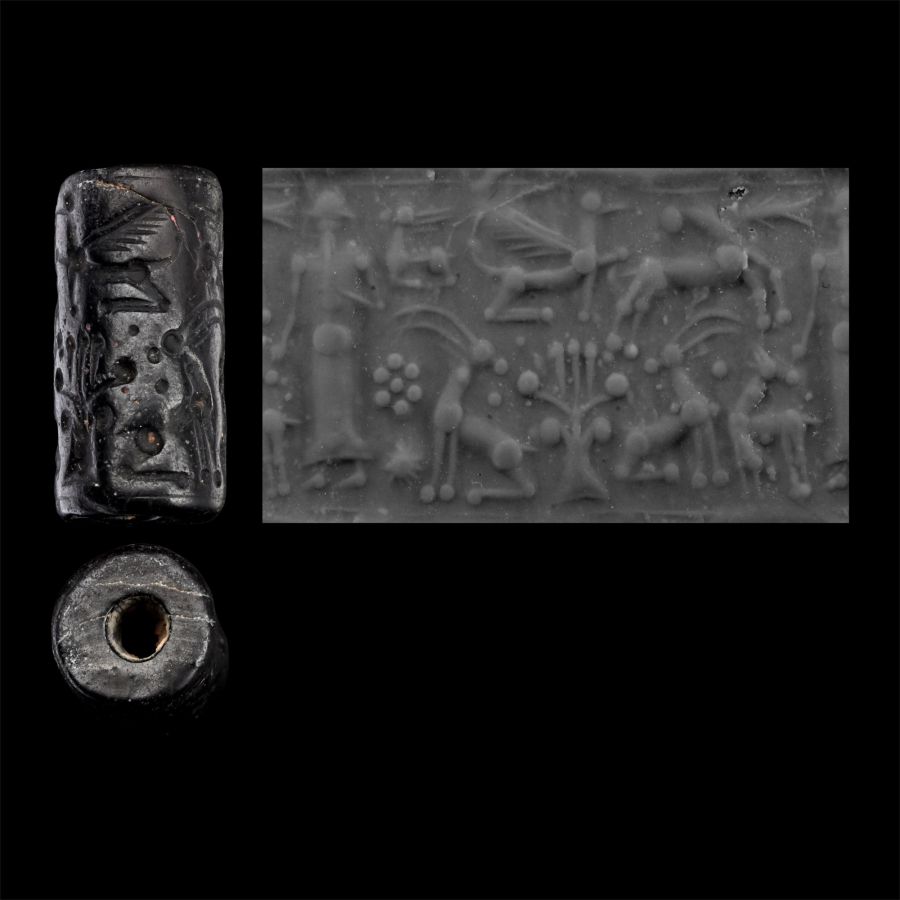
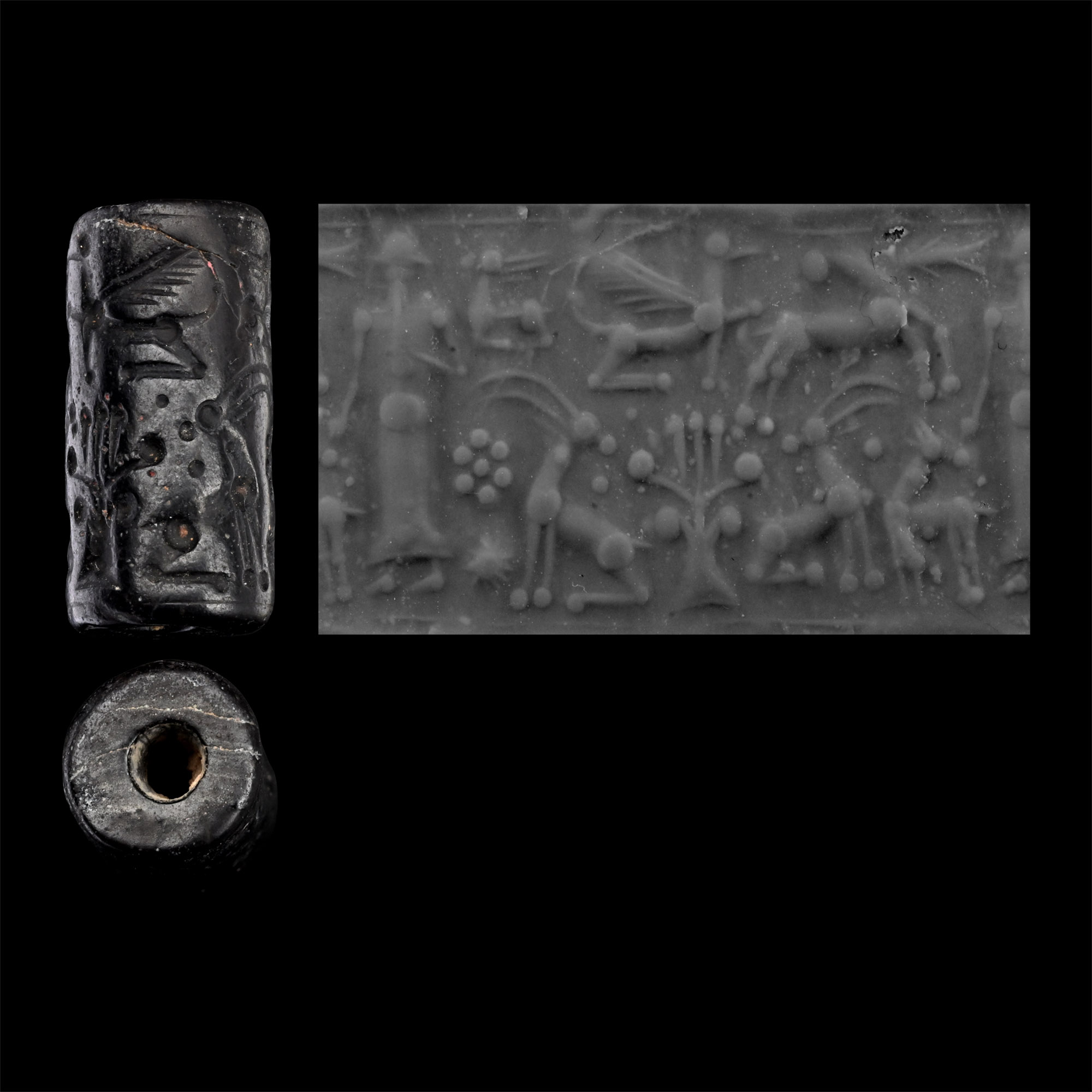
Mitanni Hematite Cylinder Seal with Griffin Attacking Quadruped
1500-1200 B.C.
3/4 in. (6.2 grams, 19 mm).
With animals and standing figure, restrung pair of red stone beads, old handwritten label '1614'; accompanied by a copy of an old scholarly note, typed and signed by W.G. Lambert, late Professor of Assyriology, University of Birmingham, 1970-1993, which states: 'Cylinder Seal of Hematite, 19.5.x9.5 mm. The design consists of one item occupying the full height of the space, the other items being in effect in two registers. The human figure is full-height, wearing a robe to the ground, holding one hand to the waist, the other up. The lower register consists mainly of two recumbent horned animals, each facing backwards towards a sacred- tree. To the right is a smaller quadruped, to the left a rosette and star. Above a griffin is attacking a quadruped, while behind. The griffin is another quadruped, but horned and recumbent. This seal is Mitanni Elaborate Style, c. 1500-1200 B.C. from Syria or north Mesopotamia. It is cut, as normal for this type of seal, mainly with the cutting wheel and drill, and is a fine example of its kind.'; accompanied by a museum-quality impression. [No Reserve]
ProvenanceUK private collection, acquired 1980-1983.
Accompanied by a copy of a scholarly note, typed and signed by Professor Wilfrid George Lambert in 1991.
This lot has been cleared against the Art Loss Register database, and is accompanied by an illustrated lot declaration signed by the Head of the Antiquities Department, Dr Raffaele D'Amato.
TimeLine Auctions follows a vetting process to ensure the authenticity and legality of all items, reinforcing our commitment to integrity and responsible trading. Each antiquity, antique, and coin lot undergoes thorough examination by a vetting committee of at least ten external specialists, professional trade association members, scientists, and archaeologists: Our Vetting Process
AUCTIONS:
TimeLine is a leading auction house specialising in antiquities, ancient art, collectables, natural history, coins, medals, and books. Our auctions offer museums, collectors, historians, and enthusiasts the opportunity to acquire unique and historically significant pieces.
LOT 0213
Mitanni Hematite Cylinder Seal with Griffin Attacking Quadruped
Sold for (Inc. bp): £650
-
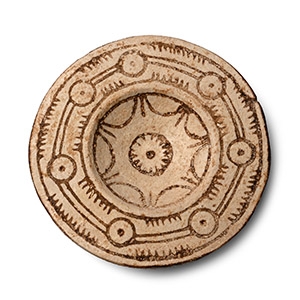
Syrian Glazed Terracotta Plate
1st millennium B.C.Sold for (Inc. bp): £468
Discoid in plan with low conical foot, incised concentric rings to the tondo with hatching and pellet-in-ring motifs. 117 grams, 12.3 cm wide
Private collection of Mr K.A., acquired in the 1990s-early 2000s. This lot has been cleared against the Art Loss Register database, and is accompanied by an illustrated lot declaration signed by the Head of the Antiquities Department, Dr Raffaele D'Amato. -
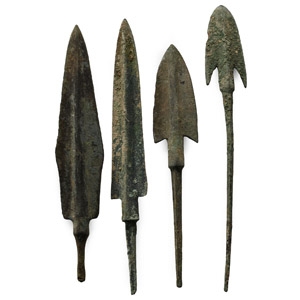
Luristan Bronze Arrowhead Collection
2nd-1st millennium B.C.Estimate: £100 - 140 (+bp*)
Opening Bid: £50
Comprising: two large tanged arrowheads, mainly of triangular type with mid-rib; two arrowheads with barbed shoulders, midrib and a stop on the blade with a long tang. 122 grams total, 12.7-15 cm
Acquired in the 1990s. Ex Abelita family collection. This lot has been cleared against the Art Loss Register database, and is accompanied by an illustrated lot declaration signed by the Head of the Antiquities Department, Dr Raffaele D'Amato.
One category of the represented arrowheads has a sharp blade, the ends of which extend to form wings or barbs, and a prominent midrib extending into a long tang that has a stop; the blade shape varies from deltoid to more triangular. The other form has no barbs, but it has a prominent midrib extending to the tang, and a rhomboid or tringular blade. Godard claimed that both types of heads, barbed and not barbed, came from Luristan. -
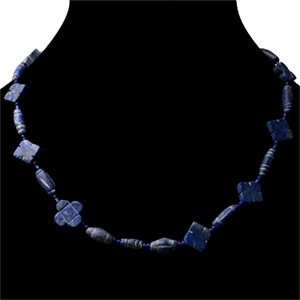
Western Asiatic Lapis Lazuli Bead Necklace String
20th century A.D.Sold for (Inc. bp): £13
Composed of alternating tabular flower-shaped and grooved cylindrical beads interspersed with small glass oblate beads; restrung. 29.09 grams, 43.5 cm
From the London, UK, art market in the 1990s. This lot has been cleared against the Art Loss Register database, and is accompanied by an illustrated lot declaration signed by the Head of the Antiquities Department, Dr Raffaele D'Amato.
