
Loading, please wait...
LOT 2048
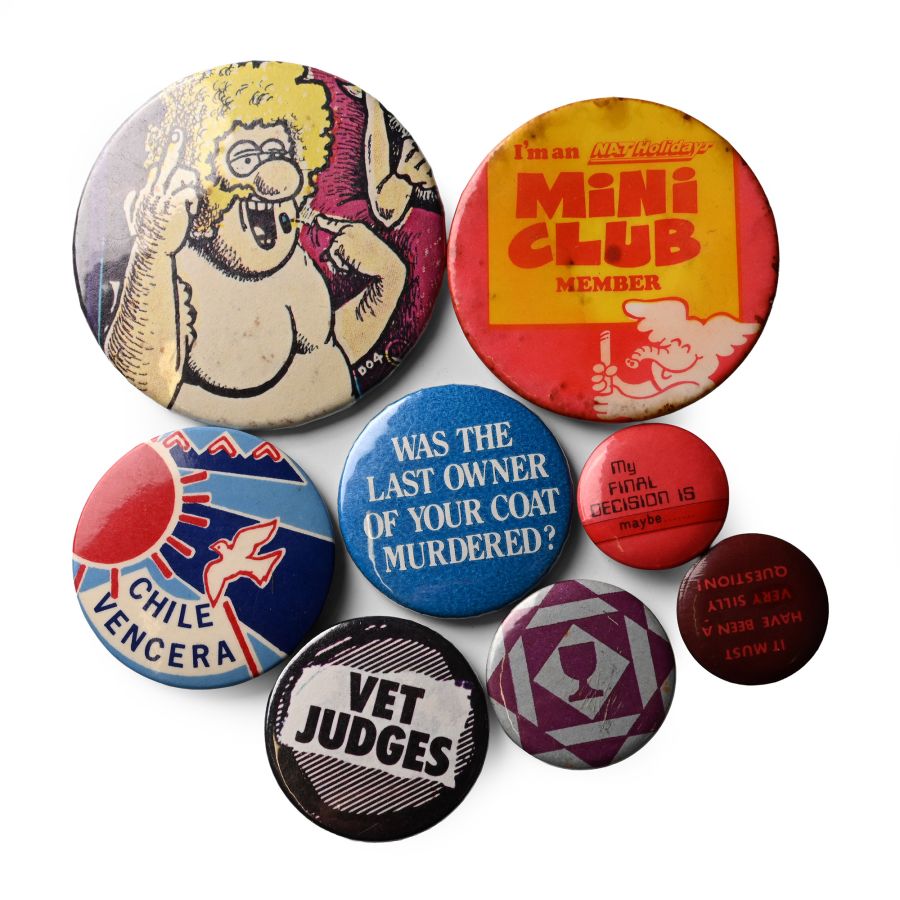
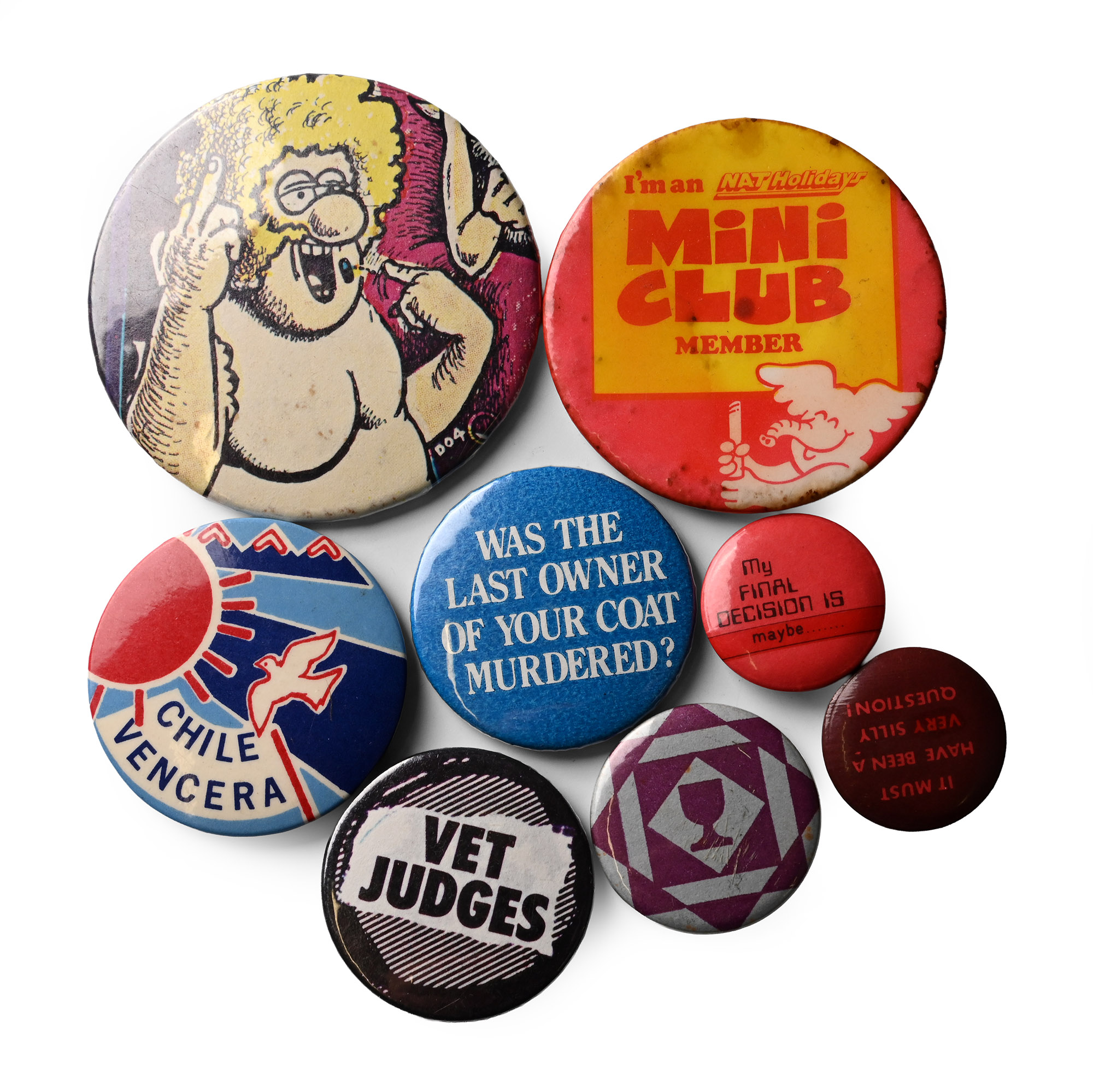
Miscellaneous Vintage Pin Badge Collection
CIRCA 1980S A.D. AND LATER
1 - 2 1/2 in. (41 grams total, 25-63 mm).
Including 'Chile Vencera', 'Was the last owner of your coat murdered?' and other types. [8, No Reserve]
ProvenanceFrom the private collection of a S.W. London gentleman, acquired in the 1970s.
This lot is accompanied by an illustrated lot declaration signed by the Head of the Antiquities Department, Dr Raffaele D'Amato.
TimeLine Auctions follows a vetting process to ensure the authenticity and legality of all items, reinforcing our commitment to integrity and responsible trading. Each antiquity, antique, and coin lot undergoes thorough examination by a vetting committee of at least ten external specialists, professional trade association members, scientists, and archaeologists: Our Vetting Process
AUCTIONS:
TimeLine is a leading auction house specialising in antiquities, ancient art, collectables, natural history, coins, medals, and books. Our auctions offer museums, collectors, historians, and enthusiasts the opportunity to acquire unique and historically significant pieces.
-
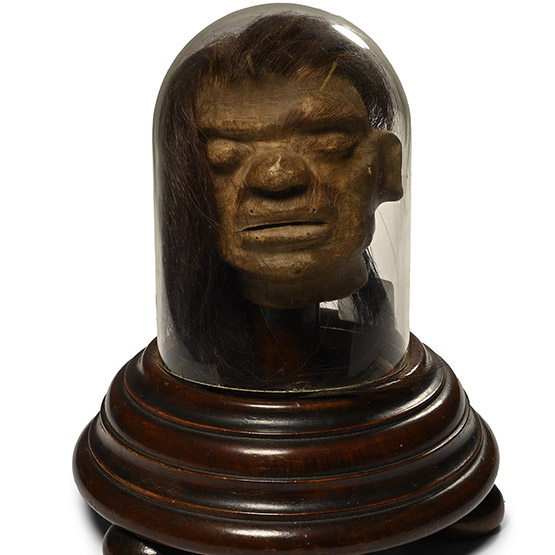
Victorian 'Freaks Fair' Model of a Shrunken Head
19th century A.D.Sold for (Inc. bp): £416
An imitation shrunken head modelled from leather with applied hair, moustache, eyebrows and eyelashes; pierced through the lips and ears; set in a later glass dome with base. 810 grams total, 20.5 cm including stand
Acquired Mellors & Kirk, circa 2019. Ian Wilkinson collection, Nottinghamshire, UK, formed since 1985.
The Victorian ‘freak show’ played a significant role in mid- and late-nineteenth century popular culture, enjoyed by everyone regardless of their class. Such shows, which often travelled the country, were presented to the public as entertaining and educational, offering the opportunity to learn about anatomy and the ‘realities’ of people from foreign lands. The real 'shrunken heads', known as tsantsas, were carefully preserved, severed human heads that were used by the Jivaroan people of the Amazon as war trophies, for ceremonial purposes, or to intimidate enemies. -
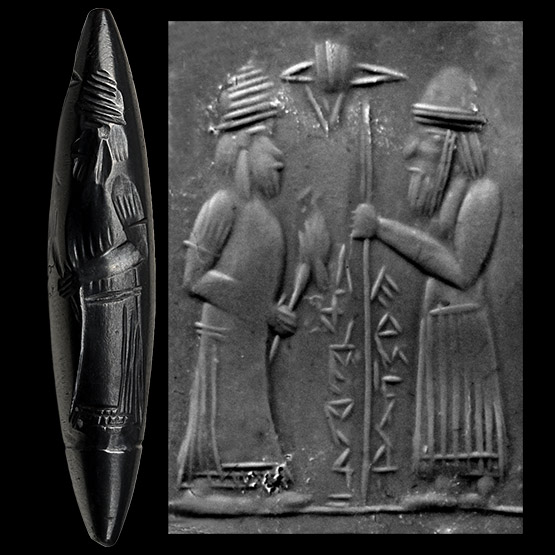
Western Asiatic Style Haematite Bead with Figures and Inscription
19th-20th century A.D.Estimate: £150 - 200 (+bp*)
Opening Bid: £75
Fusiform type with standing robed figure holding a torch and another holding a spear; two columns of text. 12.6 grams, 52 mm
with Gorny and Mosch, 12 July 2022, no.621 (part). Private collection, England. -
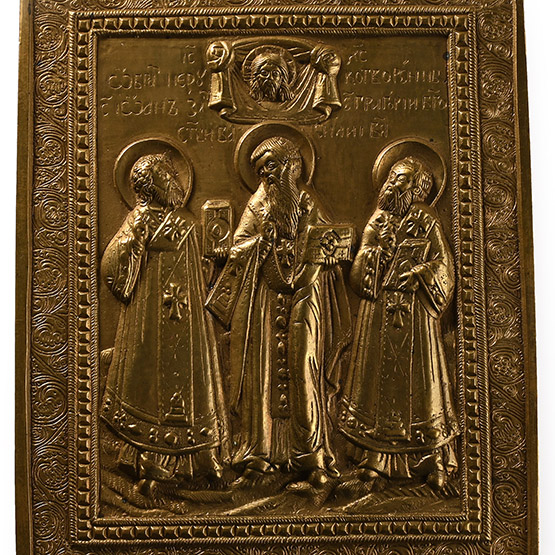
Russian Bronze Travel Icon with the Three Hierachs of Orthodoxy
19th century A.D.Estimate: £100 - 140 (+bp*)
Opening Bid: £54
Depicting Saint Basil the Great, Saint Gregory the Theologian and Saint John Chrysostomus, all nimbate and holding their holy writings, under the vision of the Holy Mandylion; Saint Basil wearing a bishop's sakkos, the other two wearing the usual orthodox priest's garb, phelonia; all three wearing a brocade band, omophorion, with four crosses; inscriptions in Old Slavonic with the names of the Saints, on the Nimbus of Jesus, the letters 'O Ѡ N' (‘I AM’); names of the Saints in the background in Old Slavonic; framed by double moulding, the first decorated with crenellated elements, the second with arabesques. 270 grams, 11.5 cm
Acquired from Chris Martin-Zakheim, Iconastas, 5 Piccadilly Arcade, London SW1. From the private collection of a West London, UK, gentleman, formed since the early 2000s.
The icon is the so-called icon of the three hierarchs, Saint Gregory the Theologian (Gregory of Nazianzus), Saint Basil the Great (Basil of Caesarea) and Saint John Chrysostom, archbishop of Constantinople. All three were important fathers of the church who strove to clarify and crystallise Dogma, for the unity of the faith, of the Liturgy and the needs of philosophy and letters.
