
Loading, please wait...
LOT 1962
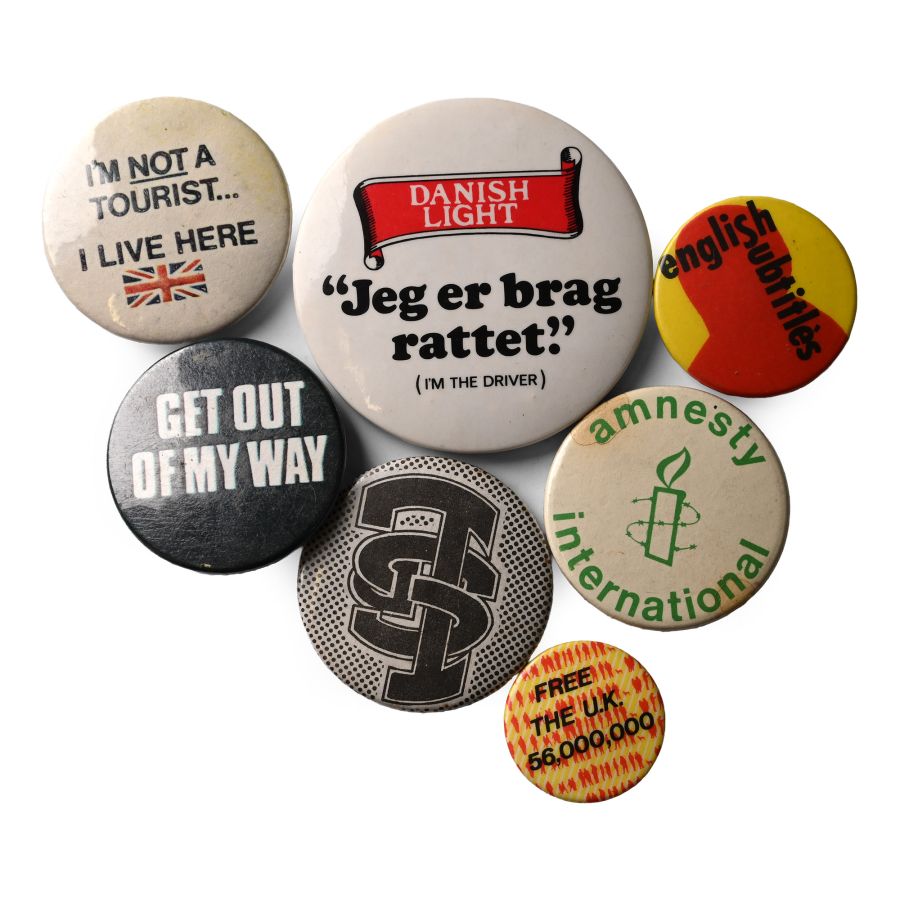
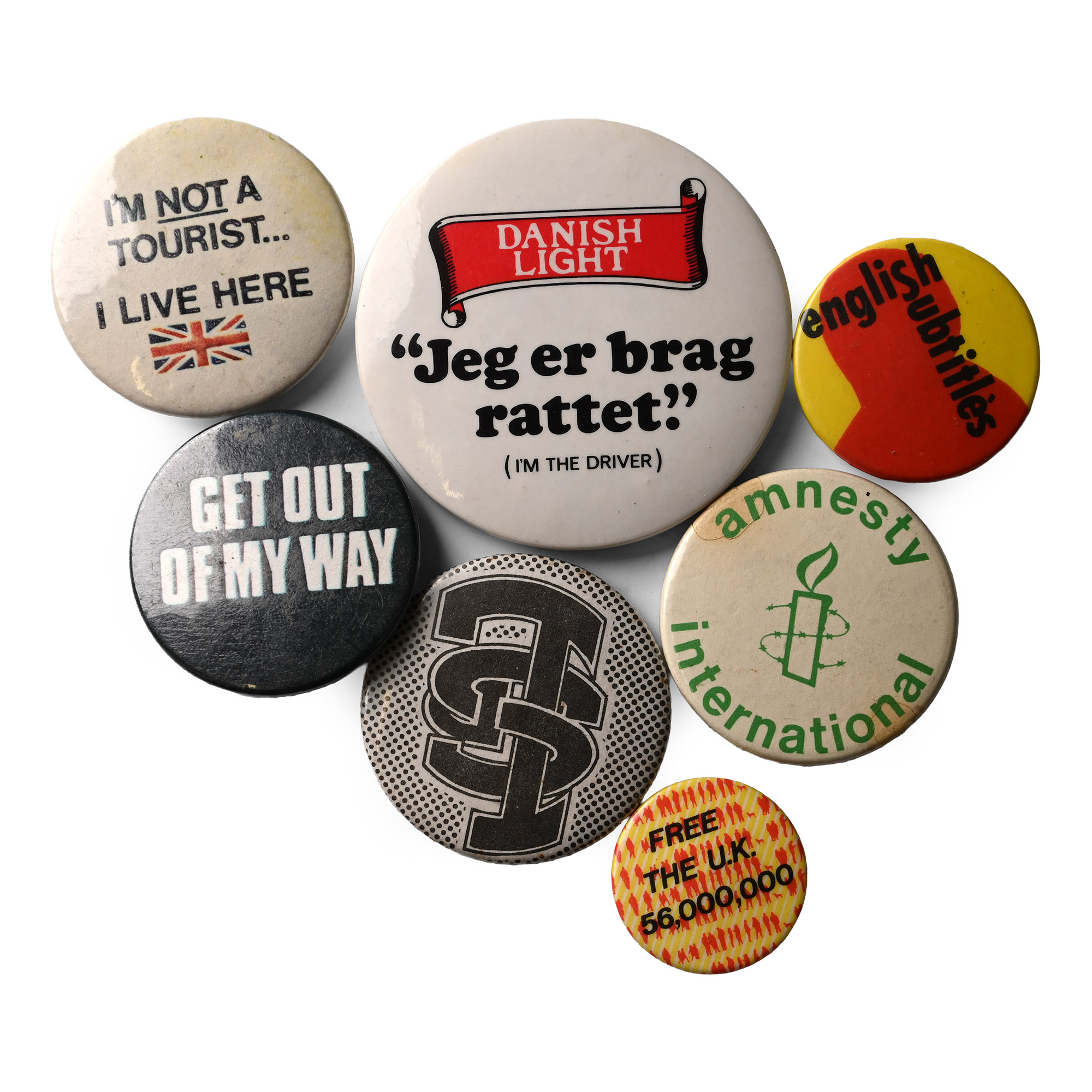
Miscellaneous Vintage Pin Badge Collection
CIRCA 1980S A.D.
1 - 2 1/4 in. (33 grams total, 24-56 mm).
Including 'Amnesty International', 'I'm Not a Tourist ... I Live Here' and other types. [7, No Reserve]
ProvenanceFrom the private collection of a S.W. London gentleman, acquired in the 1970s.
CONDITIONTimeLine Auctions follows a vetting process to ensure the authenticity and legality of all items, reinforcing our commitment to integrity and responsible trading. Each antiquity, antique, and coin lot undergoes thorough examination by a vetting committee of at least ten external specialists, professional trade association members, scientists, and archaeologists: Our Vetting Process
AUCTIONS:
TimeLine is a leading auction house specialising in antiquities, ancient art, collectables, natural history, coins, medals, and books. Our auctions offer museums, collectors, historians, and enthusiasts the opportunity to acquire unique and historically significant pieces.
LOT 1962
Miscellaneous Vintage Pin Badge Collection
Estimate £20 - 30€23 - 35 (for guidance only)$27 - 41 (for guidance only)
-
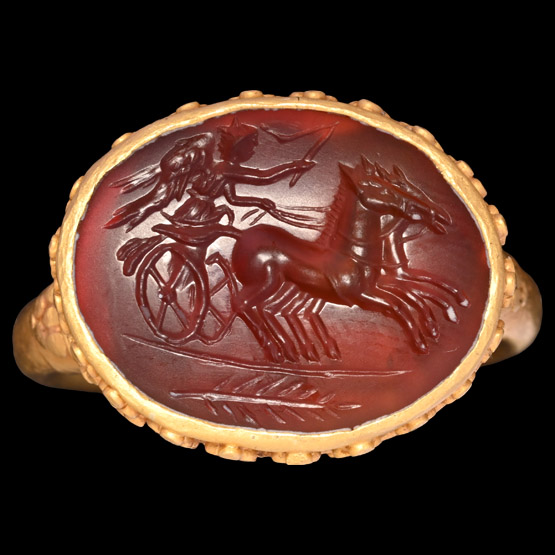
Post Medieval Gold Ring with Gemstone representing a Winged Victory Charioteer
19th-20th century A.D.Estimate: £2,000 - 3,000 (+bp*)
Opening Bid: £1,000
Plano-convex carnelian cloison with incuse image of a biga on a baseline with charioteer; frond in exergue; supplied with a museum-quality impression. 11.35 grams, 30.04 mm overall, 19.68 x 20.16 mm internal diameter (approximate size British U, USA 10, Europe 22.52, Japan 21)
Private collection, England. This lot has been checked against the Interpol Database of stolen works of art and is accompanied by search certificate number no.13156-249513. -
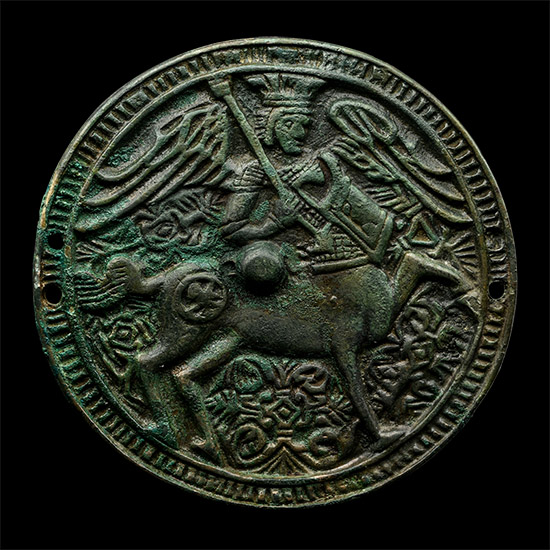
Post Medieval Mirror with Centaur 'Kitovras'
16th-17th century A.D.Sold for (Inc. bp): £910
Discoid with ribbed border and central raised pellet, motif of a winged centaur holding a square shield and a staff(?), foliage motif to the background; pierced three times to the rim. 153 grams, 10.1 cm
From the private collection of a London gentleman, from his grandfather's collection formed before the early 1970s.
This version of a centaur was known as ‘kitovras’, an old Russian version of the word ‘kentauros’. He is typically portrayed with the body of a horse and the torso and head of a man, often featuring prominent wings and wearing armour. Kitovras is best known from a legend, ‘The Tale of Solomon and Kitovras’, in which he is tricked into building the temple for King Solomon. While held in captivity, Kitovras tells Solomon how to obtain the stone needed to build the temple and stays with him through its completion. When Solomon doubts Kitovras’ strength, Kitovras throws him to the edge of the Promised Land, but the king eventually returns and takes back the throne. -
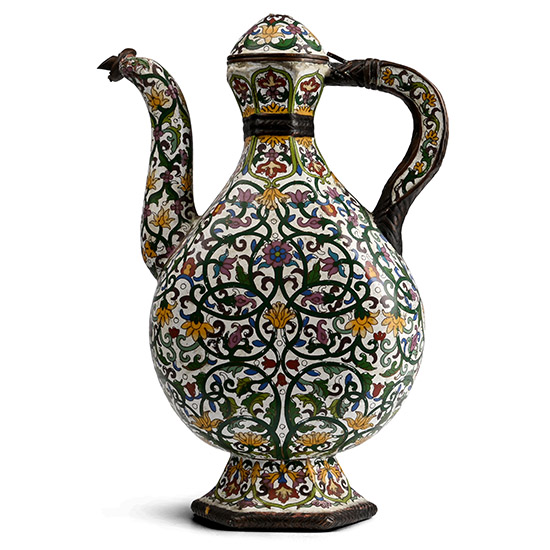
Chinese Enamelled Bronze Ewer for the Indian Market
Late 19th century A.D.Estimate: £400 - 600 (+bp*)
Opening Bid: £200
Piriform in profile with detachable lid, curved strap andle and spout, hexagonal base; white enamelled surface with painted tendrils and flowers. 1.5 kg, 31 cm
Private collection, UK.
