
Loading, please wait...

LOT 2121
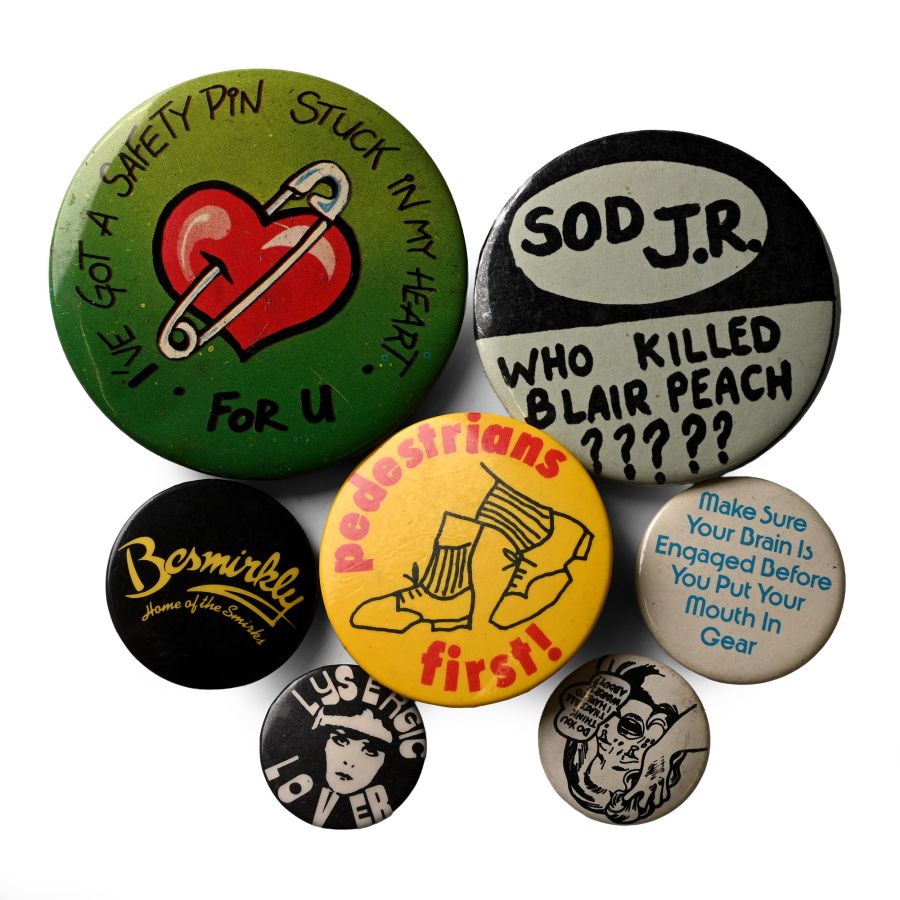
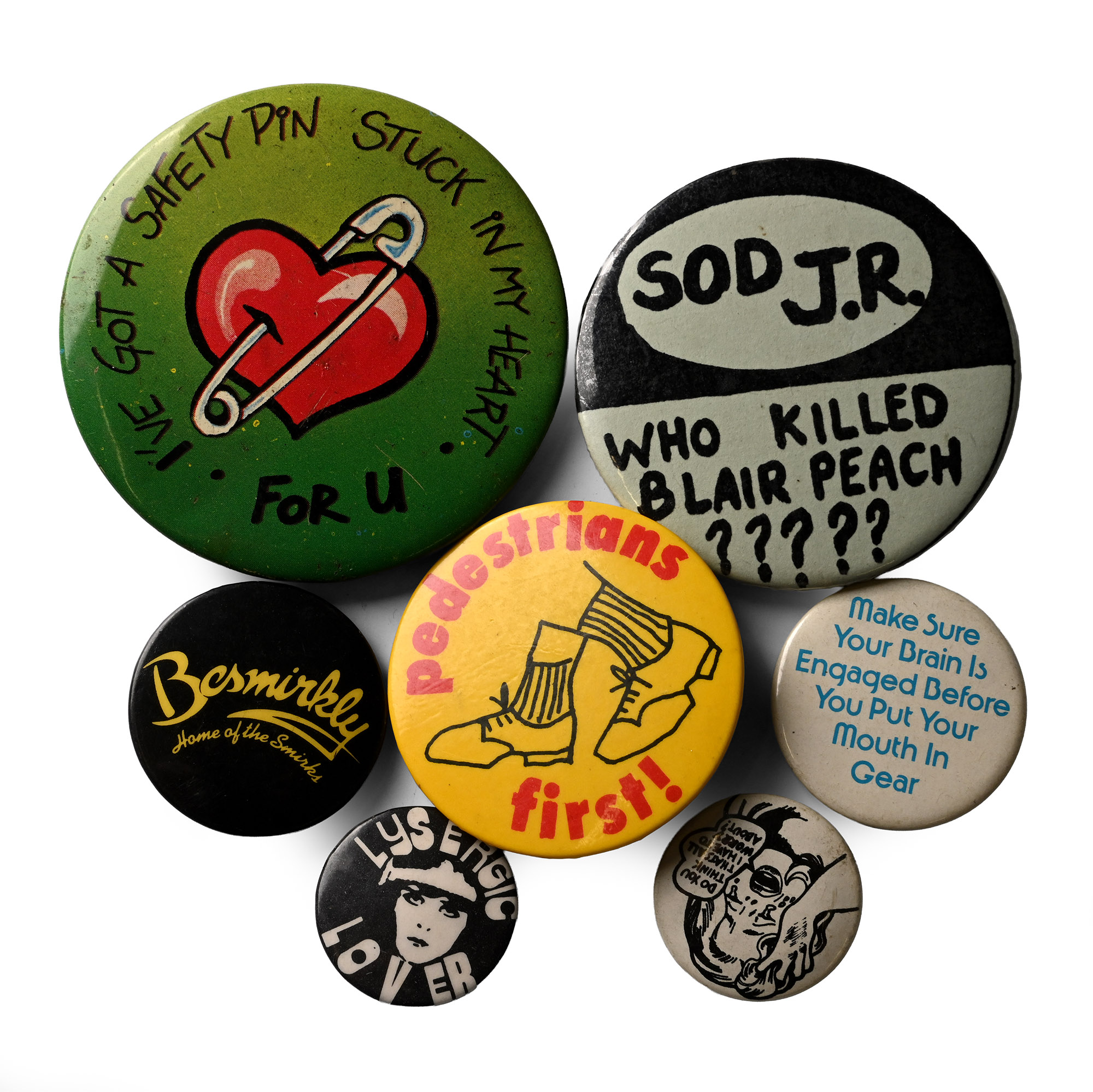
Miscellaneous Vintage Pin Badge Collection
CIRCA 1970S A.D. AND LATER
1 - 2 1/2 in. (38 grams total, 24-63 mm).
Including 'punk' safety pin design, anti-car 'Pedestrians First!' and other designs. [9, No Reserve]
ProvenanceFrom the private collection of a S.W. London gentleman, acquired in the 1970s.
This lot is accompanied by an illustrated lot declaration signed by the Head of the Antiquities Department, Dr Raffaele D'Amato.
TimeLine Auctions follows a vetting process to ensure the authenticity and legality of all items, reinforcing our commitment to integrity and responsible trading. Each antiquity, antique, and coin lot undergoes thorough examination by a vetting committee of at least ten external specialists, professional trade association members, scientists, and archaeologists: Our Vetting Process
AUCTIONS:
TimeLine is a leading auction house specialising in antiquities, ancient art, collectables, natural history, coins, medals, and books. Our auctions offer museums, collectors, historians, and enthusiasts the opportunity to acquire unique and historically significant pieces.
-
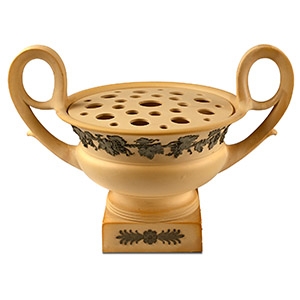
Wedgwood Caneware Kantharos-Shaped Rose Bowl
Circa 1830 A.D.Sold for (Inc. bp): £78
Comprising a kantharos-shaped vessel with tall scrolled handles and applied vine and grapes ornament in dark green, on a rectangular base with applied rosette and acanthus-leaf motifs; separate intact domed rose with graduated holes. 1.3.9 kg, 30.3 cm wide
From the private collection of a Canadian gentleman living in Essex, UK, formed since the 1920s-circa 1990. Property of an Essex lady until the late 1990s; thence by descent. From the private collection of an Essex gentleman since the late 1990s. This lot is accompanied by an illustrated lot declaration signed by the Head of the Antiquities Department, Dr Raffaele D'Amato. -
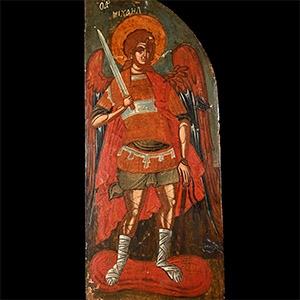
Large Wing of a Triptych Showing the Archangel Michael
Greek, 17th century A.D.Sold for (Inc. bp): £1,560
Tempera on wood panel depicting the Archangel Michael standing on a red cushion in the guise of a guardian angel, holding a drawn sword in his right hand and a scabbard in his other hand; the face with a brown base, features formed in shades of tan and beige with white highlights on a terracotta and deep green background. 3.5 kg, 70 x 38 cm with frame
Acquired on the European art market. Private collection, London, UK. Accompanied by an academic report by Dr Raffaele D'Amato. This lot has been checked against the Interpol Database of stolen works of art and is accompanied by a search certificate number no.12844-240885. This lot is accompanied by an illustrated lot declaration signed by the Head of the Antiquities Department, Dr Raffaele D'Amato.
Even after the fall of Constantinople, icons painted on wood remained the principal object of devotion for Orthodox Christians both within the former borders of Byzantium and wherever the commonwealth of the Eastern Roman Empire left its traces. The painted icons are still today used by the Orthodox for personal devotion, for display in churches on feast days, and to decorate the iconostasis (partition) of the church, i.e. the dividing wall erected in front of the Bema, where the sacred altar of the Apse is collocated. The Archangel Michael was the commander of the Heavenly Host, and venerated by military men and the common people as one of the most powerful protector saints. -
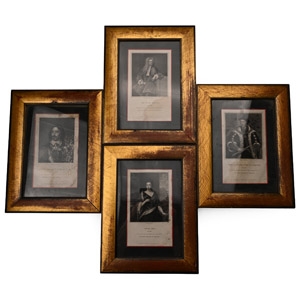
Gilt Framed Set of Historical Prints
19th century A.D.Sold for (Inc. bp): £59
A set of four framed and glazed historical prints: Sir Isaac Newton, engraved by W.T. Fry, published London, 1831, by Harding & Lepard; Thomas Howard, Duke of Norfolk, engraved by E. Scriven, published London, 1830, by Harding & Lepard; Queen Anne, engraved by J. Cochran, published London, 1835, by Harding & Lepard; Robert Devereux, Earl of Essex, published London, 1829, by Harding & Lepard. 2.4 kg total, 32.5 x 24.5 cm each
Fair to fine condition.
Property of a North London, UK, gentleman. From the private collection of John Meredith, acquired since the 1990s; thence by descent. This lot is accompanied by an illustrated lot declaration signed by the Head of the Antiquities Department, Dr Raffaele D'Amato.
