
Loading, please wait...
_900x900.jpg "Minoan Facetted Carnelian Stamp Seal")
_200x200.jpg "Minoan Facetted Carnelian Stamp Seal")
_900x900.jpg "Minoan Facetted Carnelian Stamp Seal")
_200x200.jpg "Minoan Facetted Carnelian Stamp Seal")
_900x900.jpg "Minoan Facetted Carnelian Stamp Seal")
_200x200.jpg "Minoan Facetted Carnelian Stamp Seal")
.jpg "Minoan Facetted Carnelian Stamp Seal")
.jpg "Minoan Facetted Carnelian Stamp Seal")
.jpg "Minoan Facetted Carnelian Stamp Seal")
LOT 0081
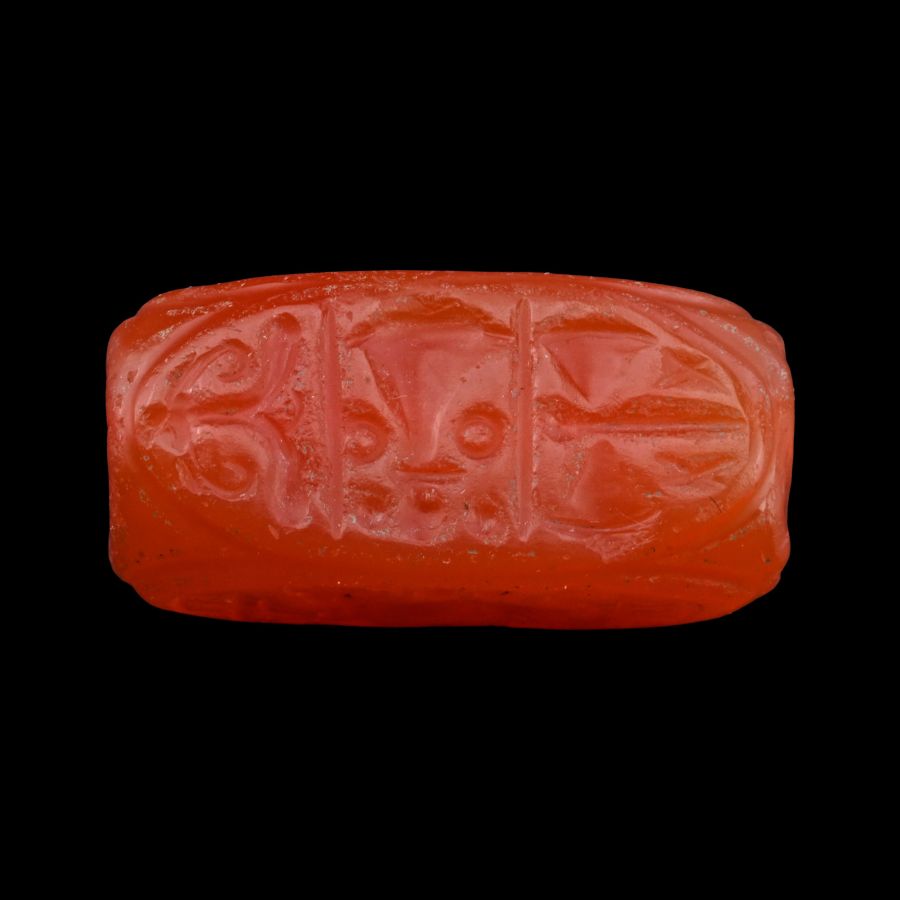
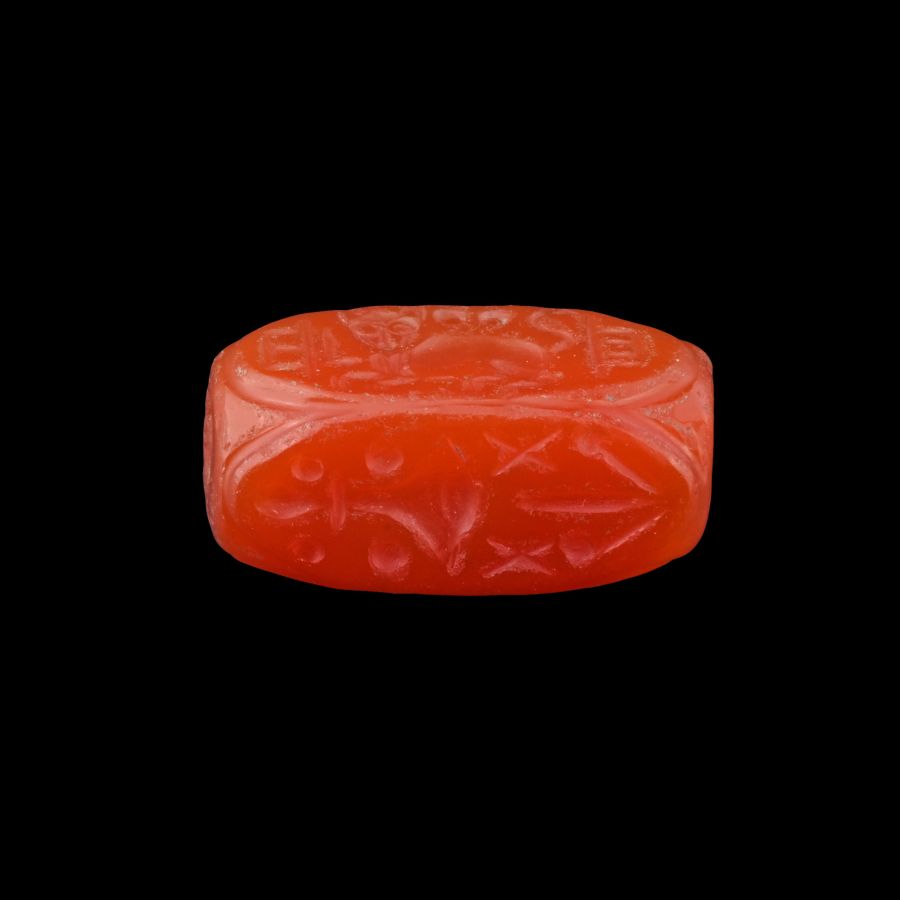
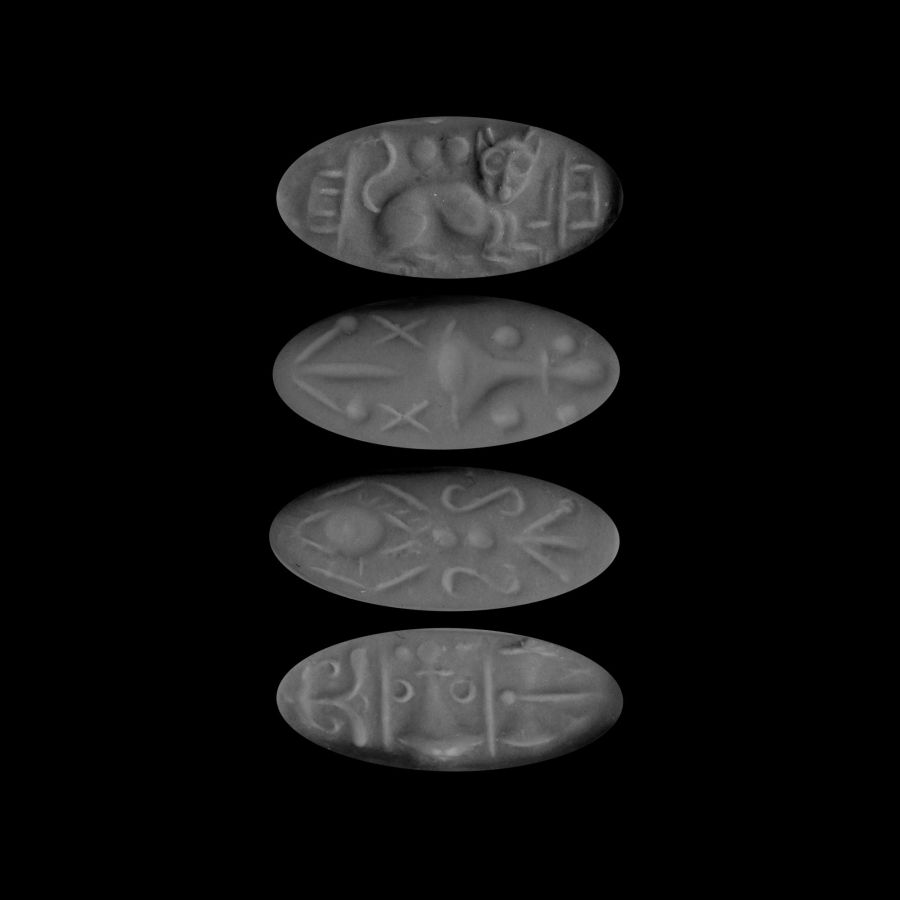
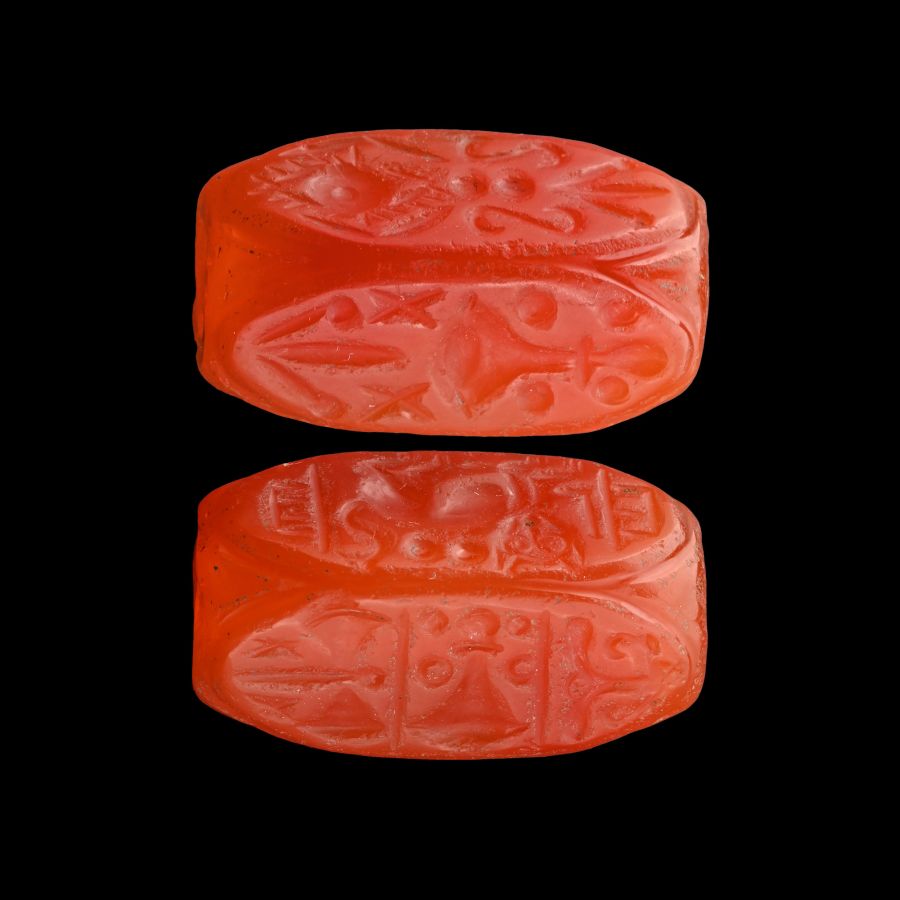
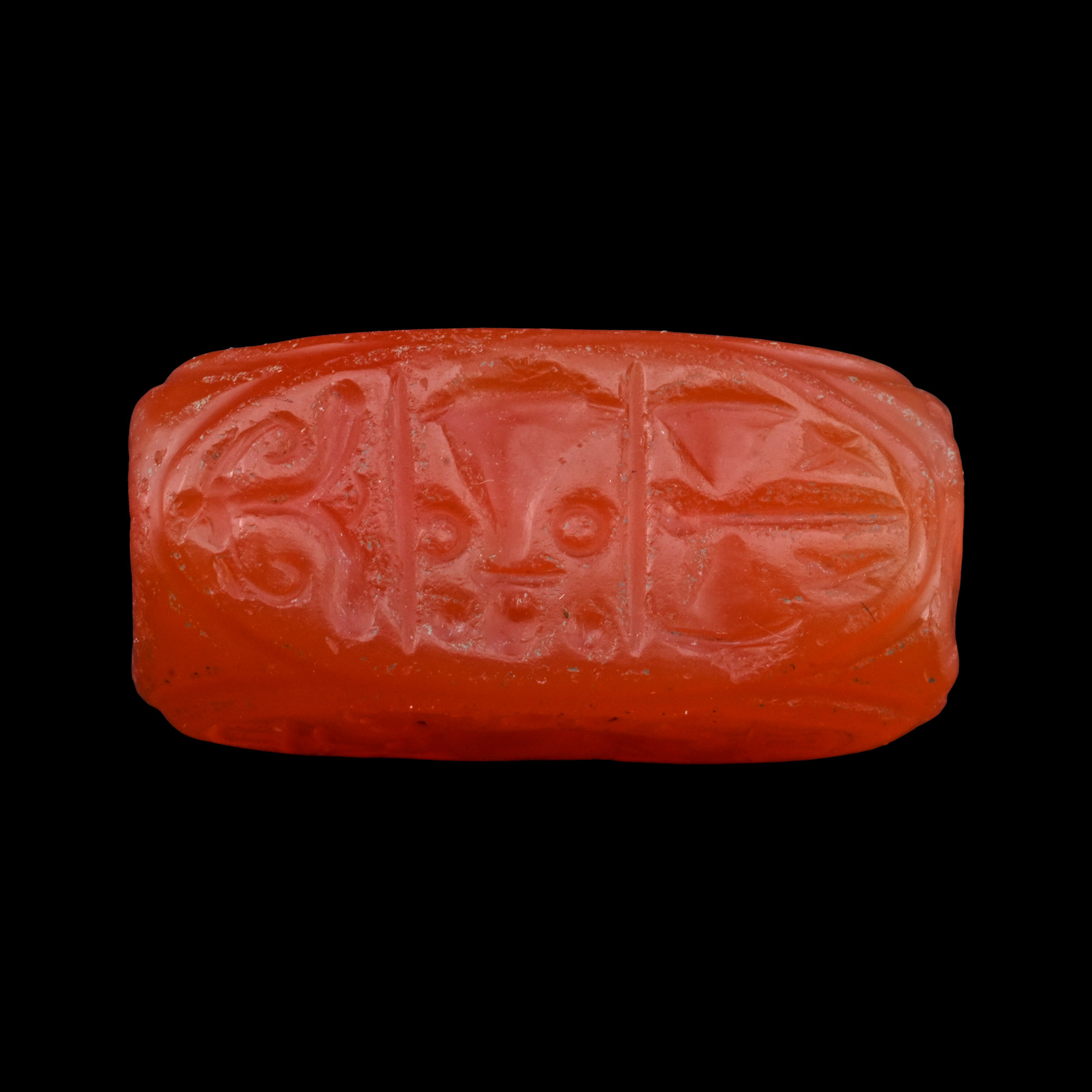
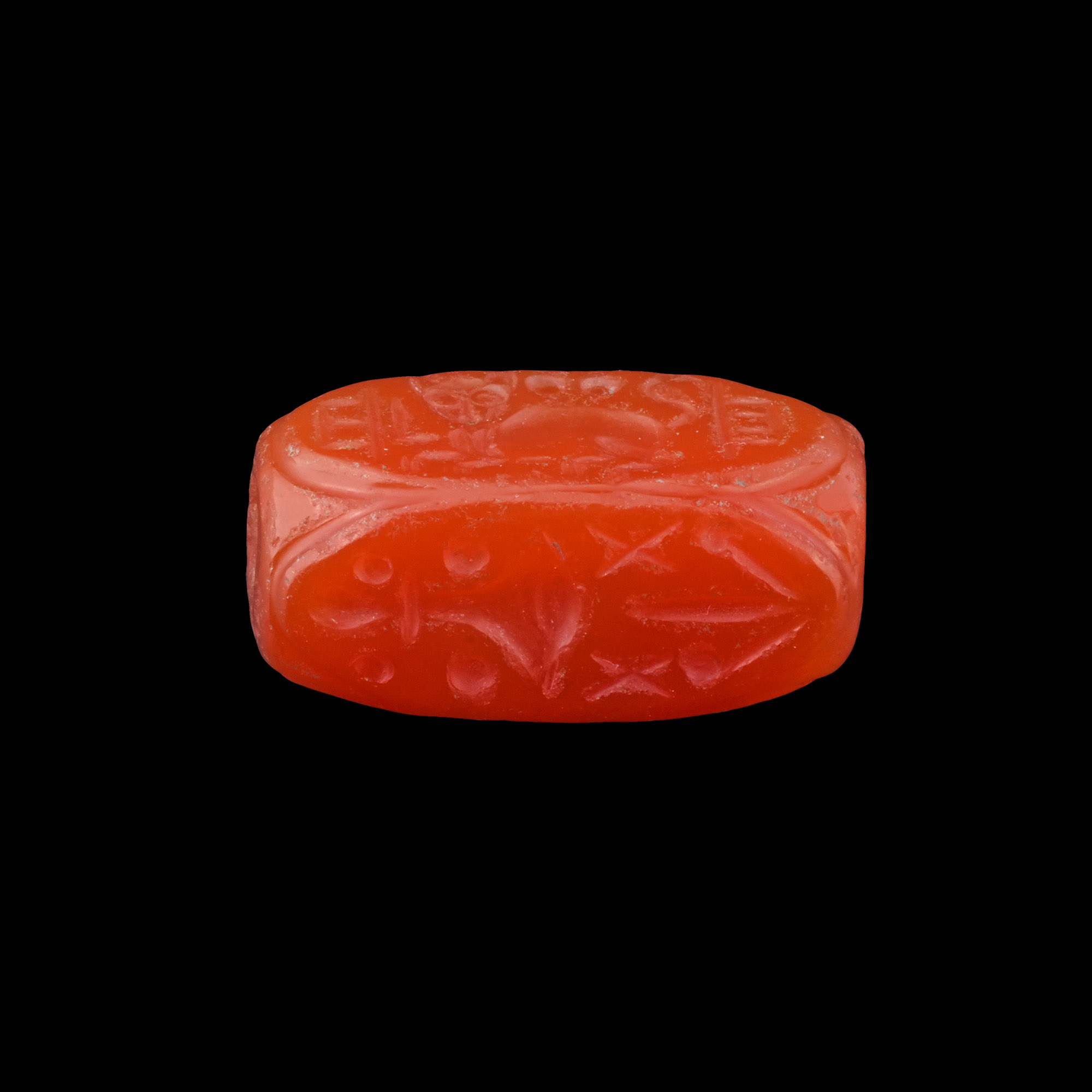
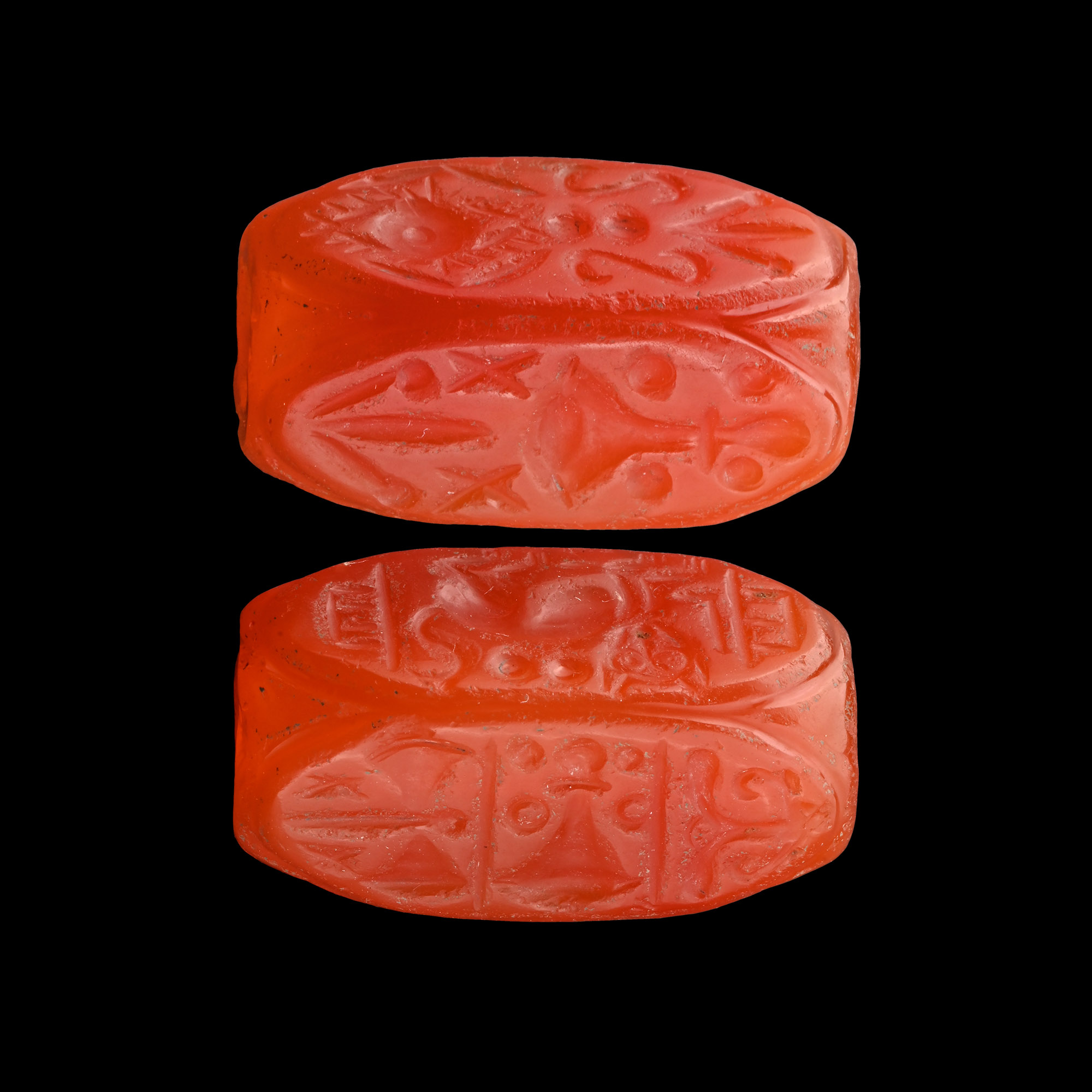
Minoan Facetted Carnelian Stamp Seal
CIRCA 20TH-15TH CENTURY B.C.
7/8 in. (4.21 grams, 21 mm).
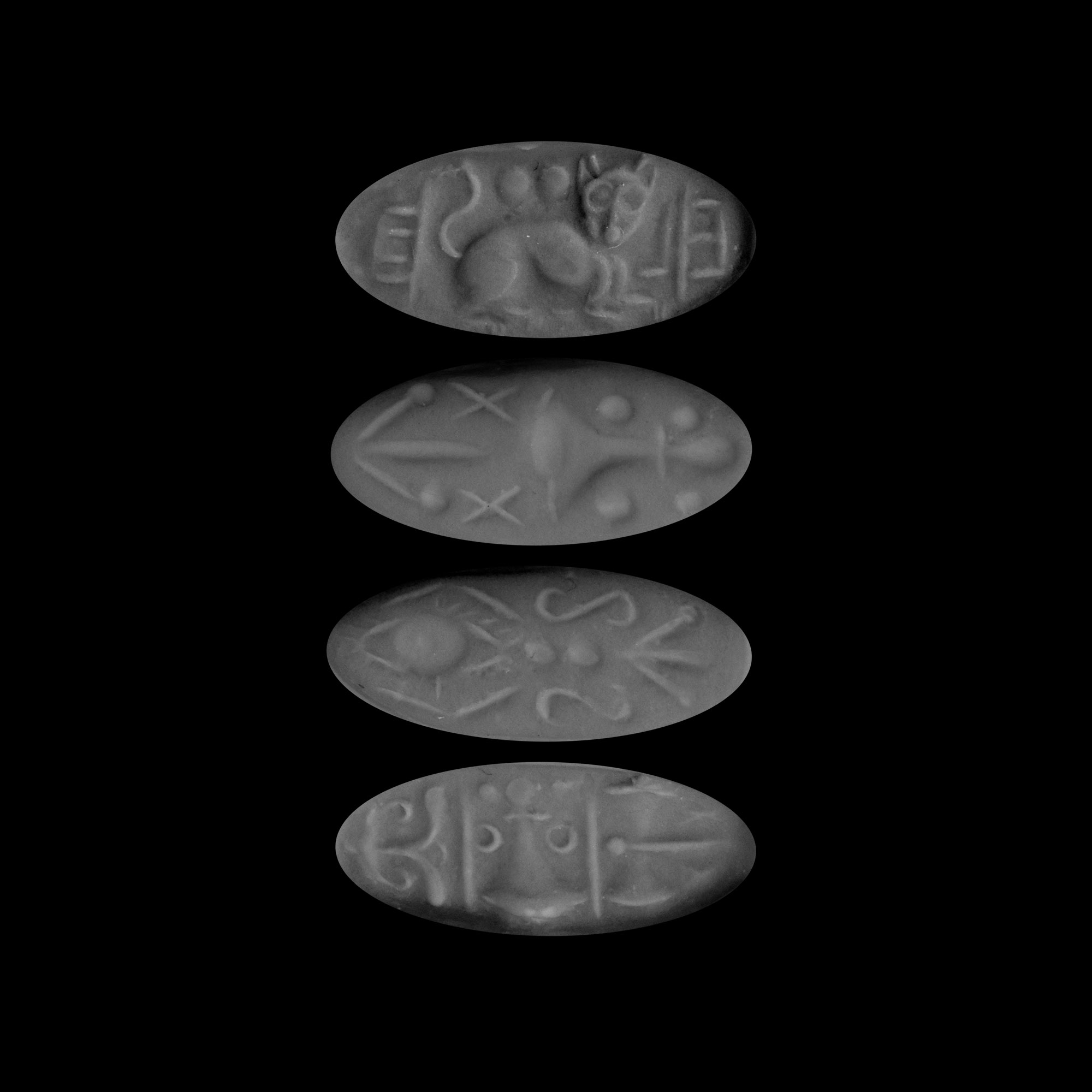
Four-sided bead with an oval panel on each side: panel 1: reclining feline with frontal head with apotropaic eyes; panel 2: three-leaved plant opposite a goblet(?) with four pellets and two crosses; panel 3: a plant and a big frontal apotropaic eye; panel 4: three segments, a plant, a butterfly or a bird; accompanied by museum-quality impressions.
ProvenanceFrom the collection of the late Mr Priday, Hertfordshire, UK, thence by descent.
This lot has been checked against the Interpol Database of stolen works of art and is accompanied by search certificate number no.13339-258812.
Cf. Yule, P., Early Cretan Seals: A Study of Chronology, Marburger Studien zur Vor- und Frühgeschichte, 4, Mainz am Rhein, 1981,
pp. 65-66 (four-sided prism type), and pls.7,12-14 (iconography).
Four-sided prisms are usually fashioned in jasper, light-coloured chalcedony and lightly banded carnelian. The workmanship is usually excellent. Largely on stylistic grounds, these seals are datable mostly to MMII (c. 2100–1875 B.C.), although they occur both slightly earlier and later.
CONDITIONTimeLine Auctions follows a vetting process to ensure the authenticity and legality of all items, reinforcing our commitment to integrity and responsible trading. Each antiquity, antique, and coin lot undergoes thorough examination by a vetting committee of at least ten external specialists, professional trade association members, scientists, and archaeologists: Our Vetting Process
AUCTIONS:
TimeLine is a leading auction house specialising in antiquities, ancient art, collectables, natural history, coins, medals, and books. Our auctions offer museums, collectors, historians, and enthusiasts the opportunity to acquire unique and historically significant pieces.
-
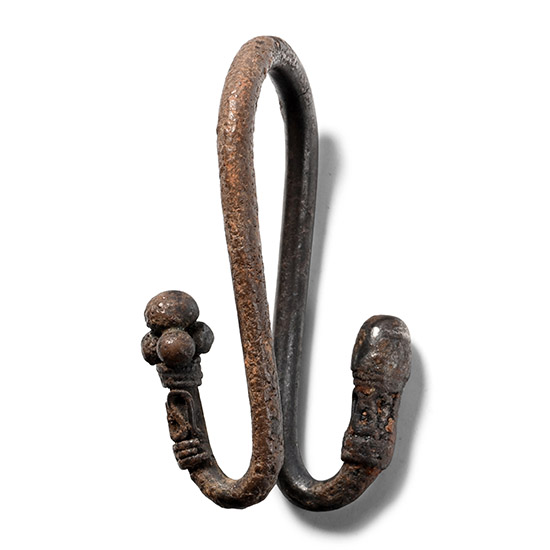
Greek Silver Belt Hanger with Decorated Terminals
5th-3rd century B.C.Sold for (Inc. bp): £33
U-shaped body with hooked terminals with filigree decoration. 17 grams, 50 mm
Acquired on UK art market. Property of a Middlesex gentleman. -
.jpg)
Eastern Greek Carnelian Scaraboid Gemstone with Nude Hero Holding Lions
6th-5th century B.C. or laterSold for (Inc. bp): £780
Scaraboid type with incuse design to the underside of a nude hero facing, holding one lion by the neck and another by the hind leg; supplied with a museum-quality impression. 4.25 grams, 19 mm
From the private collection of a European gentleman (1942-2024), formed since the 1970s.
The gem could be considered a representation of Heracles, even if the iconography is unusual, and is influenced by the Mesopotamian environment, from where it borrows the frontal image of the hero (Gilgamesh or Enkidu) fighting with two beasts. The hero is beardless and holding an inverted lion. He is acting like a master of the animals, showing eastern traits reminiscent of Graeco-Phoenician art. In the Phoenician tradition, a similar image of the god Bes, holding two lions, as posis theron (‘Master of the Animals’), is common. The type is more frequent in the Eastern Mediterranean than in the West and is found on scarabs in carnelian and chalcedony. -
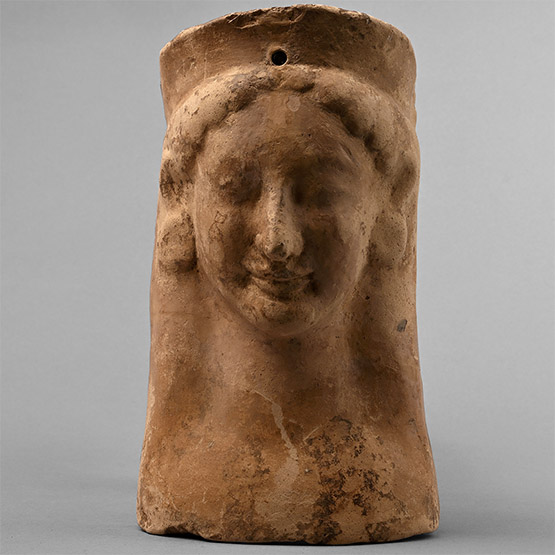
Greek Terracotta Female Protome
Early 5th century B.C.Estimate: £1,200 - 1,700 (‡+bp*)
Opening Bid: £650
Mould-made female protome with oval face, graceful nose and typical "archaic" smile; forehead framed by snail-shell curls descending to shoulder-height; with a low polos with a central perforation and large disc earrings. 606 grams, 19.5 cm
Ex Herbert A. Cahn, Kunst der Antike, Basel, 1997. with Paul and Vreny Vosseler-Studer, Riehen. Accompanied by a copy of an Art Loss Register certificate no.S00057826. This lot has been checked against the Interpol Database of stolen works of art and is accompanied by search certificate number no.12474-228714.
The presence of cults in Magna Graecia, although they fell within a well-established pantheon, in which the deity representing the Great Mother or Mother Earth, protector of fertility, natural and human fecundity, as well as health, was the most ancient, traces back to the figure of Demeter. In terracotta statuary, especially in Lucania, the goddess became the prevalent subject of votive or propitiatory offerings, reproduced in numerous variations of pose. The most common is the seated position, a distant tradition and widespread in the ancient world, the so-called 'goddess enthroned' with its multiple meanings, which allowed it to be adapted to various forms of worship. Demeter is a female deity connected to the earthly world and fertility, and therefore also present in Lucanian religiosity. The theme of the archaic protome—a head severed just below the neck—was transformed and expanded between the 5th and 4th centuries B.C., into that of the bust, finished just above the waist.
