
Loading, please wait...
_900x900.jpg "Minoan Bronze Votary Statue")
_200x200.jpg "Minoan Bronze Votary Statue")

.jpg "Minoan Bronze Votary Statue")
LOT 0059
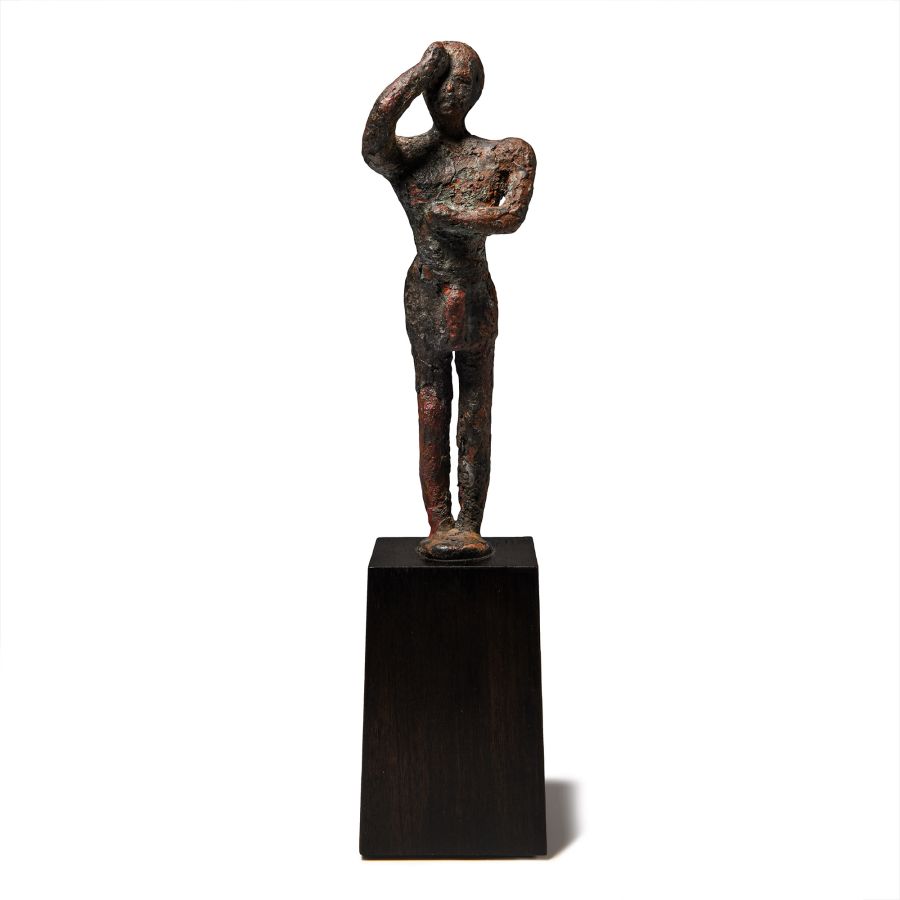
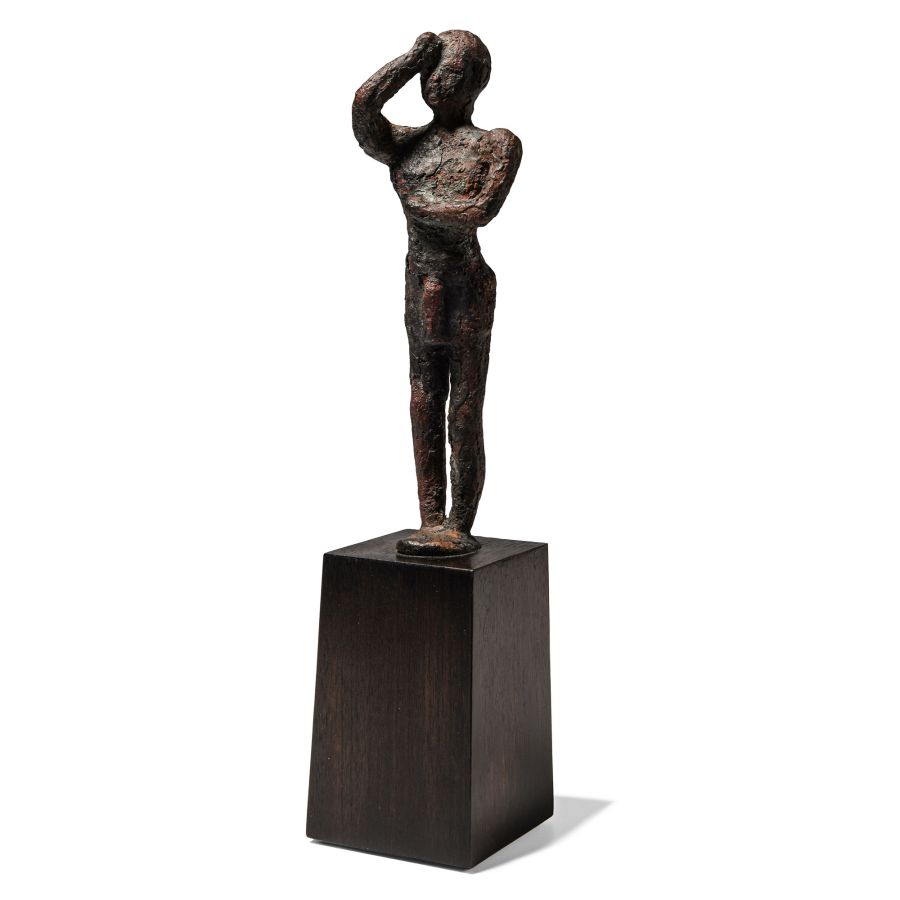
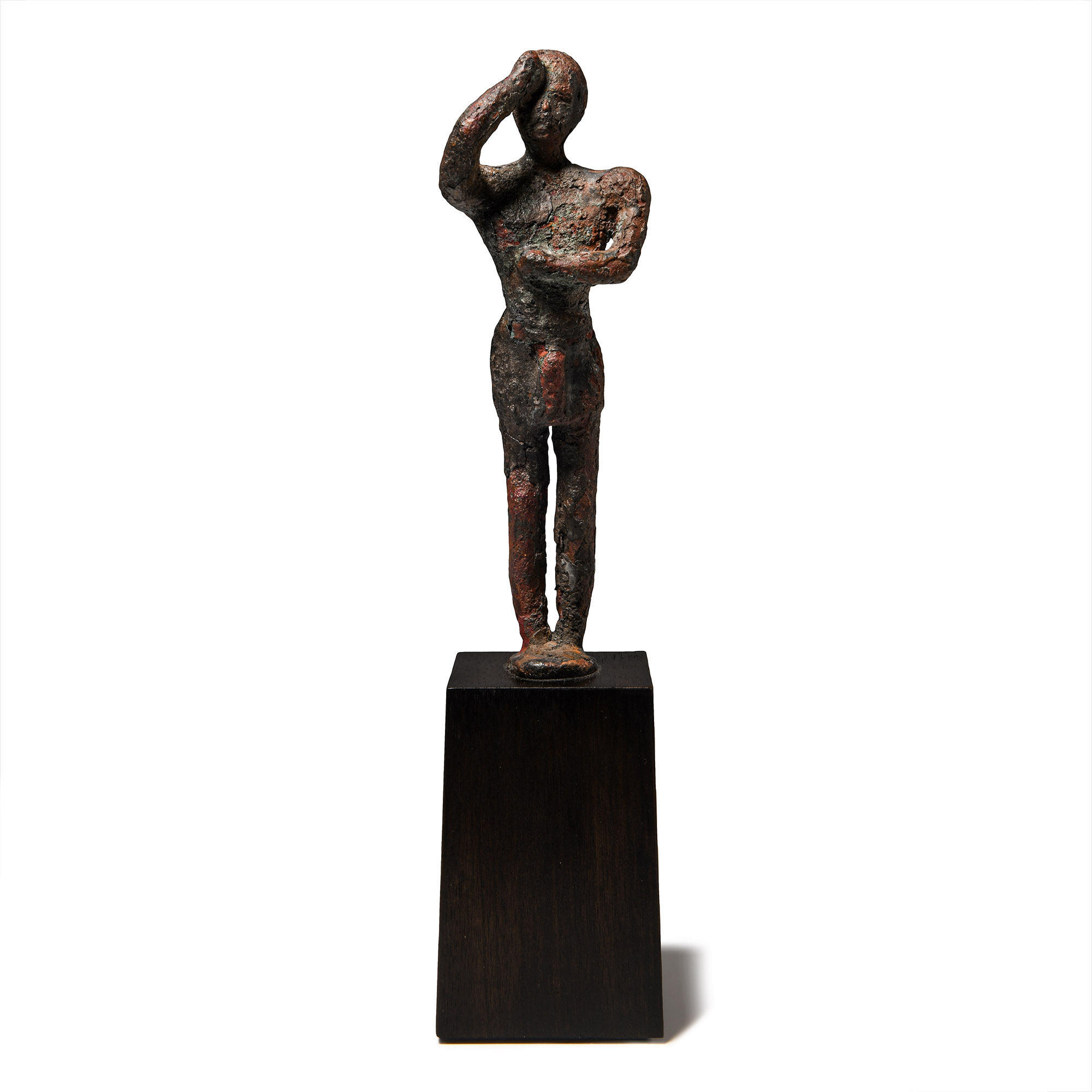
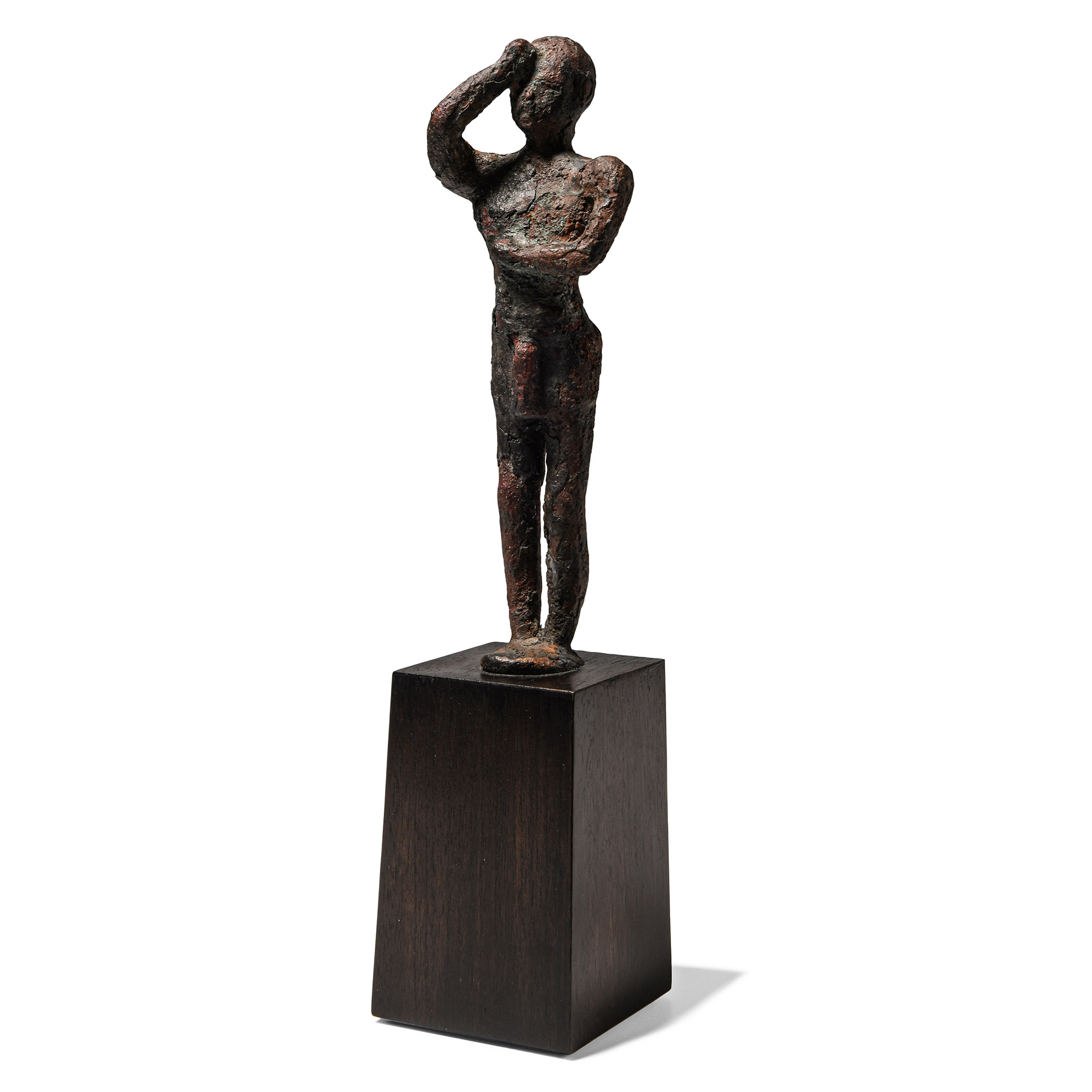
Minoan Bronze Votary Statue
CIRCA 3000–1100 B.C.
8 3/4 in. (447 grams total, 22.4 cm high including stand).
The figure standing on a small discoid base, wearing a short kilt, with broad chest and slender waist; the left arm bent across the chest and the right arm raised to the forehead in an act of worship; mounted on a custom-made stand. [No Reserve]
ProvenanceBritish private collection, acquired by 2000.
Accompanied by a copy of an old photograph showing this item on display in a display cabinet within the previous collectors home.
This lot has been checked against the Interpol Database of stolen works of art and is accompanied by search certificate no.11950-210856.
Cf. similar in the Metropolitan Museum of Art, New York under accession no. 1972.118.45.
CONDITIONTimeLine Auctions follows a vetting process to ensure the authenticity and legality of all items, reinforcing our commitment to integrity and responsible trading. Each antiquity, antique, and coin lot undergoes thorough examination by a vetting committee of at least ten external specialists, professional trade association members, scientists, and archaeologists: Our Vetting Process
AUCTIONS:
TimeLine is a leading auction house specialising in antiquities, ancient art, collectables, natural history, coins, medals, and books. Our auctions offer museums, collectors, historians, and enthusiasts the opportunity to acquire unique and historically significant pieces.
-
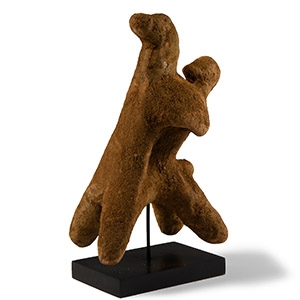
Archaic Greek Terracotta Figure of Mounted Warrior with Shield
7th-5th century B.C.Sold for (Inc. bp): £195
The figure comprising a stylised horse with elongated neck, mounted by a bearded rider figure holding a shield; mounted on a custom-made display stand. 275 grams total, 14.5 cm high including stand
Acquired before 1990. From an old German collection.
Terracotta figurines of horse and rider were common grave offerings in Boeotia, northwest of Attica, particularly during the 6th century B.C. Representations of warriors on horseback were already widespread in the Geometric Period, and widely used in Cyprus during this period. The rider, although influenced by Cypriot designs, does not show typical Cypriot characteristics. -
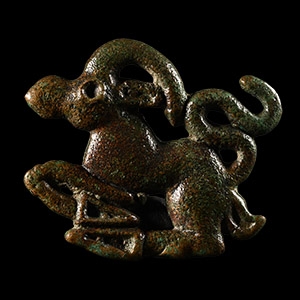
Scythian Bronze Antelope Mount
Circa 4th-3rd century B.C.Estimate: £300 - 400 (+bp*)
Opening Bid: £150
Openwork with mounting lug to the reverse; animal in active pose with S-curved tail. 50 grams, 60 mm
Acquired 1980-2015. Ex Abelita family collection. -
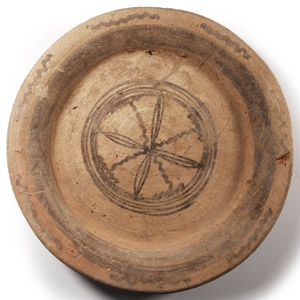
Eastern Mediterranean Terracotta Plate with Star
Late 1st millennium B.C.Sold for (Inc. bp): £117
With painted rosette motif to the centre, with concentric rings and other motifs. 740 grams, 25 cm wide
London, UK, collection, 1990s.
