
Loading, please wait...
LOT 2315
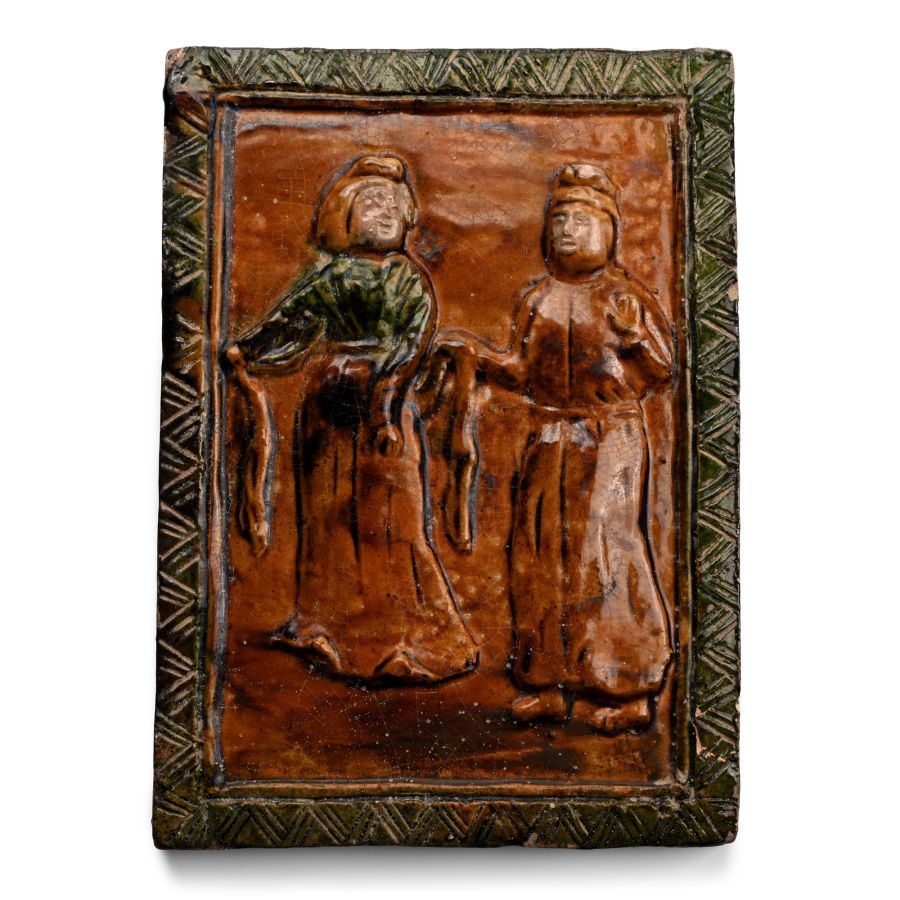
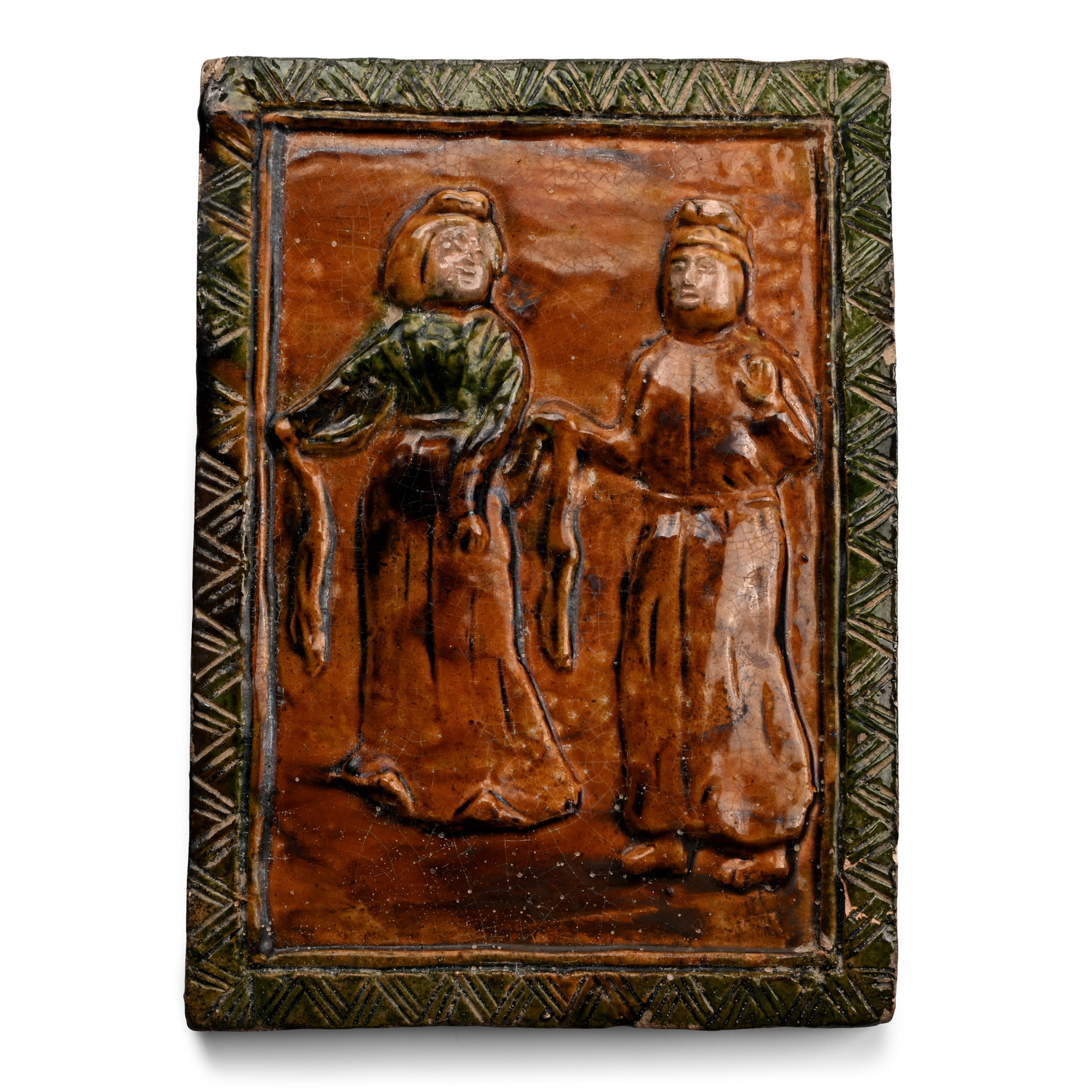
Ming Green and Brown Glazed Figural Plaque
MING DYNASTY, 1368-1644 A.D. OR LATER
9 x 6 1/2 in. (957 grams, 23 x 16.6 cm).
Rectangular plaque with raised hatched border, image of two figures modelled in high-relief, with green and pink detailing. [No Reserve]
ProvenanceFrom the private collection of a Canadian gentleman living in Essex, UK, formed since the 1920s-circa 1990.
Property of an Essex lady until the late 1990s; thence by descent.
From the private collection of an Essex gentleman since the late 1990s.
This lot is accompanied by an illustrated lot declaration signed by the Head of the Antiquities Department, Dr Raffaele D'Amato.
TimeLine Auctions follows a vetting process to ensure the authenticity and legality of all items, reinforcing our commitment to integrity and responsible trading. Each antiquity, antique, and coin lot undergoes thorough examination by a vetting committee of at least ten external specialists, professional trade association members, scientists, and archaeologists: Our Vetting Process
AUCTIONS:
TimeLine is a leading auction house specialising in antiquities, ancient art, collectables, natural history, coins, medals, and books. Our auctions offer museums, collectors, historians, and enthusiasts the opportunity to acquire unique and historically significant pieces.
-
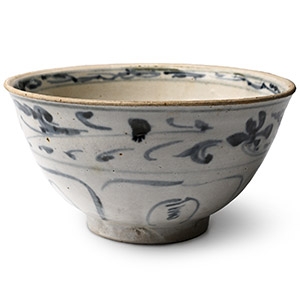
Hoi An Cargo Shipwreck Glazed Polychrome Bowl
15th century A.D.Sold for (Inc. bp): £52
Tin-glazed squat bowl with everted rim, floral motifs to rim and centre. 395 grams, 15 cm
Ex Butterfield and Butterfield auction with official Hoi An Hoard labels. From the private collection of an Essex gentleman since the late 1990s. This lot is accompanied by an illustrated lot declaration signed by the Head of the Antiquities Department, Dr Raffaele D'Amato.
In the mid 15th century a freighting junk loaded with fine Vietnamese pottery sank in an area of the South China Sea called the 'Dragon’s Embrace.' This vessel is part of the shipwreck cargo recovered off the coast of Vietnam at Hoi An. The ceramics themselves were probably made in the area of Chu Dau. -
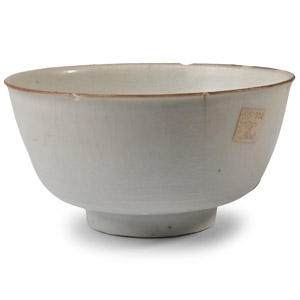
Vung Tau Cargo White Ware Bowl
Vietnam, circa 1690 A.D.Sold for (Inc. bp): £20
Bell-shaped with basal ring and brown band to the lip, tin-glazed export ware; an old Christie's label to the body. 375 grams, 15 cm wide
Ex Hong Kong and West Country collection. This lot is accompanied by an illustrated lot declaration signed by the Head of the Antiquities Department, Dr Raffaele D'Amato. -
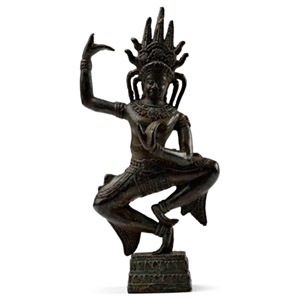
South East Asian Nang Teap Asporn Celestial Nymph Statuette
19th century A.D.Sold for (Inc. bp): £46
Modelled in active pose wearing a tiered headdress, dancing on a tiered base. 380 grams, 17.9 cm
From the private collection of a Suffolk, UK, gentleman, early 2000s. This lot is accompanied by an illustrated lot declaration signed by the Head of the Antiquities Department, Dr Raffaele D'Amato.
