
Loading, please wait...
LOT 2171
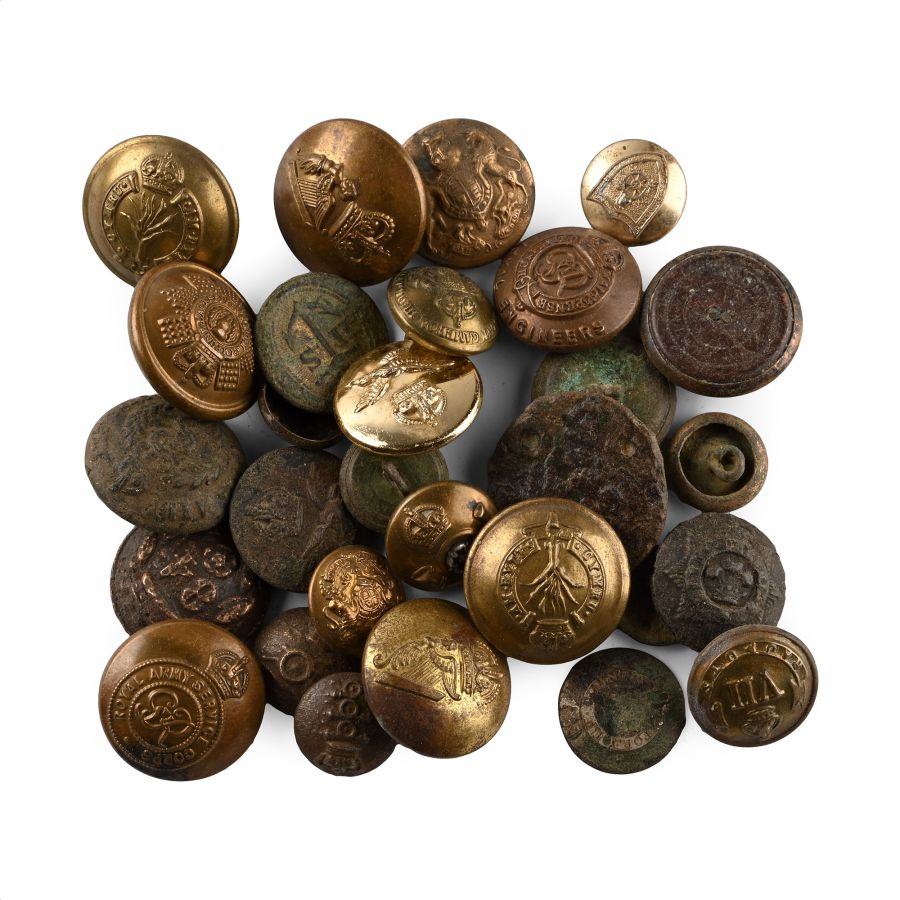
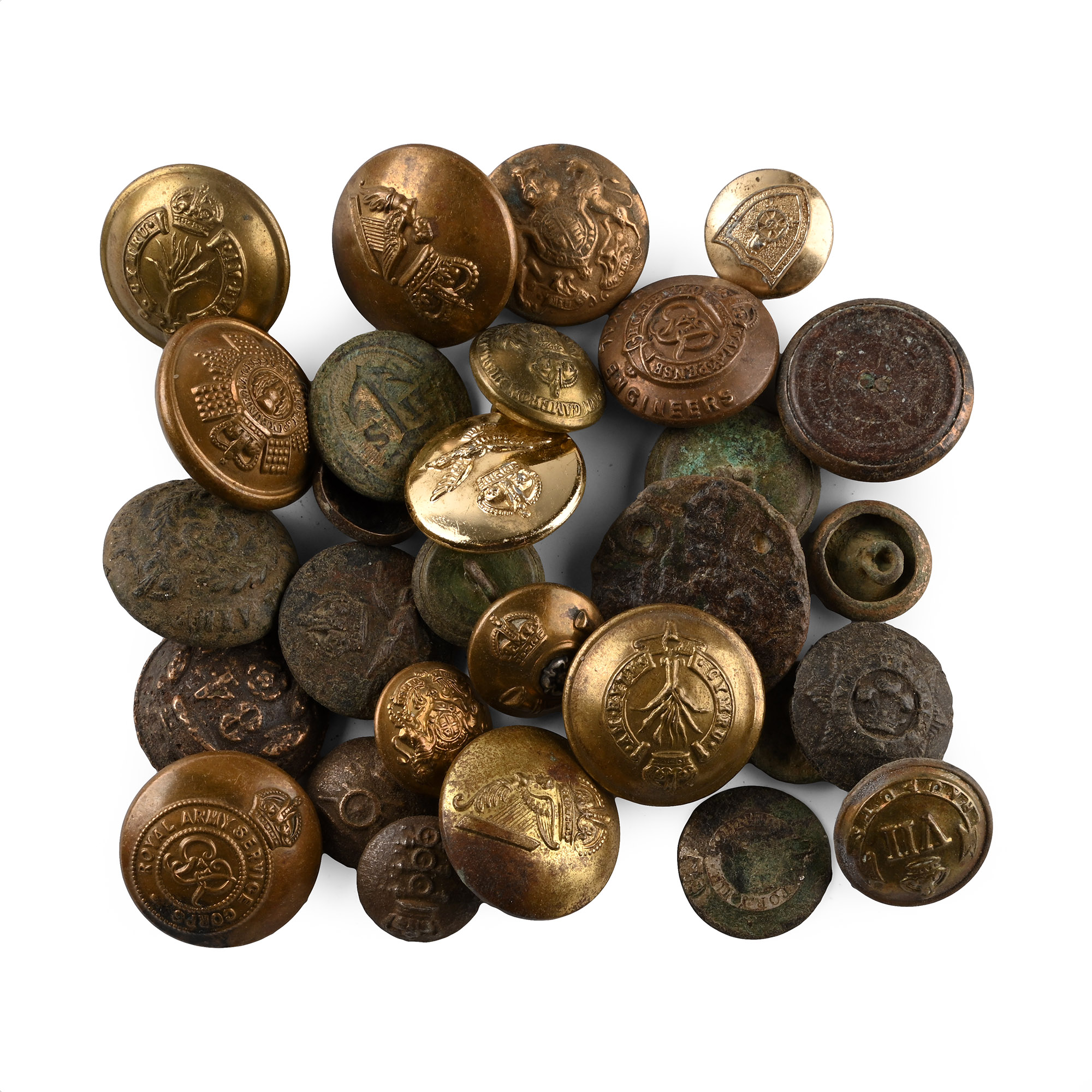
Military Bronze Button Collection
19TH-20TH CENTURY A.D.
5/8 - 1 1/4 in. (138 grams total, 15-30 mm).
Mainly military types, domed, hollow some with text to verso. [29, No Reserve]
ProvenanceAcquired on the UK art market.
Property of an East Anglia private collector.
This lot is accompanied by an illustrated lot declaration signed by the Head of the Antiquities Department, Dr Raffaele D'Amato.
TimeLine Auctions follows a vetting process to ensure the authenticity and legality of all items, reinforcing our commitment to integrity and responsible trading. Each antiquity, antique, and coin lot undergoes thorough examination by a vetting committee of at least ten external specialists, professional trade association members, scientists, and archaeologists: Our Vetting Process
AUCTIONS:
TimeLine is a leading auction house specialising in antiquities, ancient art, collectables, natural history, coins, medals, and books. Our auctions offer museums, collectors, historians, and enthusiasts the opportunity to acquire unique and historically significant pieces.
-
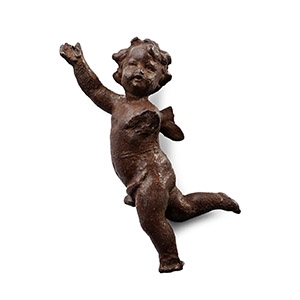
Georgian Bronze Cherub Statuette
18th century A.D.Sold for (Inc. bp): £13
Modelled in a classical dynamic pose with his right arm and leg raised, head turned to the left, and small wings on the back. 69.5 grams, 70 mm
Acquired on the UK art market in the 1970s-1990s. Property of a Nottinghamshire, UK, gentleman. This lot is accompanied by an illustrated lot declaration signed by the Head of the Antiquities Department, Dr Raffaele D'Amato. -
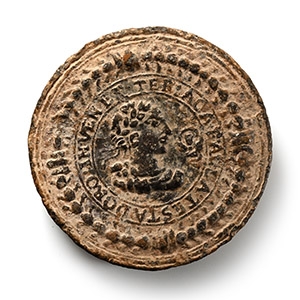
Theriaca 'Venice Triacle' Lead Box Lid
Italy, Venice, 17th century A.D.Estimate: £250 - 350 (+bp*)
Opening Bid: £125
Discoid in plan with lip to underside, central low-relief motif of a laureate and draped Roman-style bust with a nimbate lion of St. Mark, within a band inscribed 'TERIACA F ALLA TESTA DORO IN VENET'; all within outer band containing laurel wreath. 31 grams, 45 mm
From the collection of a gentleman, acquired on the London art market in the 1990s. This lot is accompanied by an illustrated lot declaration signed by the Head of the Antiquities Department, Dr Raffaele D'Amato.
Theriaca or ‘Venice treacle’ was a medicinal compound used since the time of Mithradates VI of Pontus as an antidote against any poisonous bite. -
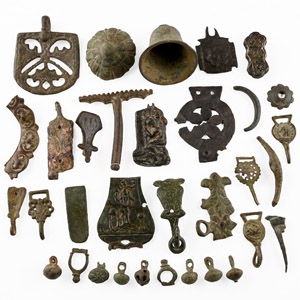
Tudor Bronze Artefact Group
16th-17th century A.D.Sold for (Inc. bp): £46
Including two appliqués with Saint Christopher, a bell with absent rumbler, globular buttons, large openwork harness pendant and others. 235 grams total, 14-56 mm
Found East Anglia, UK. This lot is accompanied by an illustrated lot declaration signed by the Head of the Antiquities Department, Dr Raffaele D'Amato.
N.B. This lot is for UK buyers only.
