
Loading, please wait...
LOT 1806
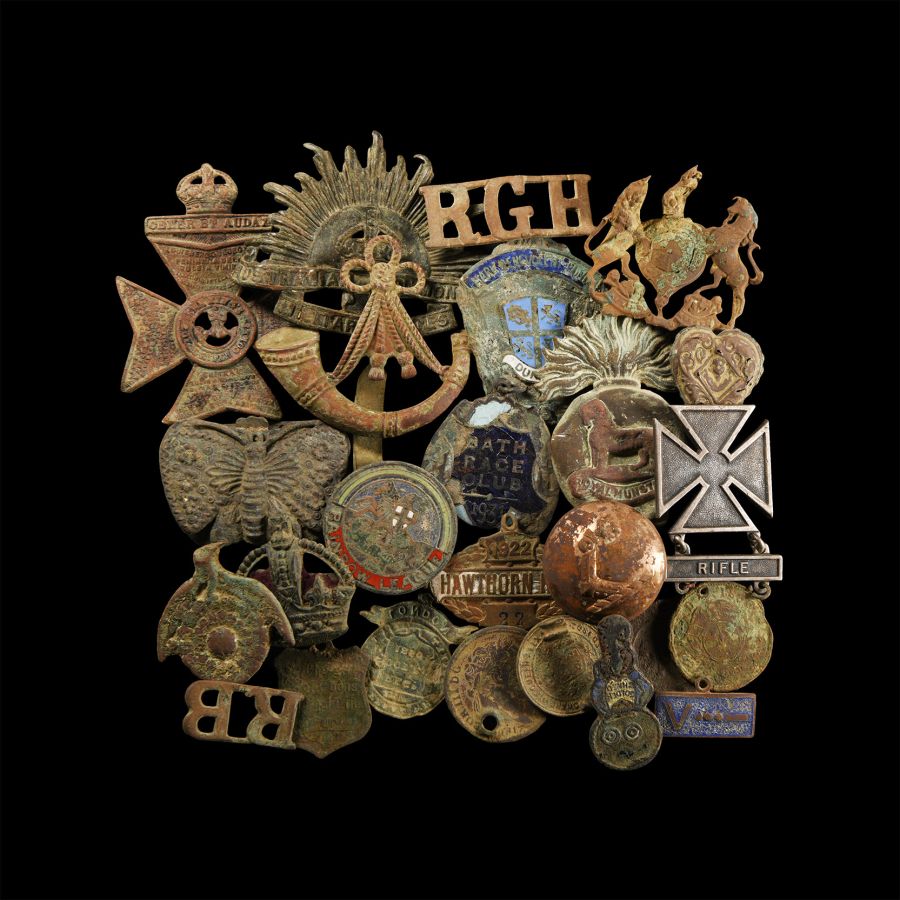
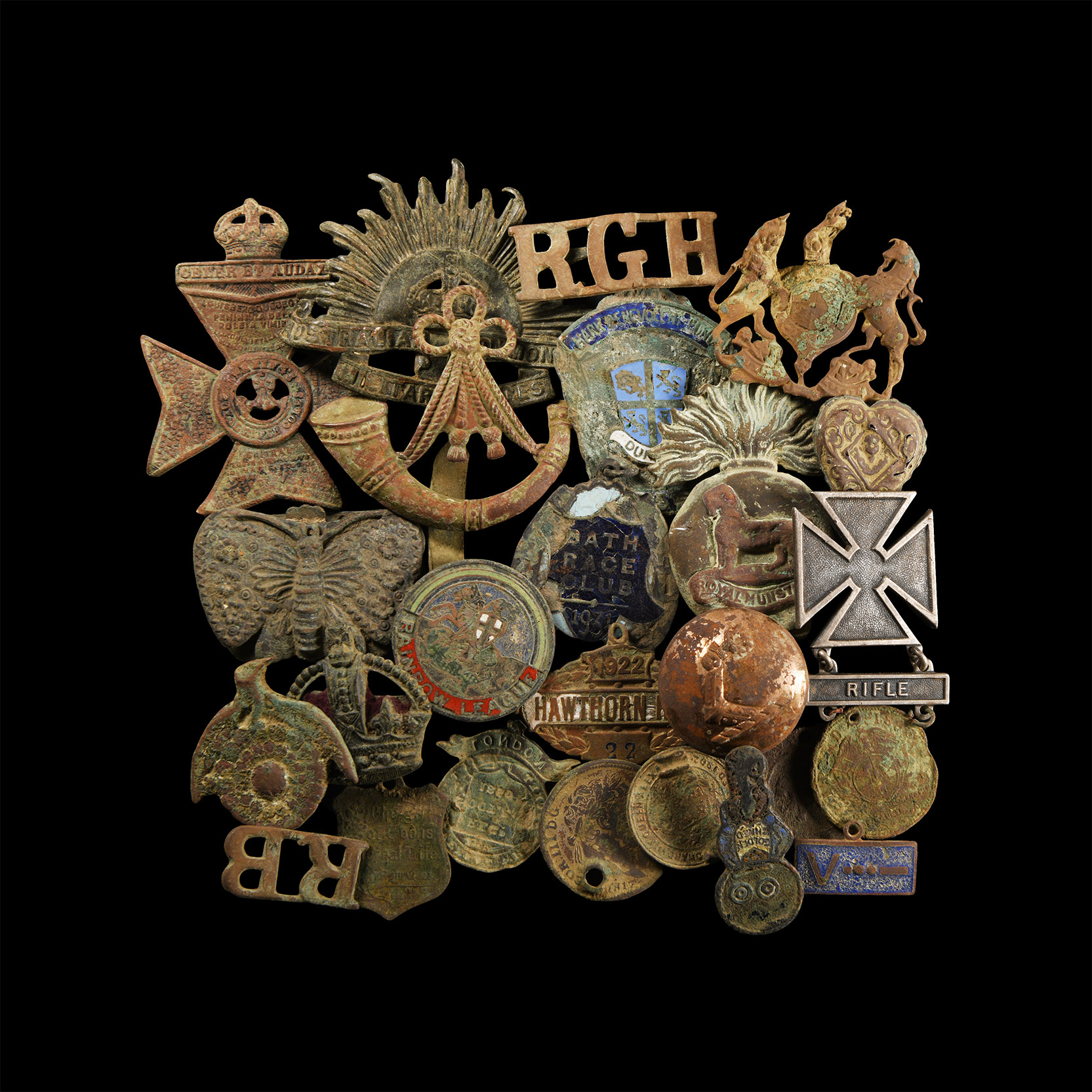
Military Badge and Other Artefact Group
19TH-20TH CENTURY A.D.
3/4 - 2 3/8 in. (158 grams total, 20-59 mm).
Mainly comprising various types of military badges, together with buttons, tags, and fittings, most decorated and/or bearing lettering. [25, No Reserve]
ProvenanceFound Berkshire, UK.
CONDITIONTimeLine Auctions follows a vetting process to ensure the authenticity and legality of all items, reinforcing our commitment to integrity and responsible trading. Each antiquity, antique, and coin lot undergoes thorough examination by a vetting committee of at least ten external specialists, professional trade association members, scientists, and archaeologists: Our Vetting Process
AUCTIONS:
TimeLine is a leading auction house specialising in antiquities, ancient art, collectables, natural history, coins, medals, and books. Our auctions offer museums, collectors, historians, and enthusiasts the opportunity to acquire unique and historically significant pieces.
-
Pumtek Necklace Bead Group
20th century A.D.Sold for (Inc. bp): £208
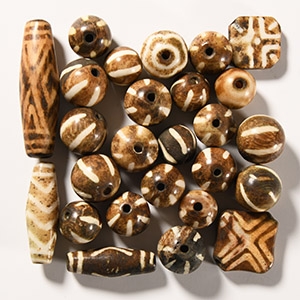
Comprising beads carved from petrified wood with added traditional designs; each pierced for stringing. 96 grams total, 12-46 mm
UK gallery, early 2000s. -
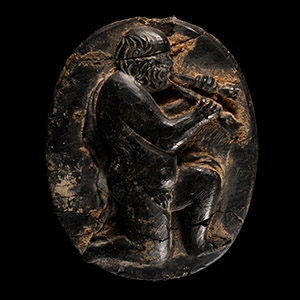
Roman Style Bone Cameo of Silenus
20th century A.D.Sold for (Inc. bp): £169
Of oval form, a mature Silenus shown nude in high-relief kneeling right on one leg, cloak thrown over one shoulder, playing two pipes, suspension loop to top edge. 19.8 grams, 56 mm high
London art market, 1990. -
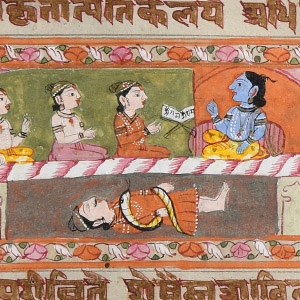
Framed Watercolour Painting
India, 19th century A.D.Estimate: £80 - 100 (+bp*)
Opening Bid: £40
A textual panel with a figural scene in watercolour at the centre, polychrome floral border; mounted in a reveal and a glazed wooden frame. 1.14 kg, 42.2 x 30.2 cm
Fine condition.
Acquired on the UK art market, 1980s-1990s. The Woodbridge collection of Indo-Persian art.
