
Loading, please wait...
LOT 0238
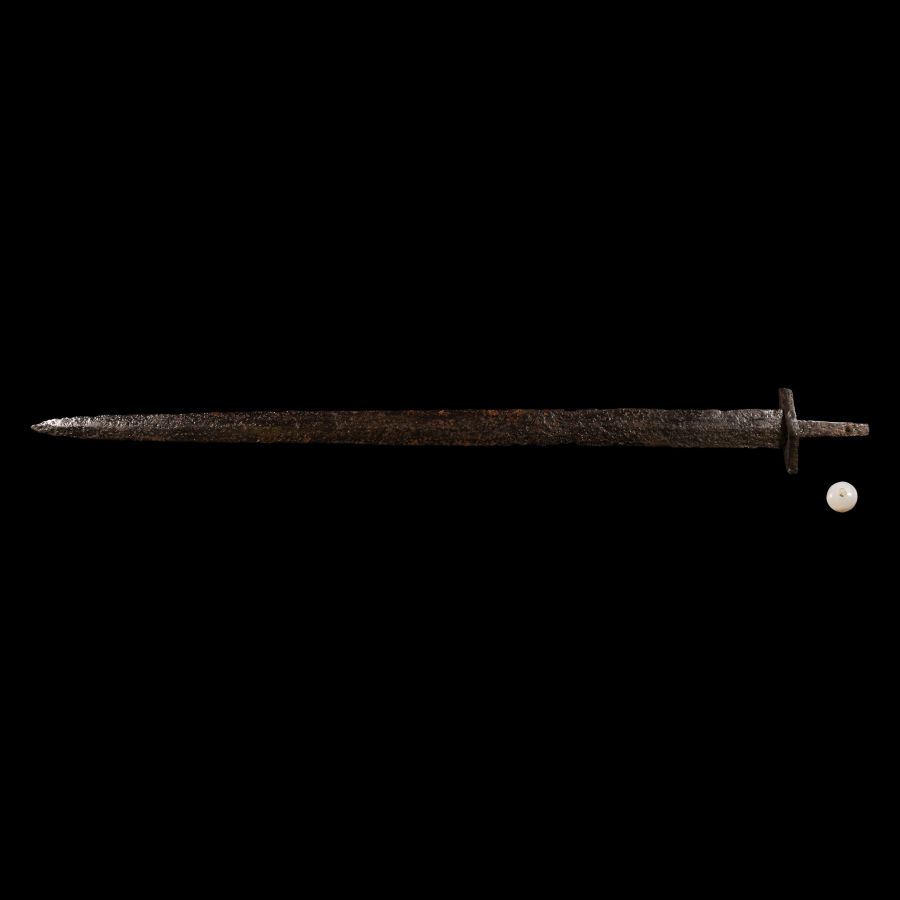
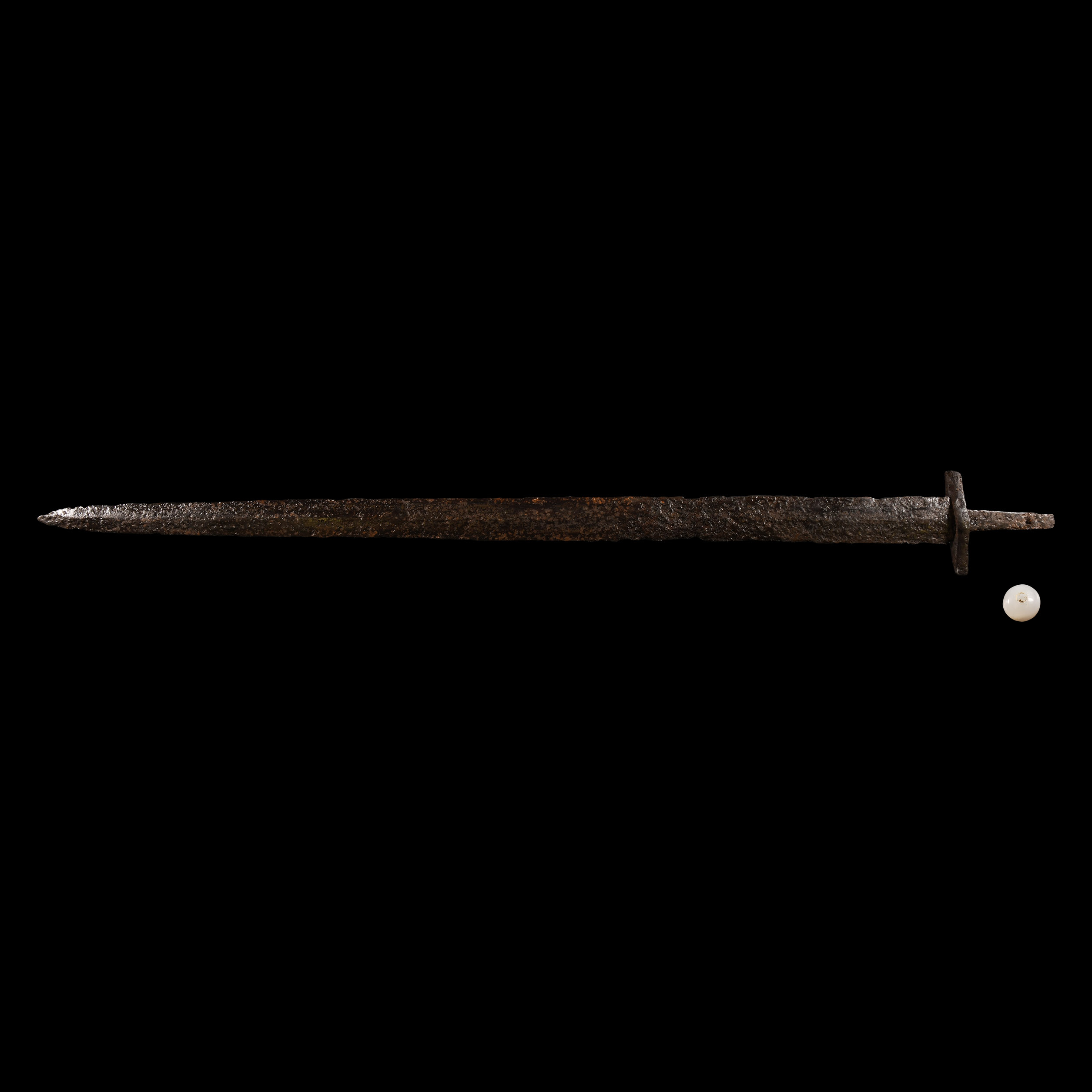
Migration Period Spatha Sword Blade with Sword Bead
CIRCA 4TH-5TH CENTURY A.D.
1 - 34 in. (921 grams total, 2.7- 86.5 cm).
A double-edged spatha with a lentoid section parallel-sided iron blade with pointed tip; battle nicks to both cutting edges; rhomboid-section cross-guard; a fastening nail on the upper tang; accompanied by a sword bead. [2, No Reserve]
ProvenanceAcquired 1971-1972.
From the collection of the vendor's father.
Property of a London, UK, collector.
Accompanied by an academic report by Dr Raffaele D’Amato.
Cf. Menghin, W., Das Schwert im Frühen Mittelalter, Stuttgart, 1983; Zasetskaïa, I.P., Kul’tura Kotchovnikov iujnorusskikh stepeï v gunnskuïu epokhu (Culture of the nomads of the southern Russian steppes in the Hun era), Saint Petersburg, 1994; Lebedinski, I., Armes et guerriers Barbares au temps des grandes invasions IVème au Vième siècle après J.C., Paris, 2001, pp.117ff., swords from Loutchistoïé, Novohryhorivka, Bátaszék, Jakuszowice, Szirmabesényo, Ártánd, Horgos; Miks, C., Studien zur Römischen Schwertbewaffnung in der Kaiserzeit, I-II Banden, Rahden, 2007.
FootnotesA Migration Period sword, originating from Central Asia, often used by nomadic populations and particularly by the Huns, defined as a Nomadic-Asiatic sword by Menghin, or as a sword with plate guard. The long and thin blade, with a lenticular or lozenge section, was equipped with a guard composed of an iron plate inserted into the tang. Little is known about the scabbard of these swords but it is known that they usually had disc-shaped pommels, and stones hanging from the pommel or hilt. This typology was widespread in Central Europe by the Huns and there are also specimens attested in Gaul in the 5th century.
CONDITIONTimeLine Auctions follows a vetting process to ensure the authenticity and legality of all items, reinforcing our commitment to integrity and responsible trading. Each antiquity, antique, and coin lot undergoes thorough examination by a vetting committee of at least ten external specialists, professional trade association members, scientists, and archaeologists: Our Vetting Process
AUCTIONS:
TimeLine is a leading auction house specialising in antiquities, ancient art, collectables, natural history, coins, medals, and books. Our auctions offer museums, collectors, historians, and enthusiasts the opportunity to acquire unique and historically significant pieces.
-
Volga-Ural Nomad Sabre
9th-11th century A.D.Sold for (Inc. bp): £381
An iron single-edged sabre with slightly curving blade showing battle nicks, evidence of a possible iron extension together with a tongue to the side of the blade, beneath the straight guard. 725 grams, 89 cm
Fine condition.
Acquired 1971-1972. From the collection of the vendor's father. Property of a London, UK, collector. Accompanied by an academic report by military specialist Dr Raffaele D'Amato.
Various sabres of similar typology were found in a complex of medieval nomad weapons in archaeological excavations in the steppe and forest-steppe zone of the Volga-Ural region; chronologically, they were dated to the 9th-11th centuries. -
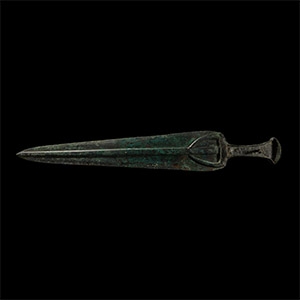
Marlik Sword with Decorated Hilt
14th-10th century B.C.Sold for (Inc. bp): £1,040
A bronze sword with flanged hilt, penannular guard and strong midrib running to the pointed tip, hilt and pommel open to accept inlays, bronze fastening nail still visible in the pommel. 477 grams, 39 cm
Ex S. Motamed collection. with Bellman's Auctions, 20th-26th June 2015, lot 2482. Property of a London gentleman.
According to Khorasani and Negahban, blade and grip of this kind of swords were cast in one-piece mould. The penannular guard was later added to the blade. -
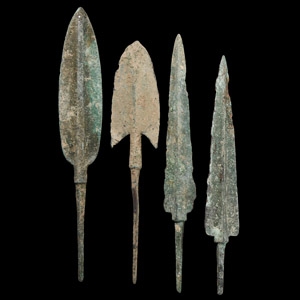
Luristan Arrowhead Collection
13th-6th century B.C.Sold for (Inc. bp): £140
A group of four bronze arrowheads comprising: two triangular with thick midrib; one barbed and tanged; one leaf-shaped. 118 grams total, 14.2-16 cm
Fine condition.
Acquired 1980-2015. Ex Abelita family collection.
