
Loading, please wait...
LOT 1799
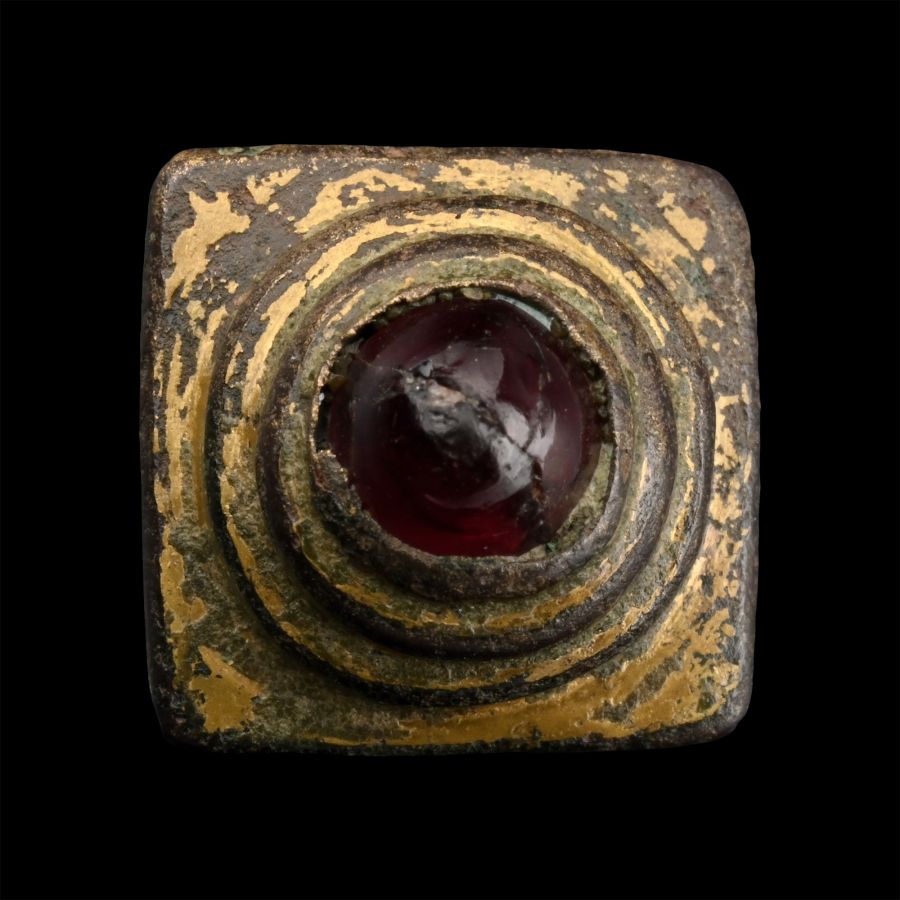
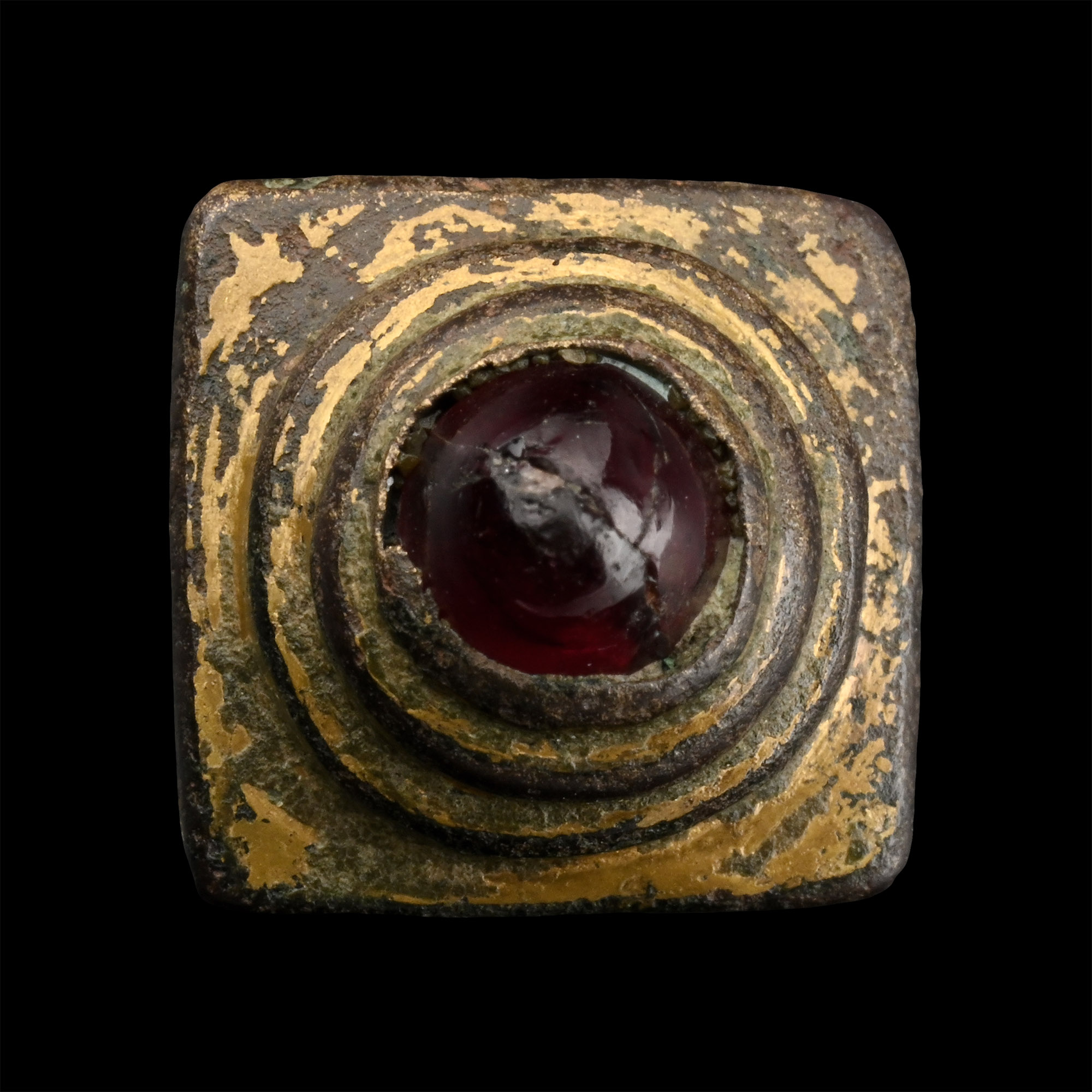
Migration Period Silver-Gilt Stud with Cabochon
6TH-8TH CENTURY A.D.
3/4 in. (6.03 grams, 19 mm).
Square in plan with stepped cell and inset cabochon garnet; mounting spike to reverse.
ProvenanceEx German art market, 2000s.
Acquired from an EU collector living in London.
From the collection of a Surrey, UK, gentleman.
TimeLine Auctions follows a vetting process to ensure the authenticity and legality of all items, reinforcing our commitment to integrity and responsible trading. Each antiquity, antique, and coin lot undergoes thorough examination by a vetting committee of at least ten external specialists, professional trade association members, scientists, and archaeologists: Our Vetting Process
AUCTIONS:
TimeLine is a leading auction house specialising in antiquities, ancient art, collectables, natural history, coins, medals, and books. Our auctions offer museums, collectors, historians, and enthusiasts the opportunity to acquire unique and historically significant pieces.
LOT 1799
Migration Period Silver-Gilt Stud with Cabochon
Estimate £100 - 140€120 - 160 (for guidance only)$140 - 190 (for guidance only)
-
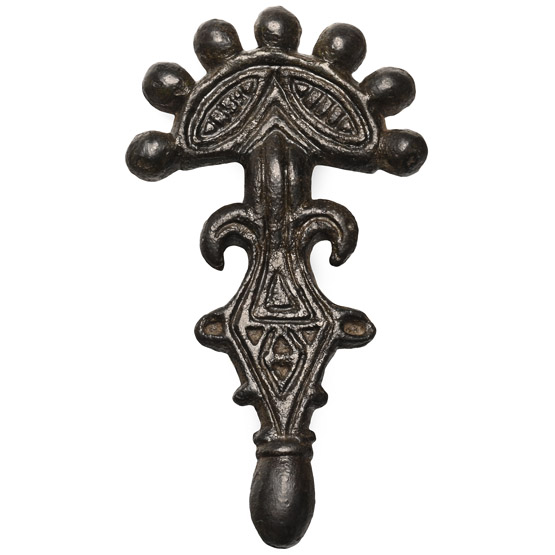
Gothic Bronze Radiate-Headed Brooch
Late 5th-early 6th century A.D.Sold for (Inc. bp): £247
Comprising: D-shaped headplate and seven radiating lobes, flat ribbed bow, lozengiform footplate with piriform finial, pin-lug and catch to the reverse. 17.5 grams, 61 mm
Ex property of an Essex, UK, gentleman collector. From the private collection of a Colchester, UK, gentleman. -
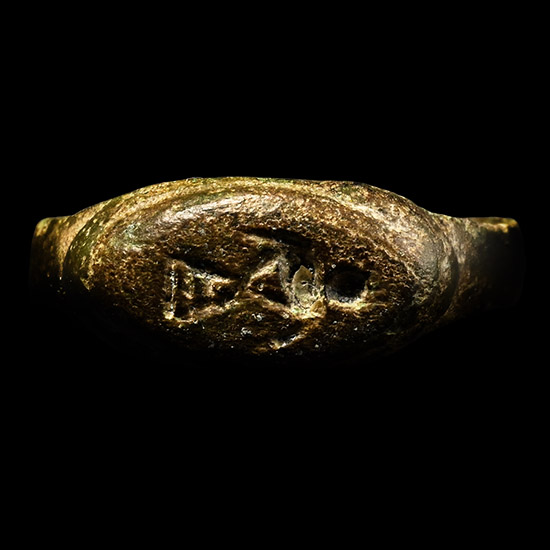
Merovingian Bronze Ring with Female Figure
6th-7th century A.D.Sold for (Inc. bp): £52
D-section hoop and a raised lentoid bezel with an incuse image of a facing woman dressed in a long skirt. 4.98 grams, 25.85 mm overall, 19.73 mm internal diameter (approximate size British U, USA 10, Europe 22.52, Japan 21)
Acquired on the UK and EU art market before 2000. From the private collection of a Surrey, UK, gentleman.
The ring belongs to the Type 4a of Hadjadj classification, i.e. rings with a sinuous and continuous profile. The image on the bezel is reminiscent of motifs linked to the Romano-Celtic mythology, and that of the mother goddess. -
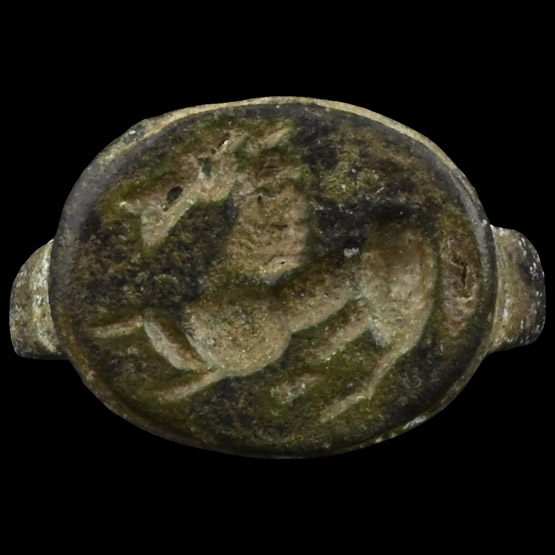
Merovingian Ring with Horse Galloping
Circa 6th century A.D.Sold for (Inc. bp): £59
Comprising a slender hoop and an oval bezel with an incuse image of a stylised horse. 3.53 grams, 18.72 mm overall, 16.18 mm internal diameter (approximate size British K, USA 5 1/4, Europe 10.58, Japan 10)
Acquired on the UK and EU art market before 2000. From the private collection of a Surrey, UK, gentleman.
The ring belongs to the Type 4b of Hadjadj classification, i.e. rings with a sinuous profile and thick head. The image on the bezel is reminiscent of horse motifs linked to the Romano-Celtic mythology, although the horse was a known pattern in the Germanic legends as well.
