
Loading, please wait...
LOT 1784
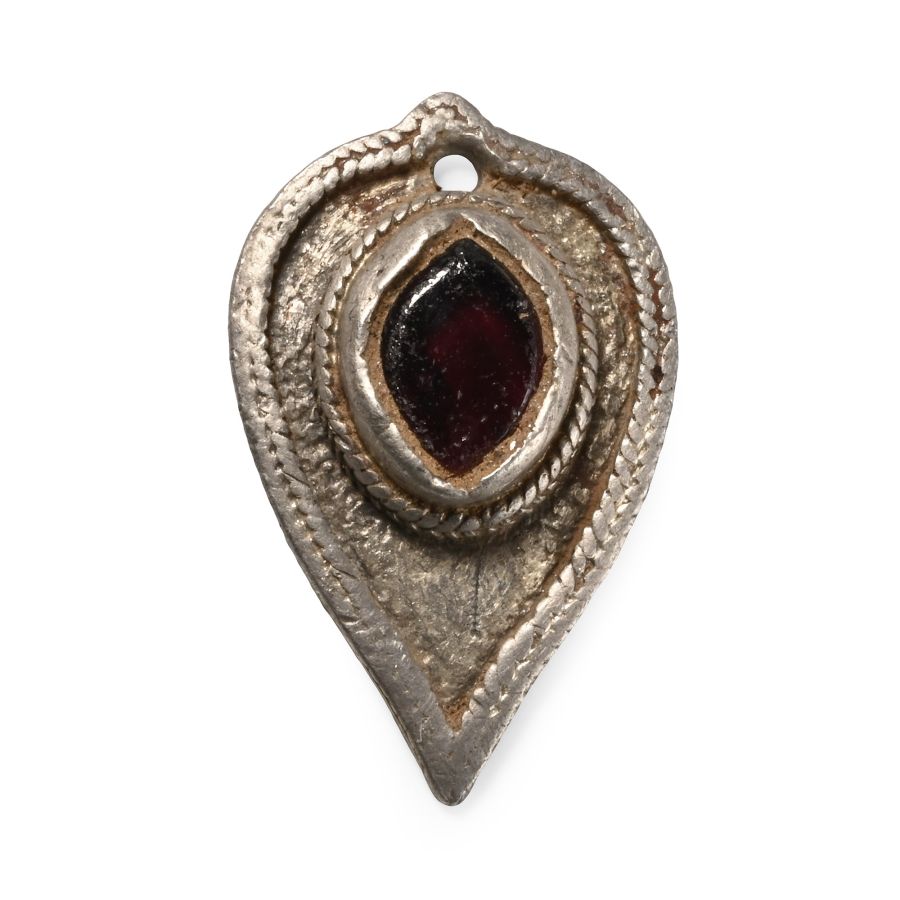
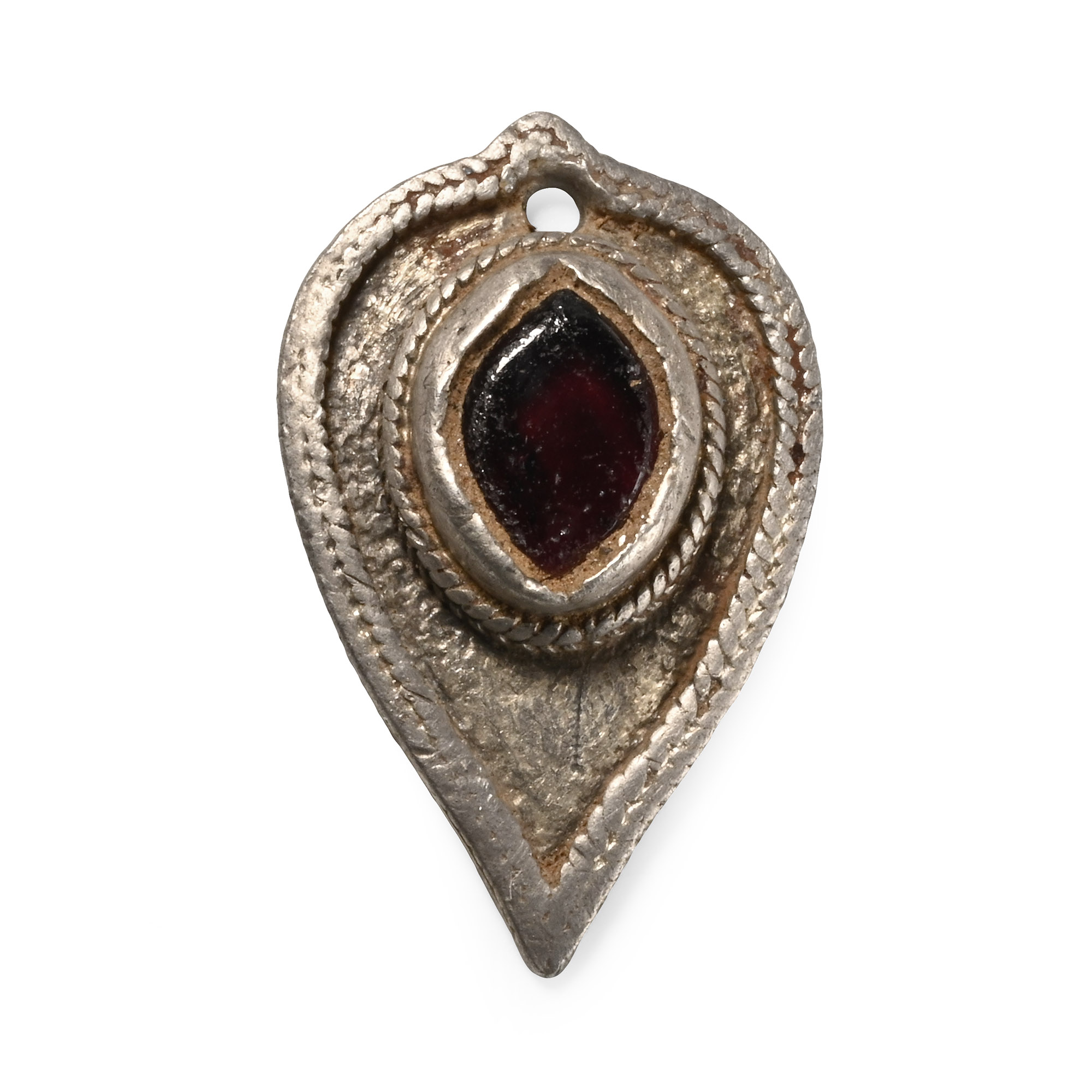
Migration Period Silver-Gilt Leaf-Shaped Pendant with Cabochon
6TH-8TH CENTURY A.D.
1 in. (3.19 grams, 25 mm).
Plaque with raised rim and central stepped cell, inset garnet clison; pierced for suspension. [No Reserve]
ProvenanceEx German art market, 2000s.
Acquired from an EU collector living in London.
From the collection of a Surrey, UK, gentleman.
TimeLine Auctions follows a vetting process to ensure the authenticity and legality of all items, reinforcing our commitment to integrity and responsible trading. Each antiquity, antique, and coin lot undergoes thorough examination by a vetting committee of at least ten external specialists, professional trade association members, scientists, and archaeologists: Our Vetting Process
AUCTIONS:
TimeLine is a leading auction house specialising in antiquities, ancient art, collectables, natural history, coins, medals, and books. Our auctions offer museums, collectors, historians, and enthusiasts the opportunity to acquire unique and historically significant pieces.
LOT 1784
Migration Period Silver-Gilt Leaf-Shaped Pendant with Cabochon
Sold for (Inc. bp): £98
-
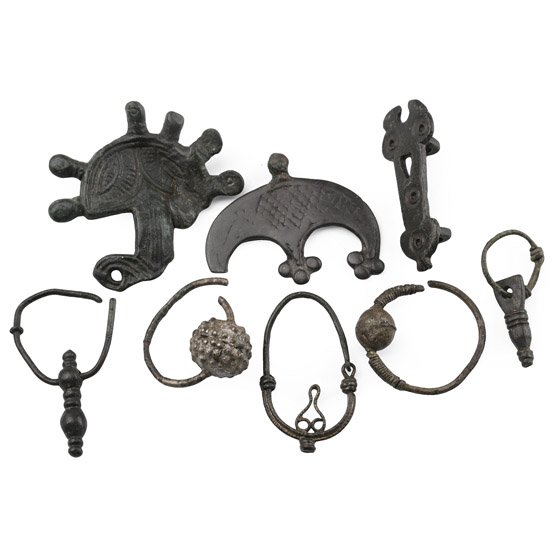
Migration Period Bronze Fragment Group
6th-10th century A.D.Sold for (Inc. bp): £39
Including the lobed headplate and bow from a brooch, pelta-shaped pendant, phallic belt stiffener and other items. 38.83 grams total, 30-43 mm
Ex German art market, 2000s. Acquired from an EU collector living in London. From the collection of a Surrey, UK, gentleman. -
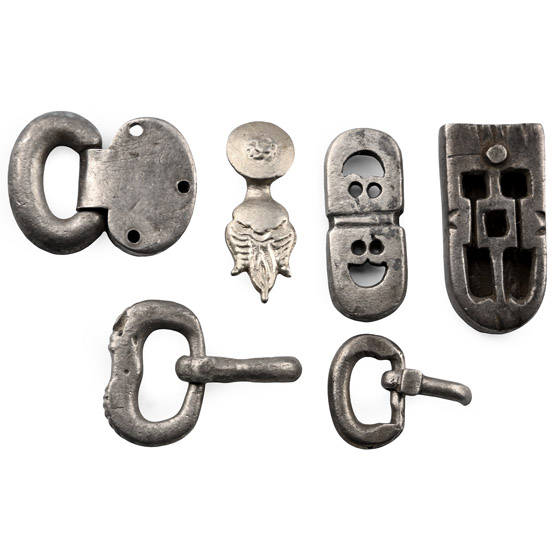
Migration Period Silver Buckle and Mount Collection
6th-8th century A.D.Sold for (Inc. bp): £72
Including kidney-shaped and other types, with openwork stiffener plate, strap end and other items. 26.34 grams total, 16-30 mm
Ex German art market, 2000s. Acquired from an EU collector living in London. From the collection of a Surrey, UK, gentleman. -
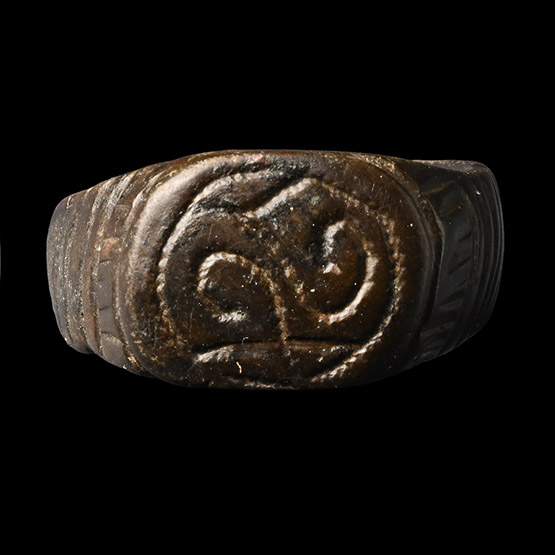
Merovingian Ring with Scrolls
Circa 640-680 A.D.Sold for (Inc. bp): £130
Comprising a wide hoop with linear decoration on the shoulders, an oval bezel with incuse scrolls. 10.53 grams, 26.37 mm overall, 19.40 mm internal diameter (approximate size British S 1/2, USA 9 1/4, Europe 20.63, Japan 19)
Acquired on the UK and EU art market before 2000. From the private collection of a Surrey, UK, gentleman.
The image on the bezel is reminiscent of the spiral motifs connected to Celto-Germanic mythology. They were associated with life force, energy, the seed of life, and cycles of existence.’
