
Loading, please wait...
LOT 0259
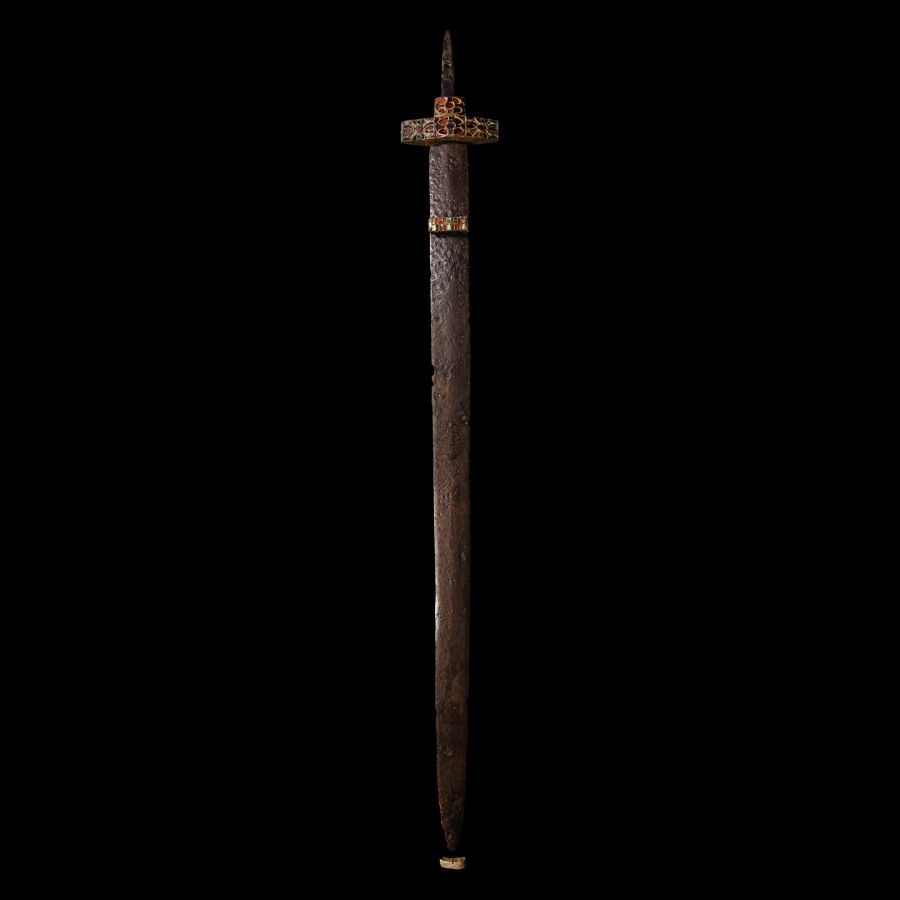
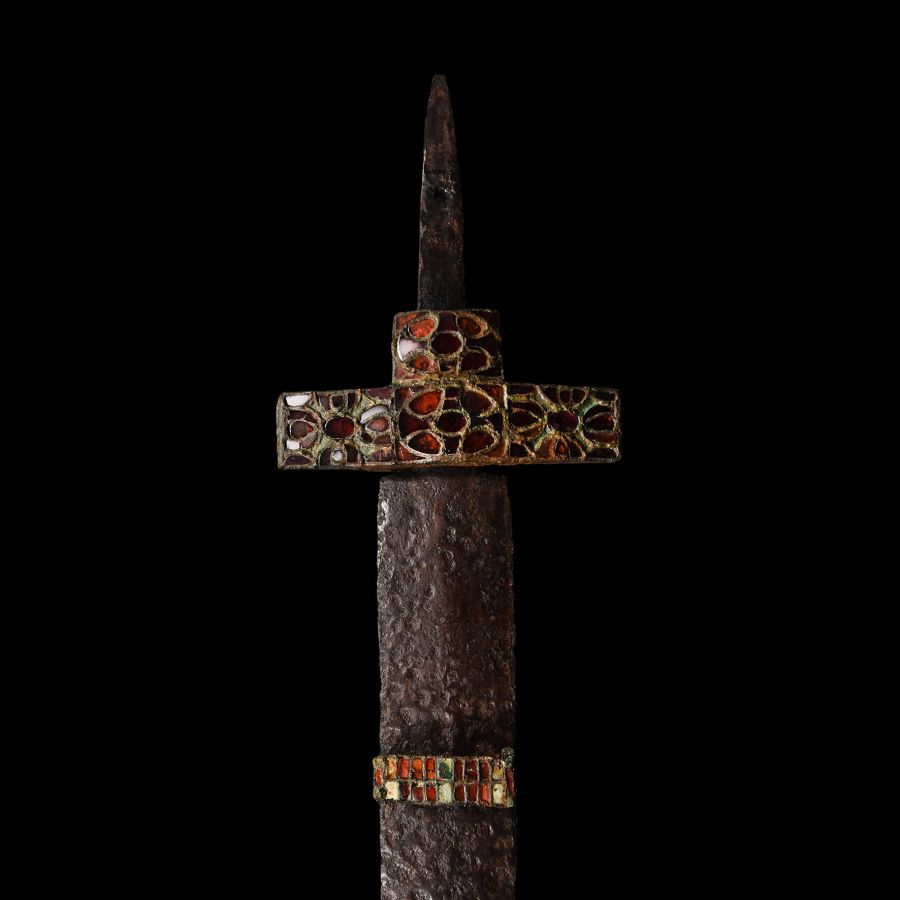
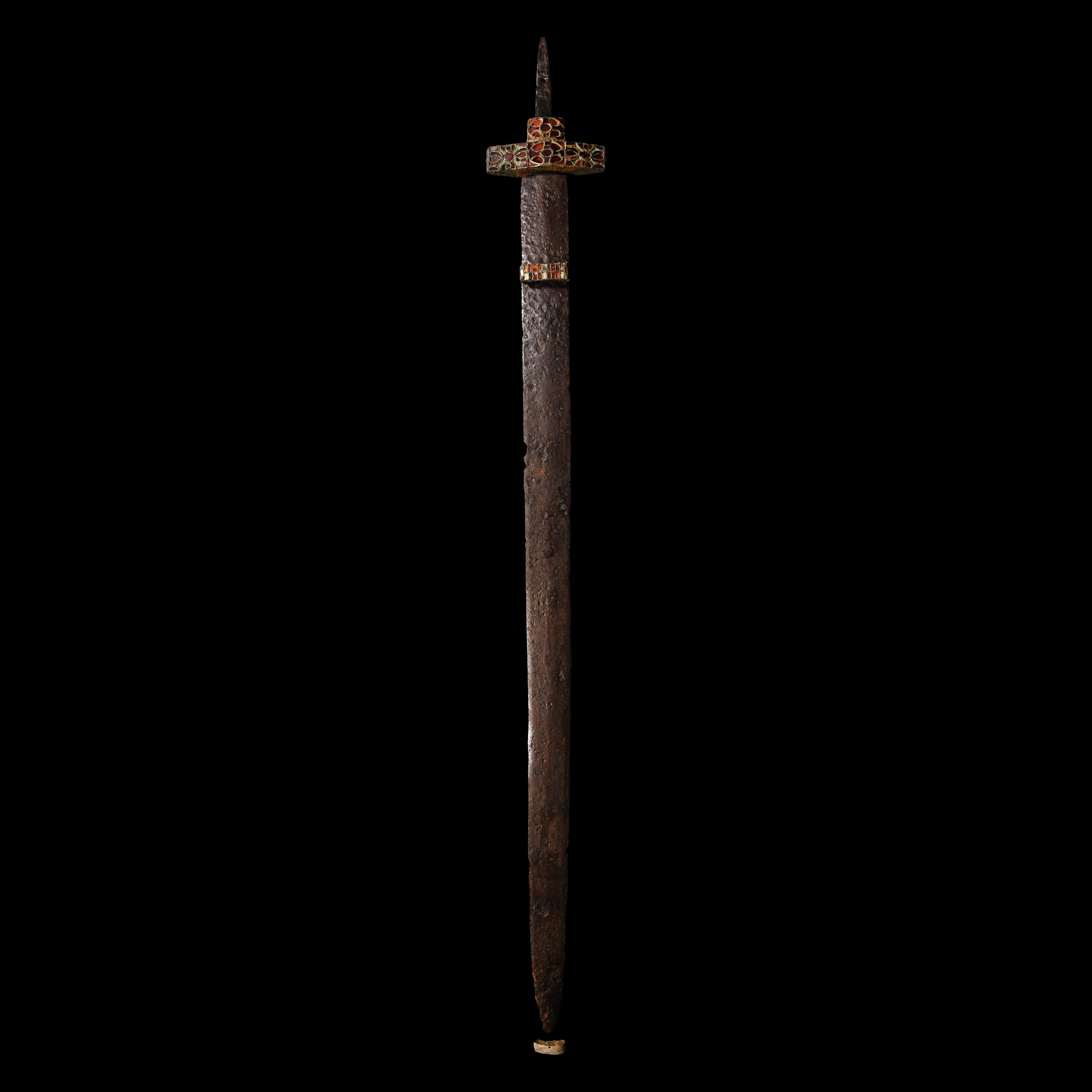
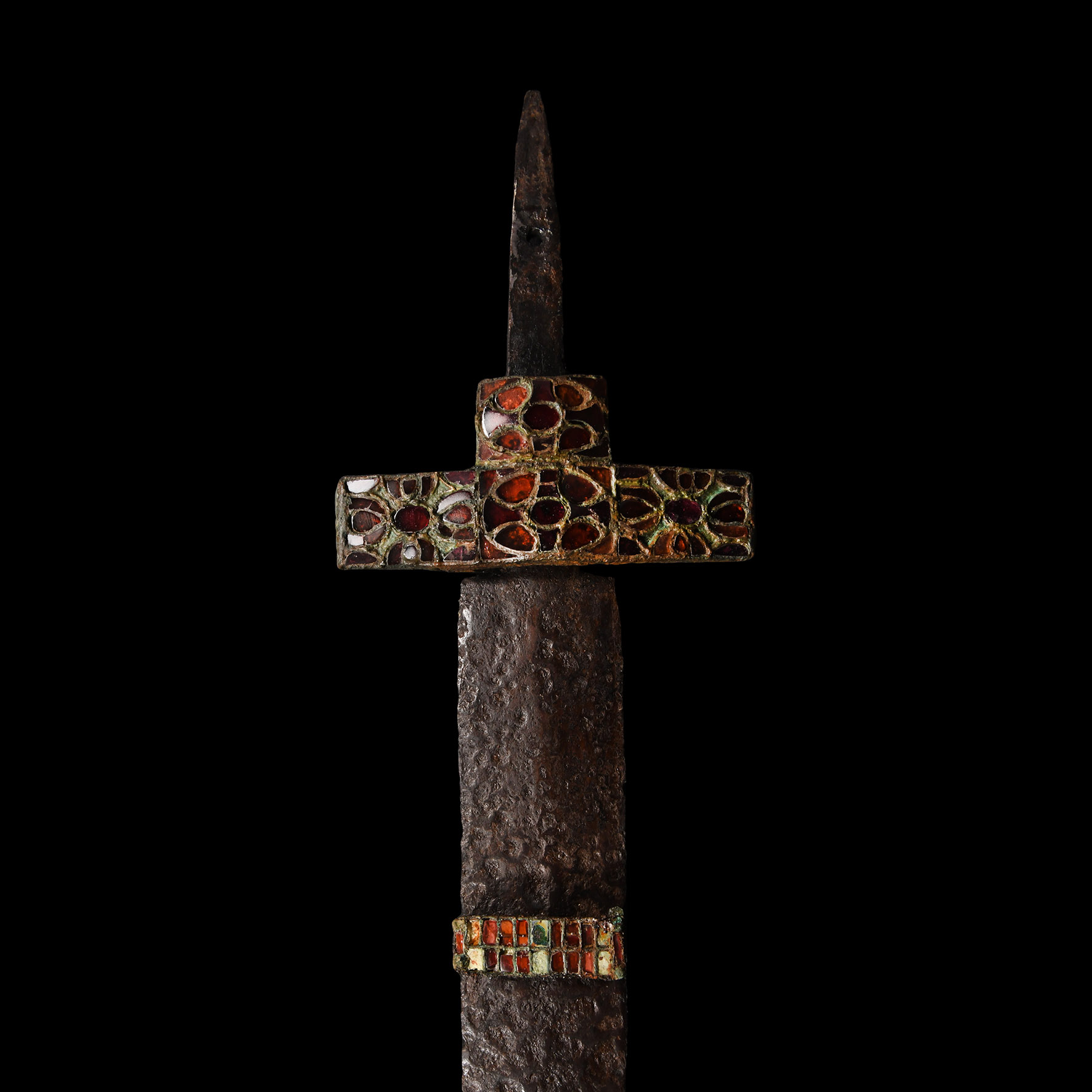
Migration Period Iron Sword with Garnet Cross Guard and Scabbard Fittings
5TH-6TH CENTURY A.D.
35 7/8 in. (903 grams, 91 cm).
With a double-edged parallel-sided blade with broad pointed tip; the lower guard inlaid with garnet cloisonné divided into four segments; accompanied by a rectangular scabbard slide inlaid with two rows of garnets and other stone; and a part of a sheet-silver chape.
ProvenanceFrom the private collection of a London gentleman, from his grandfather's collection formed before the early 1970s.
Accompanied by an academic report by Dr Raffaele D’Amato.
This lot has been checked against the Interpol Database of stolen works of art and is accompanied by search certificate number no.11819-206855.
See Behmer, E., Das zweischneidige Schwert der germanischen Völkerwanderungszeit, Stockholm, 1939; Lebedinsky, I., Armes et guerriers barbares au temps des grandes invasions, Paris, 2001; Lebedinsky, I., De l’epée scythe au sabre mongol, Paris, 2008, pp.114ff.
FootnotesThe sword belongs to the group of blades with wide guard coming from Eastern Europe, in particular from the regions of the Black Sea. The most striking examples are the sword of Dmytrivka (in the Zaporizhzhia), from a Hunnic grave, the guard and its extending reinforcement collar inlaid with precious stones; the sword of Lermontovskaia (North of Caucasus), from the grave of an Alan warrior (5th century A.D.), having the guard inlaid with coloured glass; the Pokrovsk-Voskhod swords (Region of Saratovo, on the Volga), from a Nomad grave of 5th century A.D., with garnet cloisonné on a gold background (Lebedinsky, 2001,pp.121ff.).
CONDITIONTimeLine Auctions follows a vetting process to ensure the authenticity and legality of all items, reinforcing our commitment to integrity and responsible trading. Each antiquity, antique, and coin lot undergoes thorough examination by a vetting committee of at least ten external specialists, professional trade association members, scientists, and archaeologists: Our Vetting Process
AUCTIONS:
TimeLine is a leading auction house specialising in antiquities, ancient art, collectables, natural history, coins, medals, and books. Our auctions offer museums, collectors, historians, and enthusiasts the opportunity to acquire unique and historically significant pieces.
LOT 0259
Migration Period Iron Sword with Garnet Cross Guard and Scabbard Fittings
Sold for (Inc. bp): £7,150
-
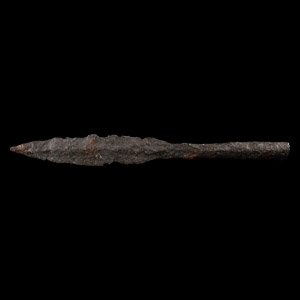
Anglo-Saxon 'Norfolk' Iron Socketted Spearhead
6th-7th century A.D.Sold for (Inc. bp): £172
With lentoid-section lanceolate blade, tapering circular socket with forge-welded split. 134 grams, 25.3 cm
Found Norfolk, UK, in the 1970s. Gary Edwards, York, UK. Private collection, Preston, UK. Accompanied by a certificate of authenticity and receipt from Gary Edwards, no.SN12480.
The spearhead belongs to the C2 group of the Swanton's classification, by far the commonest leaf-shaped blade found in Anglo-Saxon graves in 6th and 7th centuries A.D. These spears have their broadest part in the lower half, and are lentoid in section. Length varies between 20 and 35 cm. -
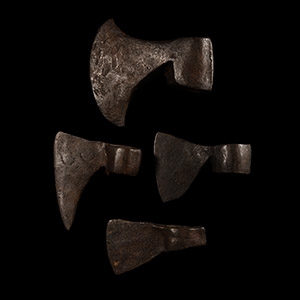
Medieval Iron Axehead Collection
Circa 14th-16th century A.D.Sold for (Inc. bp): £186
Composed of a variety of axehead types, each with a roughly circular socket, including one example with punched crescents to one face. 1.5 kg total, 9.1 - 12.8 cm
Ex property of B.C., previously in a 1970s collection. Property of a Ruislip, UK, gentleman, by inheritance. Accompanied by a previous dealer's certificate of authenticity. -
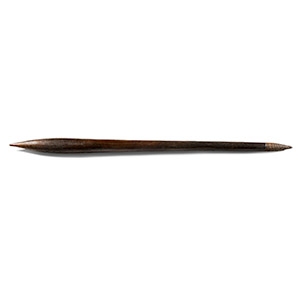
Australian Aboriginal Throwing Club
19th century A.D.Sold for (Inc. bp): £117
The round-section shaft with one tapered end and a pointed, bulbous head. 435 grams, 69 cm
Acquired UK market. Property of a Kent collector.
Used for hunting and in warfare. Possibly engraved using a possum tooth.
