
Loading, please wait...
LOT 1183
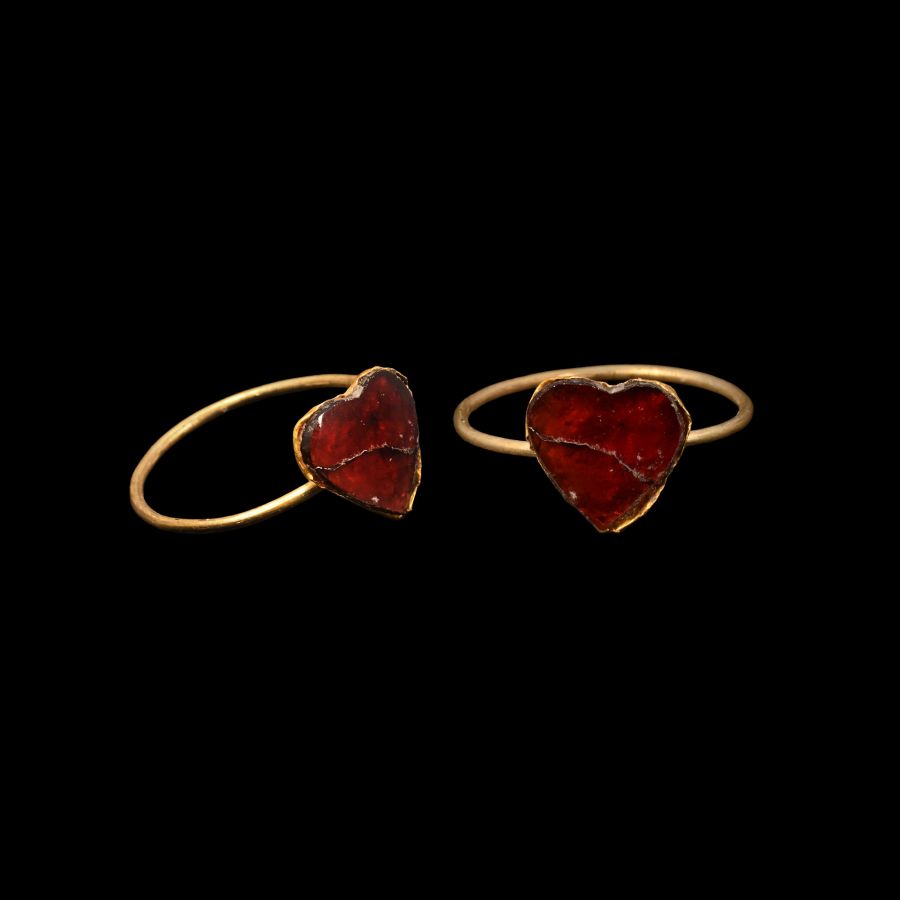
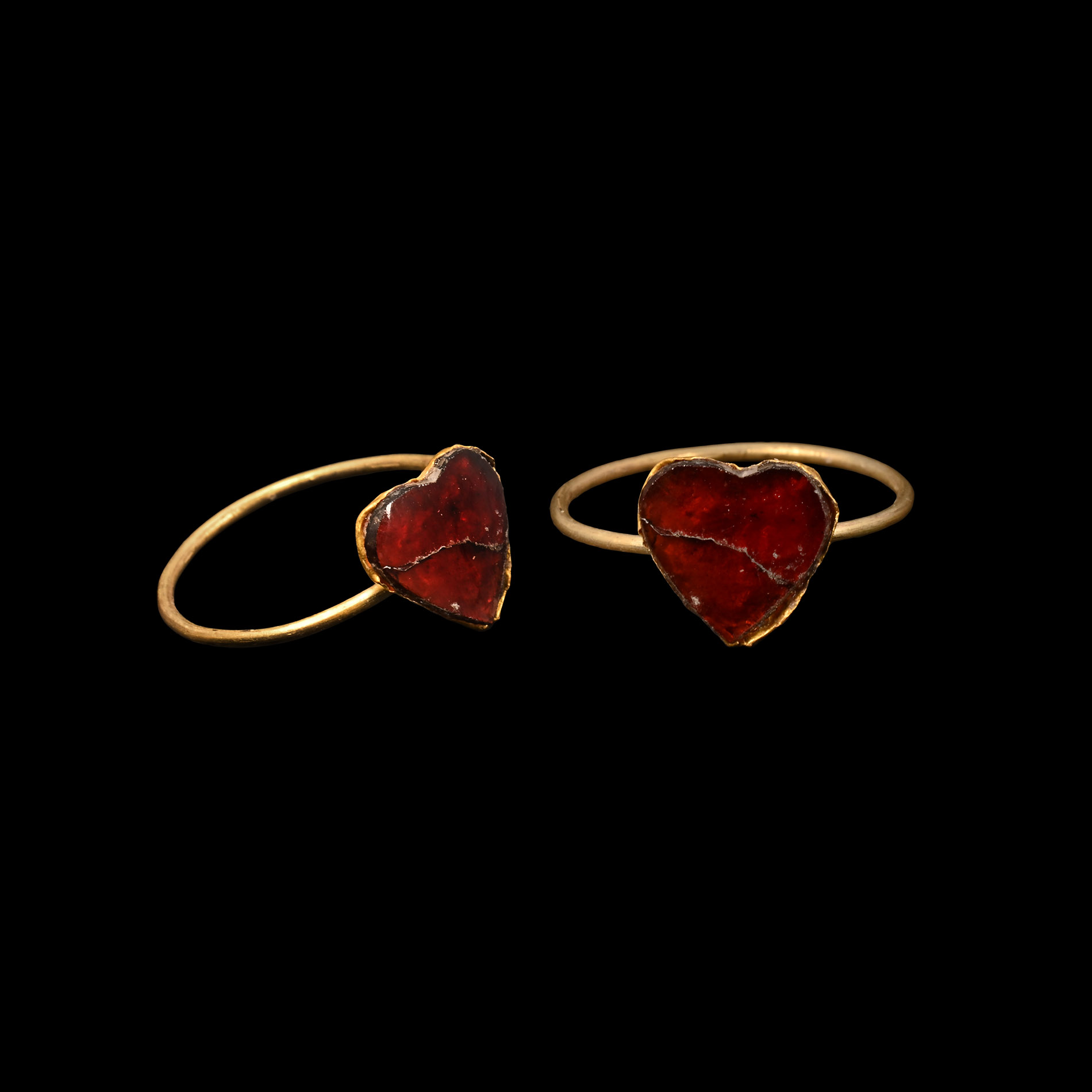
Migration Period Heart-Shaped Gold Set Garnet in Ring
5TH CENTURY A.D. AND LATER
3/4 in. (0.59 grams, 17.17 mm overall, 13.95 mm internal diameter (approximate size British F, USA 2 3/4, Europe 3.67, Japan 3)).
A heart-shaped polished garnet in ancient setting, with later gold hoop attached.
ProvenanceAcquired 1970-2000s.
Ex Abelita family collection.
TimeLine Auctions follows a vetting process to ensure the authenticity and legality of all items, reinforcing our commitment to integrity and responsible trading. Each antiquity, antique, and coin lot undergoes thorough examination by a vetting committee of at least ten external specialists, professional trade association members, scientists, and archaeologists: Our Vetting Process
AUCTIONS:
TimeLine is a leading auction house specialising in antiquities, ancient art, collectables, natural history, coins, medals, and books. Our auctions offer museums, collectors, historians, and enthusiasts the opportunity to acquire unique and historically significant pieces.
-
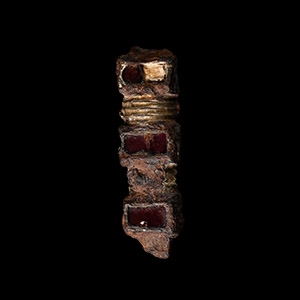
Frankish Gilt Chip-Carved Scabbard Mount with Garnets
Circa 6th century A.D.Sold for (Inc. bp): £85
A gilt copper-alloy mount or scabbard-slider (Menghin's Typ IIIa Basel-Gotterbarmweg-Entringen) comprising three horizontal rectangular cells to the upper, middle and lower third of the body, each with gilt frame and set with a polished garnet cloison; the interstitial bridges with gilt ribbing; iron remains to verso. 11.8 grams, 44 mm
Found UK. Acquired in the 1990s. From a North Yorkshire private collection, UK. -
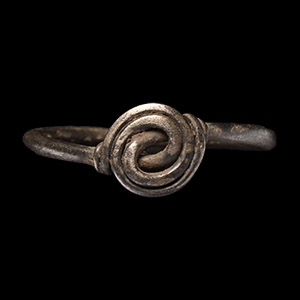
Merovingian Silver Ring with Twisted Bezel
Circa 6th-7th century A.D.Sold for (Inc. bp): £117
A silver finger ring formed as a single rod tapering at both ends, formed into a flat coil and wound around the shank. 2.50 grams, 24.79 mm overall, 19.84 mm internal diameter (approximate size British T 1/2, USA 9 3/4, Europe 21.89, Japan 21)
Acquired in the late 1990s-2000. Property of an East London gentleman. -
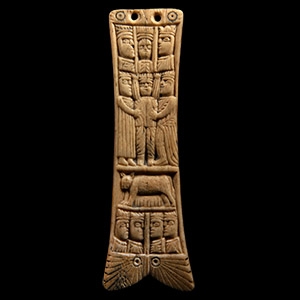
Post Roman Gallic Figural Amuletic Bone Carving
5th-7th century A.D. or laterEstimate: £1,200 - 1,700 (+bp*)
Opening Bid: £600
A fishtail-shaped bone amulet or strap end displaying vertically arranged stylised figural panels: at the top, a central facing bust flanked by two further busts; a standing central figure with arms held skywards, a robed figure standing to each side holding his torso, one in a floor-length female garment and the other with one leg advancing showing trousers; an animal facing left below; panel with central vertical divide below, each populated with two busts, one pair facing left, the other facing right; ring-and-dot motifs with radiating lines below, possibly stylised sun motifs; two perforations to top edge for suspension; natural shrinkage crack, mostly evident to the reverse. 23.4 grams, 12 cm
Fine condition, shallow crack to reverse.
Previously in the Alison Barker collection, a retired London barrister. From a Cambridge collection. Property of a North London gentleman.
The standing animal may represent the lupa or she-wolf which nurtured Romulus and Remus in the mythical story of the founding of Rome. The Emperor Julian, later known as 'the Apostate', was responsible for turning his back on Christianity and promoting a return to traditional Roman values, which included veneration of 'Roma' and the founding legends.
