
Loading, please wait...
LOT 1779
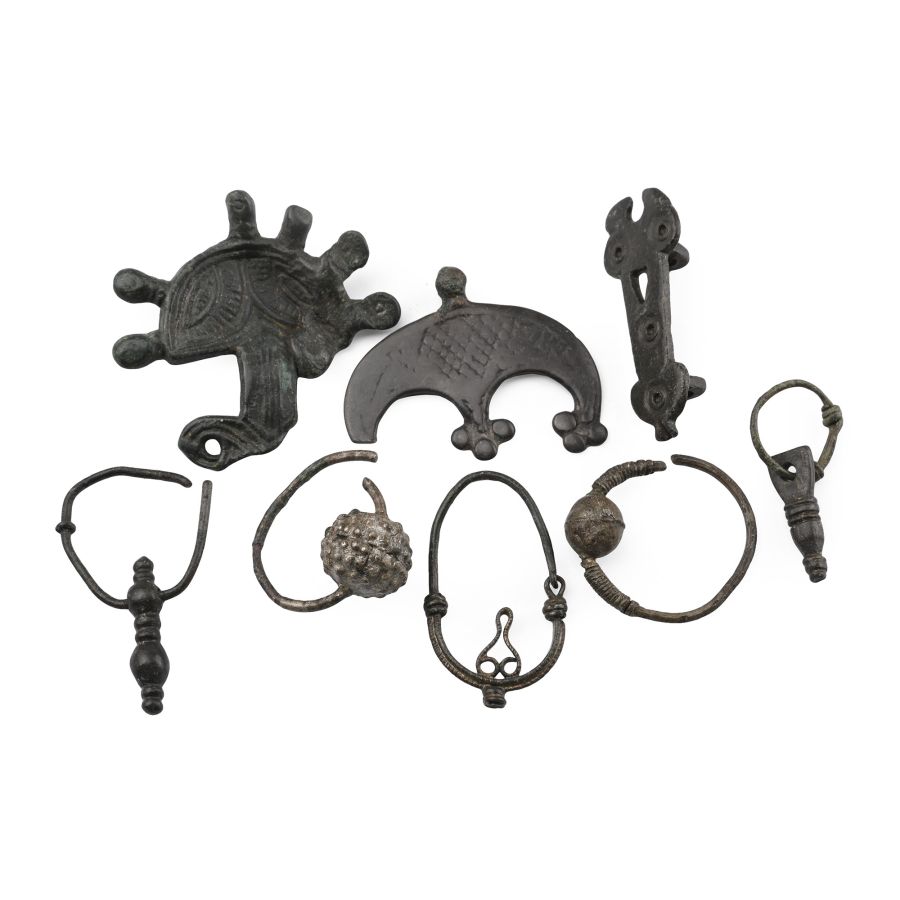
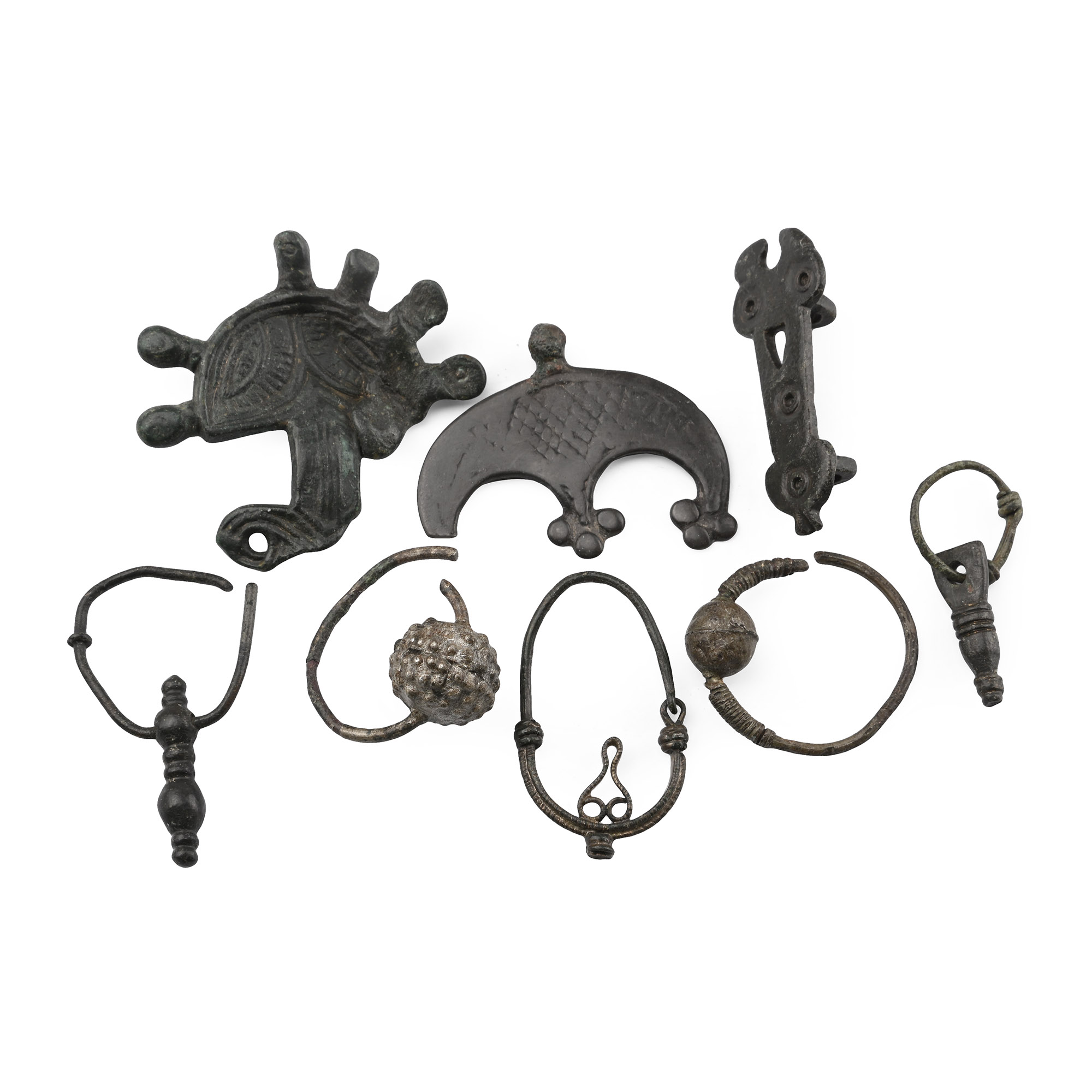
Migration Period Bronze Fragment Group
6TH-10TH CENTURY A.D.
1 1/4 - 1 3/4 in. (38.83 grams total, 30-43 mm).
Including the lobed headplate and bow from a brooch, pelta-shaped pendant, phallic belt stiffener and other items. [8, No Reserve]
ProvenanceEx German art market, 2000s.
Acquired from an EU collector living in London.
From the collection of a Surrey, UK, gentleman.
TimeLine Auctions follows a vetting process to ensure the authenticity and legality of all items, reinforcing our commitment to integrity and responsible trading. Each antiquity, antique, and coin lot undergoes thorough examination by a vetting committee of at least ten external specialists, professional trade association members, scientists, and archaeologists: Our Vetting Process
AUCTIONS:
TimeLine is a leading auction house specialising in antiquities, ancient art, collectables, natural history, coins, medals, and books. Our auctions offer museums, collectors, historians, and enthusiasts the opportunity to acquire unique and historically significant pieces.
-
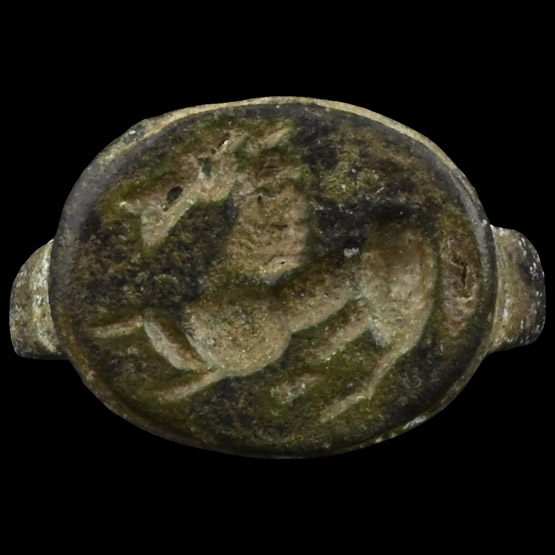
Merovingian Ring with Horse Galloping
Circa 6th century A.D.Sold for (Inc. bp): £59
Comprising a slender hoop and an oval bezel with an incuse image of a stylised horse. 3.53 grams, 18.72 mm overall, 16.18 mm internal diameter (approximate size British K, USA 5 1/4, Europe 10.58, Japan 10)
Acquired on the UK and EU art market before 2000. From the private collection of a Surrey, UK, gentleman.
The ring belongs to the Type 4b of Hadjadj classification, i.e. rings with a sinuous profile and thick head. The image on the bezel is reminiscent of horse motifs linked to the Romano-Celtic mythology, although the horse was a known pattern in the Germanic legends as well. -
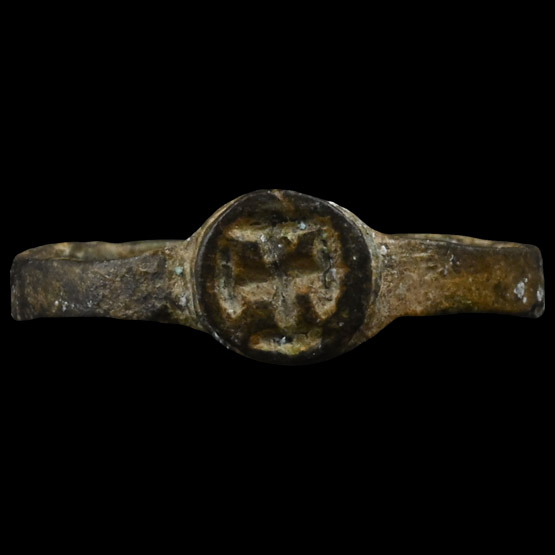
Merovingian Child's Ring with Cross
Circa 600-700 A.D.Sold for (Inc. bp): £20
Comprising a slender flat-section hoop with a raised circular bezel with incuse cross potent. 1.07 grams, 19.18 mm overall, 16.41 mm internal diameter (approximate size British K, USA 5 1/4, Europe 9.95, Japan 9)
Acquired on the UK and EU art market before 2000. From the private collection of a Surrey, UK, gentleman.
The ring belongs to Type 4b of Hadjadj classification. The image is a clear early Christian motif. A considerable proportion of rings found in the graves show portraits, names or monograms, and emblems such as the cross, the fish, the dove, i.e. early Christian symbols, most of these have the designs cut in a metal bezel. -
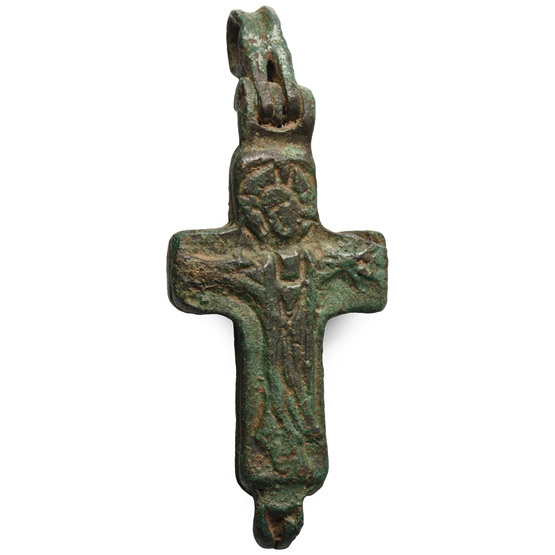
Reliquary Bronze Cross Pendant with Dark Age Inscription to Reverse
Circa 8th-10th century A.D.Sold for (Inc. bp): £572
Of Byzantine type, obverse with low-relief Corpus Christi; reverse with enigmatic legend '[?] NIXIXIN'. 31.77 grams, 72 mm
Ex R Ungar, Parthenon Gallery, London, UK, 2006. From an important North London, UK, private collection
The reverse may bear a blundered attempt at the 'INRI' legend which appears in Byzantine and Late Roman art, for Iesus Nazarenus, Rex Iudaeorum 'Jesus King of the Jews'.
