
Loading, please wait...
LOT 1115
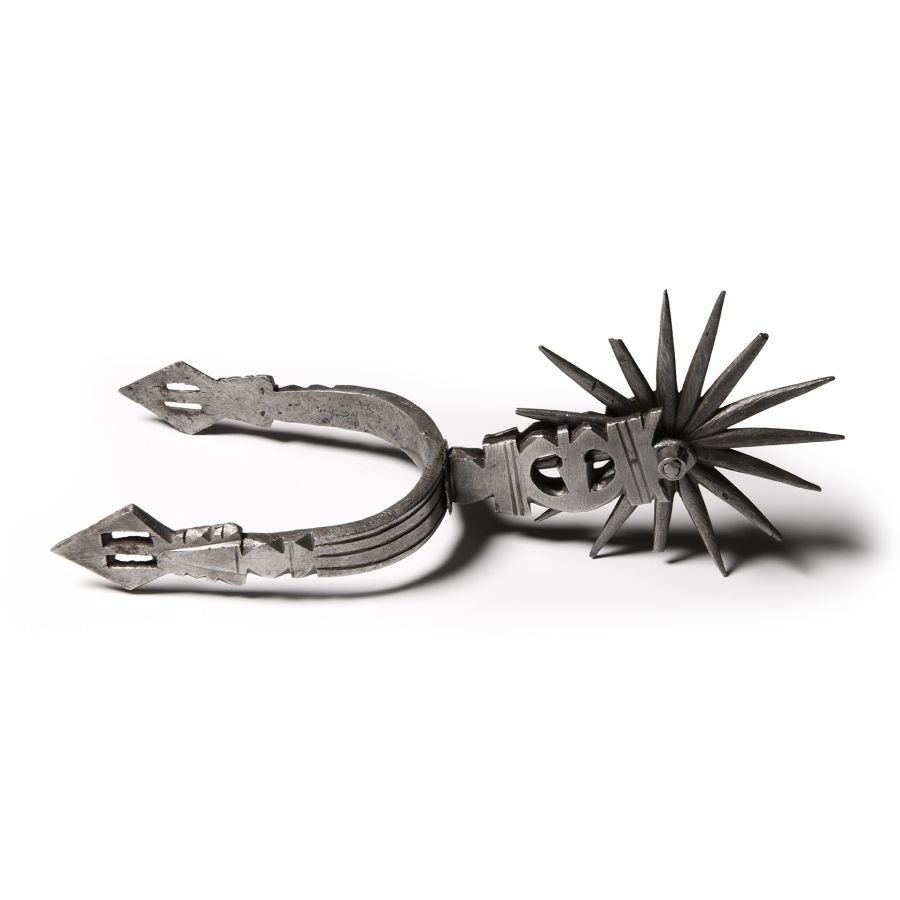
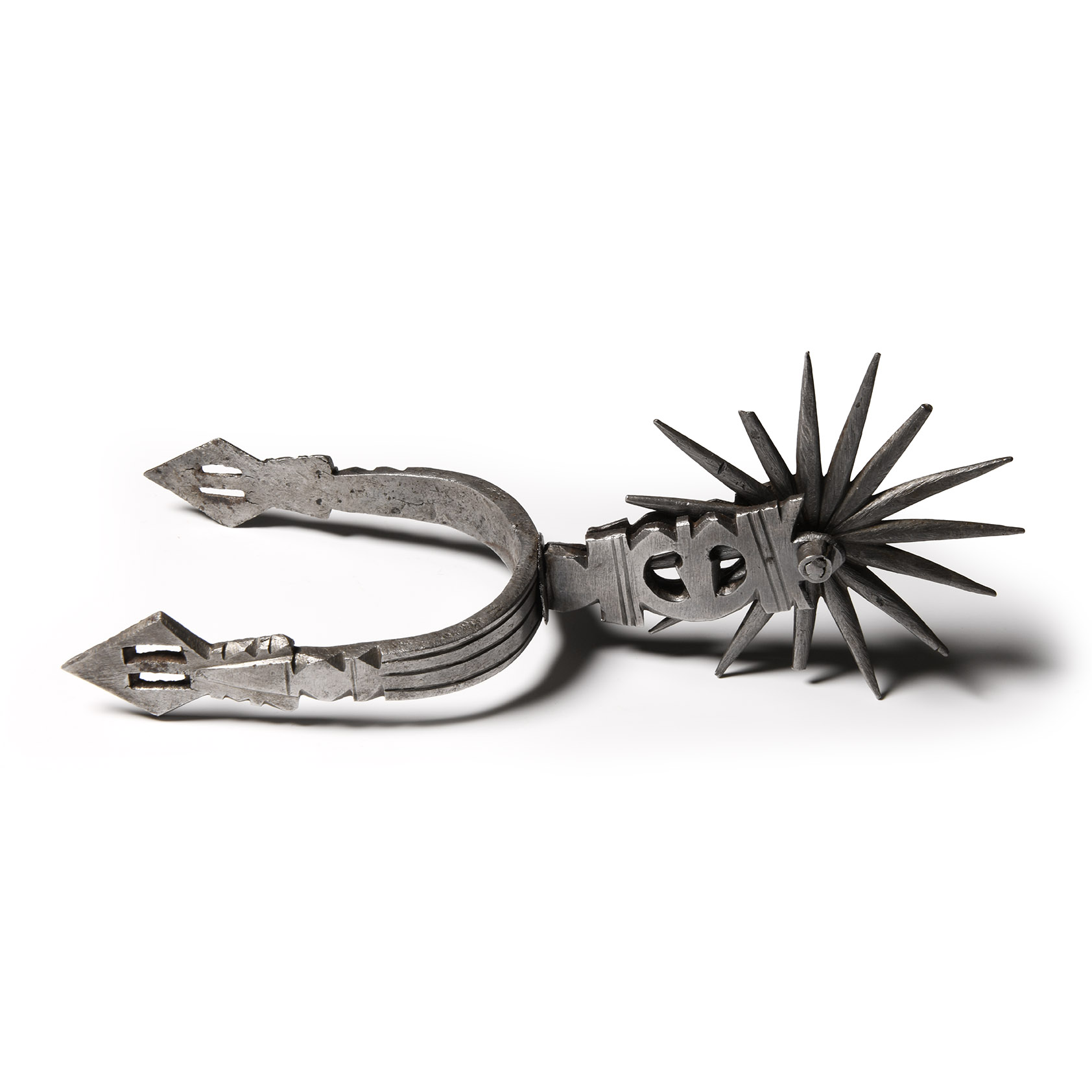
Mexican Iron Rowel Spur
18TH-19TH CENTURY A.D.
8 5/8 in. (252 grams, 22 cm).
Heelband with geometric motifs, channelling and lozengiform terminals, pierced work neck and large free-running rowel.
ProvenanceAcquired from Rusty Old Arms, UK, 2014.
The Kusmirek Collection, UK.
Accompanied by copies of the ROA invoice and listing.
TimeLine Auctions follows a vetting process to ensure the authenticity and legality of all items, reinforcing our commitment to integrity and responsible trading. Each antiquity, antique, and coin lot undergoes thorough examination by a vetting committee of at least ten external specialists, professional trade association members, scientists, and archaeologists: Our Vetting Process
AUCTIONS:
TimeLine is a leading auction house specialising in antiquities, ancient art, collectables, natural history, coins, medals, and books. Our auctions offer museums, collectors, historians, and enthusiasts the opportunity to acquire unique and historically significant pieces.
-
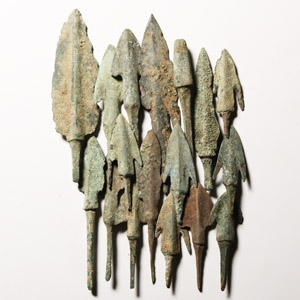
Luristan Bronze Arrowhead Group
12th-10th century B.C.Sold for (Inc. bp): £130
Comprising seventeen tanged arrowheads, the most of them having large elongated triangular blades and raised midrib, sharp central groove, cylindrical or squared stem for the shaft, barbed shoulders and convex sides; one with lanceolate head and rounded shoulders with long tang and foliate section; another narrow and foliate in shape. 126 grams total, 43-76 mm
Acquired 1980-2015. Ex Abelita family collection.
These arrowheads seem to belong to the type V, subcategory types A, C and D according to the classification of Khorasani and Negahban. In the four categories of triangular bronze arrowheads from Luristan, Marlik and Northern Iran individuated by Negahban, subtypes C and D of type V are larger arrow or javelin heads, C with barbed shoulders and D with round shoulders. Subtype A is substantially similar to C, but smaller. -
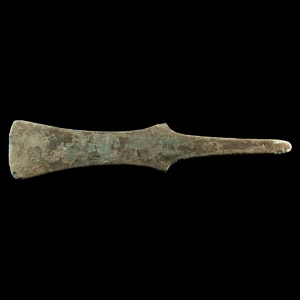
Luristan Bronze Flat Axe
13th-7th century B.C.Estimate: £120 - 170 (+bp*)
Opening Bid: £60
Featuring a tapering tang, winged neck, waisted cheeks and slightly convex cutting edge. 259 grams, 21.2 cm
Acquired 1980-2015. Ex Abelita family collection. -
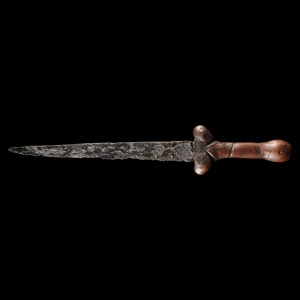
Medieval 'Thames' Iron Kidney Dagger
14th-15th century A.D.Sold for (Inc. bp): £260
The tapering blade with a single cutting edge; replica wooden handle with bulbous guard and pommel. 94 grams, 29.2 cm
Found on the Thames foreshore at Vintry, Southwark, London, UK.
