
Loading, please wait...
LOT 2616
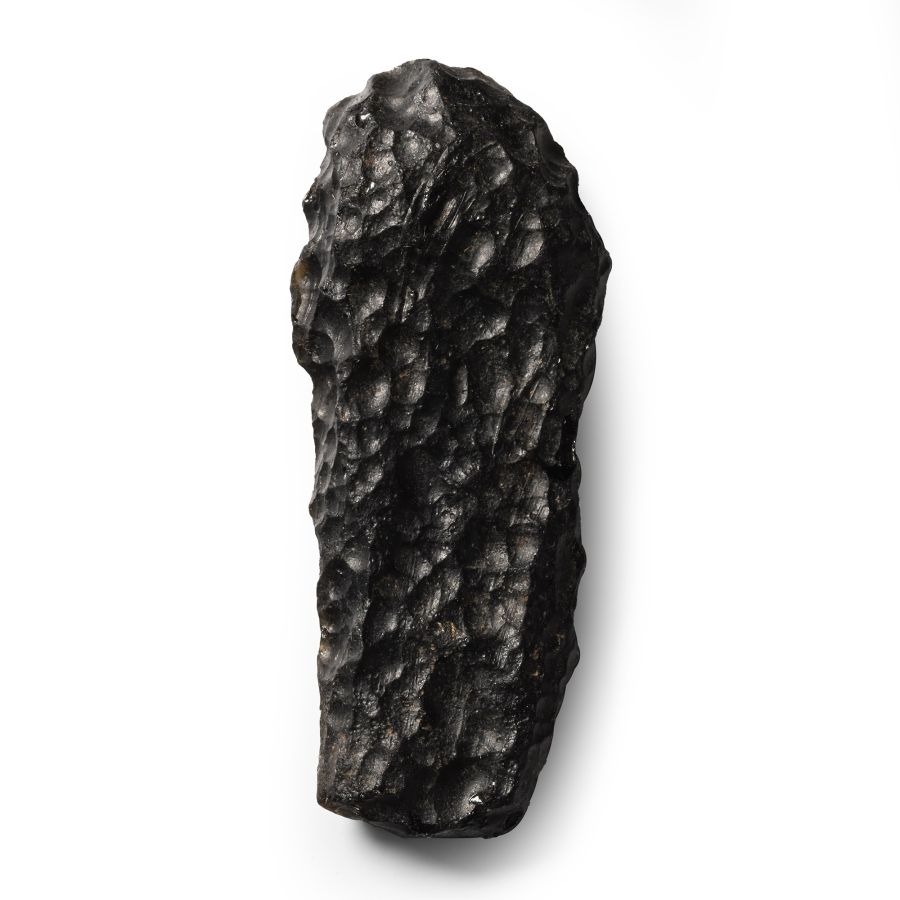
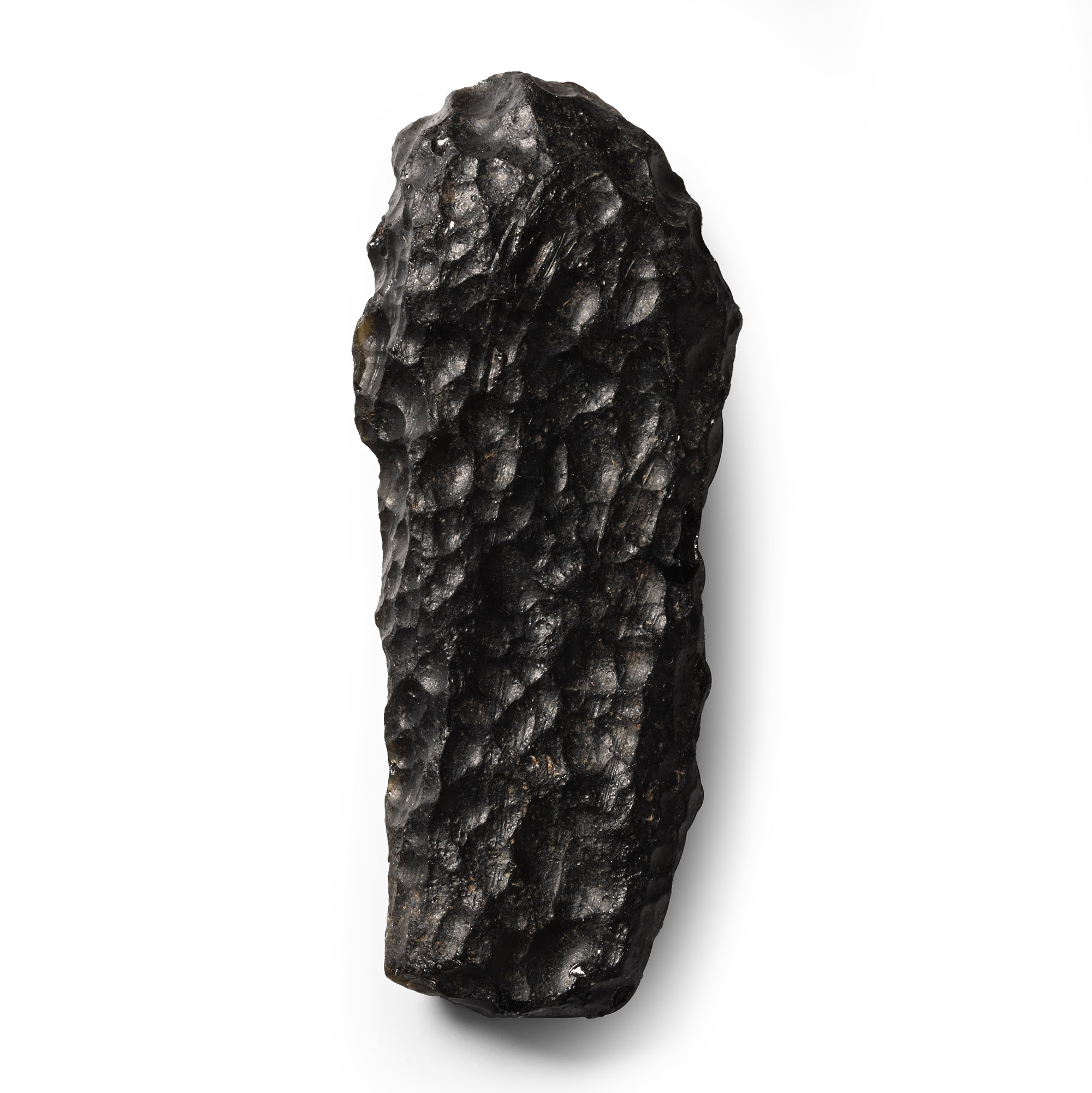
Meteoritic Tektite Specimen
1 3/4 in. (8.44 grams, 44 mm).
A tongue-shaped specimen with dimpled surface. [No Reserve]
ProvenanceFrom Indo-China.
Acquired from Friars Square market, Aylesbury, UK, October 2012.
From the private collection of Kenneth Machin (1936-2020), Buckinghamshire, UK; his collection of antiquities and natural history was formed since 1948; thence by descent.
Tektites are lumps of black or dark grey natural glass produced from melted crustal rocks that are caused by large hypervelocity meteorite impacts on sediments.
CONDITIONTimeLine Auctions follows a vetting process to ensure the authenticity and legality of all items, reinforcing our commitment to integrity and responsible trading. Each antiquity, antique, and coin lot undergoes thorough examination by a vetting committee of at least ten external specialists, professional trade association members, scientists, and archaeologists: Our Vetting Process
AUCTIONS:
TimeLine is a leading auction house specialising in antiquities, ancient art, collectables, natural history, coins, medals, and books. Our auctions offer museums, collectors, historians, and enthusiasts the opportunity to acquire unique and historically significant pieces.
-

Lapis Lazuli Bead Necklace String
Sold for (Inc. bp): £143
Restrung using mainly tabular, facetted and domed beads, interspersed with small oblate glass beads. 43 grams, 42.5 cm
Ex London art market. Property of a North London, UK, gentleman. -

Etched Gibeon Meteorite Group
Sold for (Inc. bp): £117
Two sawn sections showing good Widmanstatten lines and characteristic ablated surface. 8.27 grams total, 18-32 mm
From Namibia, Africa. Acquired from Rod White, UK, 2001. From the private collection of Kenneth Machin (1936-2020), Buckinghamshire, UK; his collection of antiquities and natural history was formed since 1948; thence by descent.
Gibeon is a meteorite that fell in prehistoric times in Namibia and was named after the nearest town. The meteorite was discovered by the Nama people and used by them to make tools and weapons; in 1836 the English captain J. E. Alexander collected samples in the vicinity of the Great Fish River and sent them to London. John Herschel analysed them and confirmed for the first time the extra-terrestrial nature of the material. -

Large Whitby Dac Fossil Ammonite Nodule
Jurassic Period, Toarcian Stage, circa 180 million years B.P.Sold for (Inc. bp): £39
Containing a Dactylioceras commune sp. specimen. 545 grams total, 9-10 cm
From Yorkshire coast. From a Lincolnshire, UK, collection.
