Loading, please wait...

Use mousewheel to zoom in and out, click to enlarge

Details

LOT 2363

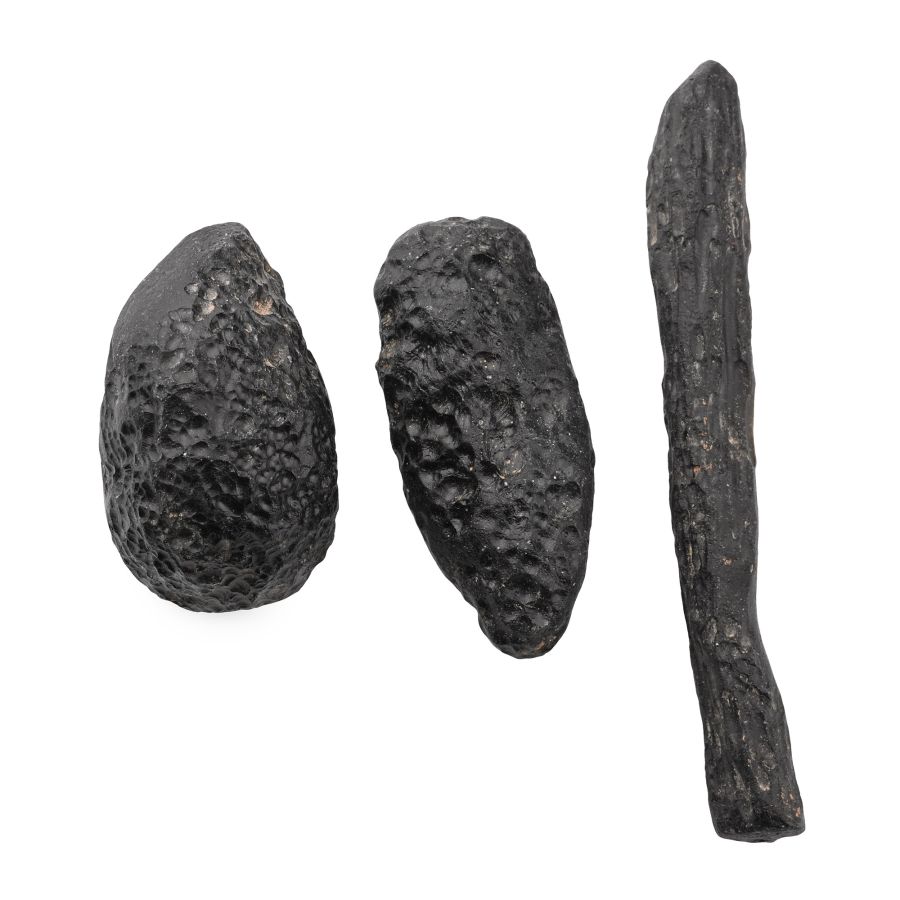
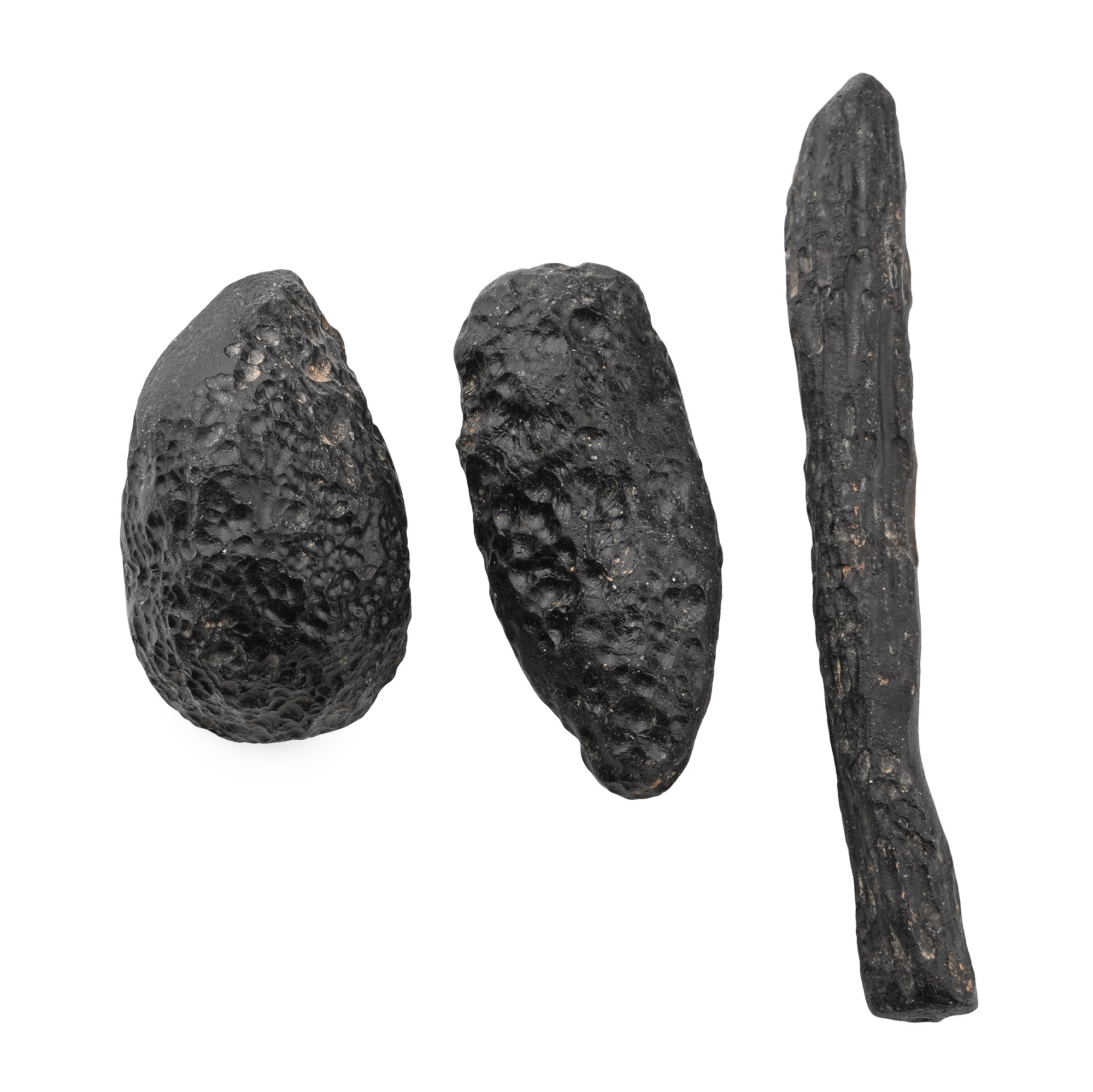
Meteoritic Tektite Specimen Group

2 - 4 in. (112 grams total, 5-10.3 cm).

Comprising two rounded specimens and one long ,branch-like specimen. [3, No Reserve]

Provenance

Private collection, London, UK.

Footnotes

Tektites are lumps of black or dark grey natural glass produced from melted crustal rocks that are caused by large hypervelocity meteorite impacts on sediments.

CONDITION

VETTING:

TimeLine Auctions follows a vetting process to ensure the authenticity and legality of all items, reinforcing our commitment to integrity and responsible trading. Each antiquity, antique, and coin lot undergoes thorough examination by a vetting committee of at least ten external specialists, professional trade association members, scientists, and archaeologists: Our Vetting Process


AUCTIONS:

TimeLine is a leading auction house specialising in antiquities, ancient art, collectables, natural history, coins, medals, and books. Our auctions offer museums, collectors, historians, and enthusiasts the opportunity to acquire unique and historically significant pieces.

LOT 2363

Meteoritic Tektite Specimen Group

Sold for (Inc. bp): £72

Print page

RELATED LOTS

  • Pale Green Calcite Mineral Specimens
    Pale Green Calcite Mineral Specimens

    Estimate: £20 - 30 (+bp*)

    Opening Bid: £5

    A group of forty-six pale green calcite mineral specimens. 510 grams total, 30-52mm

    Fine condition.

    From the historic ‘Victorian Museum’ or later collection of Gregory, Bottley & Lloyd (Gregory's); formerly Gregory, Bottley & Co. (1932-1981) and previously J. R. Gregory & Co. (1898-1932); originally James Reynolds Gregory (1858-1898). From the private collection of John Meredith, acquired since the 1990s; thence by descent.

    The firm Gregory, Bottley and Lloyd (Gregory's), was acquired by TimeLine Auctions in 2016. London-born James Reynolds Gregory (1832-1899) founded the company, which is the second longest-running gem and fossil dealership in the world. James was educated at Archbishop Tenison's School, and afterward found employment in a jewellery company on Regent Street. In 1858 he established his own business in King William Street. A few years later he moved to ‘very extensive premises’ in Golden Square, Covent Garden. He was one of the best known dealers in London, exhibiting at major commercial shows throughout the world and winning awards for excellence in Paris in 1867, Sydney in 1879 and London in 1862, 1883 and 1884. James primarily bought his stock at auction, from collectors and other dealers, and supplied many major collectors and scientists of his day. He built superb personal collections, a selection going to the British Museum. He wrote many papers and was a member of several learned societies including the Society of Arts. The business became known as J.R. Gregory & Company in 1896, still under James' management with the assistance of his son Albert Gregory (b.1864). When James died three years later, the business passed to Albert. At the end of the 19th century most London dealers had folded or retired, many selling out to J.R. Gregory & Co. Albert continued by acquiring Russell and Shaw (Est. 1848) in 1925 and Francis H. Butler (Est. 1884) in 1927. Percy Bottley (1904-1980) took over the company in 1931, renaming it Gregory, Bottley & Company with respect to his predecessors. Percy’s company survived the 2nd World War by buying out all of its competitors, including the supplier to Pitt-Rivers, Samuel Henson (Est. 1840) and G.H. Richards (Est. 1897) in 1936. Percy also added many important collections to his stock including those of Rev. F. Holmes in 1940, and the Graves collection in 1943. Following Percy's death in 1981, the business was sold to Brian Lloyd, whereupon it became Gregory, Bottley & Lloyd. Brian had been Sotheby’s main Natural History expert in the 1960s and 1970s, and subsequently traded from Pall Mall. The business continued to thrive, and Brian purchased the Joseph Neeld (1789-1856) collection in 1974 and the historic gold collection of H.S. Gordon, first exhibited at the Empire Exhibition, South Africa in 1936. Brian moved the business to 12-13 Rickett Street in 1982, and to 13 Seagrave Road in 1993. He carried on the company's specialization in historic collections, most recently acquiring that of Robert Ferguson (1767-1840) in 2000. The business moved to Walmer in Kent in 2008, and was acquired by TimeLine in April 2016. Trading History Est. 1858 (59 Frith Street, Soho) 1859 - 1861 (3 King William Street, Strand) 1862 - 1866 (25 Golden Square, Covent Garden) 1866 - 1874 (15 Russell Street, Covent Garden) 1874 - 1895 (88 Charlotte Street, Fitzroy Square) 1896 - 1906 (1 Kelso Place, Kensington) 1907 - 1926 (139 Fulham Road, Chelsea) 1926 - 1981 (30 (Old) Church Street, Chelsea) 1982 - 1993 (12-13 Rickett Street, Fulham) 1993 - 2007 (13 Seagrave Road, Fulham) 2008 - 2016 (59 Liverpool Road, Walmer, Kent) 2016 - (363 Main Road, Harwich, Essex)

    Lot Details

  • Mixed Crystal and Mineral Specimen Group
    Mixed Crystal and Mineral Specimen Group

    Sold for (Inc. bp): £85

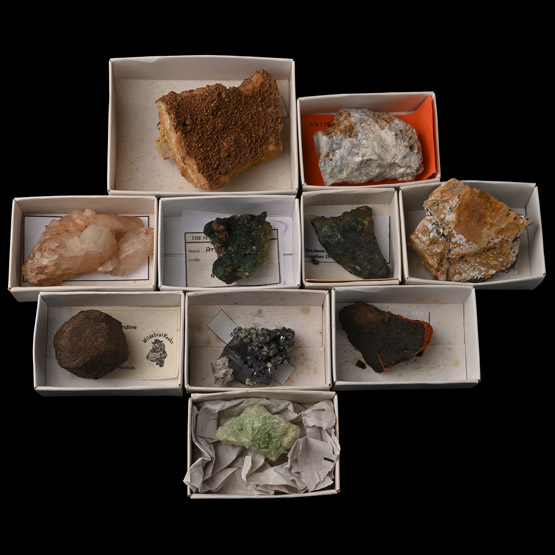
    Comprising: sphalerite from Brownley Hills Mine, Nenthead, Cumbria; calcite on fluorite from Fall Hill Quarry, Derbyshire; chkalovite, analcime and sodalite from Tassaq West, Illimaussaq, Greenland; chalcedony from Lyme Regis Beach, Lyme Regis, Dorset; chrysocolla and malachite from Lumbumbashi, Zaire; botryoidal malachite from Lumbumbashi, Zaire; anatase on ankerite from Hendreqy, Glyn Ceiriog, Wales; calcite from Taff's Wells Quarry, Nr Cardiff, Wales; galena from Greystone Quarry, Lezant, Cornwall; orthoclase from Melbur China Clay Pit, St Austell, Cornwall. 1.04 kg total, 38-98 mm


    From the private collection of a Cornish, UK, gentleman.

    Lot Details

  • 15 Sodalite Mineral Specimens
    15 Sodalite Mineral Specimens

    Sold for (Inc. bp): £7

    A group of fifteen cut sodalite mineral samples in various sizes. 472 grams total, 33-70 mm

    Very fine condition.

    From the historic ‘Victorian Museum’ or later collection of Gregory, Bottley & Lloyd (Gregory's); formerly Gregory, Bottley & Co. (1932-1981) and previously J. R. Gregory & Co. (1898-1932); originally James Reynolds Gregory (1858-1898). From the private collection of John Meredith, acquired since the 1990s; thence by descent.

    The firm Gregory, Bottley and Lloyd (Gregory's), was acquired by TimeLine Auctions in 2016. London-born James Reynolds Gregory (1832-1899) founded the company, which is the second longest-running gem and fossil dealership in the world. James was educated at Archbishop Tenison's School, and afterward found employment in a jewellery company on Regent Street. In 1858 he established his own business in King William Street. A few years later he moved to ‘very extensive premises’ in Golden Square, Covent Garden. He was one of the best known dealers in London, exhibiting at major commercial shows throughout the world and winning awards for excellence in Paris in 1867, Sydney in 1879 and London in 1862, 1883 and 1884. James primarily bought his stock at auction, from collectors and other dealers, and supplied many major collectors and scientists of his day. He built superb personal collections, a selection going to the British Museum. He wrote many papers and was a member of several learned societies including the Society of Arts. The business became known as J.R. Gregory & Company in 1896, still under James' management with the assistance of his son Albert Gregory (b.1864). When James died three years later, the business passed to Albert. At the end of the 19th century most London dealers had folded or retired, many selling out to J.R. Gregory & Co. Albert continued by acquiring Russell and Shaw (Est. 1848) in 1925 and Francis H. Butler (Est. 1884) in 1927. Percy Bottley (1904-1980) took over the company in 1931, renaming it Gregory, Bottley & Company with respect to his predecessors. Percy’s company survived the 2nd World War by buying out all of its competitors, including the supplier to Pitt-Rivers, Samuel Henson (Est. 1840) and G.H. Richards (Est. 1897) in 1936. Percy also added many important collections to his stock including those of Rev. F. Holmes in 1940, and the Graves collection in 1943. Following Percy's death in 1981, the business was sold to Brian Lloyd, whereupon it became Gregory, Bottley & Lloyd. Brian had been Sotheby’s main Natural History expert in the 1960s and 1970s, and subsequently traded from Pall Mall. The business continued to thrive, and Brian purchased the Joseph Neeld (1789-1856) collection in 1974 and the historic gold collection of H.S. Gordon, first exhibited at the Empire Exhibition, South Africa in 1936. Brian moved the business to 12-13 Rickett Street in 1982, and to 13 Seagrave Road in 1993. He carried on the company's specialization in historic collections, most recently acquiring that of Robert Ferguson (1767-1840) in 2000. The business moved to Walmer in Kent in 2008, and was acquired by TimeLine in April 2016. Trading History Est. 1858 (59 Frith Street, Soho) 1859 - 1861 (3 King William Street, Strand) 1862 - 1866 (25 Golden Square, Covent Garden) 1866 - 1874 (15 Russell Street, Covent Garden) 1874 - 1895 (88 Charlotte Street, Fitzroy Square) 1896 - 1906 (1 Kelso Place, Kensington) 1907 - 1926 (139 Fulham Road, Chelsea) 1926 - 1981 (30 (Old) Church Street, Chelsea) 1982 - 1993 (12-13 Rickett Street, Fulham) 1993 - 2007 (13 Seagrave Road, Fulham) 2008 - 2016 (59 Liverpool Road, Walmer, Kent) 2016 - (363 Main Road, Harwich, Essex)

    Lot Details

Stay up-to-date with the latest from TimeLine Auctions by joining our mailing list