
Loading, please wait...
_900x900.jpg "Metal-Thread Embroidered Silk Panel with the Tughra of Sultan Mahmud II")
_200x200.jpg "Metal-Thread Embroidered Silk Panel with the Tughra of Sultan Mahmud II")
.jpg "Metal-Thread Embroidered Silk Panel with the Tughra of Sultan Mahmud II")
LOT 0352
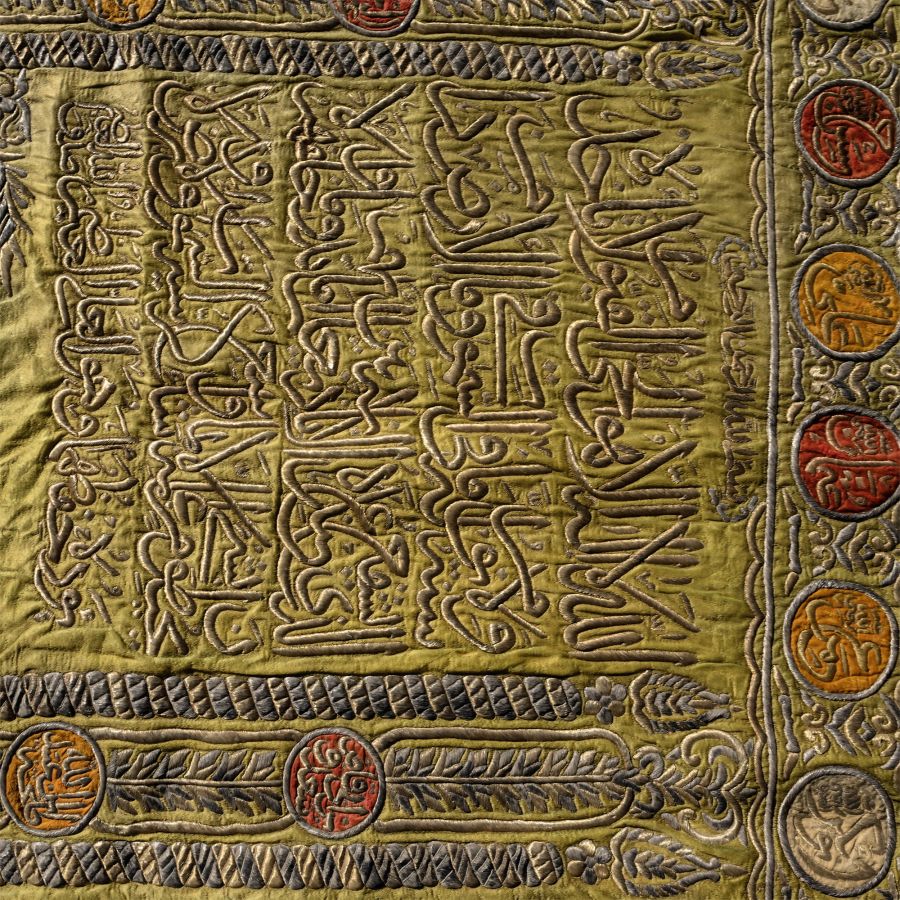
Metal-Thread Embroidered Silk Panel with the Tughra of Sultan Mahmud II
OTTOMAN EMPIRE, CIRCA 1808-1839 A.D.
115 1/2 x 70 1/4 in. (17.8 kg, 294 x 179 cm).
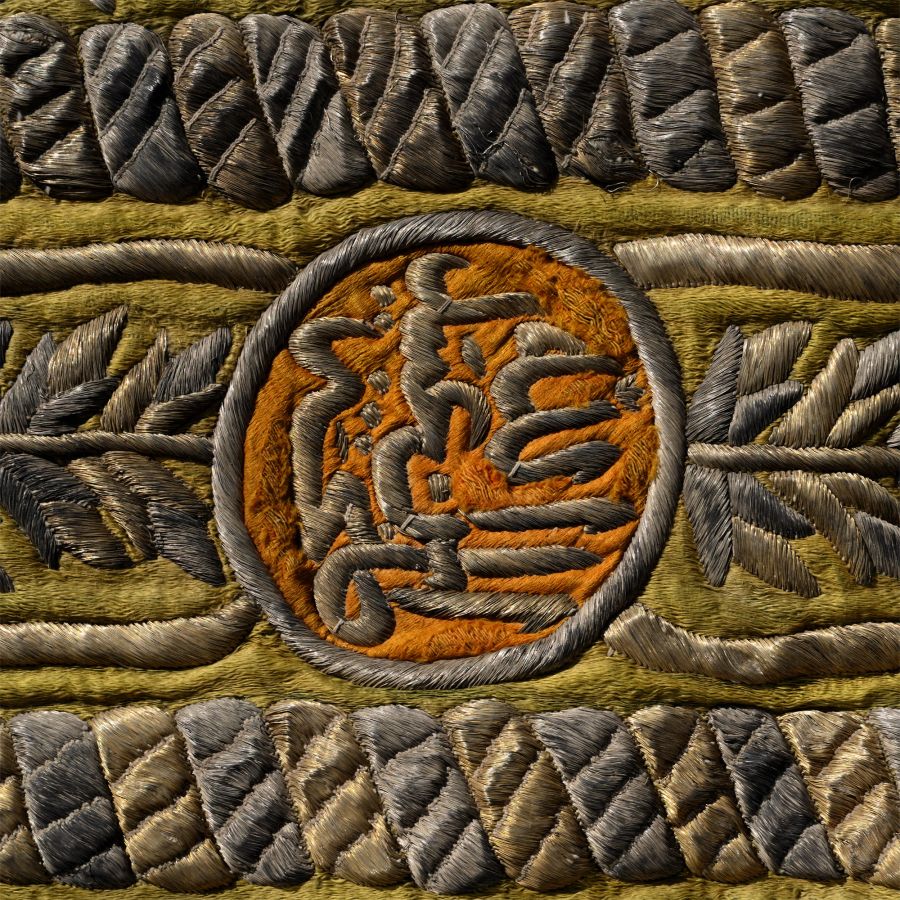
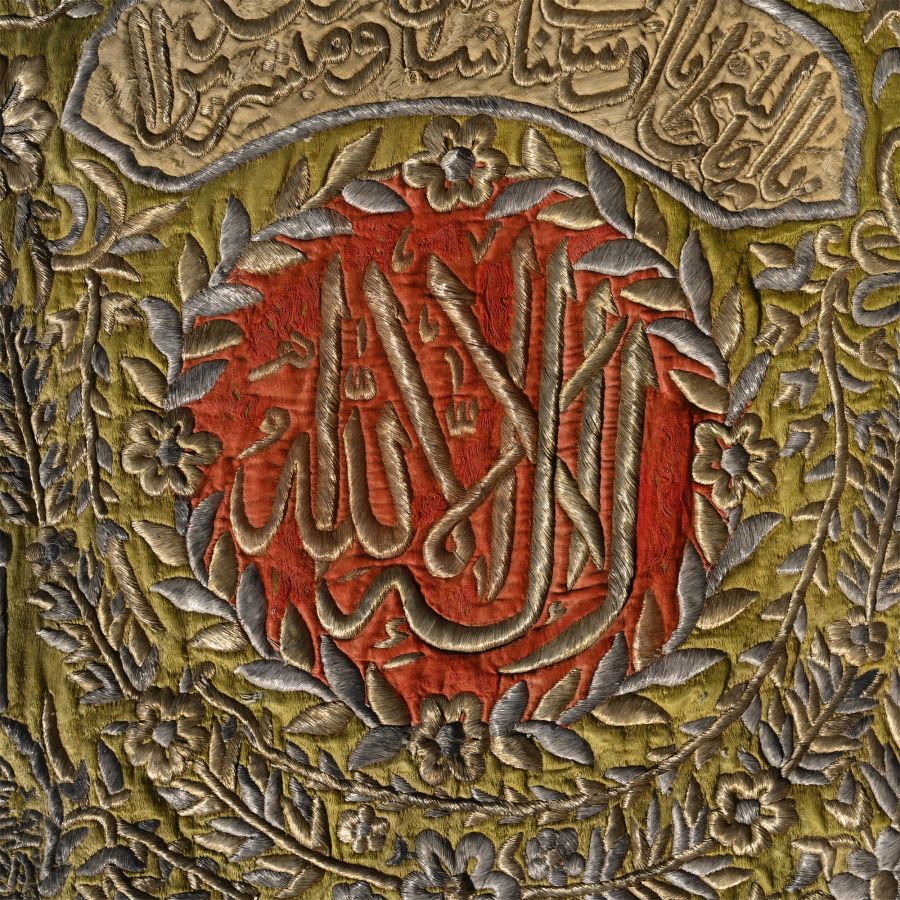
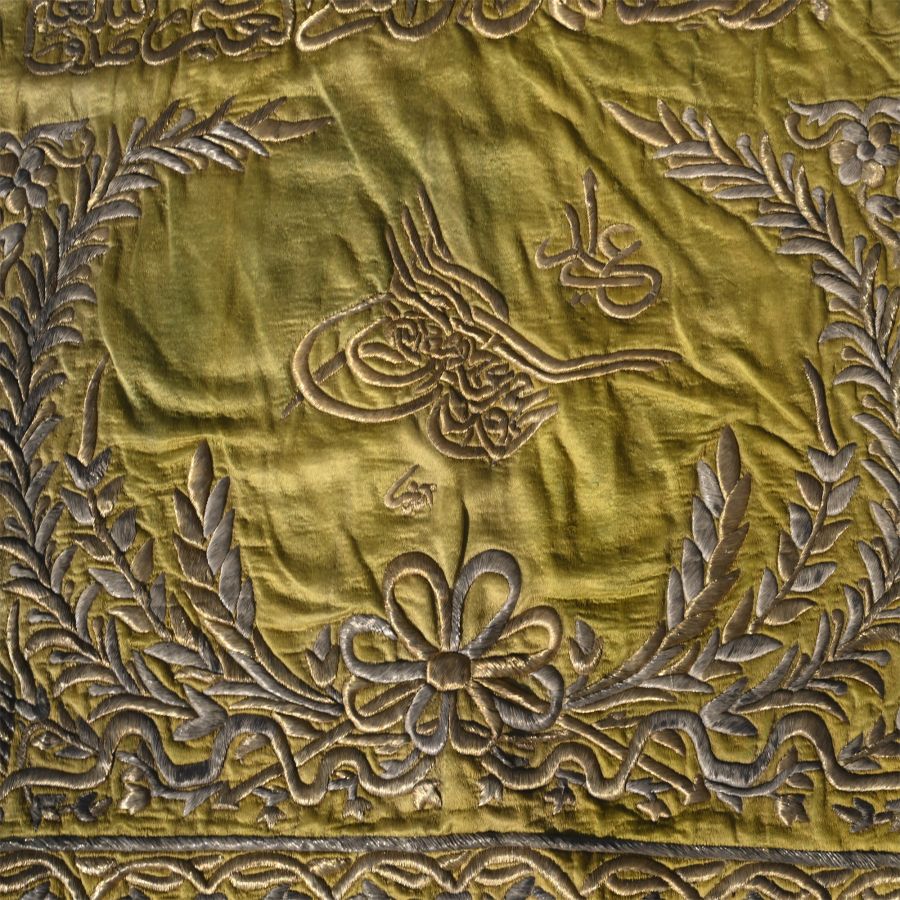
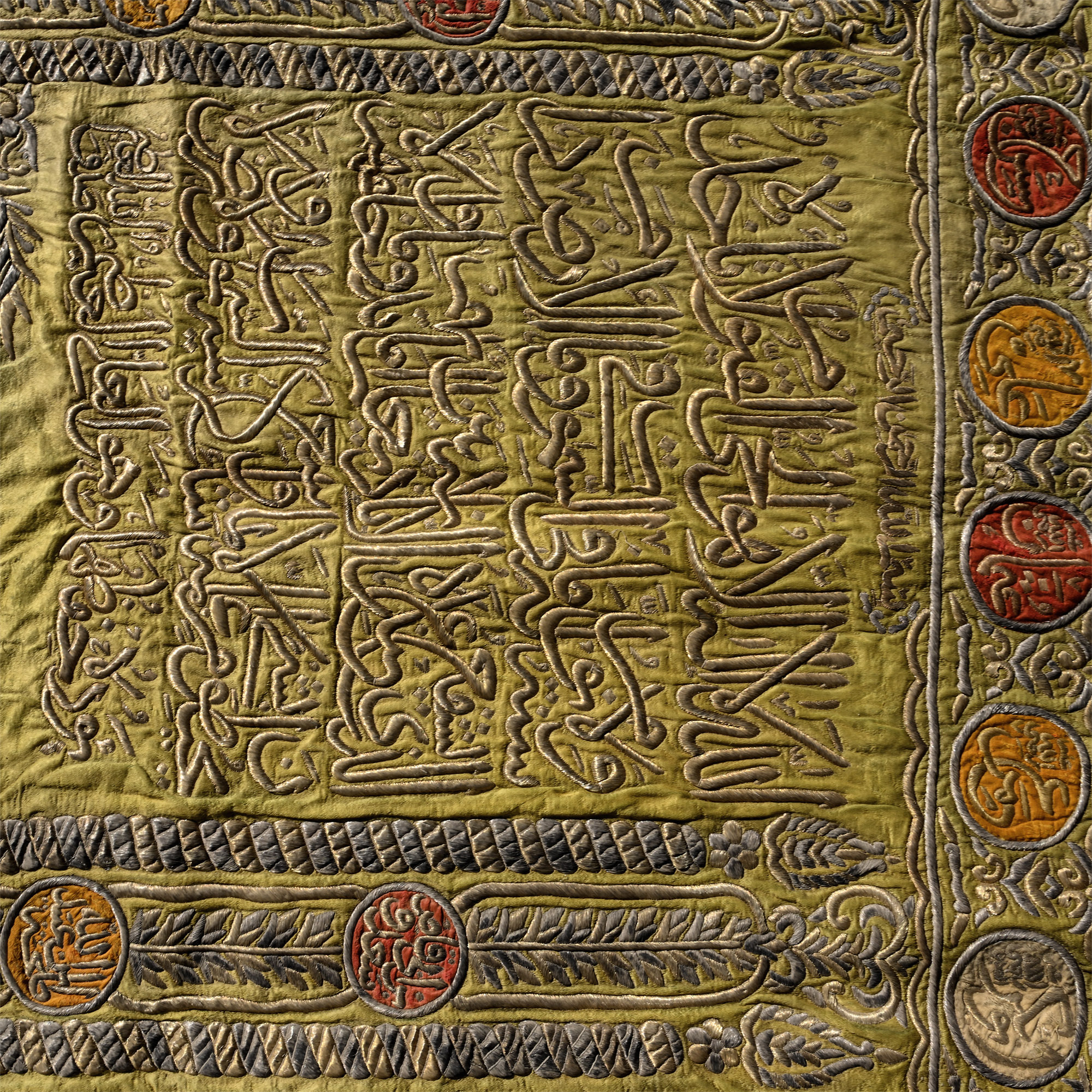
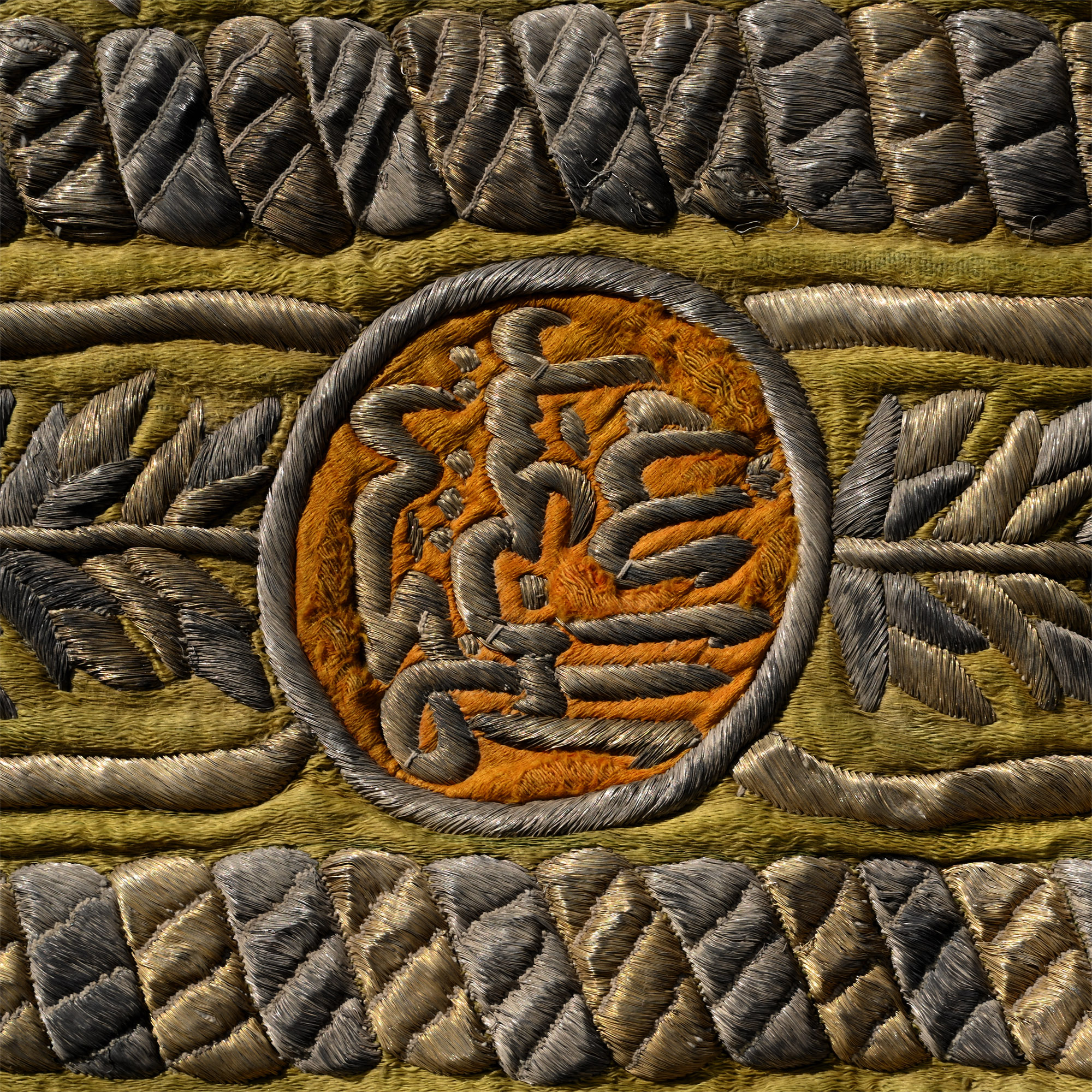
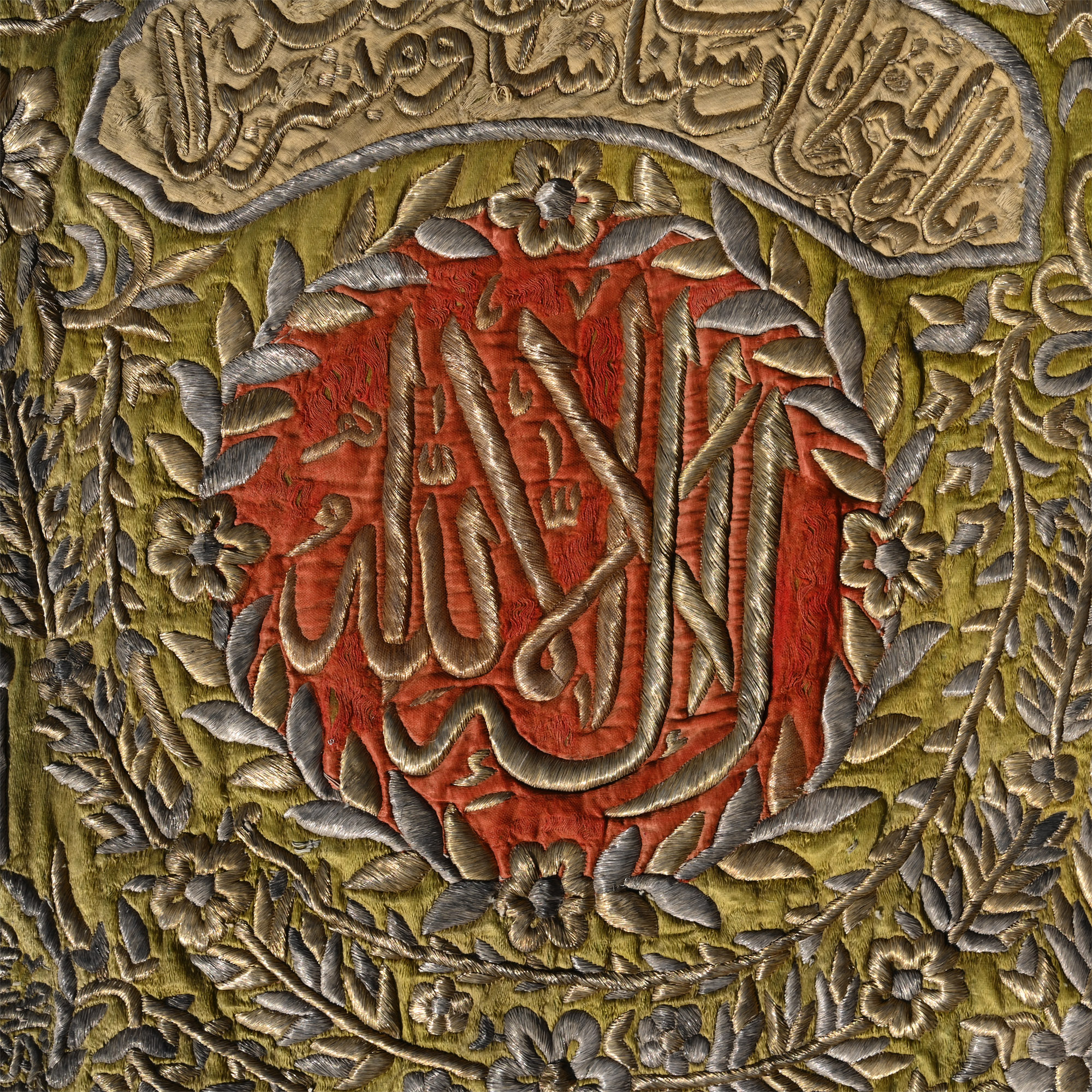
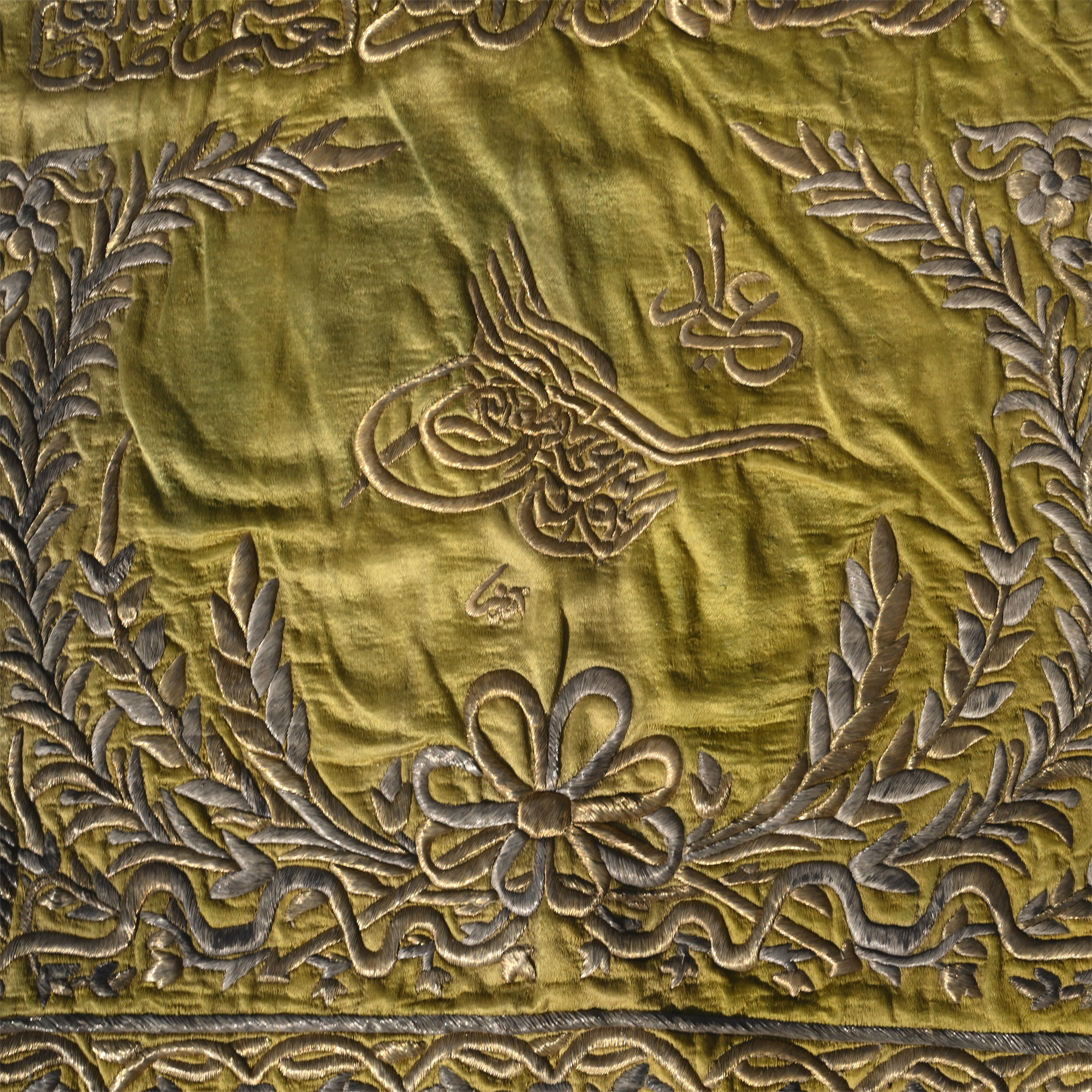
Rectangular in plan, the lime green silk field with two large roundels of red silk tied by a tassel in the rococo style, signature of Sultan Mahmud II contained within a mosque lamp, ten smaller roundels of alternating cream, orange and cream silk; large central rectangular panel and two bands above incorporating inscriptions in Thuluth, tughra of the Sultan framed by swags in lower part of field, ground richly decorated with floral swags and vegetal motifs, backed.
ProvenanceAcquired before 2000.
Private collection, UK.
with Bonhams, London, 6 October 2008, no.216 (est. £80,000 - £120,000).
This lot has been checked against the Interpol Database of stolen works of art and is accompanied by a search certificate number no.12741-235157.
The inscriptions comprise: in two horizontal cartouches: Qur'an, surah al-Ahzab (XXXIII, verses 45-46) inscription contained in mosque lamp; the signature of Sultan Mahmud Il in the two large roundels: the Shahadah in the six roundels above central rectangular panel; the names of the four Orthodox Caliphs, and the Imams Hasan and Husain in the central panel; Quran, surah al-Baqarah (Il), verse 255, ayat al-Kursi in the six side panels; the names of the companions of the Prophet in the lower part; the tughra of Sultan Mahmud.
CONDITIONTimeLine Auctions follows a vetting process to ensure the authenticity and legality of all items, reinforcing our commitment to integrity and responsible trading. Each antiquity, antique, and coin lot undergoes thorough examination by a vetting committee of at least ten external specialists, professional trade association members, scientists, and archaeologists: Our Vetting Process
AUCTIONS:
TimeLine is a leading auction house specialising in antiquities, ancient art, collectables, natural history, coins, medals, and books. Our auctions offer museums, collectors, historians, and enthusiasts the opportunity to acquire unique and historically significant pieces.
LOT 0352
Metal-Thread Embroidered Silk Panel with the Tughra of Sultan Mahmud II
Estimate £15,000 - 20,000€17,400 - 23,200 (for guidance only)$20,250 - 27,000 (for guidance only)
-
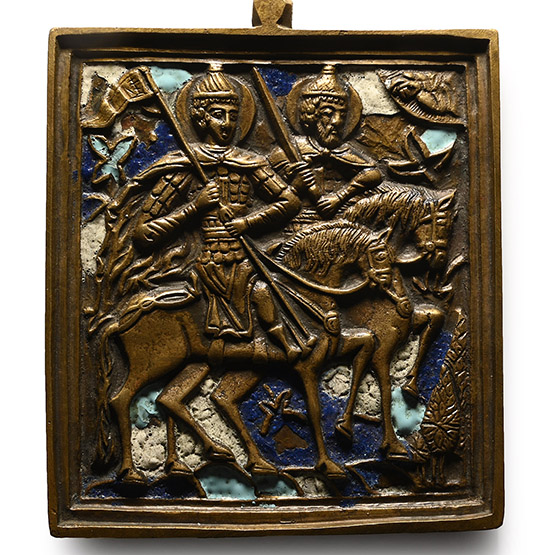
Russian Orthodox Enamelled Bronze Travel Icon with Saints Boris and Gleb
19th century A.D.Sold for (Inc. bp): £338
Saint Boris and Saint Gleb depicted on horseback wearing Russian medieval armour, holding a cross standard and a sword, each wearing a conical helmet; on the right upper corner, the hand of God. 260 grams, 10.7 cm
Acquired from Chris Martin-Zakheim, Iconastas, 5 Piccadilly Arcade, London SW1. From the private collection of a West London, UK, gentleman, formed since the early 2000s.
Boris and Gleb were the sons of Vladimir of Kyiv, the first Christian Prince of Rus; they were killed in 1015 and 1019 in the civil struggles for the succession to the throne, and sanctified for their faith. Standards with their image were worn by the medieval Russian army. -
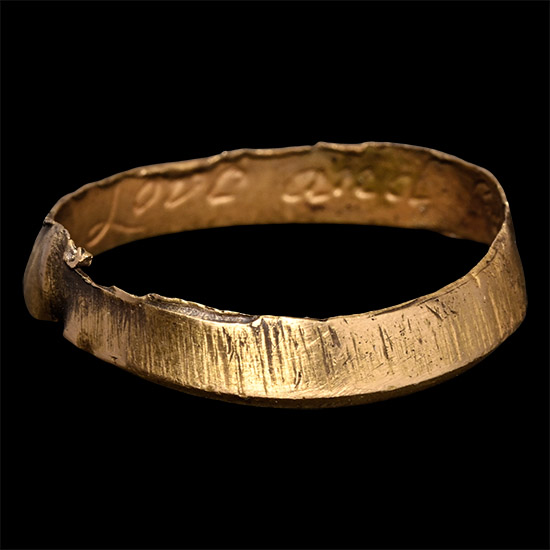
Post Medieval 'Love and Live Happily' Gold Posy Ring
18th century A.D.Sold for (Inc. bp): £325
Inscribed to the inner face in an italic hand 'Love and [l]ive happily'. 2.17 grams, 19.85 mm overall, 17.49 mm internal diameter (approximate size British N 1/2, USA 6 3/4, Europe 14.35, Japan 13)
From a UK collection formed in the 1980s. Property of an Essex, UK, gentleman. -
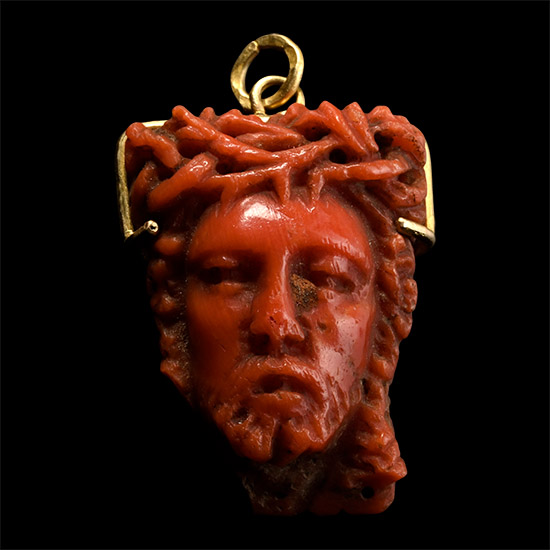
Post Medieval Coral Memento Mori Janus Chaplet Bead with Head of Christ and Skull
17th-18th century A.D.Sold for (Inc. bp): £1,560
Devotional prayer bead featuring a grimacing skull on one side and the other with the face of Jesus wearing the crown of thorns; set in a simple gold frame with suspension loop. 13.31 grams, 39 mm
Acquired on the European art market.
