
Loading, please wait...
LOT 1257
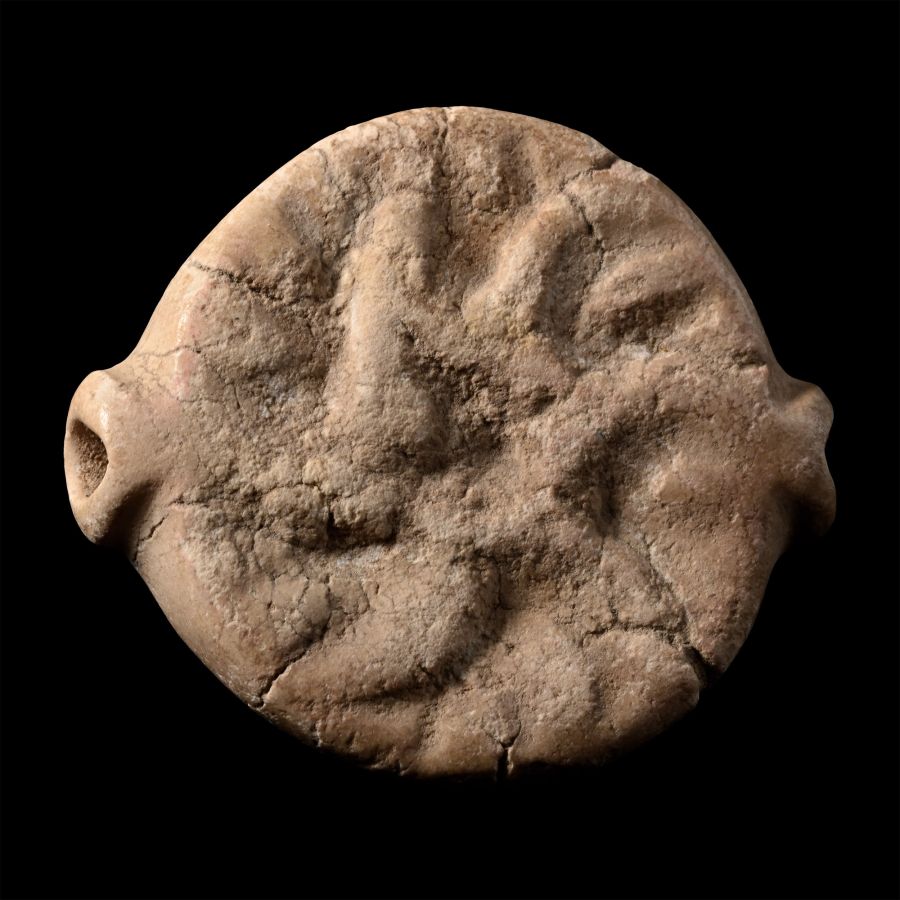
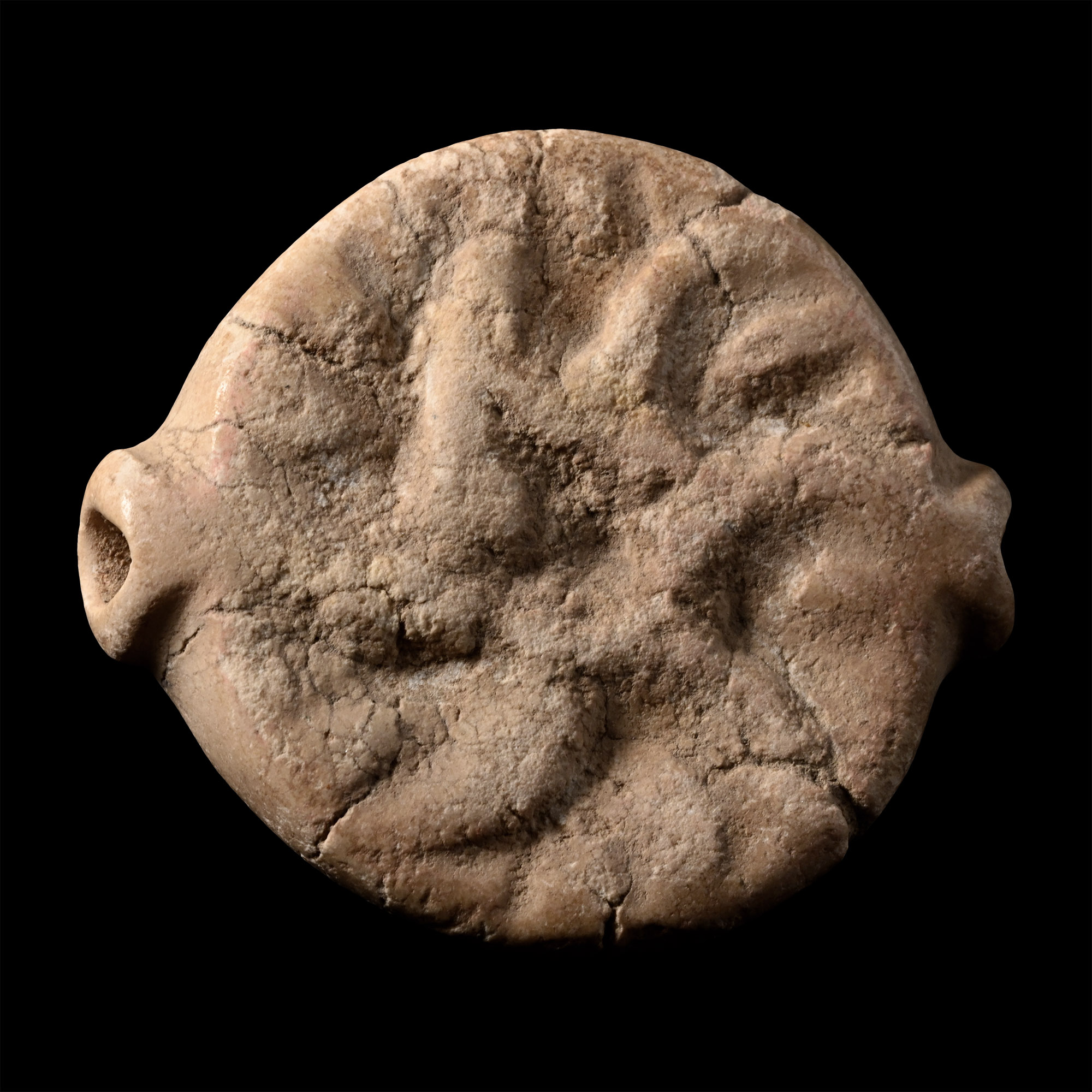
Mesopotamian White Stone Seal with Water Creatures
CIRCA 3000 B.C.
1 5/8 in. (26.9 grams, 42 mm).
Domed seal with projecting collars, accompanied by an old scholarly note, typed and signed by W.G. Lambert, late Professor of Assyriology, University of Birmingham, 1970-1993, which states: 'Stamp seal of white stone, 37 x 41 x 15 mm., a collared hemi-spheroid, pierced horizontally. Design: a circle of water creatures around a central one. Mesopotamia, c. 3000 B.C. Design corroded.' [No Reserve]
ProvenanceFrom a London collection in the 1990s.
Accompanied by a copy of a scholarly slip typed and signed by Professor Wilfrid George Lambert.
Accompanied by a previous dealer's sales ticket.
TimeLine Auctions follows a vetting process to ensure the authenticity and legality of all items, reinforcing our commitment to integrity and responsible trading. Each antiquity, antique, and coin lot undergoes thorough examination by a vetting committee of at least ten external specialists, professional trade association members, scientists, and archaeologists: Our Vetting Process
AUCTIONS:
TimeLine is a leading auction house specialising in antiquities, ancient art, collectables, natural history, coins, medals, and books. Our auctions offer museums, collectors, historians, and enthusiasts the opportunity to acquire unique and historically significant pieces.
-
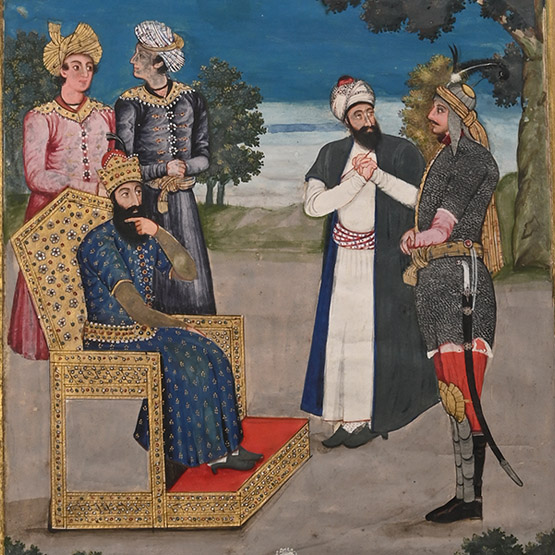
Persian Painted Gilt Shahnameh Miniature Leaf
20th century A.D.Estimate: £300 - 400 (+bp*)
Opening Bid: £160
Paper leaf from a manuscript mounted in a rectangular veneer reveal; Side A: gilt-bordered painted miniature with in two bands of calligraphic text divided into four blocks; nobleman in floor-length robe wearing a crown and turban sitting on a gilt throne with floral decoration, stroking his beard; two courtiers to his rear and a third to one side; standing military figure in helmet and mailcoat, with a scabbarded shamshir at his side, greaves and poleyns on his legs; all set in a garden with fountain and verdure; Side B: four columns of calligraphic text in 29 lines; signature to the bottom left. 90 grams, 40.2 x 28 cm
Private collection, UK. -
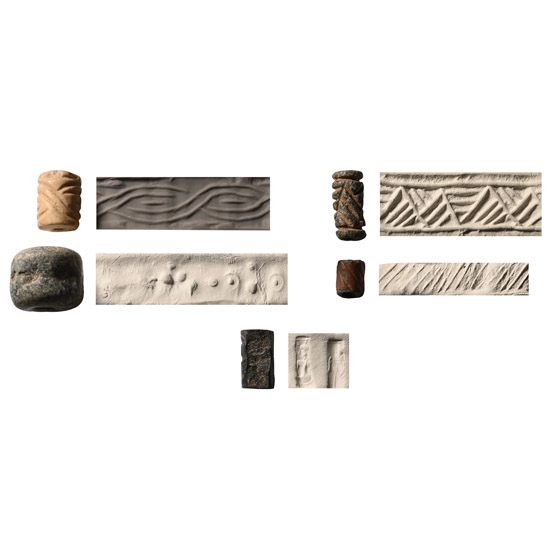
Western Asiatic Stone Cylinder Seal Group
3rd-2nd millennium B.C.Sold for (Inc. bp): £72
Comprising: a speckled grey marble seal with a drilled geometric pattern; a white limestone seal with a wickerwork pattern; a grey serpentine seal with a geometric pattern; a small bronze seal with a linear pattern; a fragmentary hematite seal with a seated deity; supplied with museum-quality impressions. 17.42 grams total, 9-17 mm
From the private collection of a European gentleman (1942-2024), formed since the 1970s. Accompanied by previous typed catalogue slips with collection nos.2, 14, 17, 18, 41. -
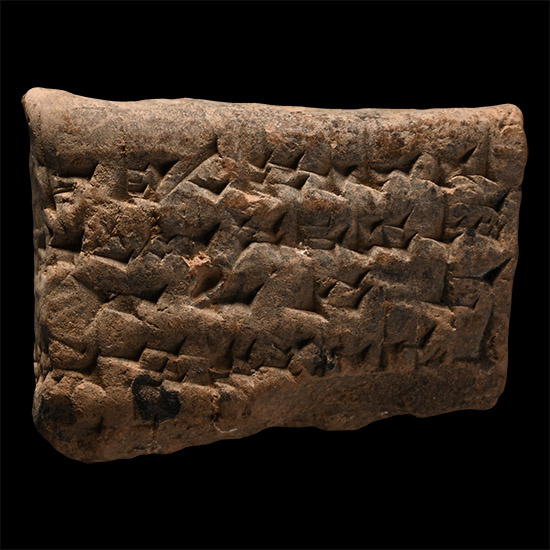
Old Babylonian Terracotta Cuneiform Tablet Fragment for Sale of Items
Circa 21st century B.C.Sold for (Inc. bp): £494
Rectangular section with impressed cuneiform text on three sides. 36 grams, 42 mm
London, UK, art market, 1980s. Private collection, London, UK.
