
Loading, please wait...


LOT 1137
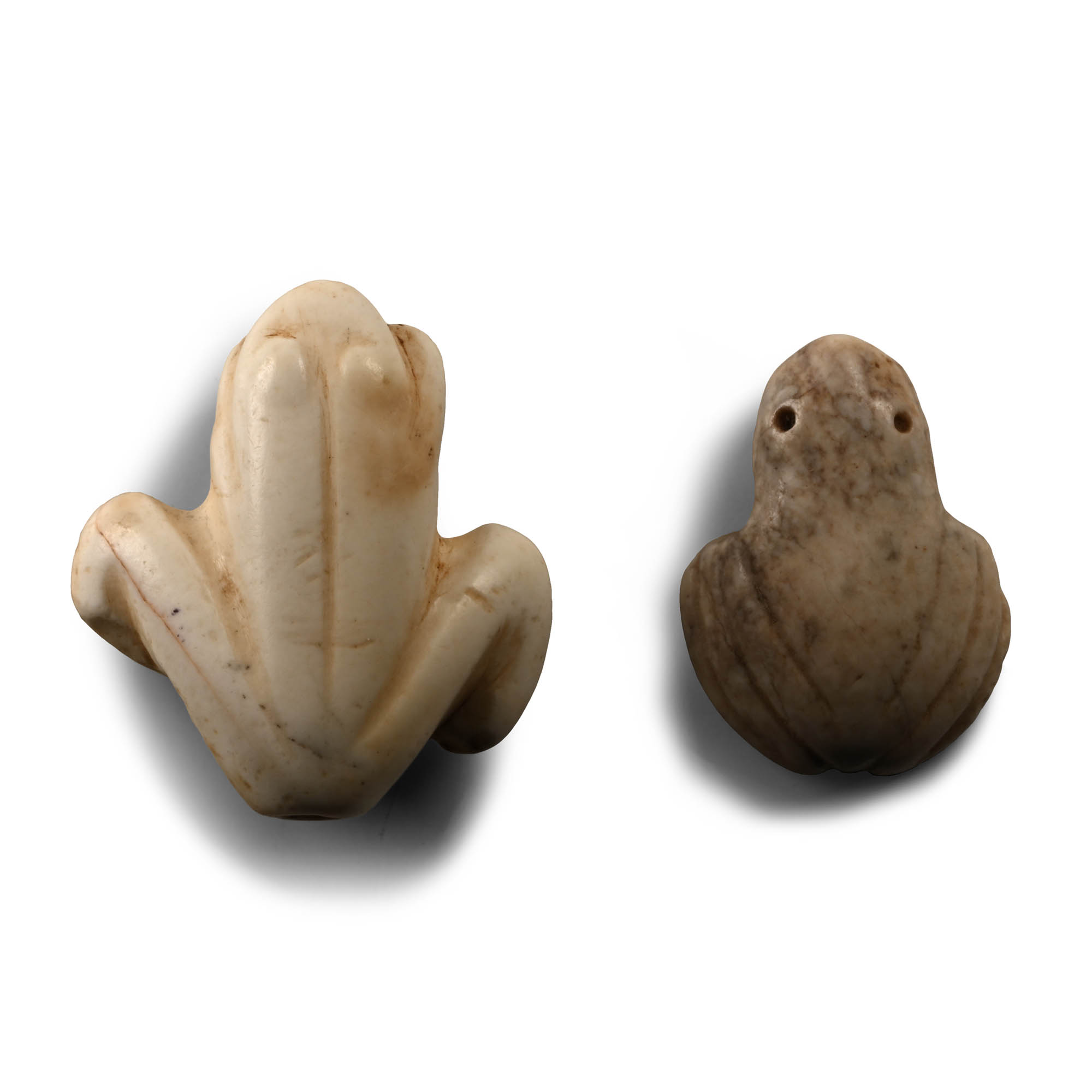
Mesopotamian White Stone Frog Amulets
2ND-1ST MILLENNIUM B.C.
1 1/8 - 1 3/8 in. (21 grams total, 28-34 mm).
Each a frog with legs splayed carved in the round, one pierced laterally and the other longitudinally. [2]
ProvenanceFrom the private collection of Mr K.A., acquired in the 1990s-early 2000s.
This lot has been cleared against the Art Loss Register database, and is accompanied by an illustrated lot declaration signed by the Head of the Antiquities Department, Dr Raffaele D'Amato.
TimeLine Auctions follows a vetting process to ensure the authenticity and legality of all items, reinforcing our commitment to integrity and responsible trading. Each antiquity, antique, and coin lot undergoes thorough examination by a vetting committee of at least ten external specialists, professional trade association members, scientists, and archaeologists: Our Vetting Process
AUCTIONS:
TimeLine is a leading auction house specialising in antiquities, ancient art, collectables, natural history, coins, medals, and books. Our auctions offer museums, collectors, historians, and enthusiasts the opportunity to acquire unique and historically significant pieces.
LOT 1137
Mesopotamian White Stone Frog Amulets
Estimate £400 - 600€460 - 700 (for guidance only)$540 - 810 (for guidance only)
-
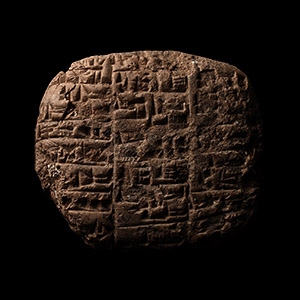
Sumerian Cuneiform Tablet Listing Goods Including 1 Shekel of Refined Silver from Mr Enshaga
Early Dynastic Period, circa 2500 B.C.Sold for (Inc. bp): £1,105
Pillow-shaped with impressed text to both faces; accompanied by an old scholarly note, typed and signed by W.G. Lambert, late Professor of Assyriology, University of Birmingham, 1970-1993, which states: 'Clay tablet 58x64 mm. with 26 Compartments and One Column of Sumerian Cuneiform. This is oblong with rounded sides and edges. each side is divided into 3 columns, and all but the last two are filled with script. This is some kind of legal document from a Sumerian city not so far known for such texts. The first five columns list items, each with a number and followed by a compartment of a different kind. The last column, on the reverse, is different from the others in giving the name and title of an official who in some way presided over the transaction here recorded. Since it is without exact parallel, it is difficult to translate even when the text is clear (there is some surface damage and one corner is broken off). The items given start with "one donkey", and include a quantity of barley (3 gur of barley), "one shekel of refined silver," and "two iku" (acres of agricultural land) is the last item. after which the document concludes: "Mr Enshaga was their seller." Other items are followed by, apparently, personal names, but only once at the end does "was their seller" appears. More study and more similar documents are needed to clear up the problems. The last column begins clearly enough: Ege-anda, Nugig but the final line is not clear. Nugig is a title of a priestess, but only here, it seems, is such a lady a high official giving her blessing to the sale just recorded. This is a most interesting Sumerian document dating to the later early Dynastic periods, c. 2500 B.C.' 95 grams, 64 mm
Ex private collection of Mr S H; thence by descent,1980-1990. Accompanied by an original typed and signed scholarly note by the late W.G. Lambert, Professor of Assyriology at the University of Birmingham, 1970-1993. This lot has been cleared against the Art Loss Register database, and is accompanied by an illustrated lot declaration signed by the Head of the Antiquities Department, Dr Raffaele D'Amato. -
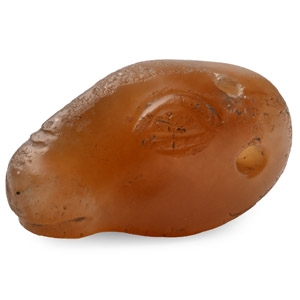
Mesopotamian Chalcedony Sheep's Head Amulet
3rd-2nd millennium B.C.Sold for (Inc. bp): £351
Finely carved bifacial sheep head with large lentoid eyes and wide mouth, pierced for suspension, two additional piercings to the top. 16.2 grams, 33 mm
Previously with a London, UK, dealership. Ex London, UK, art market, late 1990s. From a private UK collection. This lot has been cleared against the Art Loss Register database, and is accompanied by an illustrated lot declaration signed by the Head of the Antiquities Department, Dr Raffaele D'Amato. -
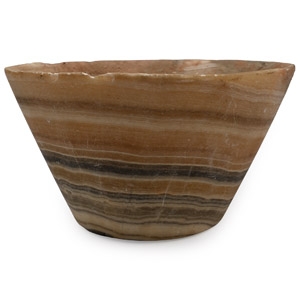
Mesopotamian Stone Vessel
1st millennium B.C.Sold for (Inc. bp): £260
With broad base and flared sidewall, curved inner face to the rim. 844 grams, 14.3 cm wide
From a collection formed before 1990. Ex Mayfair, London, UK, gallery, 2000s. This lot has been cleared against the Art Loss Register database, and is accompanied by an illustrated lot declaration signed by the Head of the Antiquities Department, Dr Raffaele D'Amato.
