
Loading, please wait...
LOT 1394
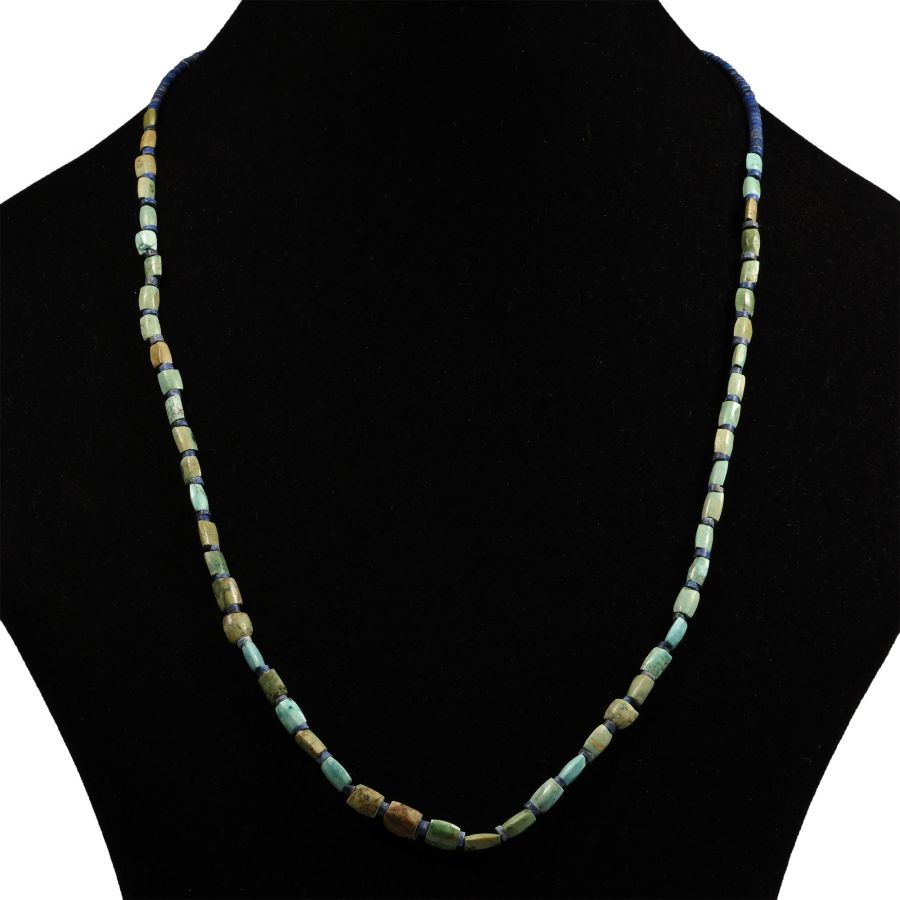
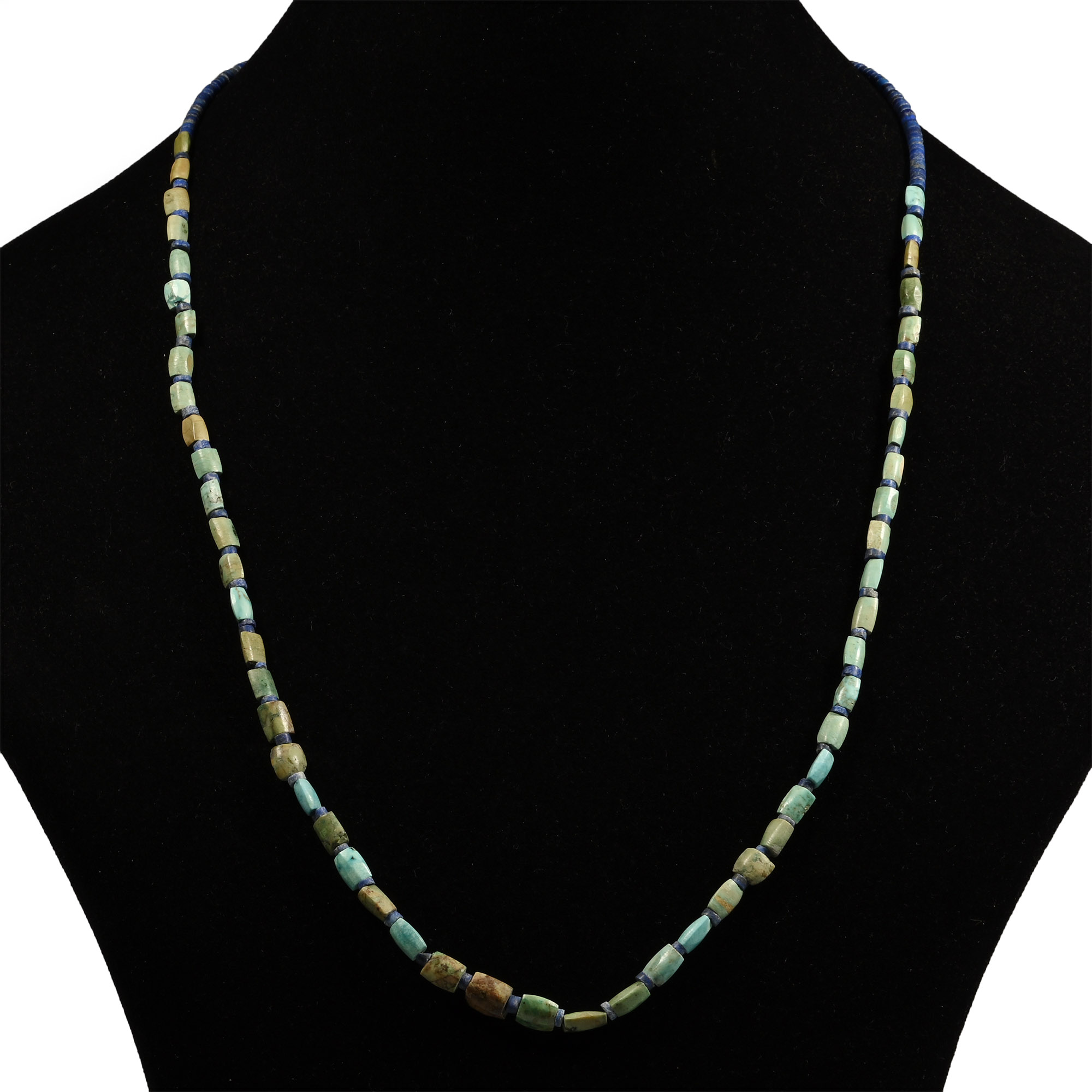
Mesopotamian Turquoise and Lapis Lazuli Bead Necklace String
1ST MILLENNIUM B.C. AND LATER
26 3/4 in. (15.9 grams, 68 cm).
Composed of small annular lapis lazuli beads and pillow-shaped graduated turquoise beads; restrung, no clasp.
ProvenanceAcquired on the UK art market before 2000.
Property of an Essex, UK, gentleman.
This lot has been cleared against the Art Loss Register database, and is accompanied by an illustrated lot declaration signed by the Head of the Antiquities Department, Dr Raffaele D'Amato.
TimeLine Auctions follows a vetting process to ensure the authenticity and legality of all items, reinforcing our commitment to integrity and responsible trading. Each antiquity, antique, and coin lot undergoes thorough examination by a vetting committee of at least ten external specialists, professional trade association members, scientists, and archaeologists: Our Vetting Process
AUCTIONS:
TimeLine is a leading auction house specialising in antiquities, ancient art, collectables, natural history, coins, medals, and books. Our auctions offer museums, collectors, historians, and enthusiasts the opportunity to acquire unique and historically significant pieces.
LOT 1394
Mesopotamian Turquoise and Lapis Lazuli Bead Necklace String
Sold for (Inc. bp): £442
-
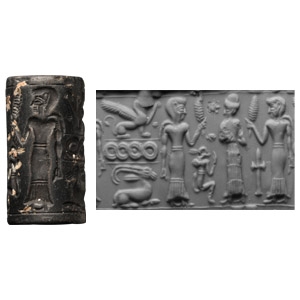
Old Babylonian Haematite Cylinder Seal
Early 2nd millennium B.C.Sold for (Inc. bp): £1,300
With frieze in three scenes: crouching gryphon with one foreleg raised above a guilloche scene-divider with a crouching ibex below; three human figures standing, the outer two wearing an ankle-length skirt with waistband, one arm bent holding a frond and, between them, a standing figure in flounced robe flanked by a squatting monkey with tail raised and a freestanding cruciform symbol; supplied with a museum-quality impression. 5.86 grams, 19 mm
From the 'S' collection, acquired 1970-1990s. The collection was seen and studied by W.G.Lambert, late Professor of Assyriology at the University of Birmingham, 1970-1993. This lot has been cleared against the Art Loss Register database, and is accompanied by an illustrated lot declaration signed by the Head of the Antiquities Department, Dr Raffaele D'Amato. -
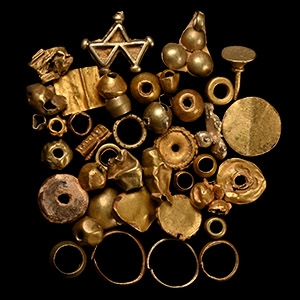
Western Asiatic Mixed Gold Bead Group
1st millennium B.C. and laterEstimate: £400 - 600 (+bp*)
Opening Bid: £200
A mixed group of small beads, pendants, and mounts. 5.78 grams total, 2-9 mm
Ex property of a late Japanese collector, 1970-2000s. This lot has been cleared against the Art Loss Register database, and is accompanied by an illustrated lot declaration signed by the Head of the Antiquities Department, Dr Raffaele D'Amato. -
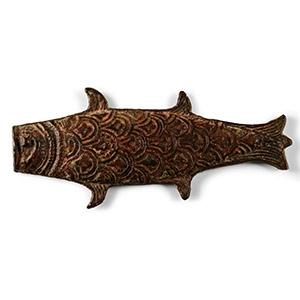
Western Asiatic Bronze Cosmetic Fish Palette
12th century A.D.Estimate: £150 - 200 (+bp*)
Opening Bid: £75
Formed as a shallow fish-shaped dish with scale and gill detailing to the underside; remains of pigment to upper face. 20.7 grams, 86 mm
Ex London, UK, gallery, 1971-early 2000s. London, UK, collection. This lot has been cleared against the Art Loss Register database, and is accompanied by an illustrated lot declaration signed by the Head of the Antiquities Department, Dr Raffaele D'Amato.
