
Loading, please wait...
LOT 1231
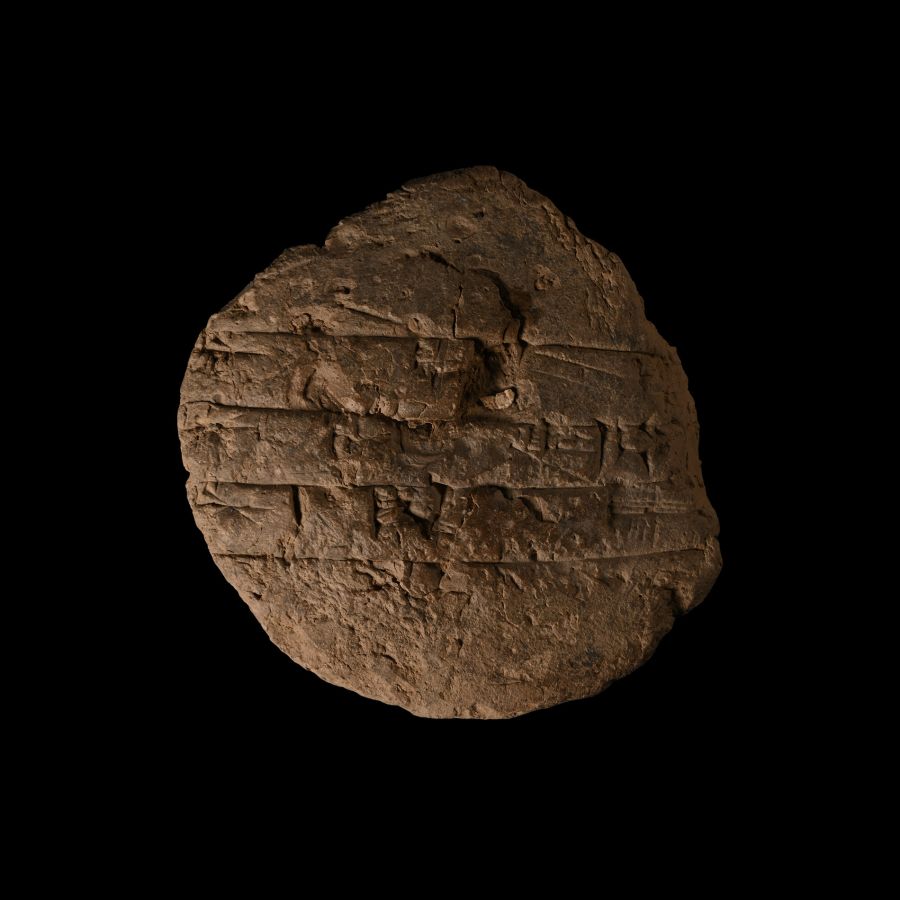
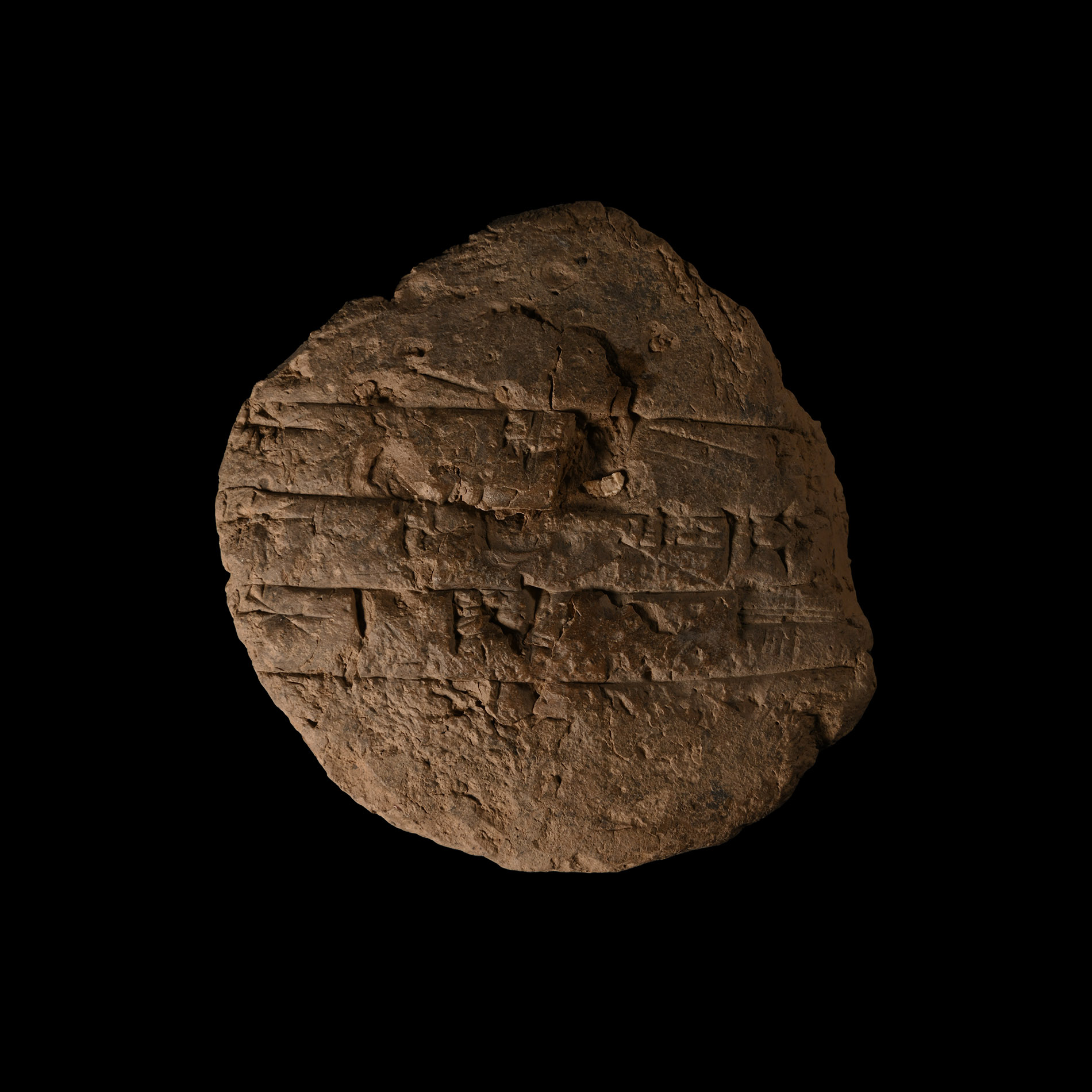
Mesopotamian Terracotta Cuneiform School Exercise Tablet
CIRCA 1950-1700 B.C.
3 1/4 in. (153 grams, 81 mm).
Discoid in plan and lentoid in section, bearing cuneiform scribal work in large characters on both sides. [No Reserve]
ProvenanceFrom a specialised collection of cuneiform texts, the property of a London gentleman and housed in London before 1992.
Thence by descent to family members and dispersed in 1988 in London and Geneva.
Such scribal 'practise tablets' are always of this round shape: Type IV tablets, also known as 'lentils', are circular tablets containing one or a few lines of a composition written out once by the teacher and then a second time by the student, either underneath (typical of Nippur tablets), or on the reverse. This would appear to be an example of the latter.
CONDITIONTimeLine Auctions follows a vetting process to ensure the authenticity and legality of all items, reinforcing our commitment to integrity and responsible trading. Each antiquity, antique, and coin lot undergoes thorough examination by a vetting committee of at least ten external specialists, professional trade association members, scientists, and archaeologists: Our Vetting Process
AUCTIONS:
TimeLine is a leading auction house specialising in antiquities, ancient art, collectables, natural history, coins, medals, and books. Our auctions offer museums, collectors, historians, and enthusiasts the opportunity to acquire unique and historically significant pieces.
LOT 1231
Mesopotamian Terracotta Cuneiform School Exercise Tablet
Sold for (Inc. bp): £338
-
Achaemenid Stone and Glass Bead Necklace String
500 B.C. and laterSold for (Inc. bp): £33
Composed of small beads in various shapes restrung to a Y-shape, the central feature with a larger melon and an irregular bead. 9.86 grams, 33 cm
Ex property of a late Japanese collector, 1970-2000s. -
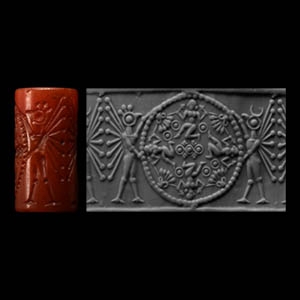
Assyrian Red Stone Warrior Ceremony Cylinder Seal
1st millennium B.C. or laterSold for (Inc. bp): £3,900
With intaglio standing figures each with discoid head surmounted by a crescent, supporting a circular panel with beaded outline, four crouching figures with arms raised holding maces and spears radiating from a a central guilloche motif, interstitial radiating bars motif (fire) to each corner. 11 grams, 28 mm
Ex 'S' collection, London, UK. Examined by Professor Wilfrid George Lambert FBA (1926-2011), historian, archaeologist, and specialist in Assyriology and Near Eastern archaeology, in the late 1980s and early 1990s. This lot has been checked against the Interpol Database of stolen works of art and is accompanied by a search certificate number no.12423-225425. -
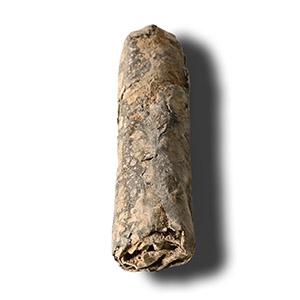
Aramaic Lead Scroll with Magical Text
2nd-8th century A.D.Estimate: £300 - 400 (+bp*)
Opening Bid: £167
A rectangular lead sheet rolled into a tight scroll with the text to the inner face. 31 grams, 58 mm
Collected from 1970-1999. From the collection of the late Mr S.M., London, UK.
The item was possibly meant to be what the Romans called a defixio or 'curse tablet', on which the magical malediction was recorded and then shut away (by being tightly rolled up) so that the victim could not find it or change it.
