
Loading, please wait...

LOT 1179
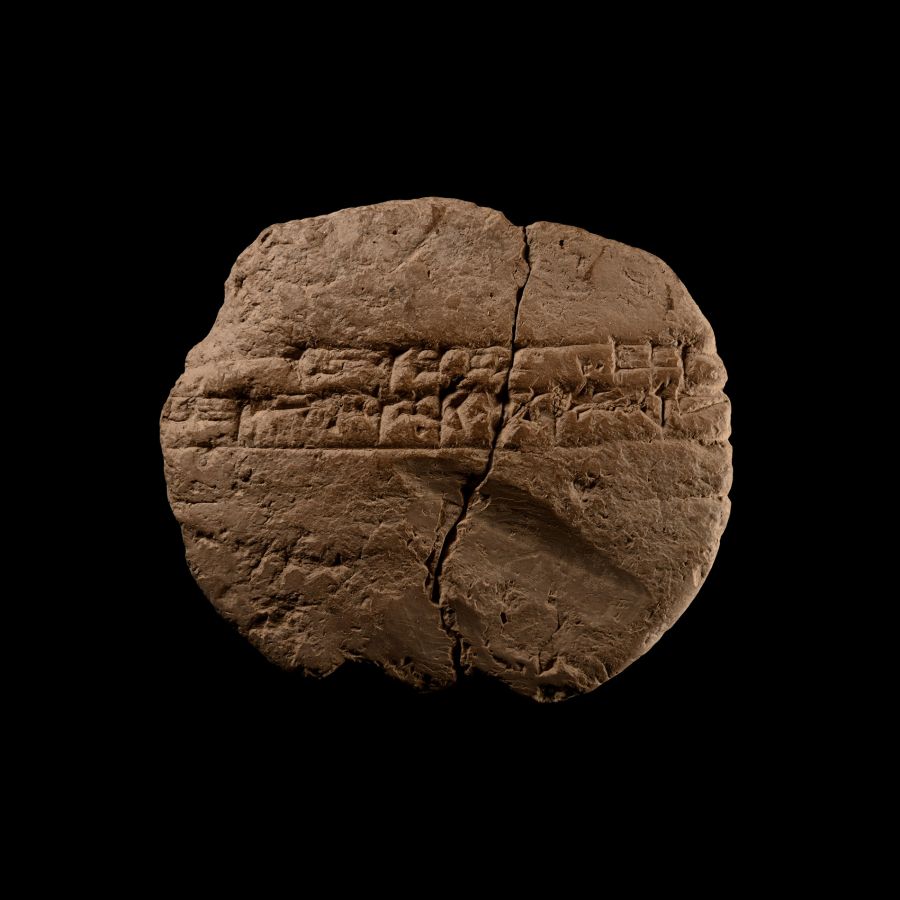
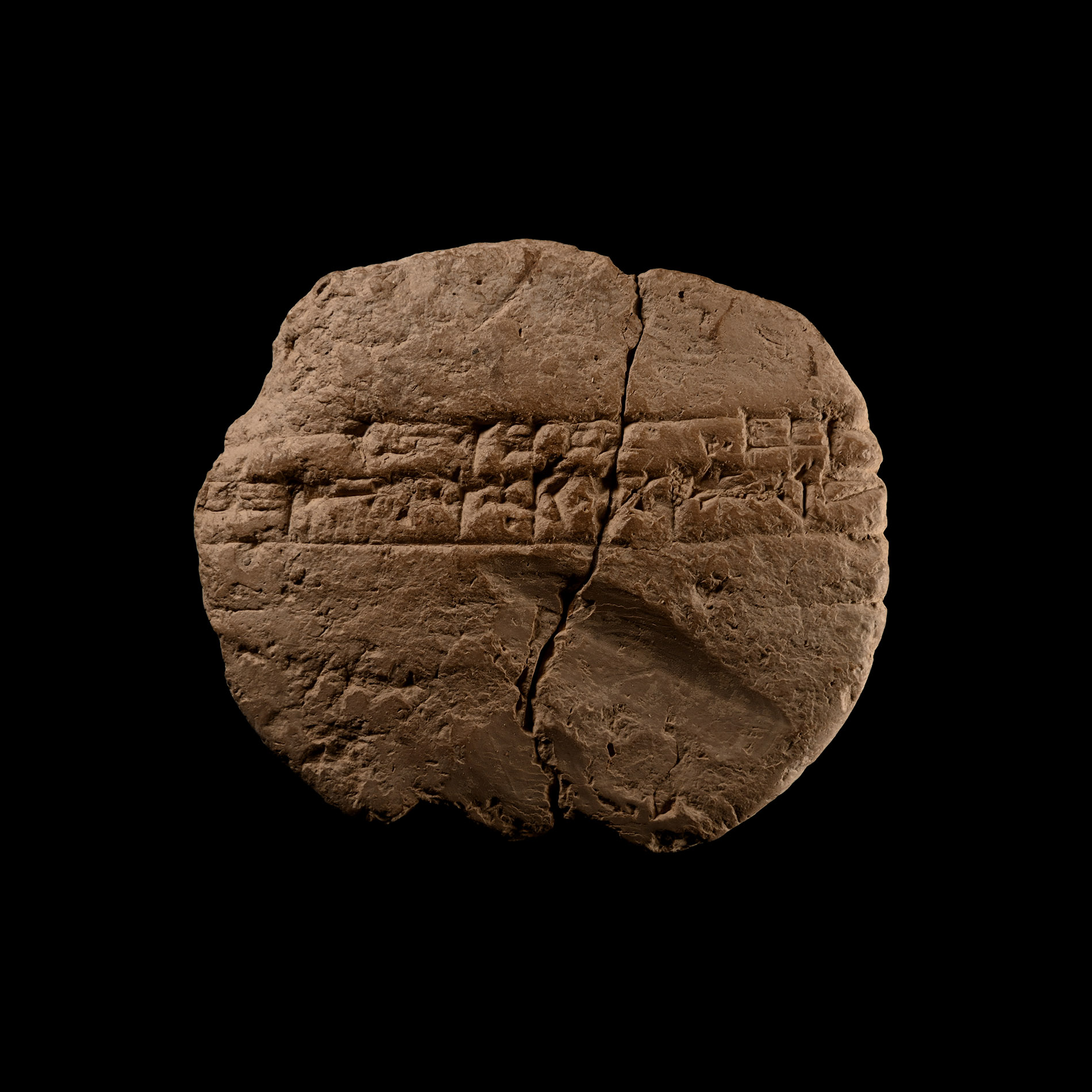
Mesopotamian Terracotta Cuneiform School Exercise Tablet
CIRCA 1950-1700 B.C.
4 in. (269 grams, 10 cm).
Discoid in plan and lentoid in section, bearing cuneiform scribal work in large characters on one side; repaired. [No Reserve]
ProvenanceFrom a specialised collection of cuneiform texts, the property of a London gentleman and housed in London before 1992.
Thence by descent to family members and dispersed in 1988 in London and Geneva.
Such scribal tablets are always of this round shape. Type IV tablets, also known as 'lentils', are circular tablets containing one or a few lines of a composition written out once by the teacher and then a second time by the student, either underneath (typical of Nippur tablets), or on the reverse. This would appear to be an example of the former.
CONDITIONTimeLine Auctions follows a vetting process to ensure the authenticity and legality of all items, reinforcing our commitment to integrity and responsible trading. Each antiquity, antique, and coin lot undergoes thorough examination by a vetting committee of at least ten external specialists, professional trade association members, scientists, and archaeologists: Our Vetting Process
AUCTIONS:
TimeLine is a leading auction house specialising in antiquities, ancient art, collectables, natural history, coins, medals, and books. Our auctions offer museums, collectors, historians, and enthusiasts the opportunity to acquire unique and historically significant pieces.
LOT 1179
Mesopotamian Terracotta Cuneiform School Exercise Tablet
Sold for (Inc. bp): £715
-
Western Asiatic Inscribed Bronze Hand Pendant
14th-15th century A.D.Sold for (Inc. bp): £111
In the form of a hand with fingers held in a gripping position against the top of the palm; possible enigmatic inscription to the palm; simple detailing delineating each finger; collared arm and suspension loop. 42.6 grams, 50 mm
Acquired before the early 1970s. Ex London, UK, gallery. Property of a London gentleman. -
Luristan Bronze Dress Pin Group
13th-7th century B.C.Sold for (Inc. bp): £52
Including tapering type with domed head, poppyhead type and others. 77 grams total, 6.2-20 cm
UK private collection before 2000. Acquired on the UK art market. Property of a London gentleman. -
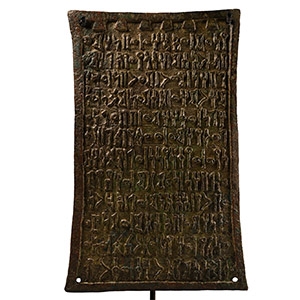
South Arabian Bronze Devotional Plaque by Yin'am and his Brother
Circa 1st century A.D.Sold for (Inc. bp): £10,010
Rectangular plaque with slightly flared ends, raised border and mounting hole to each corner; crenellation to inner edge of upper border; twelve lines of dense inscription in raised relief, reading in translation: 'Yin'am and his brother, along with their sons, the Banu Rasham, have dedicated this to their god LBNH, the bull of M'RBN, in his sanctuary at Sim'ân. This inscription is a divine ordinance that he has commanded for them on his property, for their wellbeing and the wellbeing of all they have acquired and will acquire. May LBNH increase their prosperity, favour, health, and strength, and may evil, wrong, ill-will, injustice, WTRKS, and 'W/'F of enemies, both far and near, be kept away from them.' 13.4 kg total, 29 cm including stand
German private collection, acquired in 1980. with Christie’s, New York, 4 June 2008, no.93. Acquired by the present owner at the above sale. This lot has been checked against the Interpol Database of stolen works of art and is accompanied by a search certificate number no.12416-225770.
