
Loading, please wait...
LOT 1302
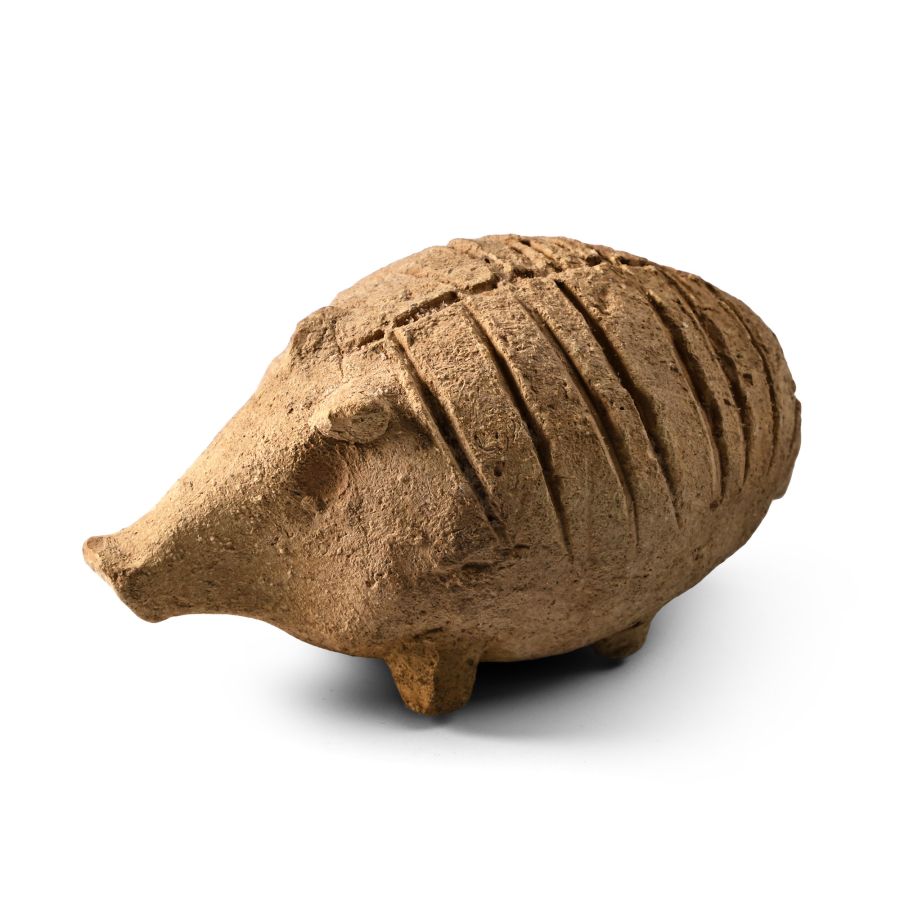
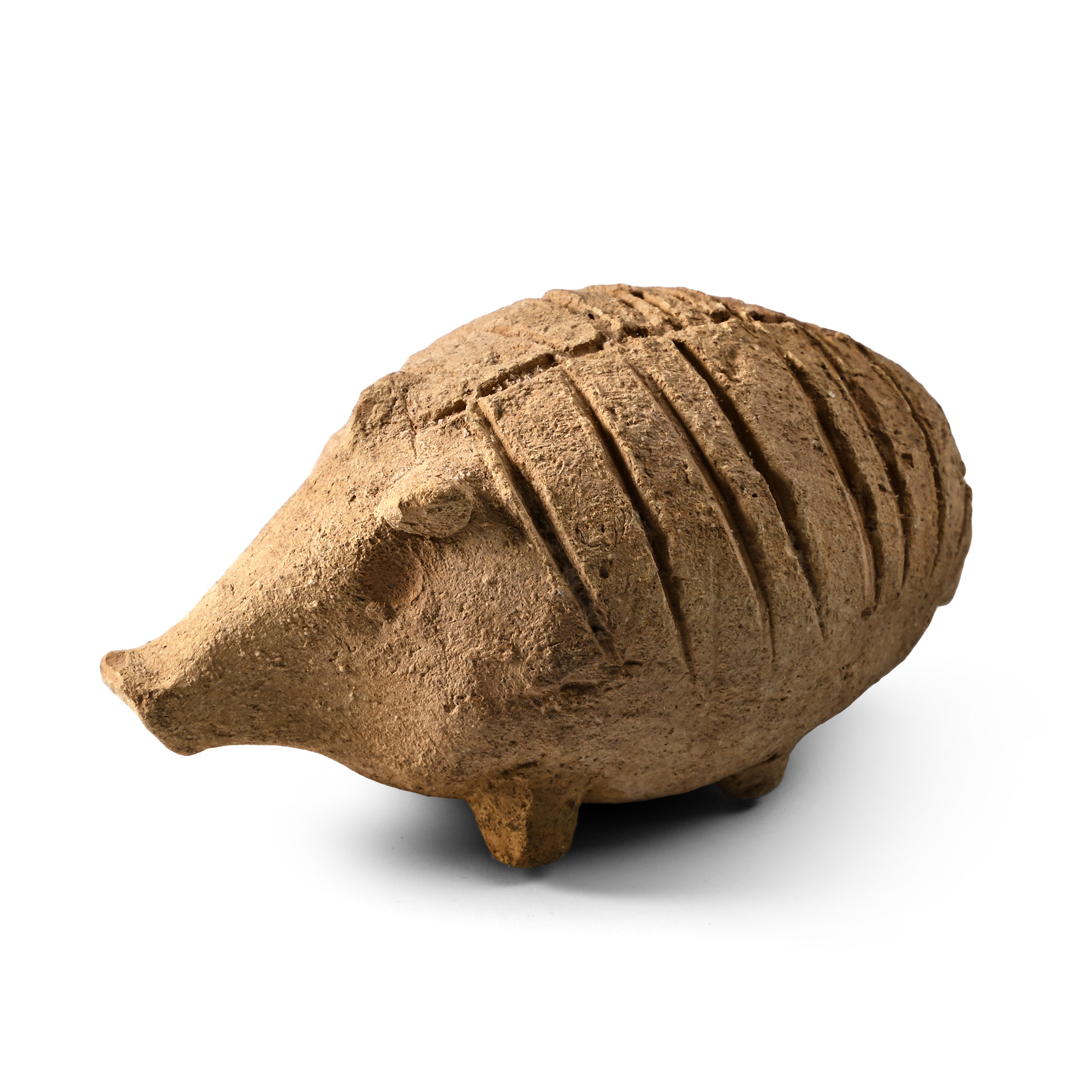
Mesopotamian Terracotta Animal
2400-1900 B.C.
3 in. (42 grams, 77 mm).
Hollow-formed porcine figure with upturned snout, pinched ears, incised fur detailing.
ProvenanceEx private collection, Contessa L.G., since the 1980s.
Private collection, acquired in 2000.
TimeLine Auctions follows a vetting process to ensure the authenticity and legality of all items, reinforcing our commitment to integrity and responsible trading. Each antiquity, antique, and coin lot undergoes thorough examination by a vetting committee of at least ten external specialists, professional trade association members, scientists, and archaeologists: Our Vetting Process
AUCTIONS:
TimeLine is a leading auction house specialising in antiquities, ancient art, collectables, natural history, coins, medals, and books. Our auctions offer museums, collectors, historians, and enthusiasts the opportunity to acquire unique and historically significant pieces.
-
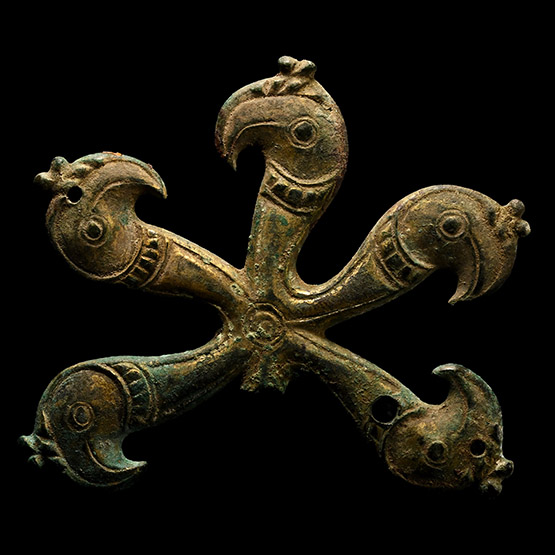
Ordos Gilt Bronze Zoomorphic Applique
Circa 4th century B.C.Sold for (Inc. bp): £494
Consisting of five (one absent) long-necked eagle heads facing in opposite directions, the beaked heads with raised eyes, necks decorated with a necklace imitating precious stones; three attachment holes. 44.5 grams, 77 mm
Acquired in the mid 1980s-1990s. Private collection, Switzerland, thence by descent.
Possibly an applique from a quiver. -
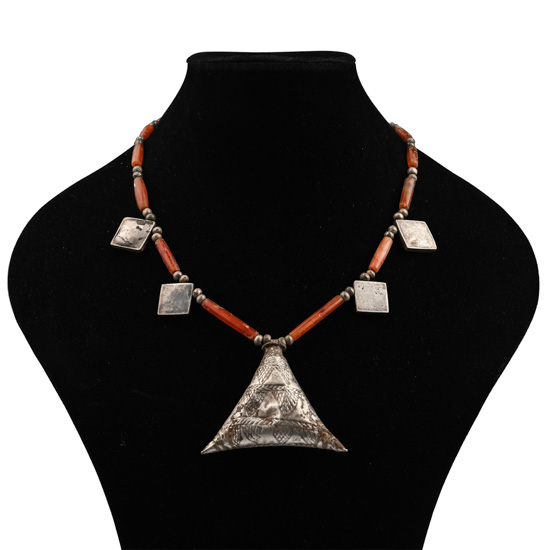
Elamite Carnelian Necklace with Large Silver Triangular Pendant
3rd-2nd millennium B.C.Estimate: £800 - 1,000 (+bp*)
Opening Bid: £400
A restrung necklace composed of carnelian beads and biconvex silver beads, with four lozengiform silver pendants and a hollow-formed bifacial silver triangular pendant, decorated with four rows of interlocking hatched and blank triangles between bands of chevrons on one face, and central floral motif on the other, with a flanged top and suspension loop; with later clasp. 62.2 grams, 46.5 cm
Acquired in the mid-1980s to early 1990s. Private collection, London, UK. -
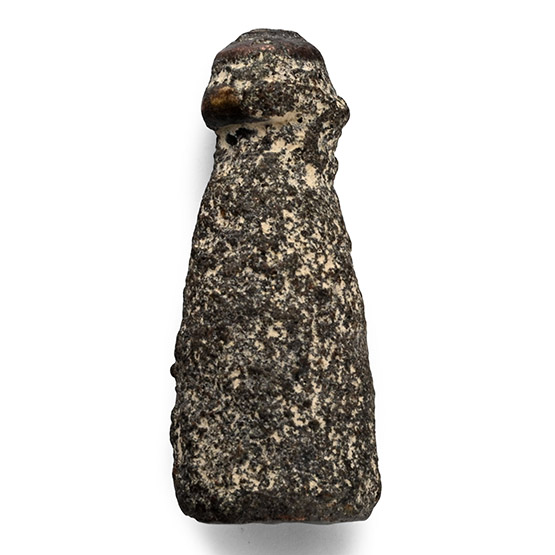
Western Asiatic Bronze Jewellery Punch
1st millennium B.C.Estimate: £140 - 180 (+bp*)
Opening Bid: £70
Skittle-shaped with three figures on the flat face. 8.9 grams, 27 mm
From the collection of a gentleman, acquired on the London art market in the 1990s.
