
Loading, please wait...
LOT 0928
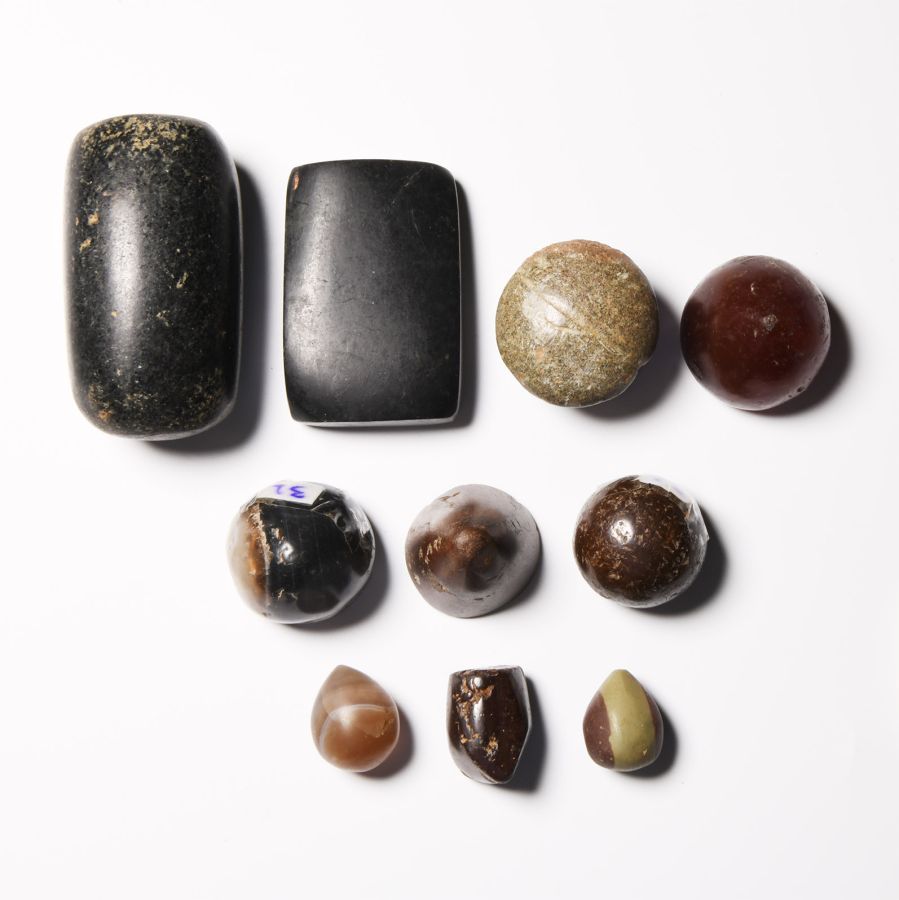
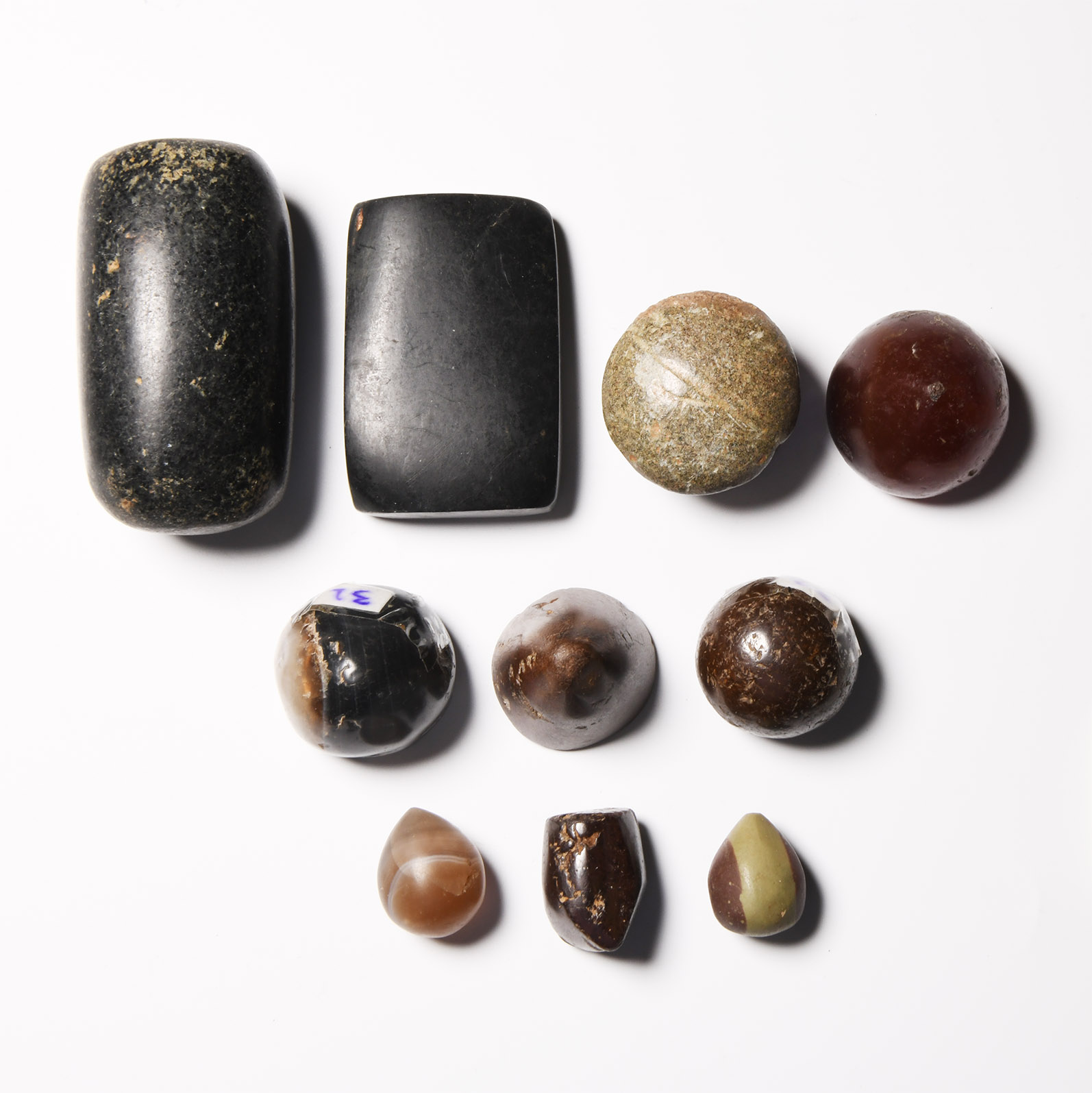
Mesopotamian Stone Weight Collection
CIRCA 1ST MILLENNIUM B.C. AND LATER
5/8 - 2 1/8 in. (256 grams total, 17-54 mm).
Including tabular, cylindrical, conical and other types, all polished. [10, No Reserve]
ProvenanceEx Simmons Gallery, London E11, UK, in the 1990s.
From a North London collection.
TimeLine Auctions follows a vetting process to ensure the authenticity and legality of all items, reinforcing our commitment to integrity and responsible trading. Each antiquity, antique, and coin lot undergoes thorough examination by a vetting committee of at least ten external specialists, professional trade association members, scientists, and archaeologists: Our Vetting Process
AUCTIONS:
TimeLine is a leading auction house specialising in antiquities, ancient art, collectables, natural history, coins, medals, and books. Our auctions offer museums, collectors, historians, and enthusiasts the opportunity to acquire unique and historically significant pieces.
-
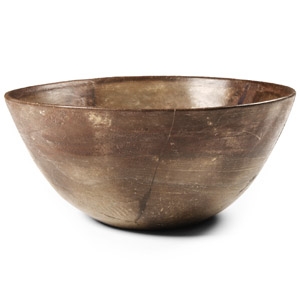
Western Asiatic Bowl with Cross
1st millennium B.C.Sold for (Inc. bp): £65
Comprising a deep body with flat base; the interior with a large painted cross motif extending to the rim with triangles on the field between the cross arms; repaired. 140 grams, 13.2 cm
London, UK gallery, 1971-early 2000s. -
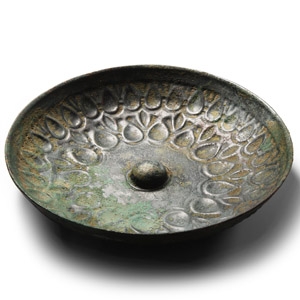
Achaemenid Bronze Phiale Mesomphalos
5th-4th century B.C.Estimate: £300 - 400 (+bp*)
Opening Bid: £150
With flanged rim, central mesomphalos boss surrounded by radiating lotus petals. 186 grams, 16.5 cm wide
From the collection of M. Cummings, UK, 1990s.
Phiale mesomphalos (literally: bowl with central boss) were the most popular form of vessel and were produced in a number of materials, including clay, bronze, silver and gold. They are a distinctive type of Achaemenid tableware, made by hammering or raising sheet metal, with decoration added in repoussé. They were used in banquets held by the nobility and for pouring libations at religious festivals. Phiales of this kind were a common gift from the Achaemenid king to the nobility which helped cement alliances among the different tribes of the Empire. The central boss to the underside allowed the user to secure their fingers and ensure a solid grip whilst drinking or pouring. -
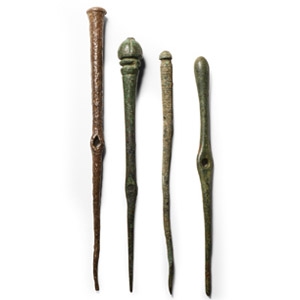
Luristan Bronze Pin Group
11th-8th century B.C.Sold for (Inc. bp): £46
Comprising four examples with tapering bodies and decorative finials, three with a central piercing. 112 grams total, 13.5-16 cm
From a UK private collection, before 1980.
