
Loading, please wait...
LOT 1186
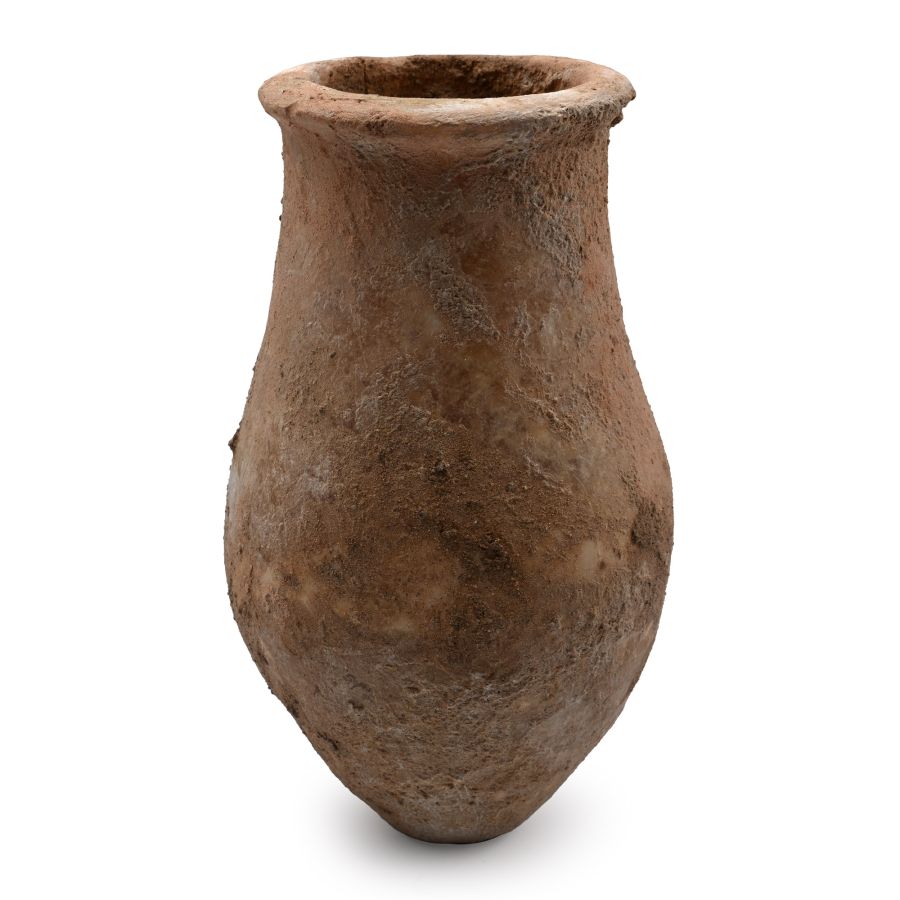
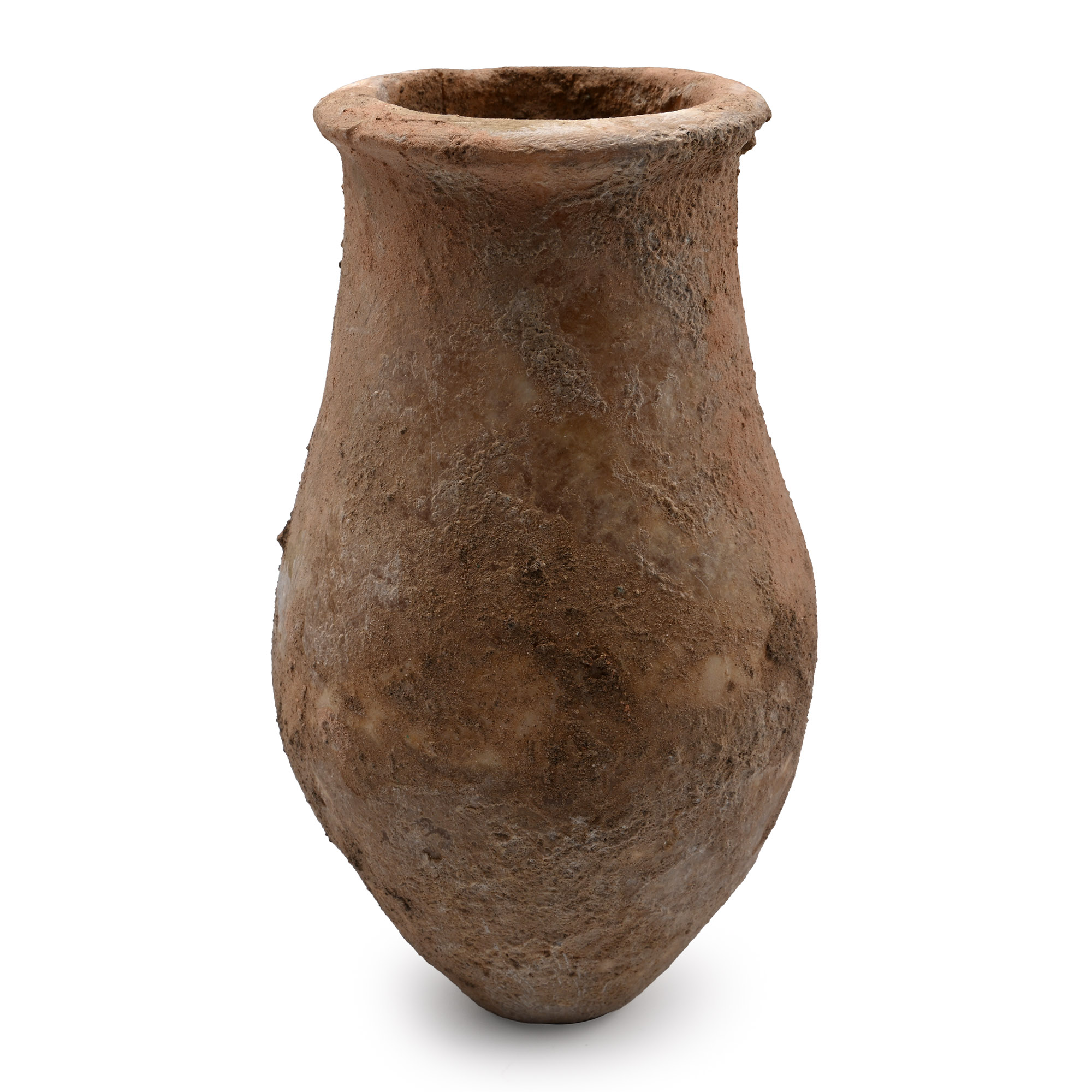
Mesopotamian Stone Vessel
1ST MILLENNIUM B.C.
5 3/8 in. (676 grams, 13.7 cm).
Piriform in profile with rounded base, everted rim.
ProvenanceFrom a collection formed before 1990.
Ex Mayfair, London, UK, gallery, 2000s.
This lot has been cleared against the Art Loss Register database, and is accompanied by an illustrated lot declaration signed by the Head of the Antiquities Department, Dr Raffaele D'Amato.
TimeLine Auctions follows a vetting process to ensure the authenticity and legality of all items, reinforcing our commitment to integrity and responsible trading. Each antiquity, antique, and coin lot undergoes thorough examination by a vetting committee of at least ten external specialists, professional trade association members, scientists, and archaeologists: Our Vetting Process
AUCTIONS:
TimeLine is a leading auction house specialising in antiquities, ancient art, collectables, natural history, coins, medals, and books. Our auctions offer museums, collectors, historians, and enthusiasts the opportunity to acquire unique and historically significant pieces.
LOT 1186
Mesopotamian Stone Vessel
Estimate £120 - 170€140 - 200 (for guidance only)$160 - 230 (for guidance only)
-
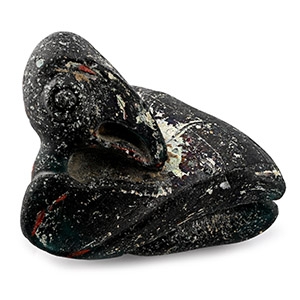
Levant Glass Bird Statuette
Late 1st millennium B.C.Sold for (Inc. bp): £91
A mainly black glass figure of a bird with open beak, domed eye, six vertical holes behind the head. 120 grams, 68 mm
Fine condition.
Property of a West London businessman, formed in the late 1980s-early 1990s. From the private collection of John Meredith, acquired since the 1990s; thence by descent. This lot has been cleared against the Art Loss Register database, and is accompanied by an illustrated lot declaration signed by the Head of the Antiquities Department, Dr Raffaele D'Amato. -
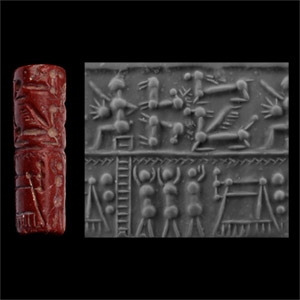
Levantine Style Red Jasper Cylinder Seal with Recumbent Quadrupeds
1500-1000 B.C.Sold for (Inc. bp): £468
With two rows of human and animal figures, restrung pair of red stone beads, old handwritten label '1544'; accompanied by a copy of an old scholarly note, typed and signed by W.G. Lambert, late Professor of Assyriology, University of Birmingham, 1970-1993, which states: 'Description of Cylinder Seal of Red Jasper, 37 x 12 mm. The upper register shows a seated figure with one arm raised, the other resting on the waist, a human hand(?) between knees and raised arm; two recumbent quadrupeds one above the other, one winged; two standing stags sideways, with heads turned back. The lower register shows, in a scene marked off by a ladder pattern, three standing humans with both hands raised before a tent-like structure with some object affixed to its upper front, two dots behind the structure. The registers are separated by a line with a row of simple crosses beneath it. This is in a rare Levantine style of c. 1500-1000 B.C. The lower register seems to show an act of worship. The condition is almost fine save for a little chipping at the bottom'; accompanied by a museum-quality impression. 10.2 grams, 37 mm
UK private collection, acquired 1980-1983. Accompanied by a copy of a scholarly note, typed and signed by Professor Wilfrid George Lambert in 1987. This lot has been cleared against the Art Loss Register database, and is accompanied by an illustrated lot declaration signed by the Head of the Antiquities Department, Dr Raffaele D'Amato. -
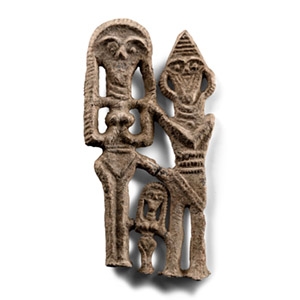
Syro-Hittite Lead Fertility Idol
2nd millennium B.C.Sold for (Inc. bp): £780
A plaque depicting a stylised man and woman conjoined at hips, flanking a small child holding their legs, the woman with large head and long hair, holding her breasts, the man wearing a loin cloth and conical headdress, holding the woman by the arm. 30 grams, 70 mm
Fine condition.
Ex property of a Dutch gentleman; formerly in an old Dutch collection formed in the 1970s. From the private collection of John Meredith, acquired since the 1990s; thence by descent. This lot has been cleared against the Art Loss Register database, and is accompanied by an illustrated lot declaration signed by the Head of the Antiquities Department, Dr Raffaele D'Amato.
