
Loading, please wait...
LOT 1215
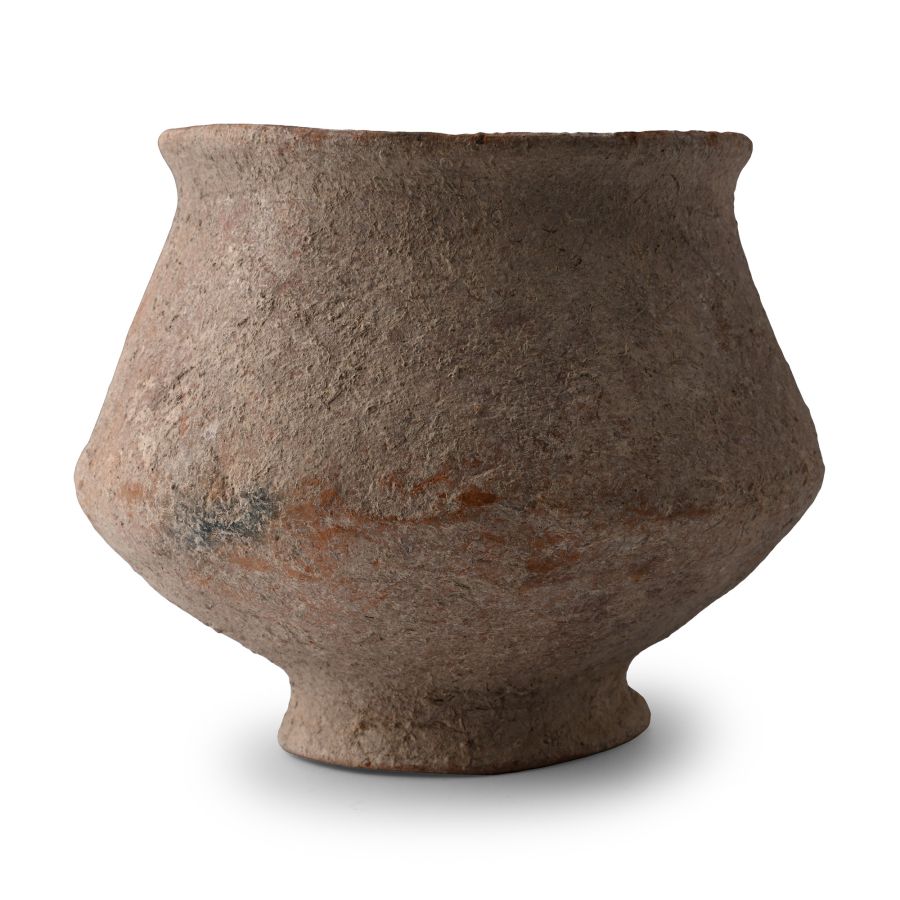
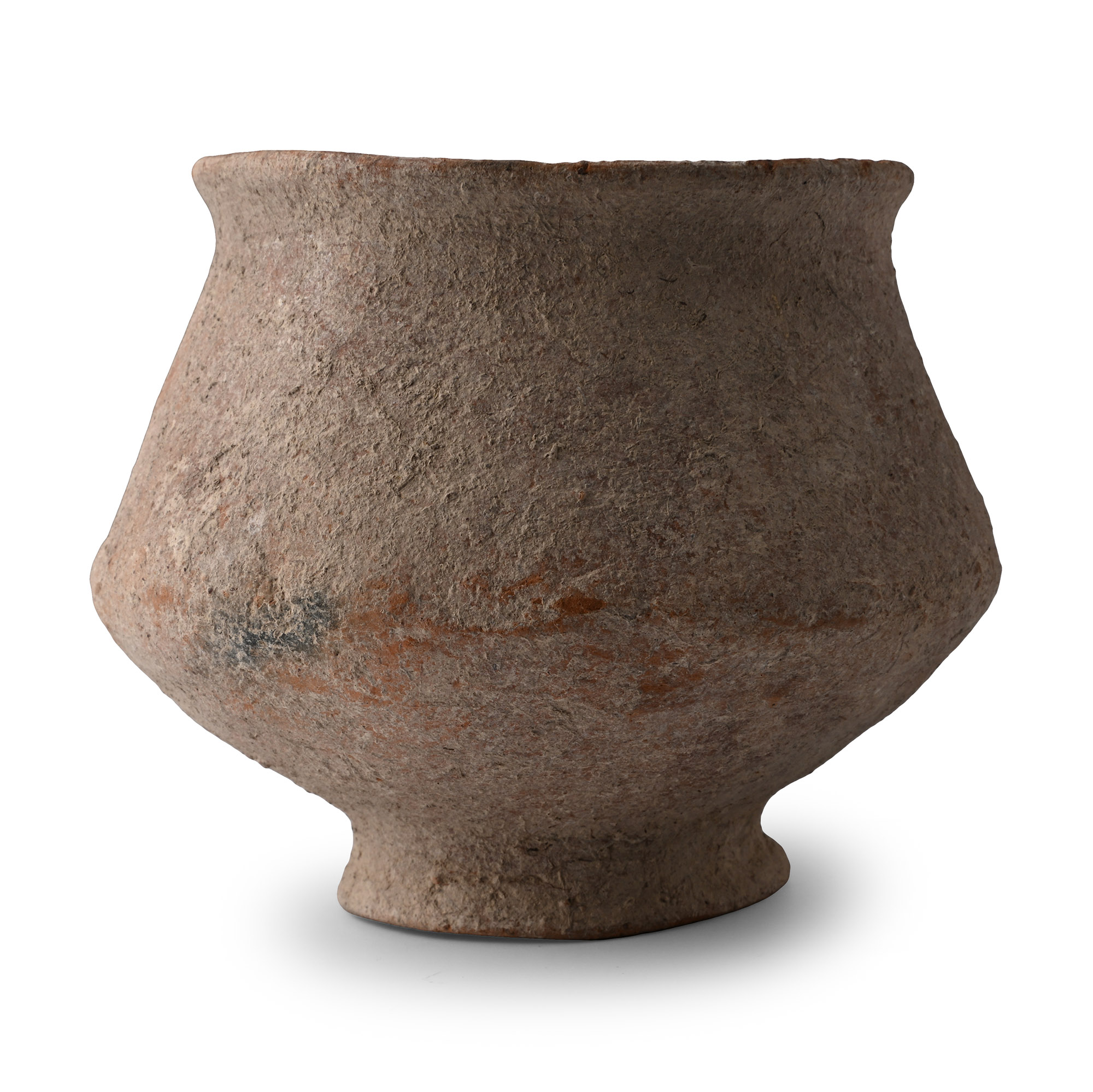
Mesopotamian Stone Vessel
1ST MILLENNIUM B.C.
4 3/8 in. (434 grams, 11.2 cm wide).
Biconvex in profile with flared foot and everted rim to the mouth.
ProvenanceFrom a collection formed before 1990.
Ex Mayfair, London, UK, gallery, 2000s.
This lot has been cleared against the Art Loss Register database, and is accompanied by an illustrated lot declaration signed by the Head of the Antiquities Department, Dr Raffaele D'Amato.
TimeLine Auctions follows a vetting process to ensure the authenticity and legality of all items, reinforcing our commitment to integrity and responsible trading. Each antiquity, antique, and coin lot undergoes thorough examination by a vetting committee of at least ten external specialists, professional trade association members, scientists, and archaeologists: Our Vetting Process
AUCTIONS:
TimeLine is a leading auction house specialising in antiquities, ancient art, collectables, natural history, coins, medals, and books. Our auctions offer museums, collectors, historians, and enthusiasts the opportunity to acquire unique and historically significant pieces.
-
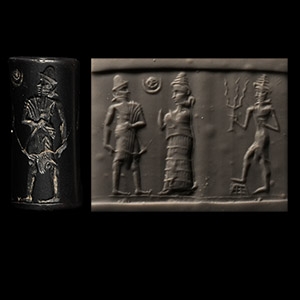
Old Babylonian Haematite Cylinder Seal
2000-1800 B.C.Sold for (Inc. bp): £3,120
Columnar in form with frieze depicting a standing Lamma goddess in flounced robe facing towards a god wearing a pleated garment and holding a mace at his hip; disc-and-crescent motif above; behind, the storm-god Adad with one foot on a mound, wielding a lightning bolt in his raised hand. 11 grams, 25 mm
Private collection, Europe. with Bonhams, London, 22 April 1999, no.538. Acquired by the present owner from the above. Accompanied by copies of the relevant Bonhams catalogue pages. This lot has been checked against the Interpol Database of stolen works of art and is accompanied by a search certificate number no.12538-232100. This lot has been cleared against the Art Loss Register database, and is accompanied by an illustrated lot declaration signed by the Head of the Antiquities Department, Dr Raffaele D'Amato. -
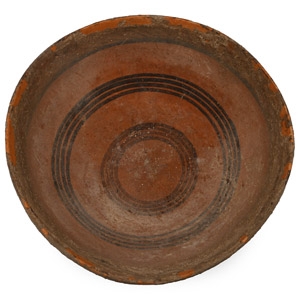
Bronze Age Bichrome Terracotta Bowl
2nd-1st millennium B.C.Sold for (Inc. bp): £91
Broad and squat with concentric painted rings in two bands to the inner face. 625 grams, 22.5 cm wide
Ex property of a London, UK, gentleman, 1990s. This lot has been cleared against the Art Loss Register database, and is accompanied by an illustrated lot declaration signed by the Head of the Antiquities Department, Dr Raffaele D'Amato. -
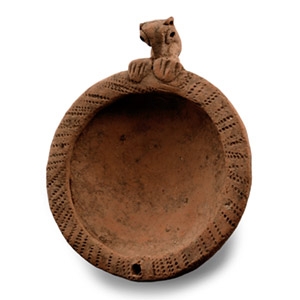
Mesopotamian Terracotta Dish with Animal Figurehead
1st millennium B.C.Sold for (Inc. bp): £234
Shallow body, rounded base, flat rim decorated etched dots and pierced for suspension, applied stylised zoomorphic figure to the outer rim. 82 grams, 97 mm
From an important collection pre 1988. From a private UK collection. This lot has been cleared against the Art Loss Register database, and is accompanied by an illustrated lot declaration signed by the Head of the Antiquities Department, Dr Raffaele D'Amato.
