
Loading, please wait...



LOT 1265
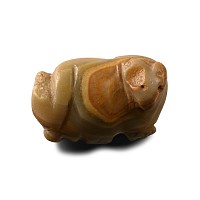
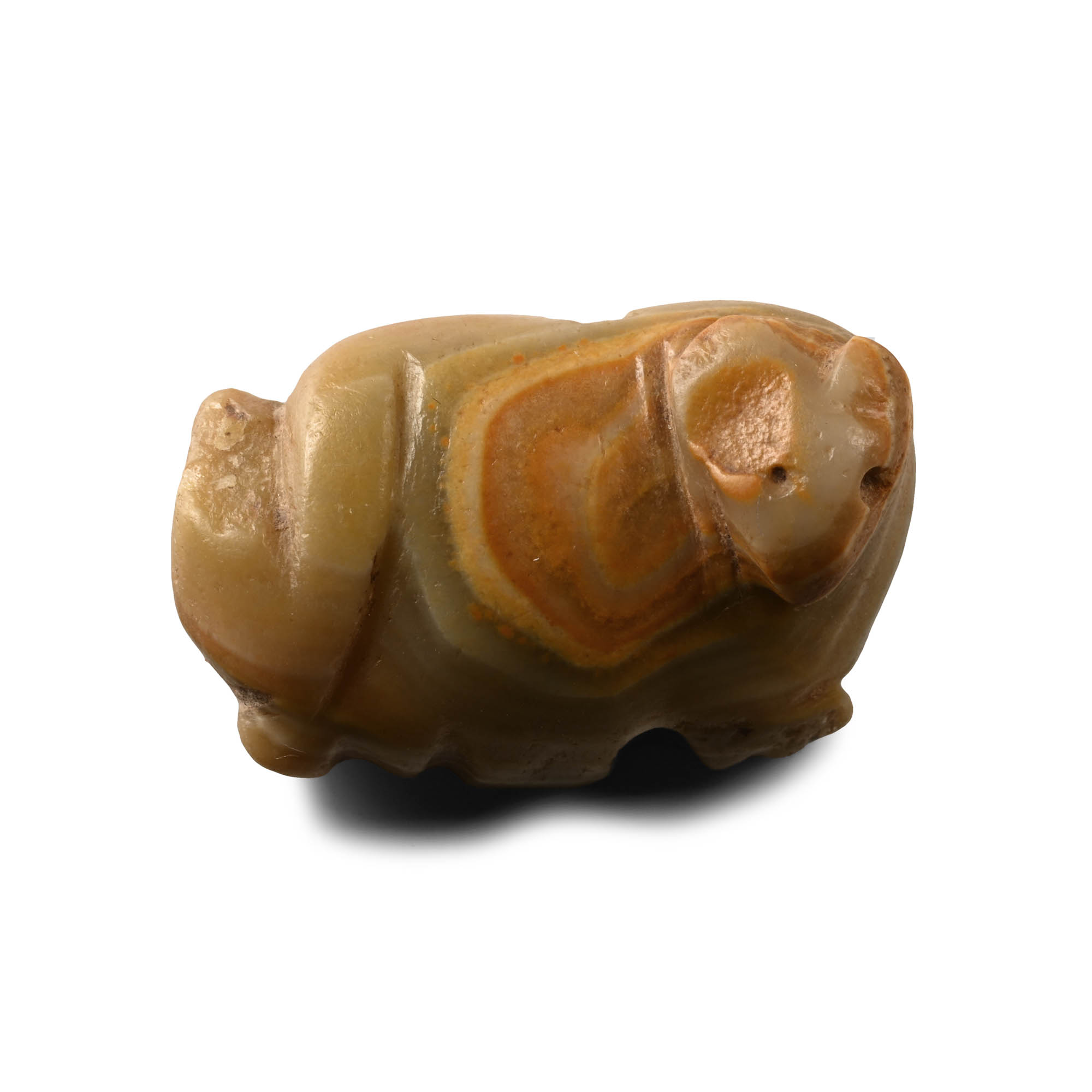
Mesopotamian Stone Bull Stamp Seal
2ND-1ST MILLENNIUM B.C.
1 in. (7.1 grams, 27 mm).
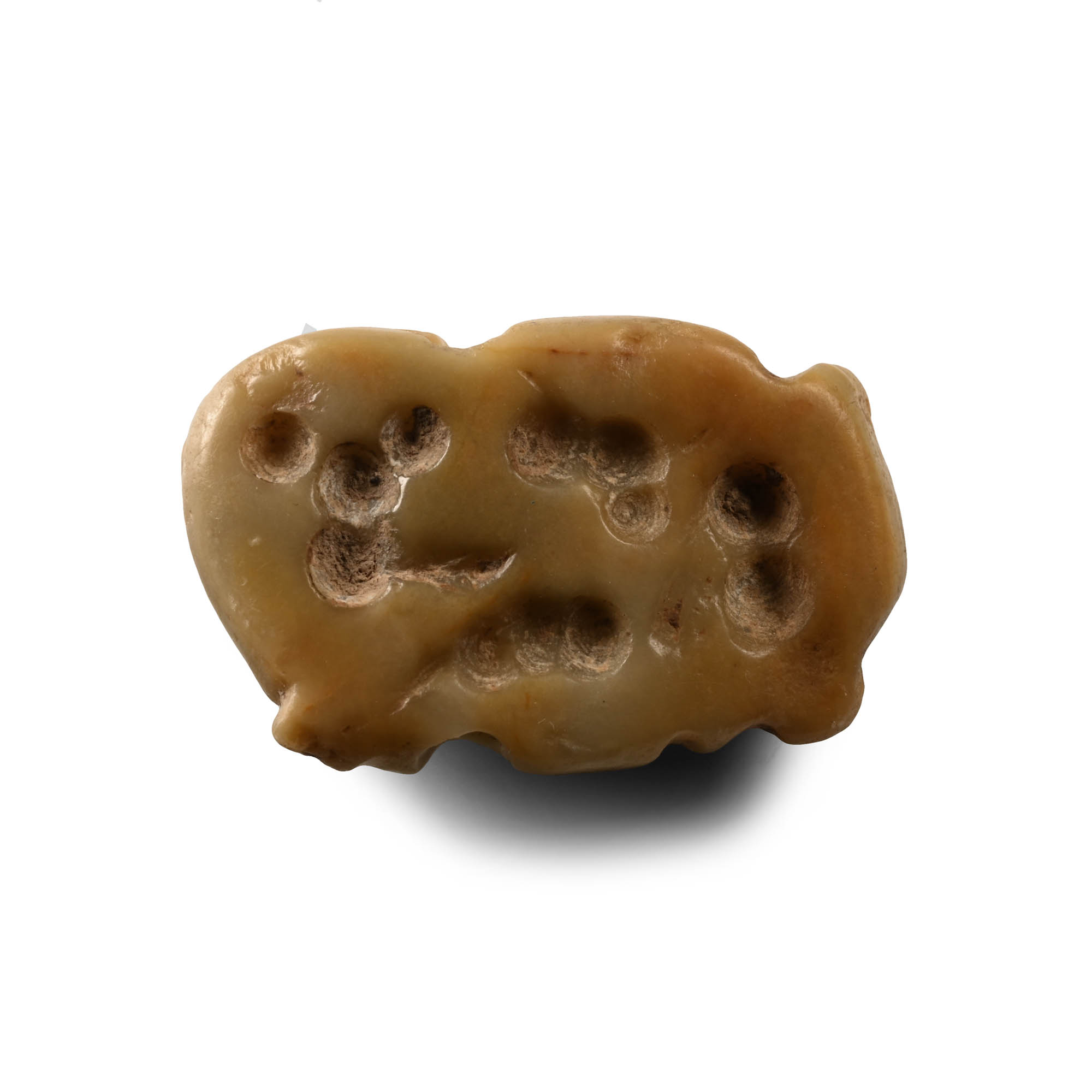
Modelled in the round as a recumbent bull with piriform head, pierced at the shoulder, with abstract drilled design to the underside.
ProvenanceFrom the private collection of Mr K.A., acquired in the 1990s-early 2000s.
CONDITIONTimeLine Auctions follows a vetting process to ensure the authenticity and legality of all items, reinforcing our commitment to integrity and responsible trading. Each antiquity, antique, and coin lot undergoes thorough examination by a vetting committee of at least ten external specialists, professional trade association members, scientists, and archaeologists: Our Vetting Process
AUCTIONS:
TimeLine is a leading auction house specialising in antiquities, ancient art, collectables, natural history, coins, medals, and books. Our auctions offer museums, collectors, historians, and enthusiasts the opportunity to acquire unique and historically significant pieces.
-
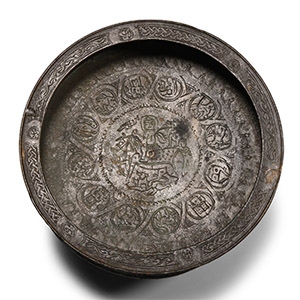
Western Asiatic Decorated Dish with Animal Feet
12th century A.D.Sold for (Inc. bp): £338
With low sidewall and flat everted rim, three radiating feet to the underside, each a quadruped with lowered head; sidewall with band of low-relief roundels each containing a perching bird in profile; rim with knotwork and guilloche panels interrupted by roundels; inner face of the bowl with low-relief band of roundels containing profile birds, hounds and other animals, surrounding a scene depicting a huntsman on horseback with billowing cape, a hound running beside the horse's legs and a bird perching above the horse's head, second hound crouching above the horse's rump. 1.15 kg, 18 cm diameter
Ex London, UK, gallery, 1971-early 2000s. Property of a London gentleman. -
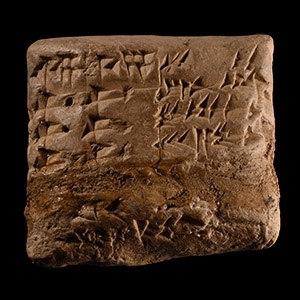
Mesopotamian Terracotta Cuneiform Tablet
2nd millennium B.C.Sold for (Inc. bp): £598
A bifacial pillow-shaped tablet with cuneiform text to both faces; repaired from two fragments. 41.5 grams, 49 mm
From specialised collection of cuneiform texts, formed in the 1950s-1990s. The property of a London gentleman and housed in London, thence by descent to family members. Examined by Professor Wilfrid George Lambert FBA (1926-2011), historian, archaeologist, and specialist in Assyriology and Near Eastern archaeology, in the late 1980s and 1990s. The collection is exceptional for the variety of types, including some very rare and well preserved examples. -
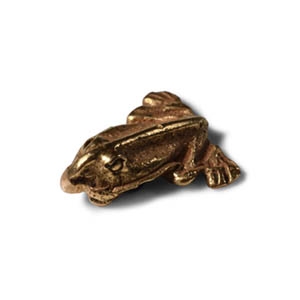
Old Babylonian Gold Frog Amulet
2000-1800 B.C.Sold for (Inc. bp): £598
The frog modelled in the round with anatomical detailing, pierced at the middle. 0.34 grams, 6 mm
Acquired in Switzerland, 1999. Private collection, Europe.
