
Loading, please wait...
LOT 1402
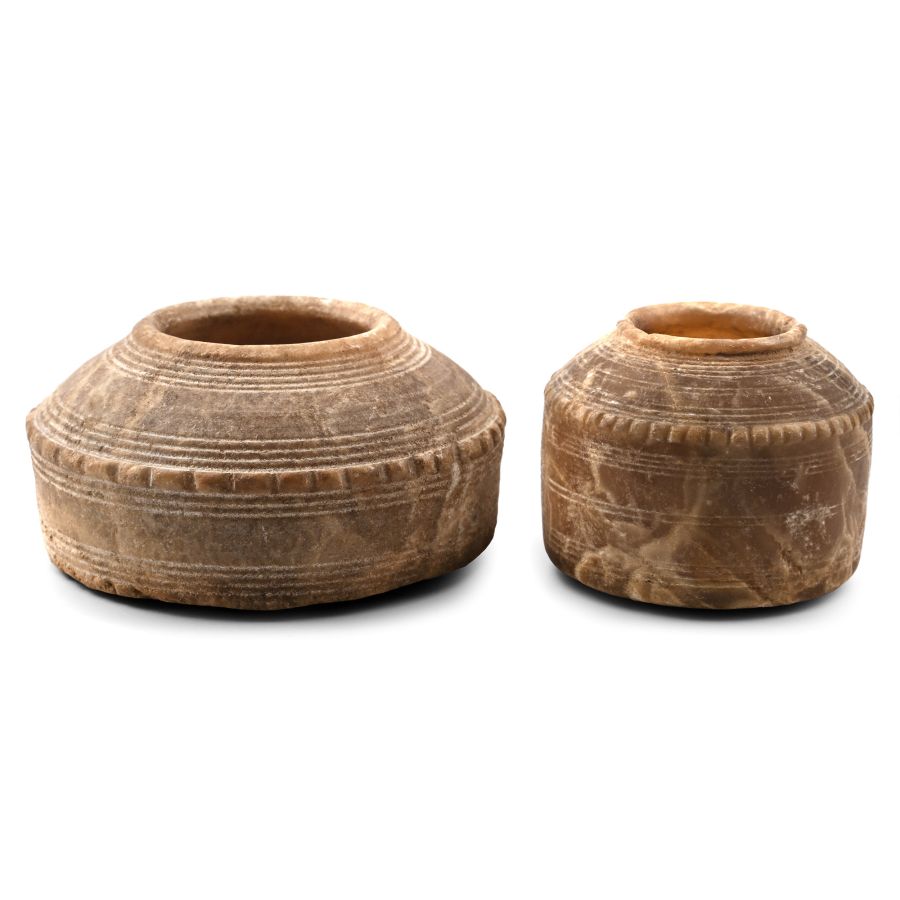
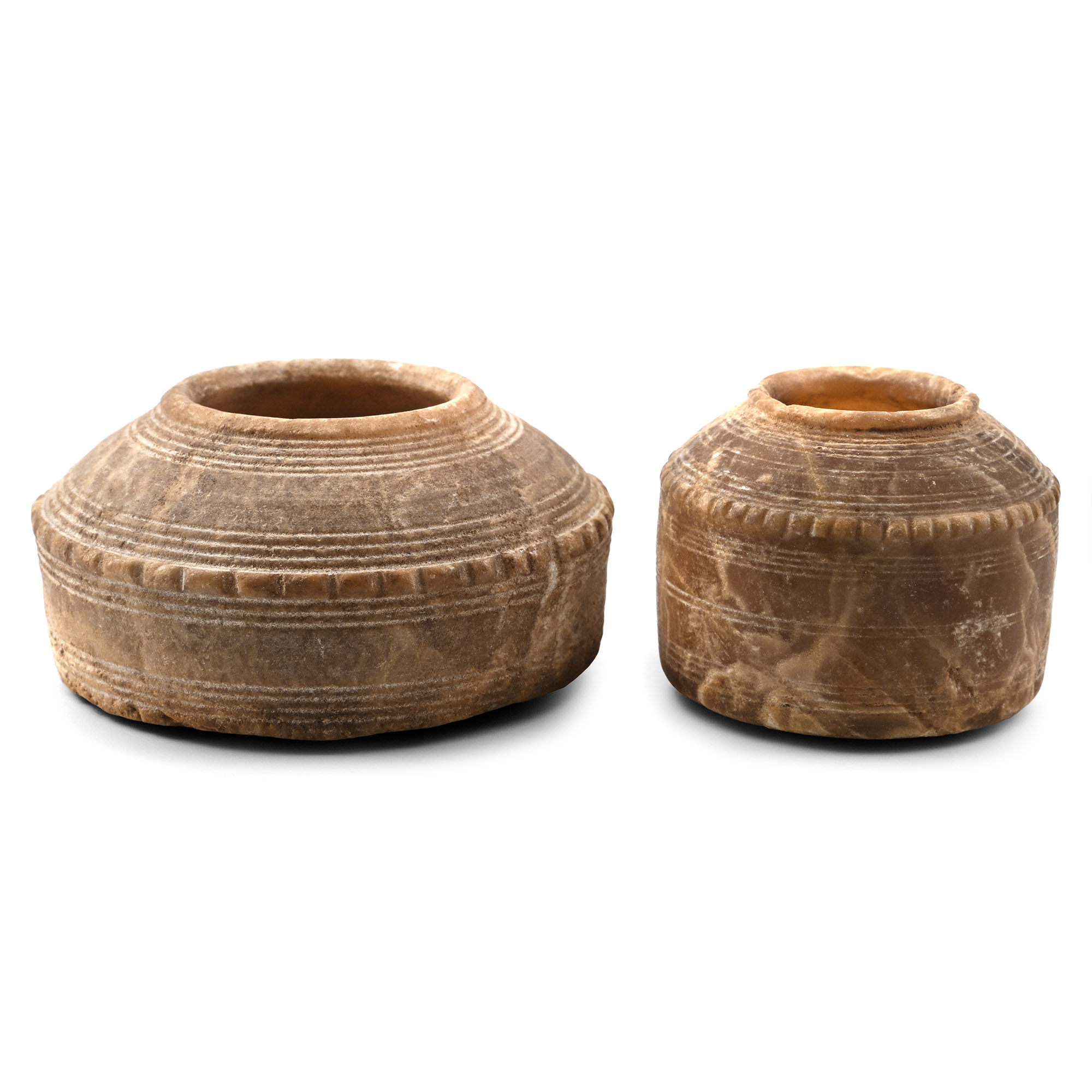
Mesopotamian Stone Bowl Collection
2ND MILLENNIUM B.C.
2 - 3 in. (199 grams total, 51-75 mm).
Barrel-shaped in profile with a flat base, ribbed rim to the tapering neck with raised rim; incised lines to the outer face. [2]
ProvenanceUK private collection before 2000.
Acquired on the UK art market.
Private collection, London, UK.
TimeLine Auctions follows a vetting process to ensure the authenticity and legality of all items, reinforcing our commitment to integrity and responsible trading. Each antiquity, antique, and coin lot undergoes thorough examination by a vetting committee of at least ten external specialists, professional trade association members, scientists, and archaeologists: Our Vetting Process
AUCTIONS:
TimeLine is a leading auction house specialising in antiquities, ancient art, collectables, natural history, coins, medals, and books. Our auctions offer museums, collectors, historians, and enthusiasts the opportunity to acquire unique and historically significant pieces.
LOT 1402
Mesopotamian Stone Bowl Collection
Estimate £700 - 900€810 - 1,040 (for guidance only)$950 - 1,220 (for guidance only)
-
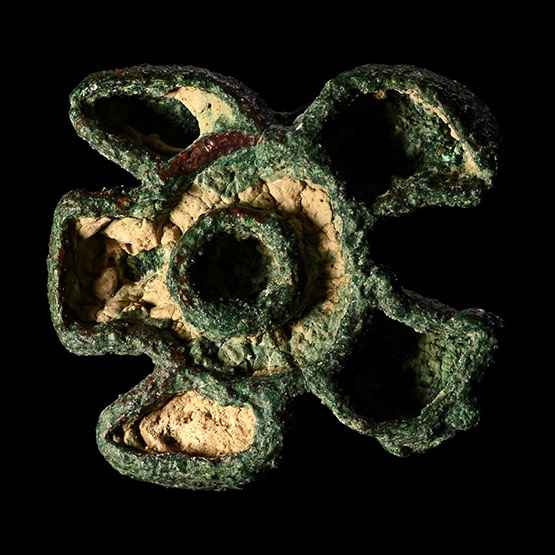
West Central Asian Bronze Stamp Seal with Horned Beast
Circa 2300-2000 B.C.Sold for (Inc. bp): £98
Zoomorphic stamp with loop handle to the reverse; accompanied by an old scholarly note, typed and signed by W.G. Lambert, late Professor of Assyriology, University of Birmingham, 1970-1993, which states: 'Stamp Seal of Bronze. 27.5x35x13 mm. This bears the shape of what is depicted. The face is flat and compartmented, and the back is flat also with look of sheet metal for suspension. The design shows the face of a horned quadruped frontally, with drooping ears and stout horns, but with one big central eye. This comes from west central Asia and dates to c. 2300-2000 B.C. It is a rare design and in good condition.' 12.5 grams, 31 mm
Acquired in the late 1980s-early 1990s. Ex property of a West London businessman. Academically researched and catalogued by the late Professor Lambert in the early 1990s. -
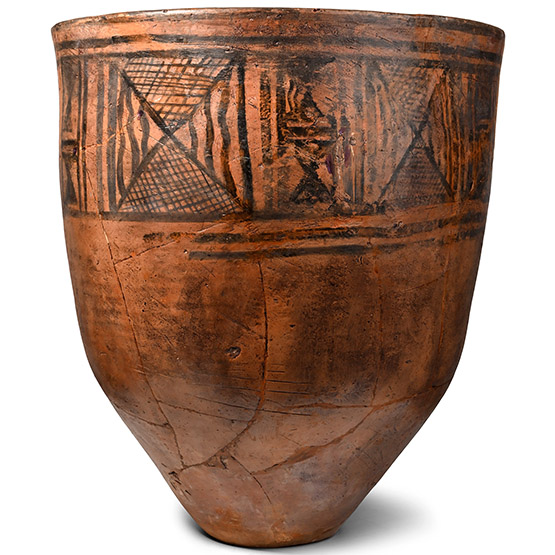
Monumental Western Asiatic Pottery Jar
Circa 3000 B.C.Estimate: £1,500 - 2,000 (+bp*)
Opening Bid: £600
Comprising a sharply tapering lower body, parallel-sided upper body and rounded rim; decorated in dark brown with thirteen square panels with central saltire on a hatched field; repaired. 17 kg, 64 cm high
with Mahboubian Gallery, London, UK, 1974. Private collection, London, UK. This lot has been checked against the Interpol Database of stolen works of art and is accompanied by search certificate number no.12972-245238. -
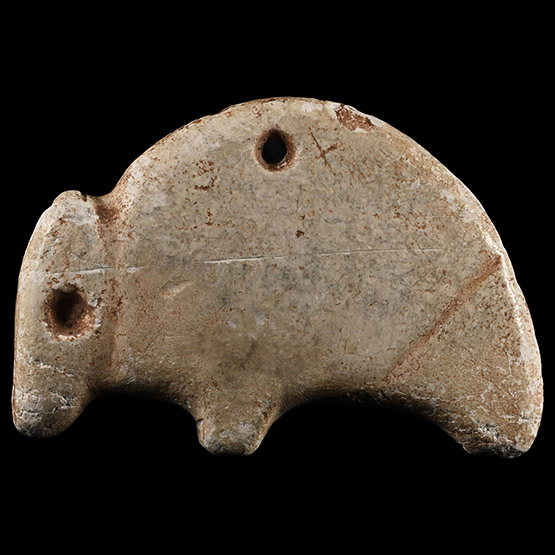
Large Sumerian Animal Amulet
3rd millennium B.C.Estimate: £380 - 480 (+bp*)
Opening Bid: £210
Carved bifacial amuletic pendant of an ox with incised detailing, sockets for inlaid eyes, suspension hole at shoulder. 62 grams, 74 mm
From the collection of a gentleman, acquired on the London art market in the 1990s.
