
Loading, please wait...
LOT 0265
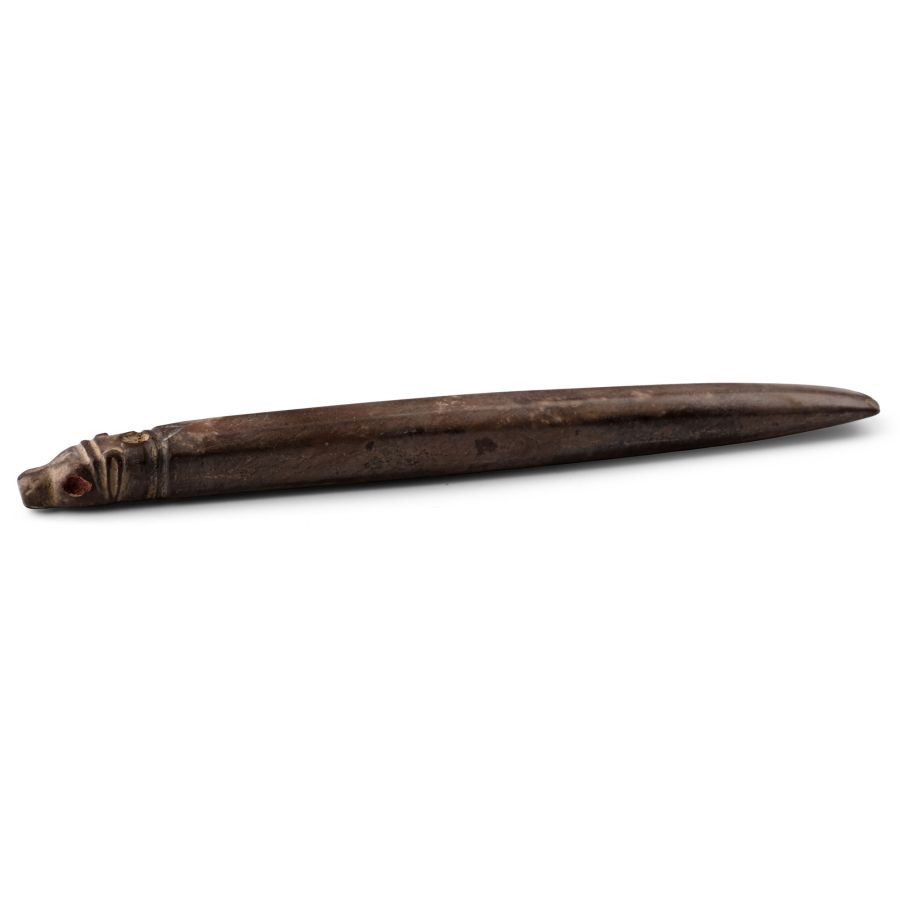
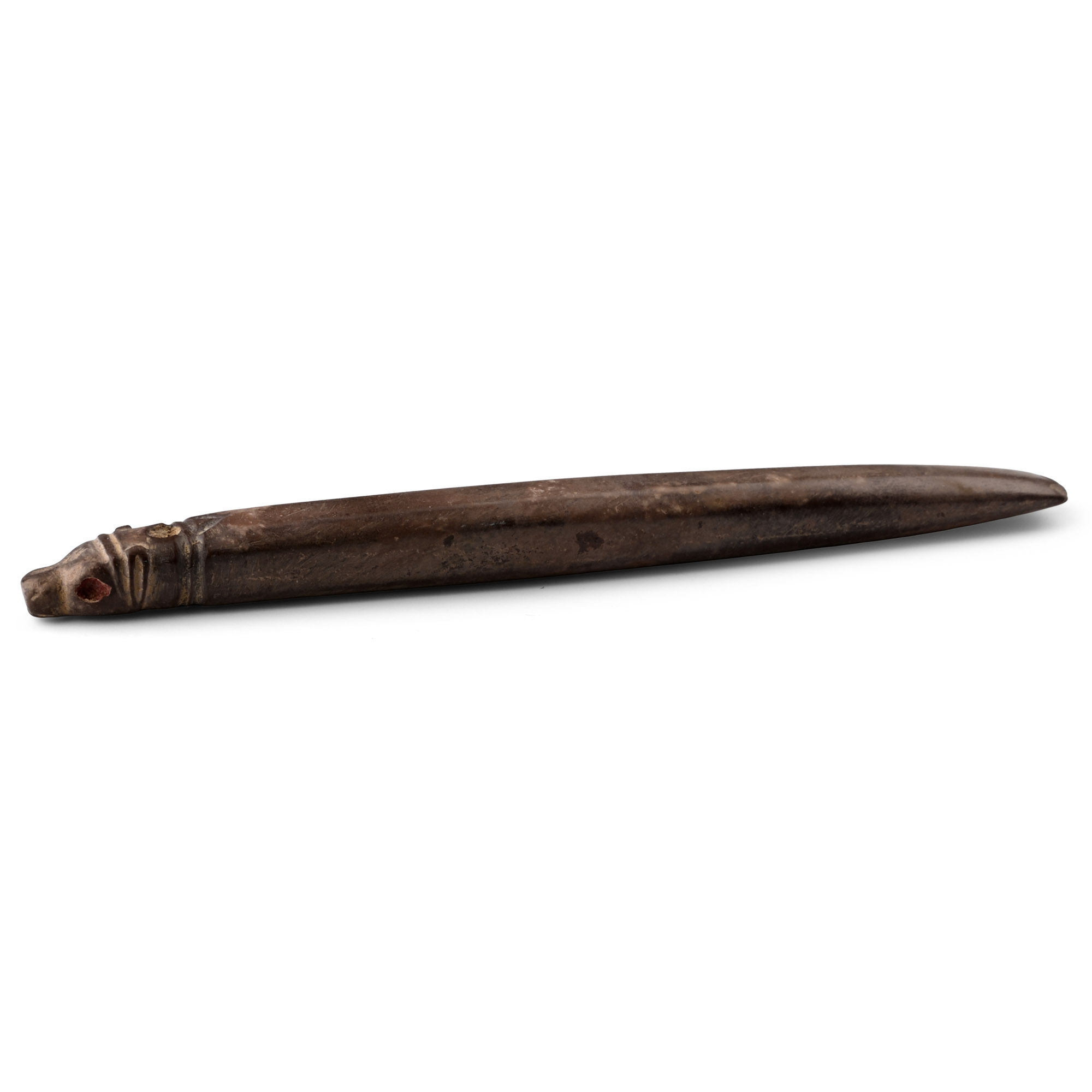
Mesopotamian Stone Animal-Headed Implement
3RD-2ND MILLENNIUM B.C.
6 in. (42.4 grams, 15.1 cm).
Square-section long body with rounded edges, tapered and flattened to one end; stylised zoomorphic finial to the other end with one white eye inlay, pierced for suspension.
ProvenanceFrom an important collection pre 1988.
From a private UK collection.
This lot has been cleared against the Art Loss Register database, and is accompanied by an illustrated lot declaration signed by the Head of the Antiquities Department, Dr Raffaele D'Amato.
TimeLine Auctions follows a vetting process to ensure the authenticity and legality of all items, reinforcing our commitment to integrity and responsible trading. Each antiquity, antique, and coin lot undergoes thorough examination by a vetting committee of at least ten external specialists, professional trade association members, scientists, and archaeologists: Our Vetting Process
AUCTIONS:
TimeLine is a leading auction house specialising in antiquities, ancient art, collectables, natural history, coins, medals, and books. Our auctions offer museums, collectors, historians, and enthusiasts the opportunity to acquire unique and historically significant pieces.
LOT 0265
Mesopotamian Stone Animal-Headed Implement
Estimate £600 - 800€700 - 930 (for guidance only)$810 - 1,080 (for guidance only)
-
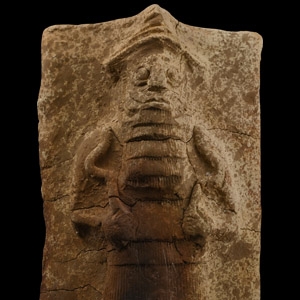
Mesopotamian Terracotta Plaque with Nergal
2nd millennium B.C.Sold for (Inc. bp): £494
Rectangular plaque with low-relief standing front-facing figure of a bearded male wearing long dress and horned crown, holding a sceptre in each hand, possibly depicting Nergal (god of the Underworld); oven baked for conservation. 155 grams, 13.4 cm
From an important collection pre 1988. From a private UK collection. This lot has been cleared against the Art Loss Register database, and is accompanied by an illustrated lot declaration signed by the Head of the Antiquities Department, Dr Raffaele D'Amato. -
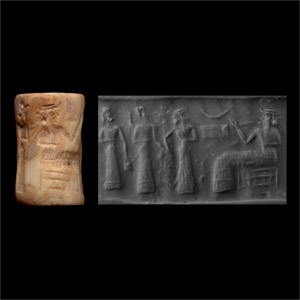
Early Akkadian Shell Cylinder Seal with Presentation Scene
Circa 2300-2200 B.C.Sold for (Inc. bp): £260
Depicting seated god facing three standing figures, restrung pair of red stone beads, old handwritten label '1648'; accompanied by a copy of an old scholarly note, typed and signed by W.G. Lambert, late Professor of Assyriology, University of Birmingham, 1970-1993, which states: 'Cylinder Seal of Cream Fossil Shell, 35 x 22 mm. On the right sits a god, bearded, hair done up in a bun, wearing a horned tiara and a long, flounced robe, and raising one hand' before him stands a deity in a long robe falling in pleats and holding by the wrist a worshipper behind, who is bringing a kid as a gift to the seated god. The worshipper's wife stands behind him, with different hair style but similar clothing, holding a bucket in one hand. There is a crescent moon in the sky and between the two gods an oblong filled with circles; and a fish. This is an Akkadian seal from Mesopotamia or West Iran, c. 2300-2200 B.C. The presentation scene it shows was meant to be understood as the seal owner and his wife being introduced to an important god who could help them. The oblong object with circles in not certainly understood, but it may be a tray in which small cheese were put to drain.'; accompanied by a museum-quality impression. 30.9 grams, 35 mm
Armand Trampitsch, Glyptique Archéologie, Paris, Hôtel Drouot, 13-14 May 1992, no.23 [Part]. Accompanied by a copy of a scholarly note, typed and signed by Professor Wilfrid George Lambert in 1992. This lot has been cleared against the Art Loss Register database, and is accompanied by an illustrated lot declaration signed by the Head of the Antiquities Department, Dr Raffaele D'Amato. -
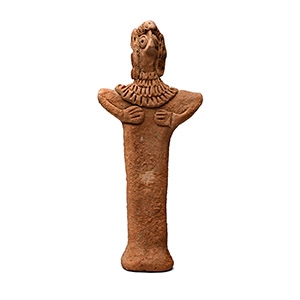
Syro-Hittite Terracotta Fertility Figure
Circa 12th-8th century B.C.Sold for (Inc. bp): £286
Modelled with a flat-section body and splayed base, arms and hands positioned on the chest, applied ornamental collar and headdress or hair; large circular eyes and pinched nose. 146 grams, 18.5 cm high
From the property of the late Mr SM, London, UK, 1969-1999; thence by descent. From the private collection of John Meredith, acquired since the 1990s; thence by descent. This lot has been cleared against the Art Loss Register database, and is accompanied by an illustrated lot declaration signed by the Head of the Antiquities Department, Dr Raffaele D'Amato.
