
Loading, please wait...
_900x900.jpg "Mesopotamian Steatite Libation Spoon")
_200x200.jpg "Mesopotamian Steatite Libation Spoon")
_900x900.jpg "Mesopotamian Steatite Libation Spoon")
_200x200.jpg "Mesopotamian Steatite Libation Spoon")
_900x900.jpg "Mesopotamian Steatite Libation Spoon")
_200x200.jpg "Mesopotamian Steatite Libation Spoon")
.jpg "Mesopotamian Steatite Libation Spoon")
.jpg "Mesopotamian Steatite Libation Spoon")
.jpg "Mesopotamian Steatite Libation Spoon")
LOT 0206
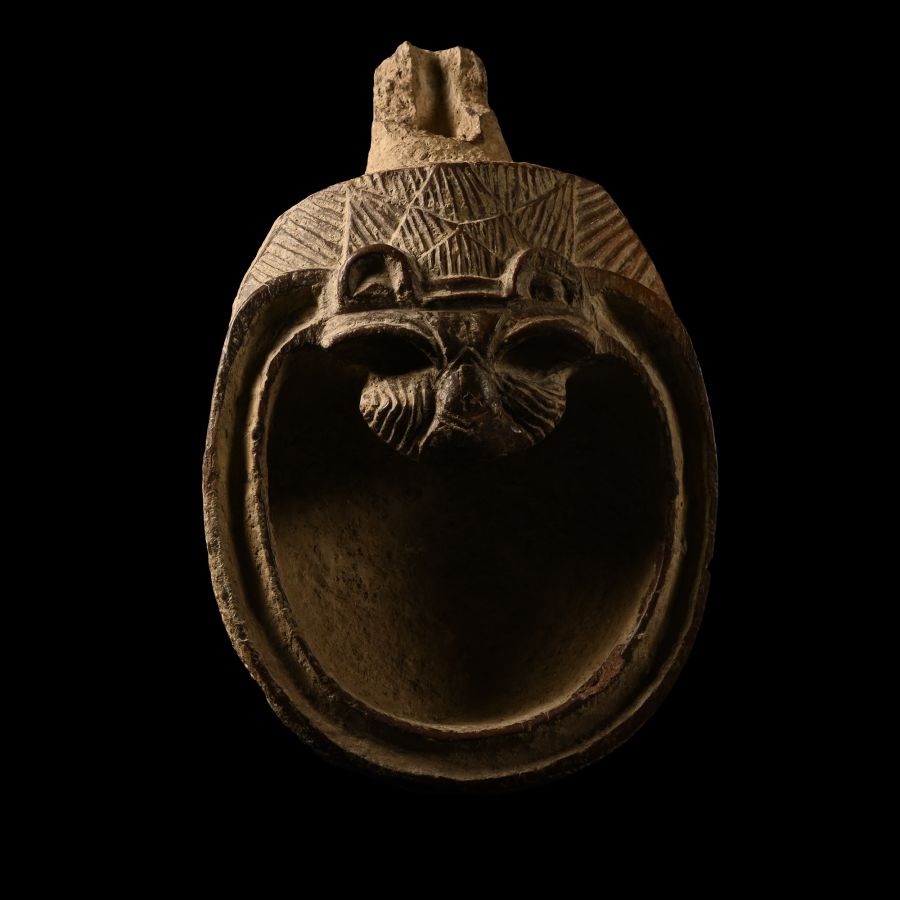
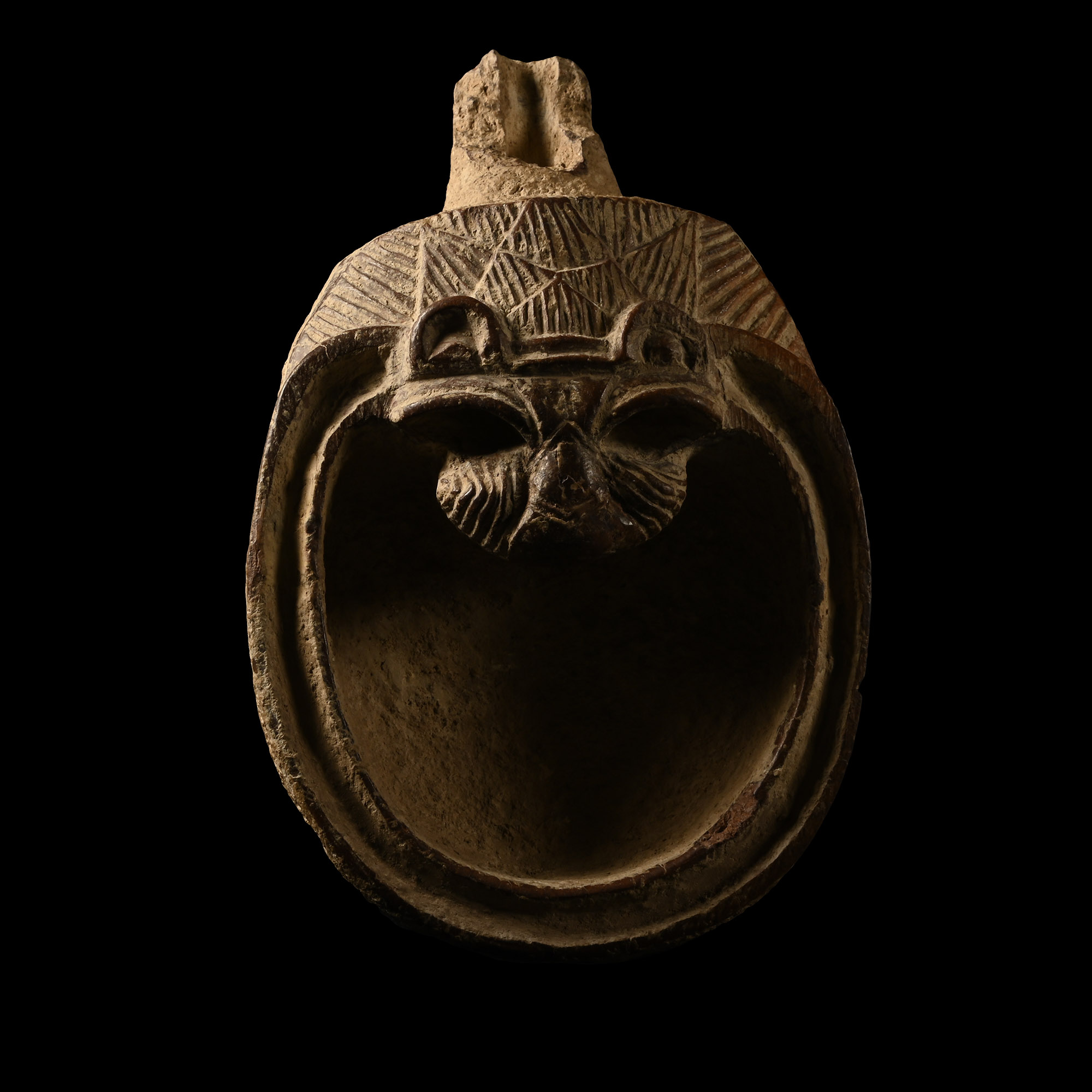
Mesopotamian Steatite Libation Spoon
1ST MILLENNIUM B.C.
4 1/2 in. (357 grams, 11.3 cm).
Carved in the round with gusseted rim, shallow bowl with carved hand and arm detail to each side and cruciform segmented bands to the underside; lion-head carved in the round to the rear with segmented mane, sockets to the eyes and gaping mouth with hole for pouring liquids through the tubular junction to the rear, repaired.
ProvenanceAcquired in the mid 1980s-1990s.
Private collection, Switzerland, thence by descent.
Private collection, since the late 1990s.
Accompanied by an academic report by Dr Raffaele D’Amato.
This lot has been checked against the Interpol Database of stolen works of art and is accompanied by search certificate number no.12193-222189.
This lot has been cleared against the Art Loss Register database, and is accompanied by an illustrated lot declaration signed by the Head of the Antiquities Department, Dr Raffaele D'Amato.
For discussion of similar pieces c.f. Merhav (ed.), A Glimpse into the past: The Joseph Tembach Collection, Jerusalem, 1981, p.62, fig.37; and Settgast, J., Von Troja bis Amarna, The Norbert Schimmel Collection, Mainz, 1978, no.146, for a vessel with similar lion heads; Moorey, P.R.S., Bunker, E.C., Porada, E., and Markoe, G., Ancient Bronzes Ceramics and Seals, The Nasli M. Heeramaneck Collection of Ancient Near Eastern, Central Asiatic and European Art, Los Angeles, 1981, cat.1305, for similar vessel with lion head biting the rim, carved in steatite; Fortin, M., Syrie, terre de civilisations, Québec, 1999, p.195, no.160, for a lion’s head shaped cup from Ugarit.
CONDITIONTimeLine Auctions follows a vetting process to ensure the authenticity and legality of all items, reinforcing our commitment to integrity and responsible trading. Each antiquity, antique, and coin lot undergoes thorough examination by a vetting committee of at least ten external specialists, professional trade association members, scientists, and archaeologists: Our Vetting Process
AUCTIONS:
TimeLine is a leading auction house specialising in antiquities, ancient art, collectables, natural history, coins, medals, and books. Our auctions offer museums, collectors, historians, and enthusiasts the opportunity to acquire unique and historically significant pieces.
-
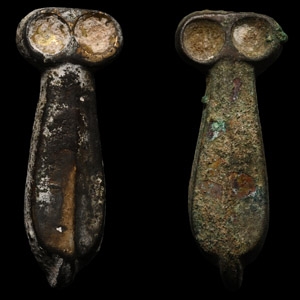
Western Asiatic Silver Phallic Mount Pair
1st millennium B.C.Estimate: £200 - 300 (+bp*)
Opening Bid: £100
Each with leaf-shaped shank and two recessed discs, studs to the reverse. 11.91 grams total, 31 mm each
Acquired before 1983. Ex London gallery, 1990s. This lot has been cleared against the Art Loss Register database, and is accompanied by an illustrated lot declaration signed by the Head of the Antiquities Department, Dr Raffaele D'Amato. -
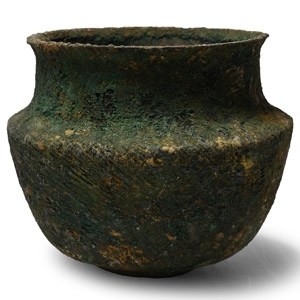
Achaemenid Bronze Cup
6th-4th century B.C.Sold for (Inc. bp): £86
Round-bodied with carinated shoulder and everted rim, central raised base. 133 grams, 96 mm
Acquired 1980-2015. Ex Abelita family collection. This lot has been cleared against the Art Loss Register database, and is accompanied by an illustrated lot declaration signed by the Head of the Antiquities Department, Dr Raffaele D'Amato. -
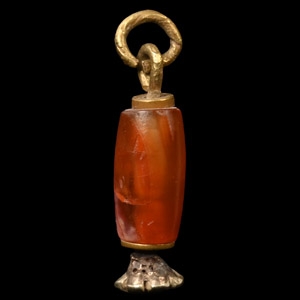
Western Asiatic Gold and Carnelian Bead Pendant
1st millennium B.C.Sold for (Inc. bp): £117
Fusiform bead with gold rosette to one end and wire passed through, looped at the other end. 0.65 grams, 16 mm
Ex property of a late Japanese collector, 1970-2000s. This lot has been cleared against the Art Loss Register database, and is accompanied by an illustrated lot declaration signed by the Head of the Antiquities Department, Dr Raffaele D'Amato.
