
Loading, please wait...
LOT 0239
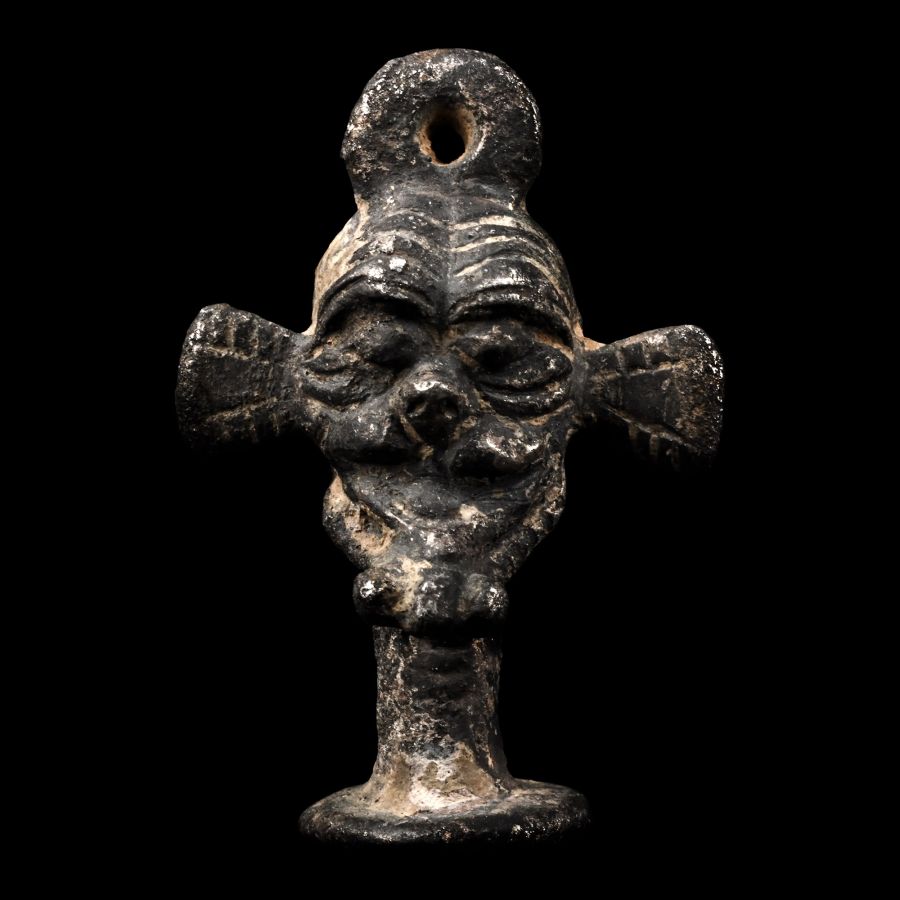
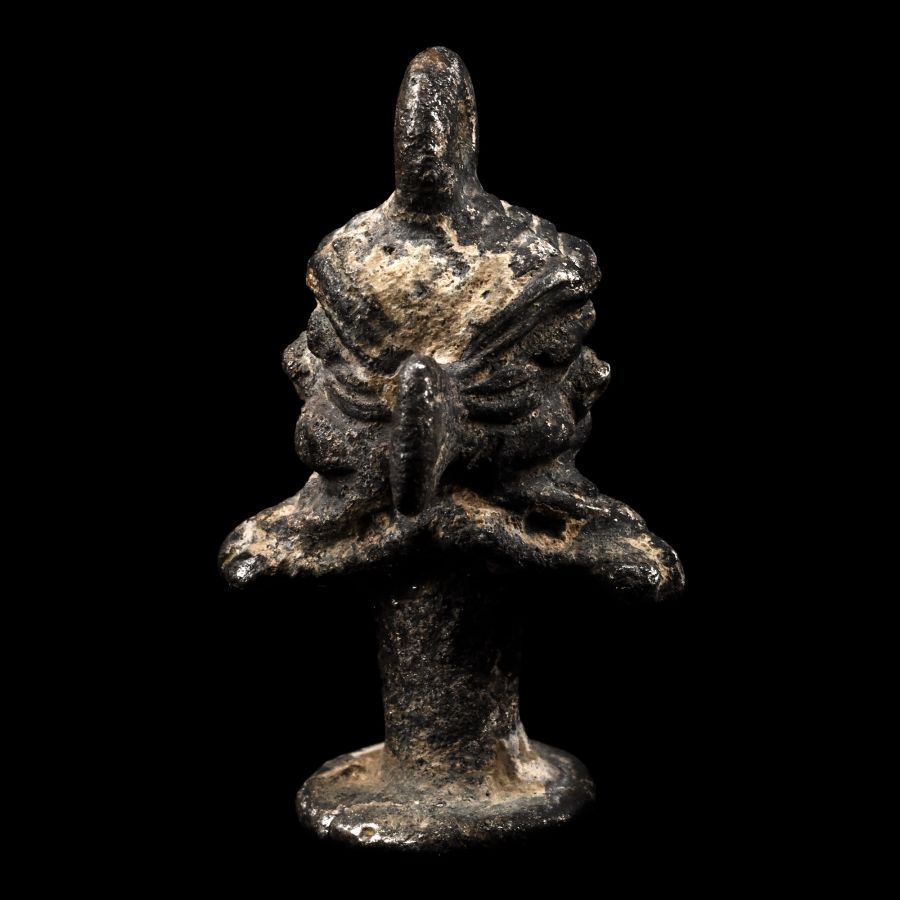
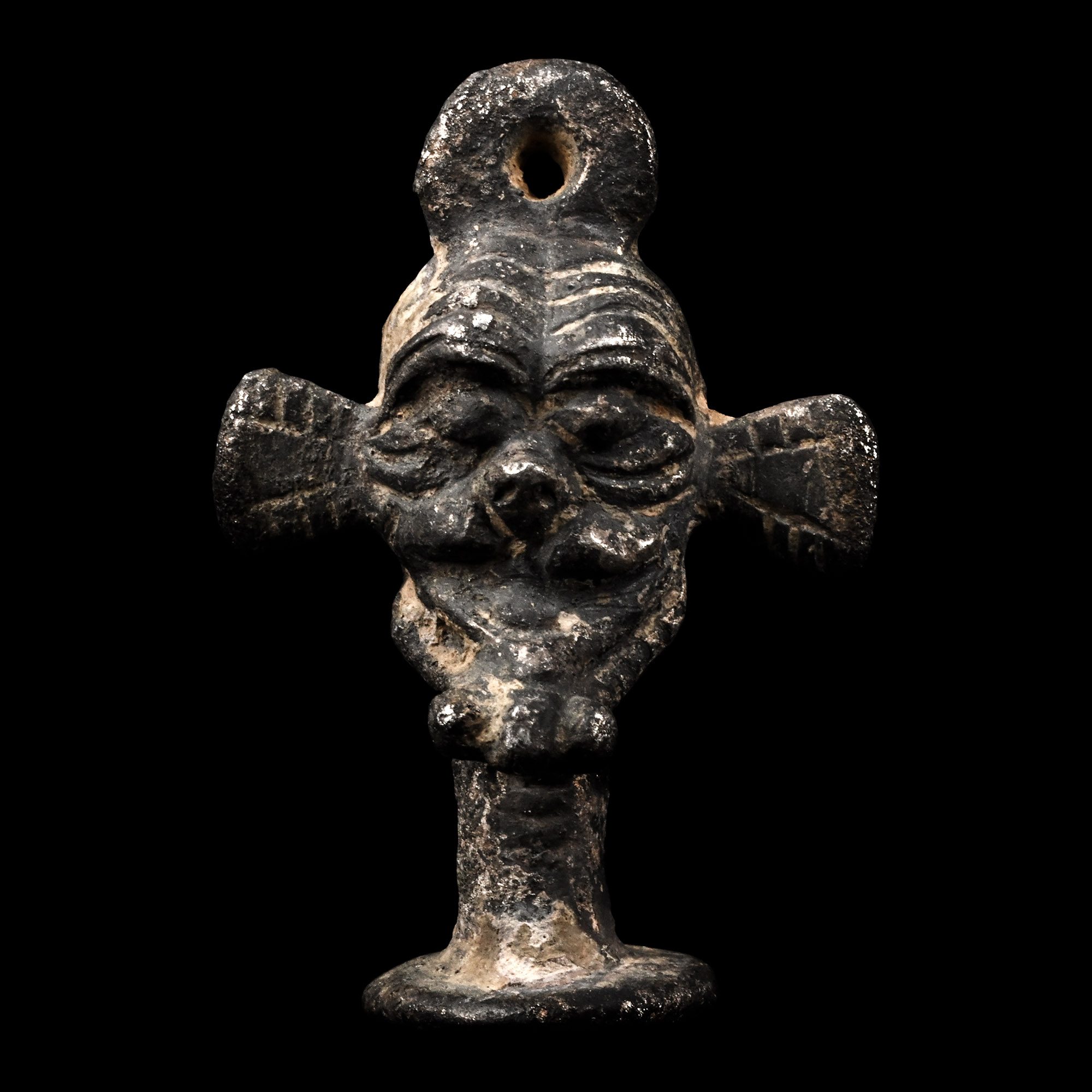
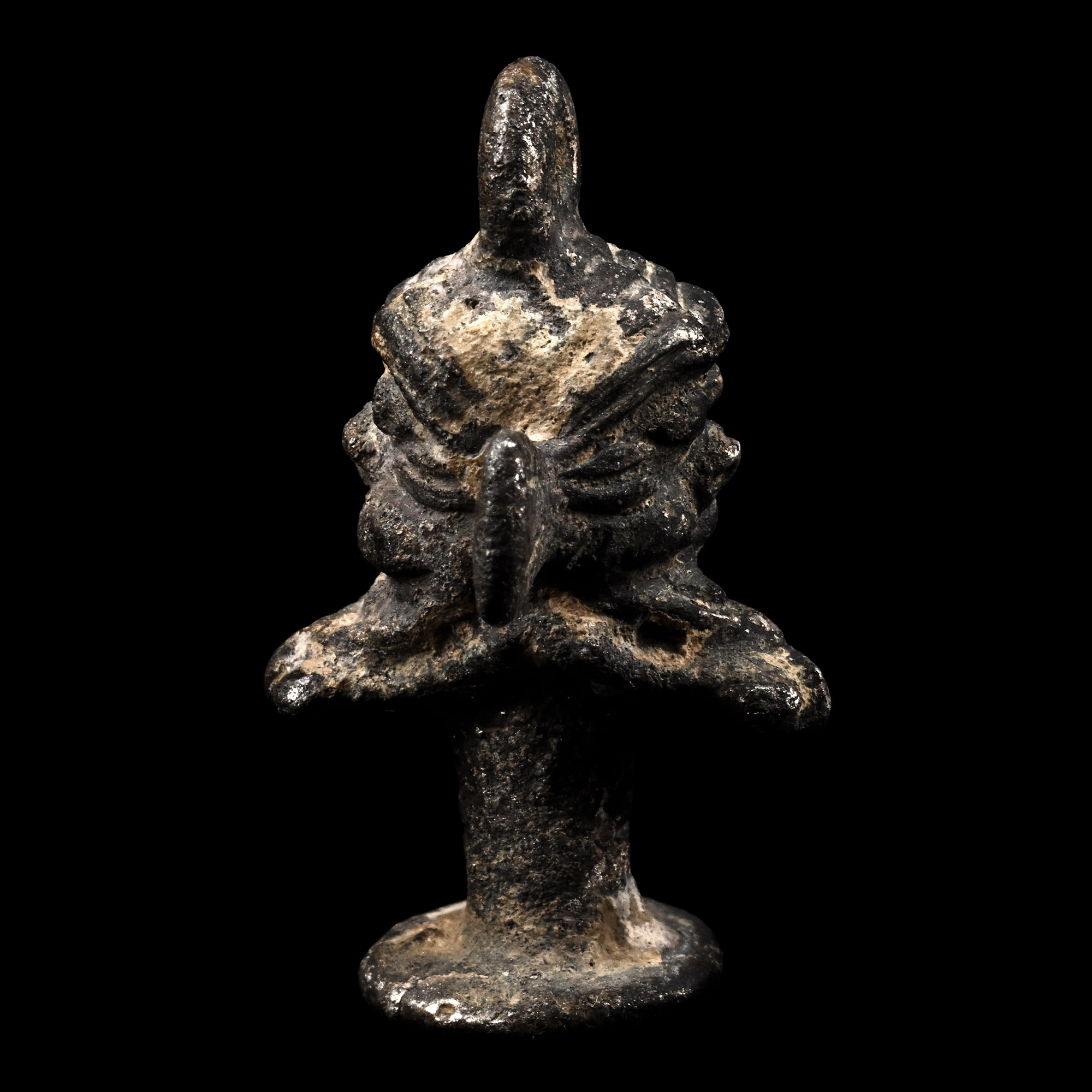
Mesopotamian Silver Stamp Seal with Janiform Head of the God Pazuzu
1ST MILLENNIUM B.C.
1 3/8 in. (25.80 grams, 36 mm).
Columnar in form with discoid base supporting a pair of stylised head with almond-shaped eyes, button nose, prominent elongated chin and triangular lobes; suspension loop to the top.
ProvenanceEx Mayfair, London, UK, collection, 1979-1990s.
This lot has been checked against the Interpol Database of stolen works of art and is accompanied by search certificate no.13072-249423.
Cf. Yale Peabody Museum of Natural History, catalog number YPM BC 017054, similar in The Israeli Museum, item number 2009-926.
FootnotesPazuzu was an Assyrian and Babylonian demonic god who was represented with a canine head, scaly body, a snake-headed penis, the talons of a bird, and usually four wings. He is often regarded as an evil underworld demon, but he seems also to have played a beneficent role as a protector against pestilential winds; a bronze figure of Pazuzu in the Louvre, (accession number MNB 467) is inscribed, ‘I am Pazuzu, son of Hanpa, king of the evil spirits of the air which issues violently from mountains, causing much havoc.’ His close association with Lamashtu, a fierce demon goddess responsible for child mortality, resulted in him being used to counter her powers and send her back to the underworld. Amulets of Pazuzu were positioned in dwellings to act as protective barriers to evil powers, or were often in the form of just a head, as in this example, and were hung around the necks of pregnant women. Pazuzu is popularly known today as the demon from the 1973 film ‘The Exorcist’.
CONDITIONTimeLine Auctions follows a vetting process to ensure the authenticity and legality of all items, reinforcing our commitment to integrity and responsible trading. Each antiquity, antique, and coin lot undergoes thorough examination by a vetting committee of at least ten external specialists, professional trade association members, scientists, and archaeologists: Our Vetting Process
AUCTIONS:
TimeLine is a leading auction house specialising in antiquities, ancient art, collectables, natural history, coins, medals, and books. Our auctions offer museums, collectors, historians, and enthusiasts the opportunity to acquire unique and historically significant pieces.
LOT 0239
Mesopotamian Silver Stamp Seal with Janiform Head of the God Pazuzu
Estimate £3,000 - 4,000€3,480 - 4,640 (for guidance only)$4,050 - 5,400 (for guidance only)
-
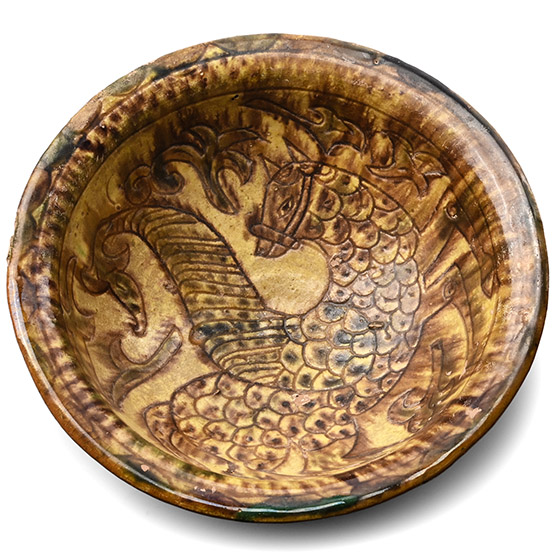
Large Western Asiatic Style Ceramic Bowl with Mythical Beast
Late 20th-21st century A.D.Sold for (Inc. bp): £46
Bell-shaped in profile with polychrome rim. incised advancing winged feline among fronds. 577 grams, 21.7 cm wide
Private collection, UK. -
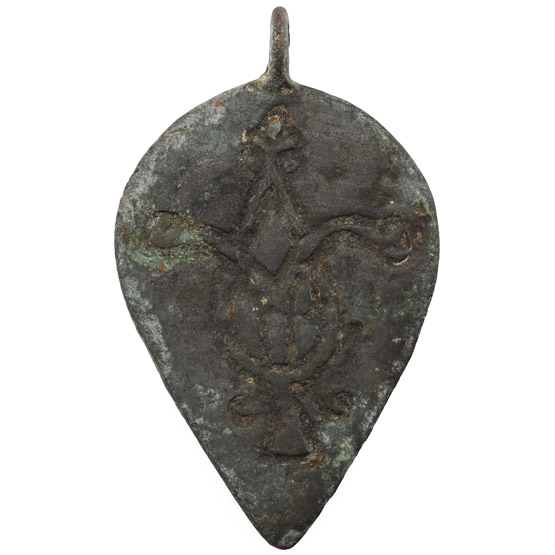
Western Asiatic Bronze Bifacial Pendant with Inscription
12th-14th century A.D.Estimate: £100 - 140 (+bp*)
Opening Bid: £50
Teardrop-shaped with integral loop, obverse with lobed plant motif, reverse with seven lines of Arabic script. 12.7 grams, 51 mm
Ex Abelita family collection, 1980s-2000s. -
.jpg)
Sasanian Gold Pendant with Three Registers
6th-7th century A.D.Estimate: £800 - 1,000 (‡+bp*)
Opening Bid: £400
Ovoid in plan with loop to the narrow end, repoussé pellets to the rim, star-and-crescent motifs, and ropework borders. 3.47 grams, 45 mm
Acquired by a Swiss family in the mid-1980s to late 1990s, thence by descent. Private collection, Switzerland, since the late 1990s.
