
Loading, please wait...
LOT 1064
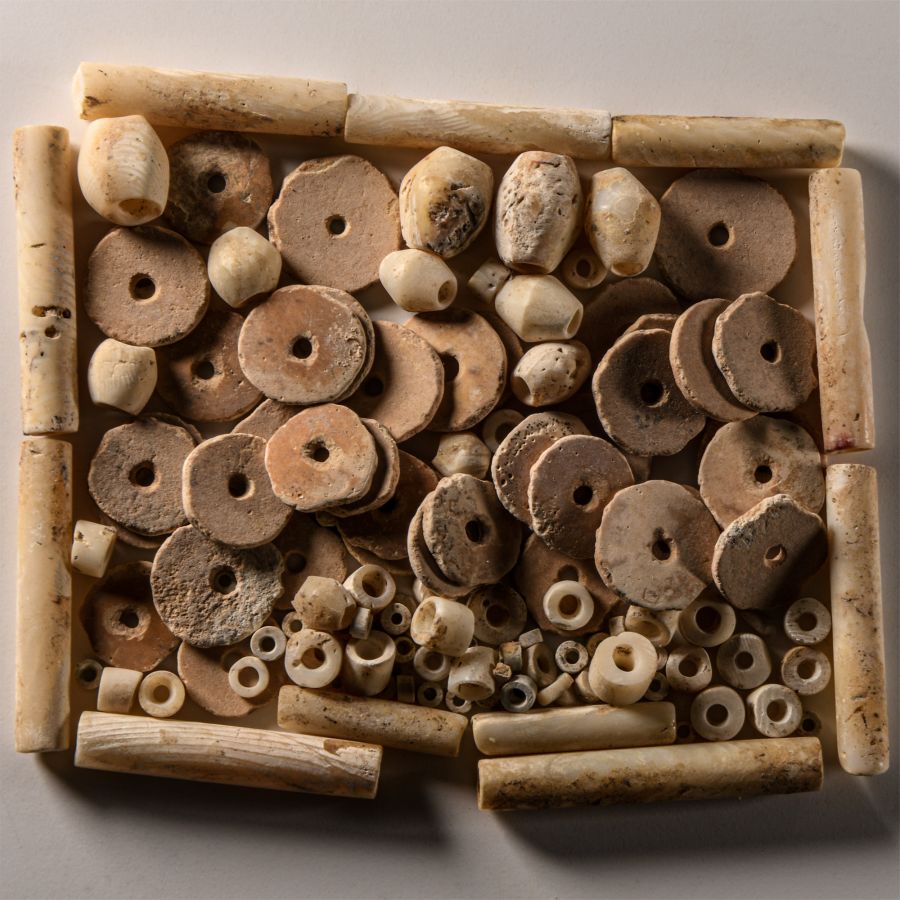
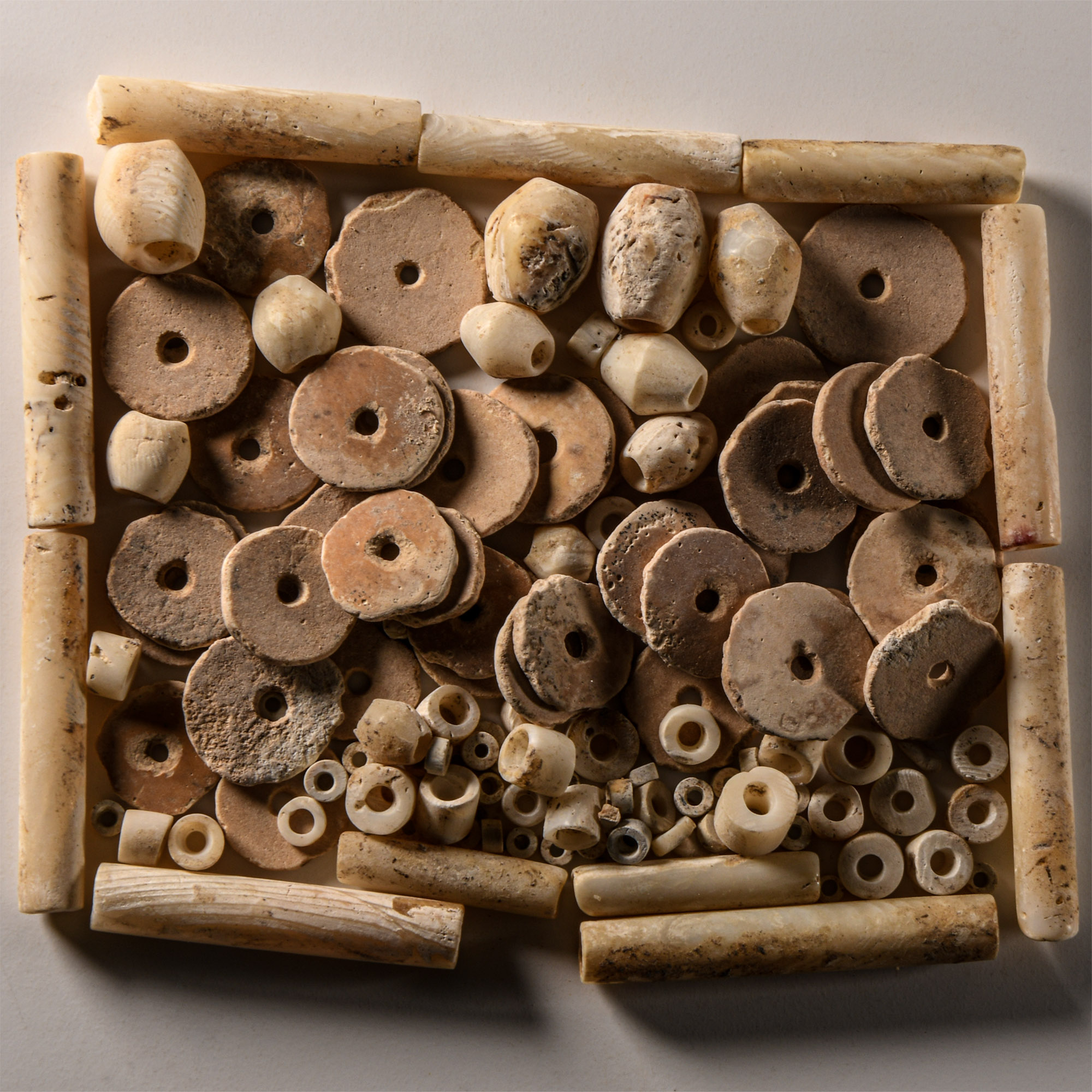
Mesopotamian Shell Necklace Bead Group
CIRCA 4TH MILLENNIUM B.C. OR LATER
1/8 - 1 5/8 in. (72.7 grams total, 3-41 mm).
Including beads of tubular, biconical, disc, annular and other types of varying sizes. [120+]
ProvenanceUK gallery, early 2000s.
CONDITIONTimeLine Auctions follows a vetting process to ensure the authenticity and legality of all items, reinforcing our commitment to integrity and responsible trading. Each antiquity, antique, and coin lot undergoes thorough examination by a vetting committee of at least ten external specialists, professional trade association members, scientists, and archaeologists: Our Vetting Process
AUCTIONS:
TimeLine is a leading auction house specialising in antiquities, ancient art, collectables, natural history, coins, medals, and books. Our auctions offer museums, collectors, historians, and enthusiasts the opportunity to acquire unique and historically significant pieces.
LOT 1064
Mesopotamian Shell Necklace Bead Group
Estimate £100 - 140€120 - 160 (for guidance only)$140 - 190 (for guidance only)
-
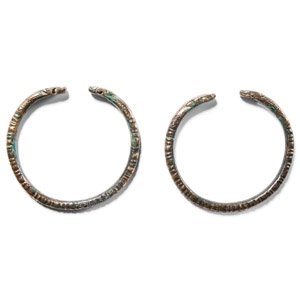
Western Asiatic Bronze Snake-Headed Bracelet Pair
1st millennium B.C.Sold for (Inc. bp): £111
Each formed as a penannular bracelet with balustered body, the finials with stylised snake heads and punched scale decoration. 42.7 grams total, 57-58 mm
Ex old English collection. London art market, 1980s. -
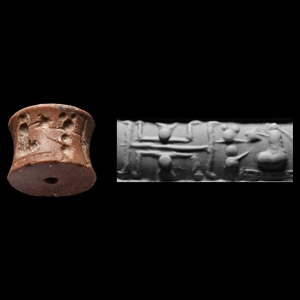
Western Asiatic Jasper Cylinder Seal with Seated Figures
Circa 3rd millennium B.C.Sold for (Inc. bp): £286
Cotton-reel type with drilled frieze of serpents, seated figures and other items. 13.6 grams, 22 mm
Acquired 1970s-1996. Property of a North American collector, collection no.070. London collection, 2016. -
.jpg)
Western Asiatic Millefiori Glass Bead Necklace
Early 1st millennium A.D.Sold for (Inc. bp): £494
Comprising opaque polychrome glass beads of mainly spherical and tubular types, displaying an array of decorative techniques and patterns including millefiori, chequerboard, ribbon glass and others; restrung designer necklace with a modern clasp. 101 grams, 45 cm long
Ex private collection, 1980s. Acquired on the UK art market in the 1990s.
