
Loading, please wait...
LOT 0263
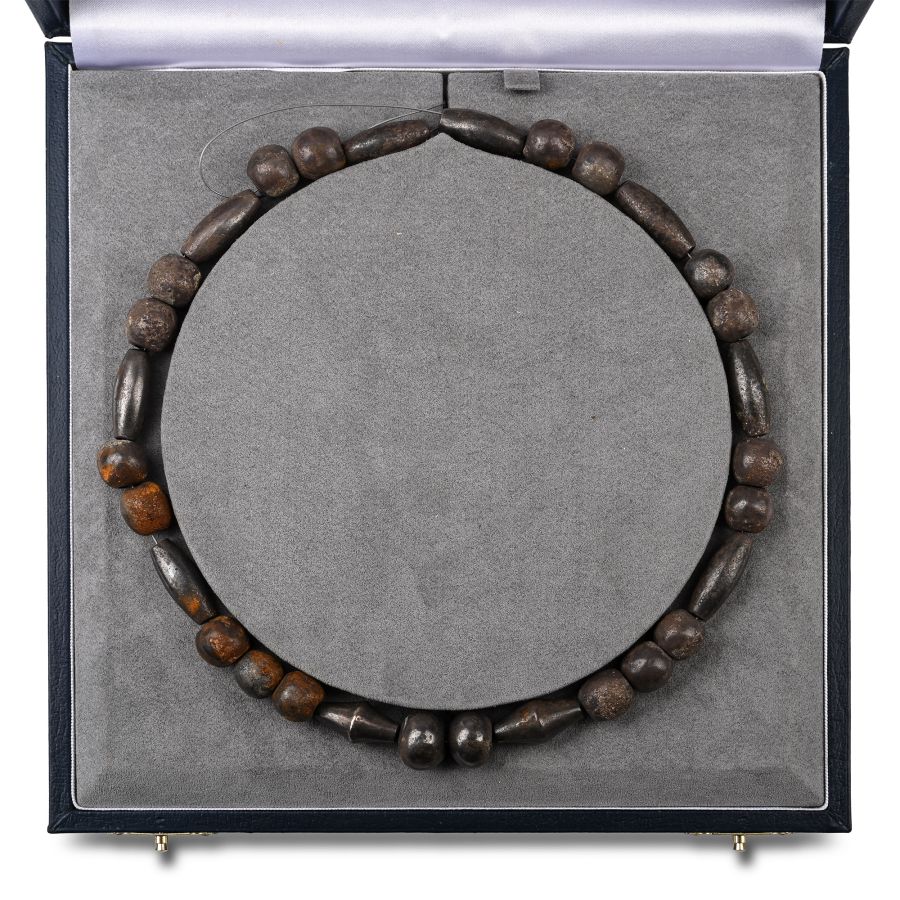
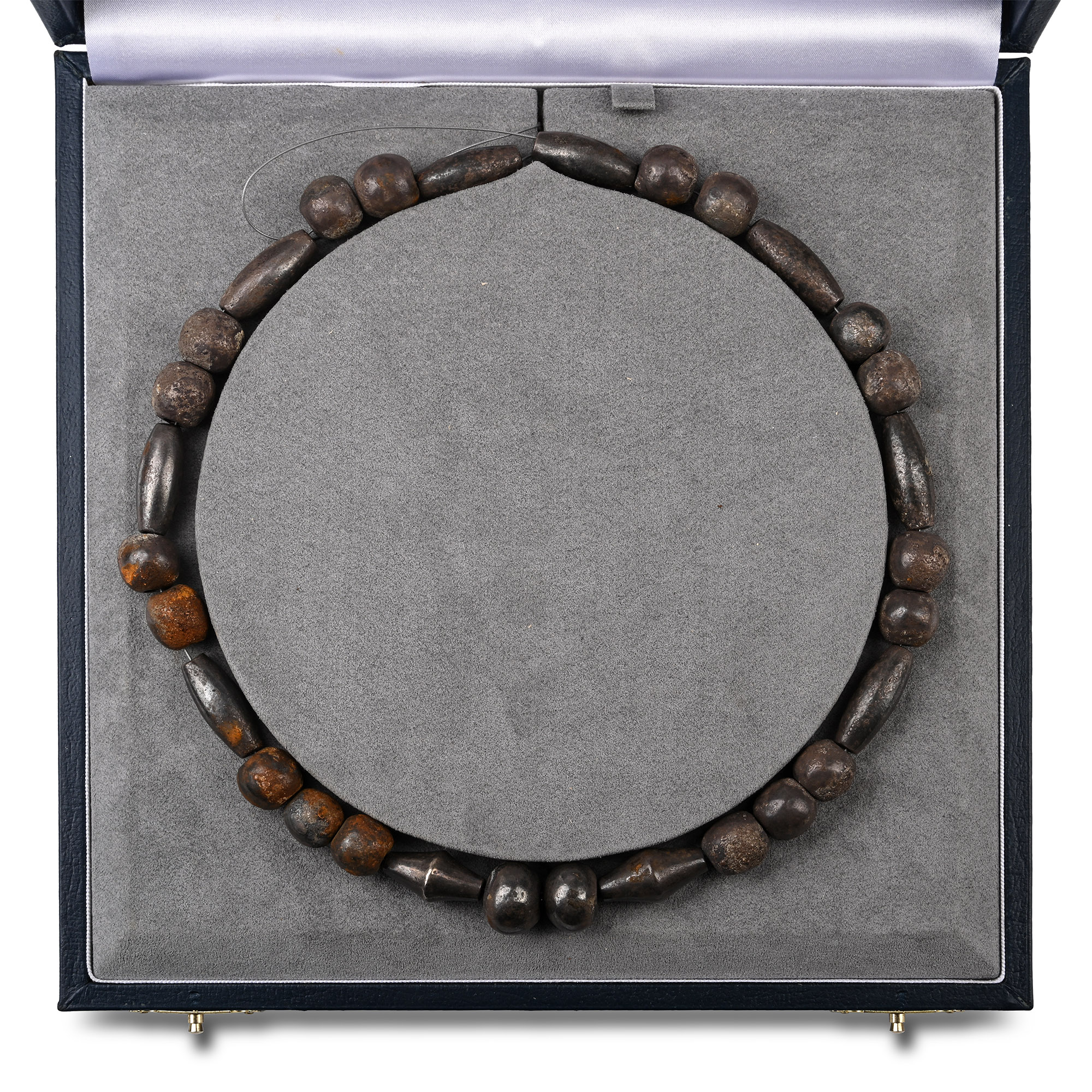
Mesopotamian Heavy Silver Bead Necklace
3RD-EARLY 2ND MILLENNIUM B.C.
22 in. (224 grams, 56 cm).
Restrung and comprising mainly spherical, elongated ovals, oblates, and biconical shapes; accompanied by a custom-made lined display box.
ProvenanceNumismatic and Ancient Art Gallery AG, Ancient Art of the Mediterranean World, No 8, no.5, c.1982.
Taisei Gallery, Gold & Silver Auction, Part II, Ancient to Renaissance, 5 November 1992, The Conrad Salon, The Waldorf-Astoria, New York, no.39.
Private collection, London.
This lot has been checked against the Interpol Database of stolen works of art and is accompanied by search certificate number no.13265-253358.
Cf. Bass, G.F. ‘A Hoard of Trojan and Sumerian Jewelry’ in Aja, no.70, 1974, pp.335-341, for similar metal beads. Pl.85, fig.24-25.
FootnotesThe Sumerian word for silver is kú-babbar, which means ‘white metal’. Silver was mined from ores that contained significant amounts of other metals and impurities and therefore requires a great deal of further processing before it can be used. It was considered sacred and immutable, and an extremely high-status material, used for royal jewellery.
CONDITIONTimeLine Auctions follows a vetting process to ensure the authenticity and legality of all items, reinforcing our commitment to integrity and responsible trading. Each antiquity, antique, and coin lot undergoes thorough examination by a vetting committee of at least ten external specialists, professional trade association members, scientists, and archaeologists: Our Vetting Process
AUCTIONS:
TimeLine is a leading auction house specialising in antiquities, ancient art, collectables, natural history, coins, medals, and books. Our auctions offer museums, collectors, historians, and enthusiasts the opportunity to acquire unique and historically significant pieces.
LOT 0263
Mesopotamian Heavy Silver Bead Necklace
Estimate £5,000 - 7,000€5,800 - 8,120 (for guidance only)$6,750 - 9,450 (for guidance only)
-
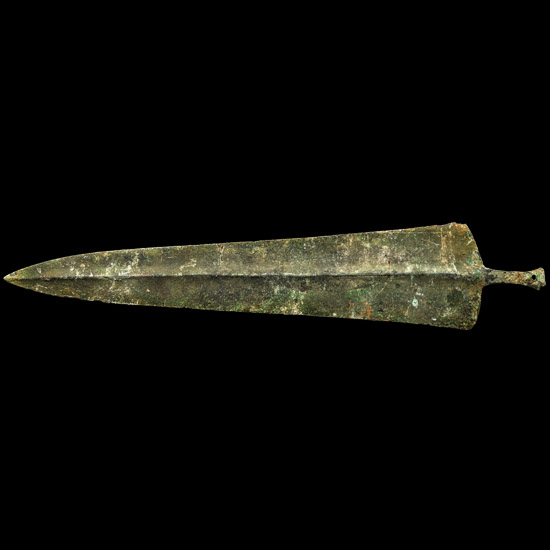
Luristan Bronze Tanged Short Sword
Early 1st millennium B.C.Sold for (Inc. bp): £130
Comprising a wide triangular blade with raised midrib and a short, pierced tang. 157 grams, 31.5 cm
Ex Abelita family collection, 1980s-2000s.
Edged weapons with tangs are among the simplest forms of weapons from this culture. This basic type was hardly altered in the period when bronze was the most important material in weapon production. The retention of this basic type with so few alterations makes precise dating challenging. Bronze daggers, dirks and swords exist today only as bronze blades, having lost their perishable handles over the course of time. -
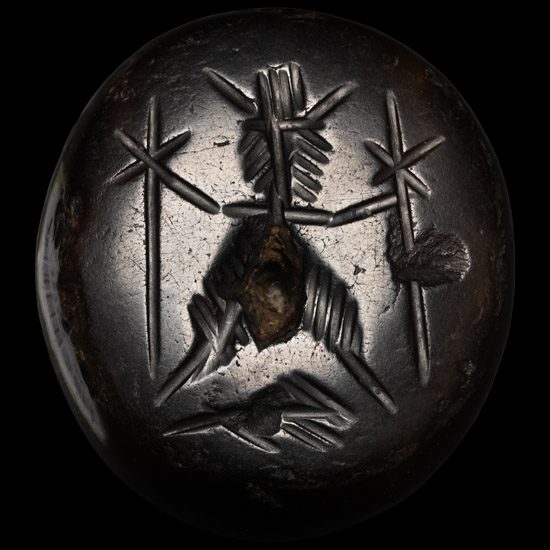
Large Sasanian Dark Agate Stamp Seal with Master of Animals
Circa 3rd-7th century A.D.Sold for (Inc. bp): £85
With stylised Master of Beasts figure holding two staves, animal below. 35.89 grams, 32.26 mm
From the private collection of a European gentleman (1942-2024), formed since the 1970s. -
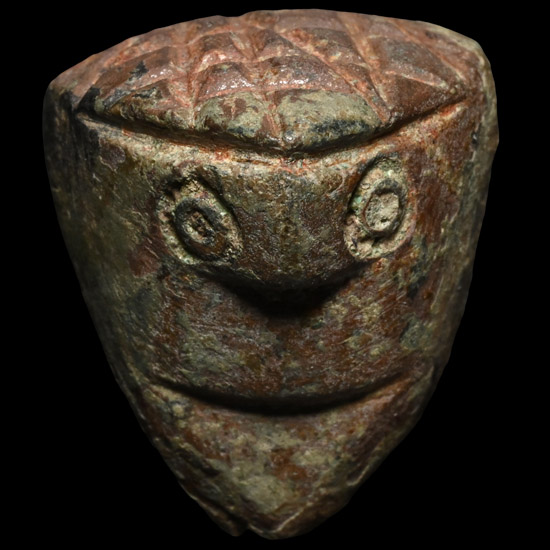
Western Asiatic Bronze Idol
1st millennium B.C.Sold for (Inc. bp): £26
Depicting a stylised face with grooved hair and small ring-and-dot eyes, a wide nose and slit mouth. 11.6 grams, 22.2 mm
From the private collection of a European gentleman (1942-2024), formed since the 1970s.
