
Loading, please wait...
LOT 1016
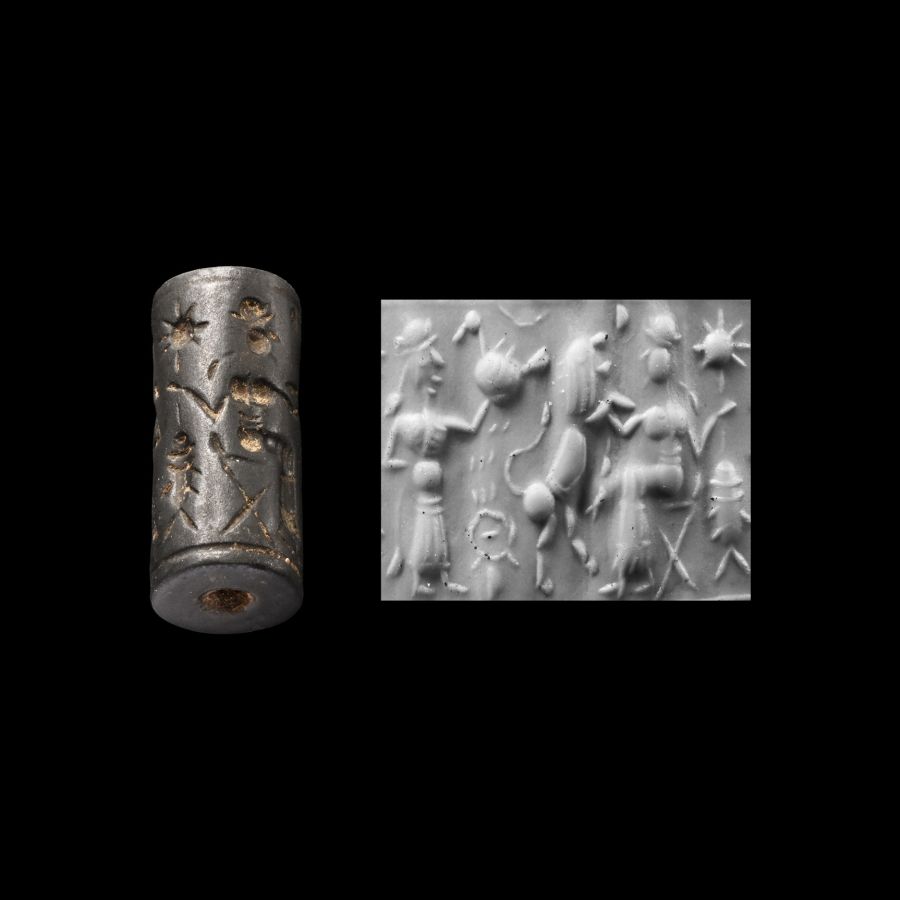
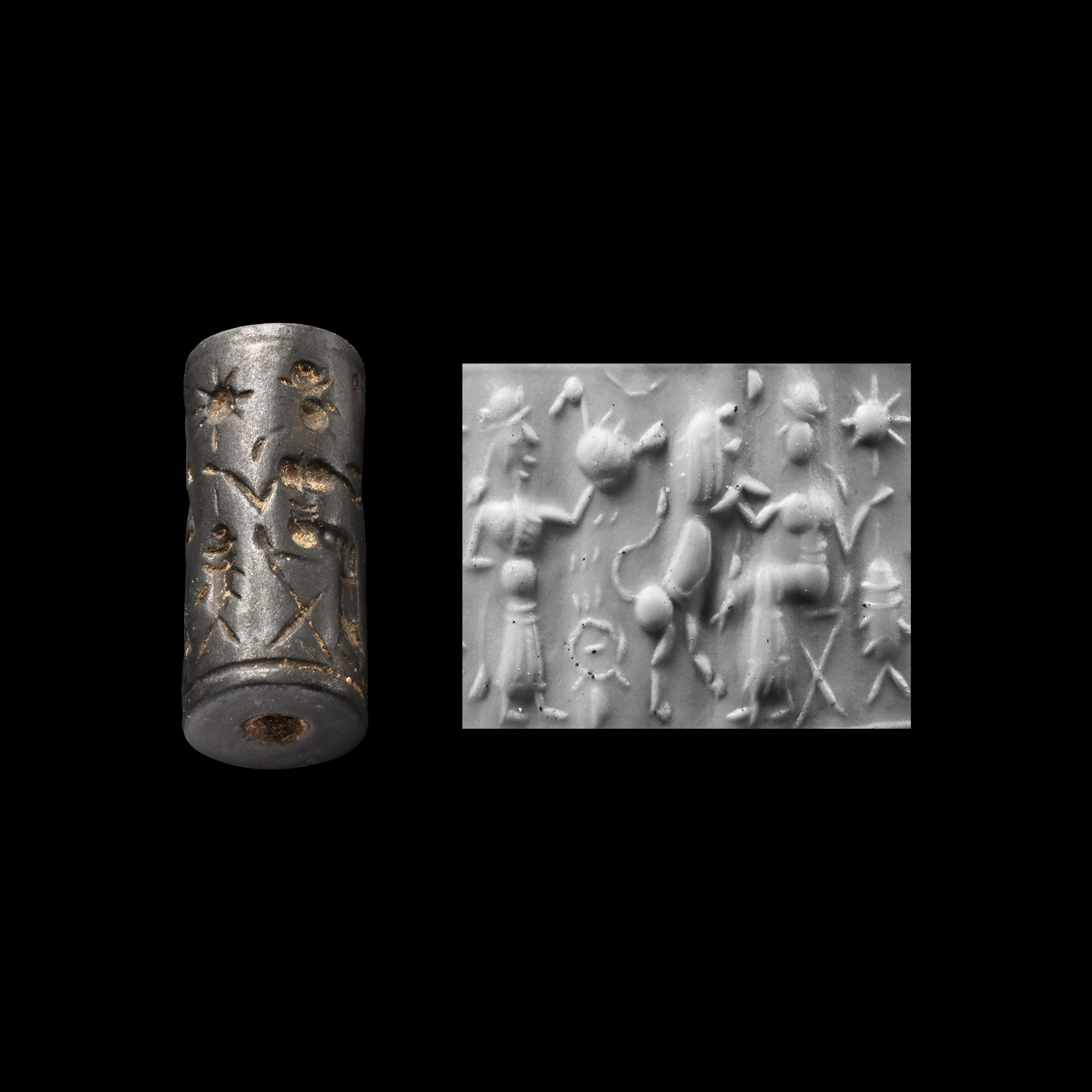
Mesopotamian Haematite Cylinder Seal
CIRCA 2ND-1ST MILLENNIUM B.C.
1 in. (10.5 grams, 25 mm).
Displaying a figural frieze composed of human and animal figures; drilled vertically for suspension.
ProvenanceFrom an important London, UK, collection, 1970-1990.
Examined by Professor Wilfrid George Lambert FBA (1926-2011), historian, archaeologist, and specialist in Assyriology and Near Eastern archaeology, in the late 1980s and early 1990s.
TimeLine Auctions follows a vetting process to ensure the authenticity and legality of all items, reinforcing our commitment to integrity and responsible trading. Each antiquity, antique, and coin lot undergoes thorough examination by a vetting committee of at least ten external specialists, professional trade association members, scientists, and archaeologists: Our Vetting Process
AUCTIONS:
TimeLine is a leading auction house specialising in antiquities, ancient art, collectables, natural history, coins, medals, and books. Our auctions offer museums, collectors, historians, and enthusiasts the opportunity to acquire unique and historically significant pieces.
-
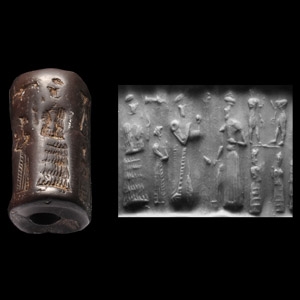
Western Asiatic Haematite Cylinder Seal with Processional Scene
2nd-1st millennium B.C.Sold for (Inc. bp): £468
With incised frieze of a standing figure in pleated robe holding a sword towards a figure in floor-length fringed garment with raised arms, smaller figure behind him and a third in a tiered robe; group of four small figures to the rear. 8.97 grams, 23 mm
Acquired 1970s-1996. Property of a North American collector; collection no.07. London collection, 2016. -
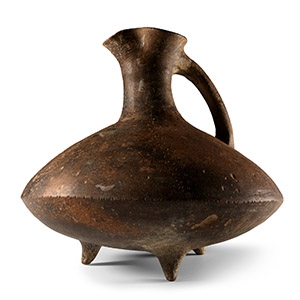
Luristan Tripod Footed Jug with Strainer
2nd-1st millennium B.C. or laterEstimate: £1,000 - 1,400 (+bp*)
Opening Bid: £400
With a carinated body with conical feet to the base, a slender neck with trefoil mouth and pierced strainer panel to the spout, integral handle to the rear; displaying vertical notching to the equator and columns composed of shallow dimples to the upper body; chipped. 1.64 kg, 24 cm wide
with a London, UK, gallery, 1971-early 2000s. -
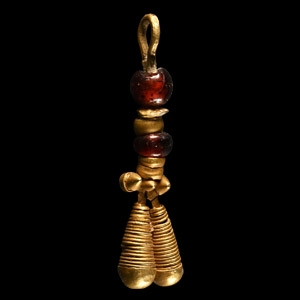
Western Asiatic Gold and Garnet Pendant
Circa 1st millennium B.C.Sold for (Inc. bp): £312
Composed of polished garnet and gold beads suspended on gold wire, three conical bosses below and conjoined coiled wire pendants below; repaired. 2.22 grams, 33 mm
From a late Japanese specialist collector, 1970-2000s.
