
Loading, please wait...
_900x900.jpg "Mesopotamian Decorated Calcite Jar")
_200x200.jpg "Mesopotamian Decorated Calcite Jar")
.jpg "Mesopotamian Decorated Calcite Jar")
LOT 0207
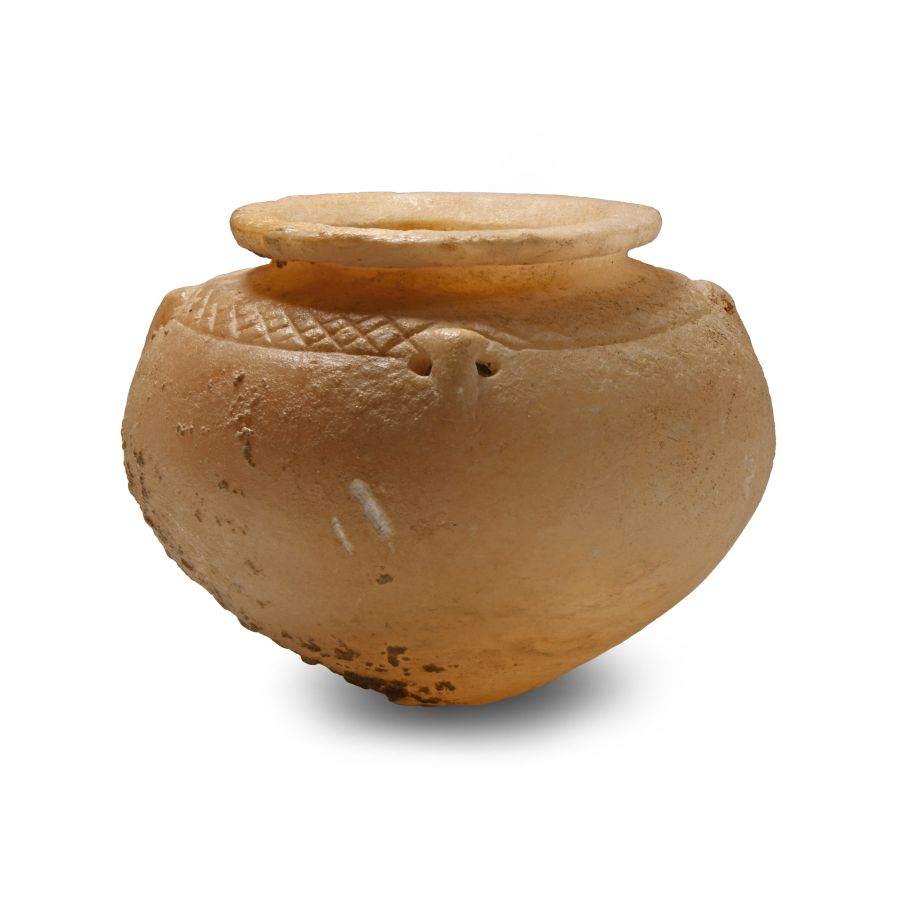
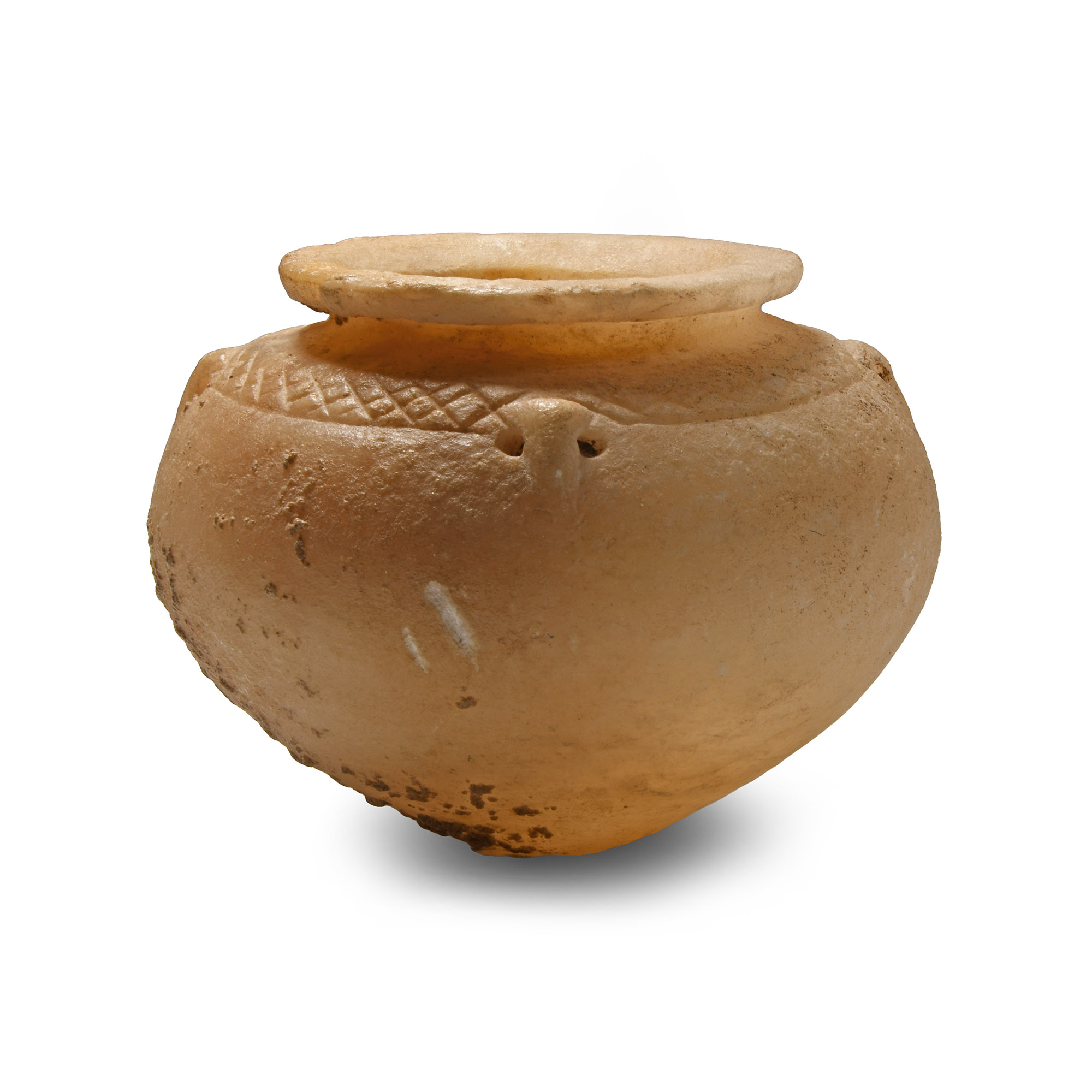
Mesopotamian Decorated Calcite Jar
CIRCA 3RD MILLENNIUM B.C.
4 5/8 in. (746 grams, 11.8 cm).
Carved squat-bodied vessel with a broad, rounded shoulder and narrow flat base, short neck and everted rim, four pierced lugs to the shoulders incorporated into a circumferential band of engraved cross-hatching.
ProvenanceFrom a British collection, acquired in 1993.
This lot has been checked against the Interpol Database of stolen works of art and is accompanied by search certificate number no.11835-206783.
This lot has been cleared against the Art Loss Register database, and is accompanied by an illustrated lot declaration signed by the Head of the Antiquities Department, Dr Raffaele D'Amato.
TimeLine Auctions follows a vetting process to ensure the authenticity and legality of all items, reinforcing our commitment to integrity and responsible trading. Each antiquity, antique, and coin lot undergoes thorough examination by a vetting committee of at least ten external specialists, professional trade association members, scientists, and archaeologists: Our Vetting Process
AUCTIONS:
TimeLine is a leading auction house specialising in antiquities, ancient art, collectables, natural history, coins, medals, and books. Our auctions offer museums, collectors, historians, and enthusiasts the opportunity to acquire unique and historically significant pieces.
LOT 0207
Mesopotamian Decorated Calcite Jar
Estimate £2,000 - 3,000€2,320 - 3,480 (for guidance only)$2,700 - 4,050 (for guidance only)
-
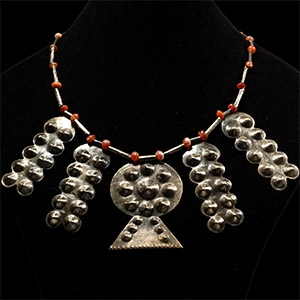
Elamite Carnelian Necklace with Silver Pendants
Late 2nd-early 1st millennium B.C.Estimate: £1,200 - 1,700 (+bp*)
Opening Bid: £600
Restrung necklace of tubular sheet-silver beads with biconvex and other carnelian interstitial beads; four pendant plaques, each a tongue-shaped panel with repoussé domes, centrepiece a keyhole-shaped plaque with similar domes and pointillé lower edge. 74.2 grams, 47 cm
Acquired before 1983. Ex London gallery, 1990s. This lot has been cleared against the Art Loss Register database, and is accompanied by an illustrated lot declaration signed by the Head of the Antiquities Department, Dr Raffaele D'Amato. -
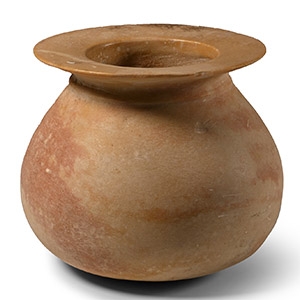
Mesopotamian Bulbous Marble Vase
4rd-3rd millennium B.C.Estimate: £1,500 - 2,000 (‡+bp*)
Opening Bid: £800
Squat-bodied with a broad, rounded shoulder and base, short neck and flat everted rim. 1.95 kg, 13.7 cm
with Gerhard Hirsch Nachf, Germany, Auction 238|239, February 2005, no.107. Acquired by the present owner from the above. This lot has been checked against the Interpol Database of stolen works of art and is accompanied by search certificate number no.12256-222173. This lot has been cleared against the Art Loss Register database, and is accompanied by an illustrated lot declaration signed by the Head of the Antiquities Department, Dr Raffaele D'Amato. -
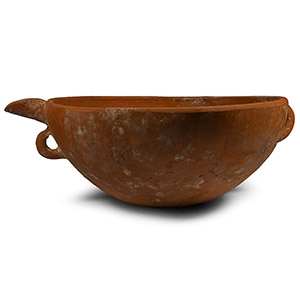
Very Large Amlash Terracotta Spouted Bowl
1st millennium B.C.Sold for (Inc. bp): £208
With broad hemispherical bowl, short U-section spout, integral round-section handle and inturned rim. 2.5 kg, 46.5 cm
From a gentleman's London, UK, collection of ancient pottery and artefacts, 1990s. Accompanied by a thermoluminescence analysis report no.N125a52 from Oxford Authentication. This lot has been cleared against the Art Loss Register database, and is accompanied by an illustrated lot declaration signed by the Head of the Antiquities Department, Dr Raffaele D'Amato.
