
Loading, please wait...
LOT 0224
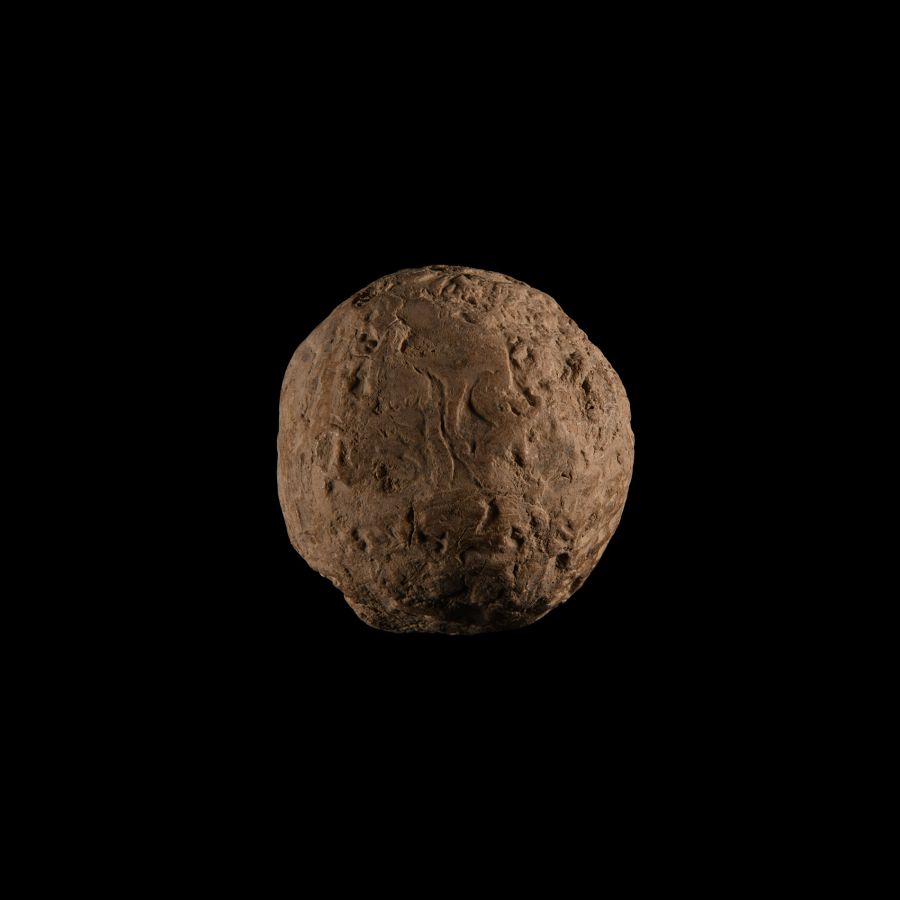
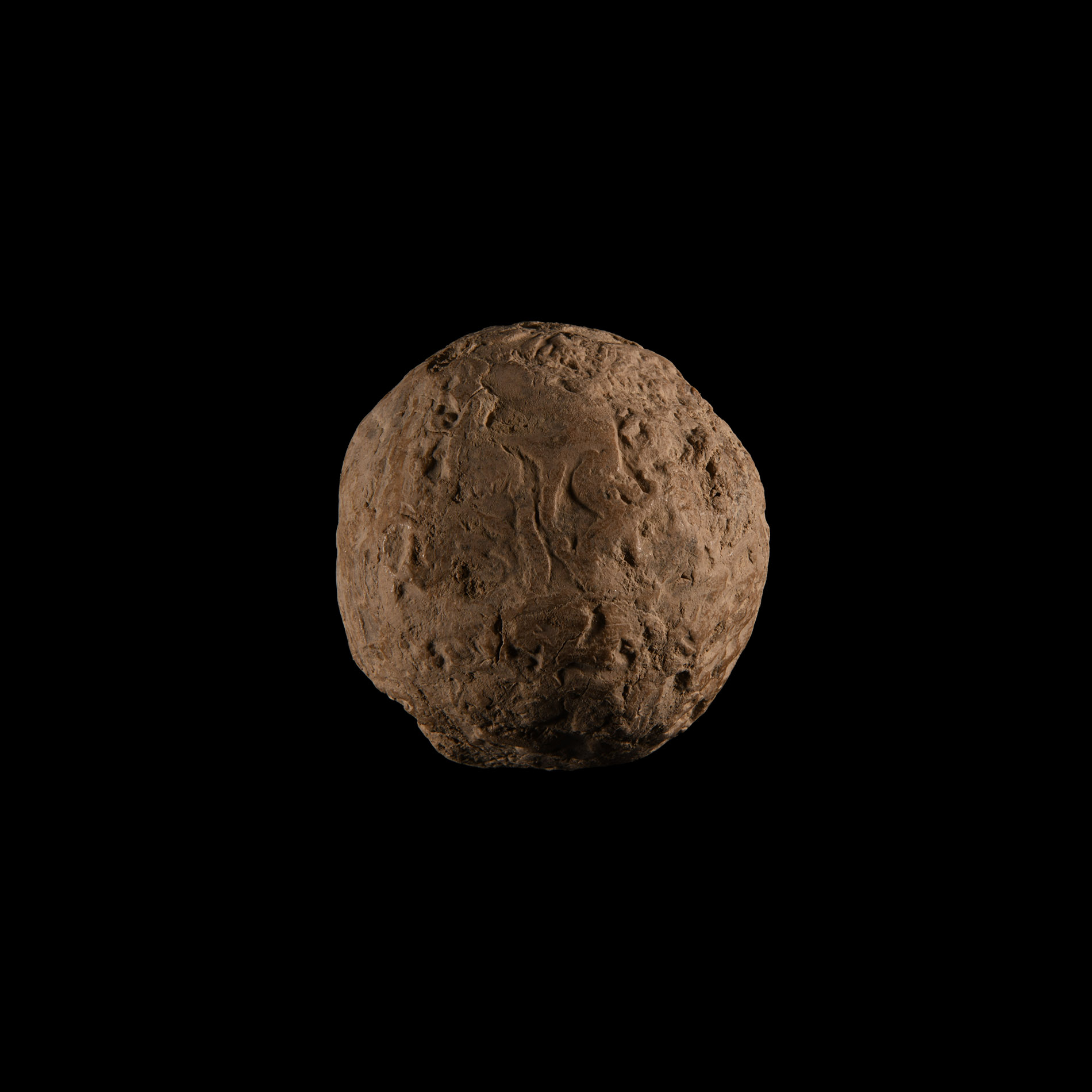
Mesopotamian Decorated Bulla Envelope Containing Tokens
MID 6TH-MID 4TH MILLENNIUM B.C.
2 3/8 in. (169 grams, 61 mm).
Spherical hollow clay mass with the remains of impressions to the exterior and ceramic tokens inside; surface cracked.
ProvenanceSpecialised collection of cuneiform texts, the property of a London gentleman and housed in London before 1992.
Thence by descent to family members.
Examined by Professor Wilfrid George Lambert FBA (1926-2011), historian, archaeologist, and specialist in Assyriology and Near Eastern archaeology, in the late 1980s and early 1990s.
The collection is exceptional for the variety of types, including some very rare and well preserved examples.
This bulla envelope likely belonged to the Sumerian or Uruk culture.
It is believed that there are less than 250 complete and fragmentary examples of this type of bulla envelope worldwide. This is one of only a handful of examples ever offered at auction. The bulla first emerged in Mesopotamia around 8000 B.C. The clay envelopes contain a number of pre-baked accounting tokens, which were used in commercial and stock-taking transactions. Placing the tokens inside the bulla greatly enhanced the honesty of the transaction, as the bulla would have to be broken or crushed to reveal its contents.
TimeLine Auctions follows a vetting process to ensure the authenticity and legality of all items, reinforcing our commitment to integrity and responsible trading. Each antiquity, antique, and coin lot undergoes thorough examination by a vetting committee of at least ten external specialists, professional trade association members, scientists, and archaeologists: Our Vetting Process
AUCTIONS:
TimeLine is a leading auction house specialising in antiquities, ancient art, collectables, natural history, coins, medals, and books. Our auctions offer museums, collectors, historians, and enthusiasts the opportunity to acquire unique and historically significant pieces.
LOT 0224
Mesopotamian Decorated Bulla Envelope Containing Tokens
Sold for (Inc. bp): £1,950
-
Western Asiatic Glass and Other Necklace Bead Collection
1st millennium B.C. and laterSold for (Inc. bp): £130
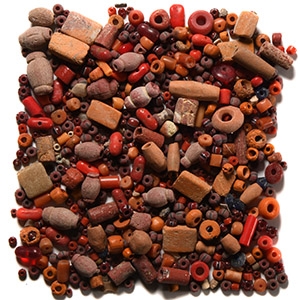
Comprising a group of mostly small mixed shape and material beads mainly in red or reddish hues; each pierced for stringing; some Roman. 55 grams total, 2-16 mm
UK gallery, early 2000s. -
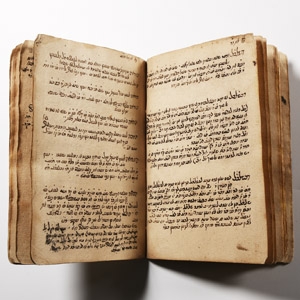
Western Asiatic Bound Manuscript Pocket Book
18th-19th century A.D.Sold for (Inc. bp): £468
With saddle-stitched binding, manuscript blocks of Arabic-script black-ink text, small heading text; several blank pages; probably from India. 38 grams, 15 x 10.5 cm
Acquired 1970s-1996. Property of a North American collector. London collection, 2016. -
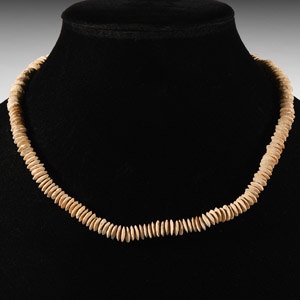
Mesopotamian Alabaster Disc Bead Necklace String
Circa 4th millennium B.C.Sold for (Inc. bp): £52
Composed of restrung lentoid-section disc beads. 29 grams, 45 cm long
UK gallery, early 2000s.
