
Loading, please wait...
LOT 1375
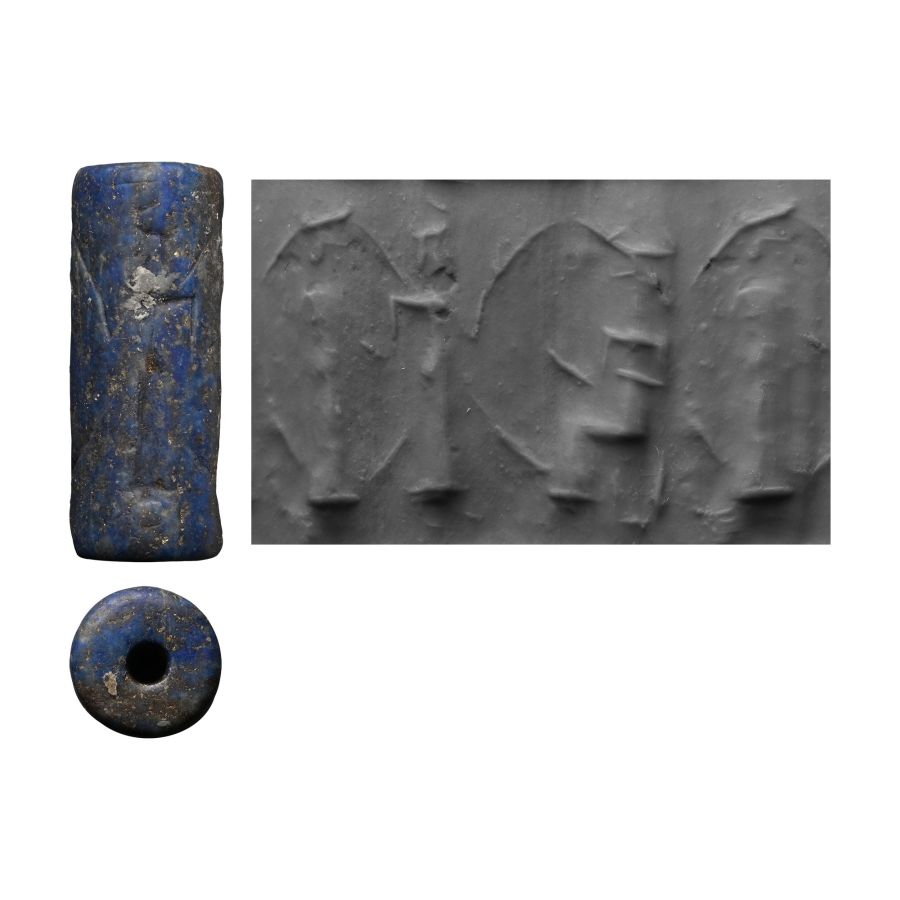
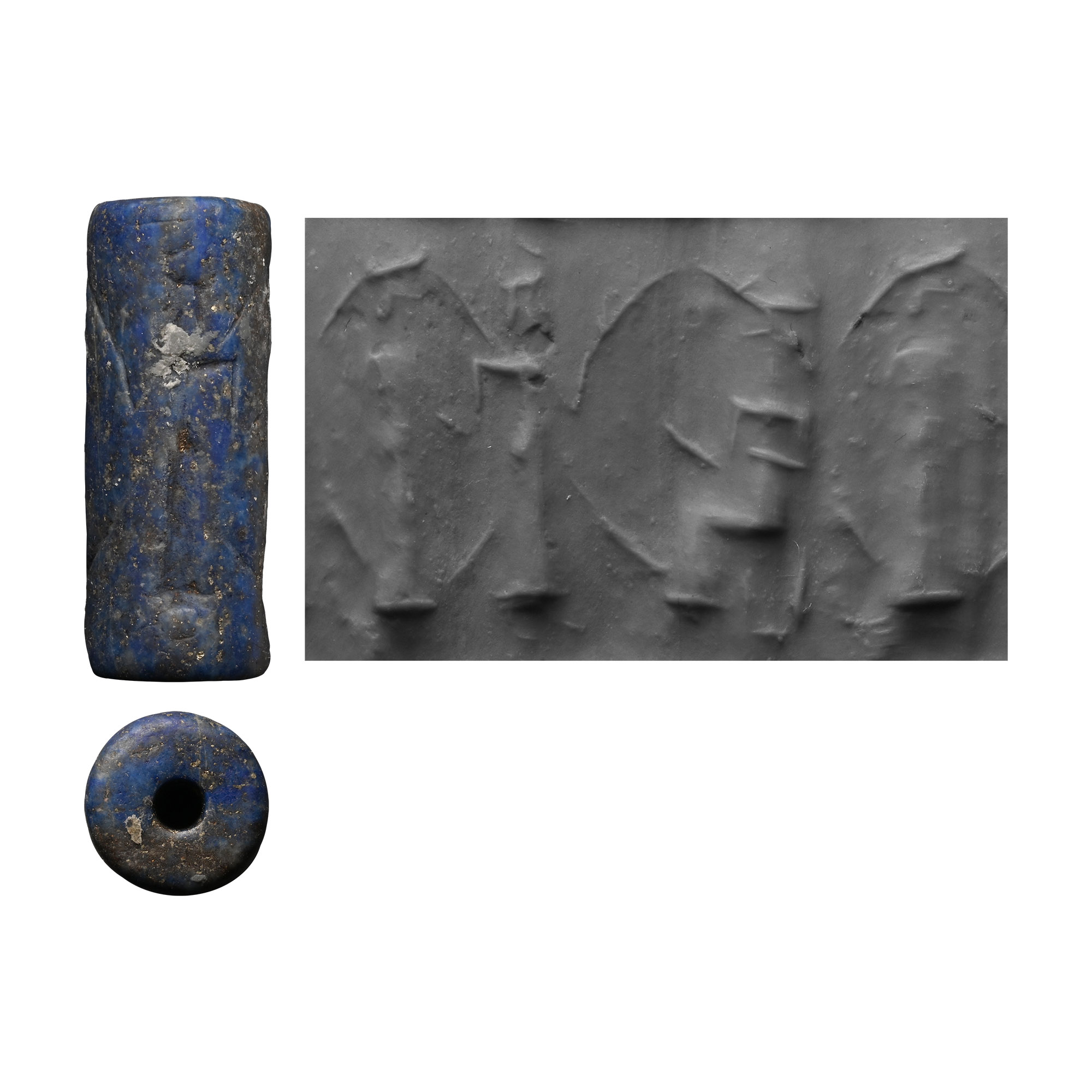
Mesopotamian Cylinder Seal with Seated Deity
THIRD DYNASTY OF UR, 2100-2000 B.C.
1/4 - 7/8 in. (5.65 grams total, 8.1-23.5 mm).
Cylinder with cord and bead handles; accompanied by a copy of an old scholarly note, typed and signed by W.G. Lambert, late Professor of Assyriology, University of Birmingham, 1970-1993, which states: 'Cylinder Seal of lapis Lazuli, 23.5 x 9 mm. The design shows a seated deity to the right, raising one hand, while from the left an introducing goddess leads in a worshipper. The cutting is simple, but is identifiable as from the period of the Third Dynasty of Ur, c. 2100-2000 B.C., coming from southern Mesopotamia or a neighbouring area. The design is worn, but clearly visible. Lapis is a rare stone for this period.'; accompanied by a museum-quality impression. [No Reserve]
ProvenanceUK private collection, acquired 1980-1983.
Accompanied by a copy of a scholarly note, typed and signed by Professor Wilfrid George Lambert in July 1991.
This lot has been cleared against the Art Loss Register database, and is accompanied by an illustrated lot declaration signed by the Head of the Antiquities Department, Dr Raffaele D'Amato.
TimeLine Auctions follows a vetting process to ensure the authenticity and legality of all items, reinforcing our commitment to integrity and responsible trading. Each antiquity, antique, and coin lot undergoes thorough examination by a vetting committee of at least ten external specialists, professional trade association members, scientists, and archaeologists: Our Vetting Process
AUCTIONS:
TimeLine is a leading auction house specialising in antiquities, ancient art, collectables, natural history, coins, medals, and books. Our auctions offer museums, collectors, historians, and enthusiasts the opportunity to acquire unique and historically significant pieces.
-
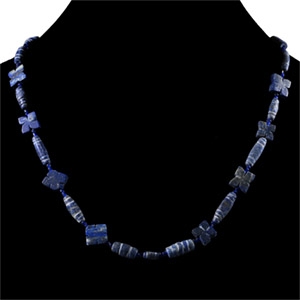
Bactrian Style Lapis Lazuli Bead Necklace String
20th century A.D.Sold for (Inc. bp): £169
Composed of alternating tabular flower-shaped and grooved cylindrical beads interspersed with small glass oblate beads; restrung. 28.2 grams, 40.5 cm
Ex London art market. Property of a North London, UK, gentleman. This lot has been cleared against the Art Loss Register database, and is accompanied by an illustrated lot declaration signed by the Head of the Antiquities Department, Dr Raffaele D'Amato. -
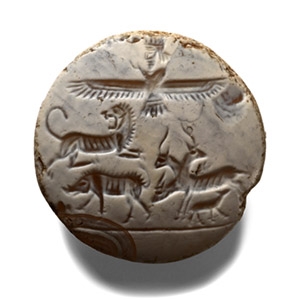
Achaemenid Chalcedony Stamp Seal with Ahura Mazda
Circa 5th century B.C.Sold for (Inc. bp): £5,980
Fragment of a conoid seal; Bivar notes in his summary: 'White chalcedony conoid with the reverse end broken off, leaving disk-shaped bezel. Fifth century B.C. This shape is perhaps typical of Babylonia. Above, "Ahuramazda symbol" r., with a human bust crowned...'; accompanied by a museum-quality impression. 14.3 grams, 25 mm
with Christie's, London, 21 April 1999, no.12. Accompanied by a copy of a scholarly note typed and signed by A.D.H. (David) Bivar. This lot has been checked against the Interpol Database of stolen works of art and is accompanied by a search certificate number no.12541-230316. This lot has been cleared against the Art Loss Register database, and is accompanied by an illustrated lot declaration signed by the Head of the Antiquities Department, Dr Raffaele D'Amato. -
.jpg)
Jade Plaque with Inscription
Probably Indian, 19th-20th century A.D.Sold for (Inc. bp): £234
Heart-shaped plaque with long drilled suspension bar above, obverse with nine lines of maghribi script. 41 grams, 73 mm
with a London, UK gallery, 1971-early 2000s. This lot has been cleared against the Art Loss Register database, and is accompanied by an illustrated lot declaration signed by the Head of the Antiquities Department, Dr Raffaele D'Amato.
