
Loading, please wait...
LOT 0996
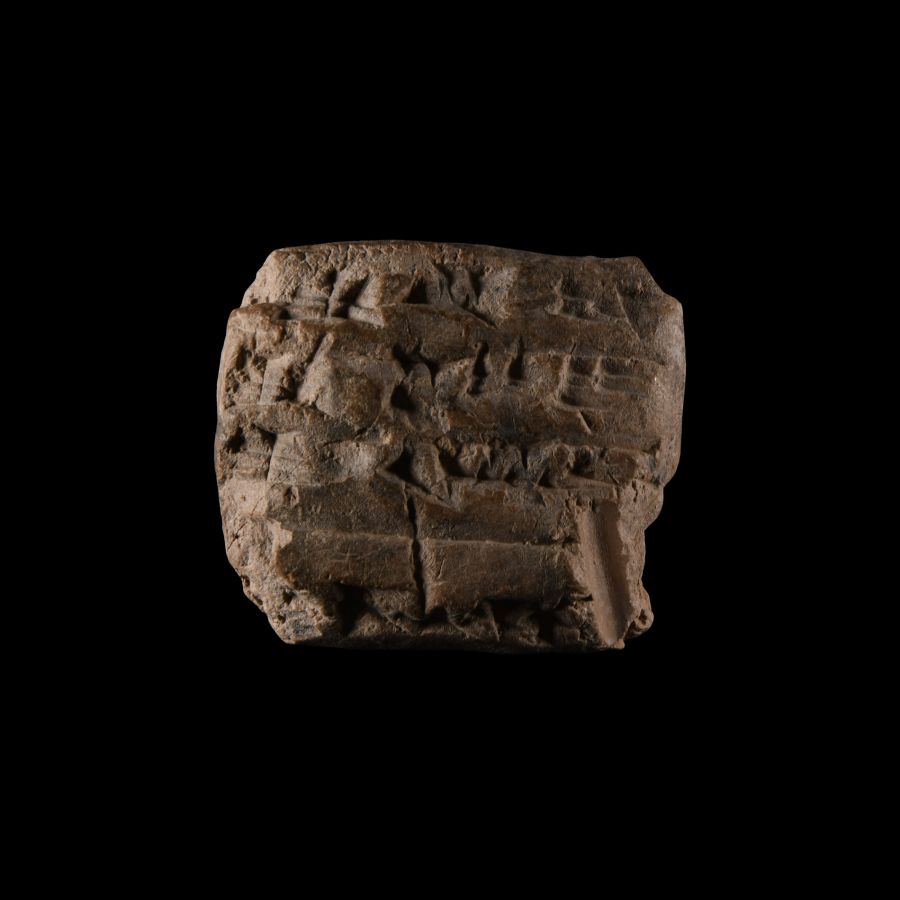
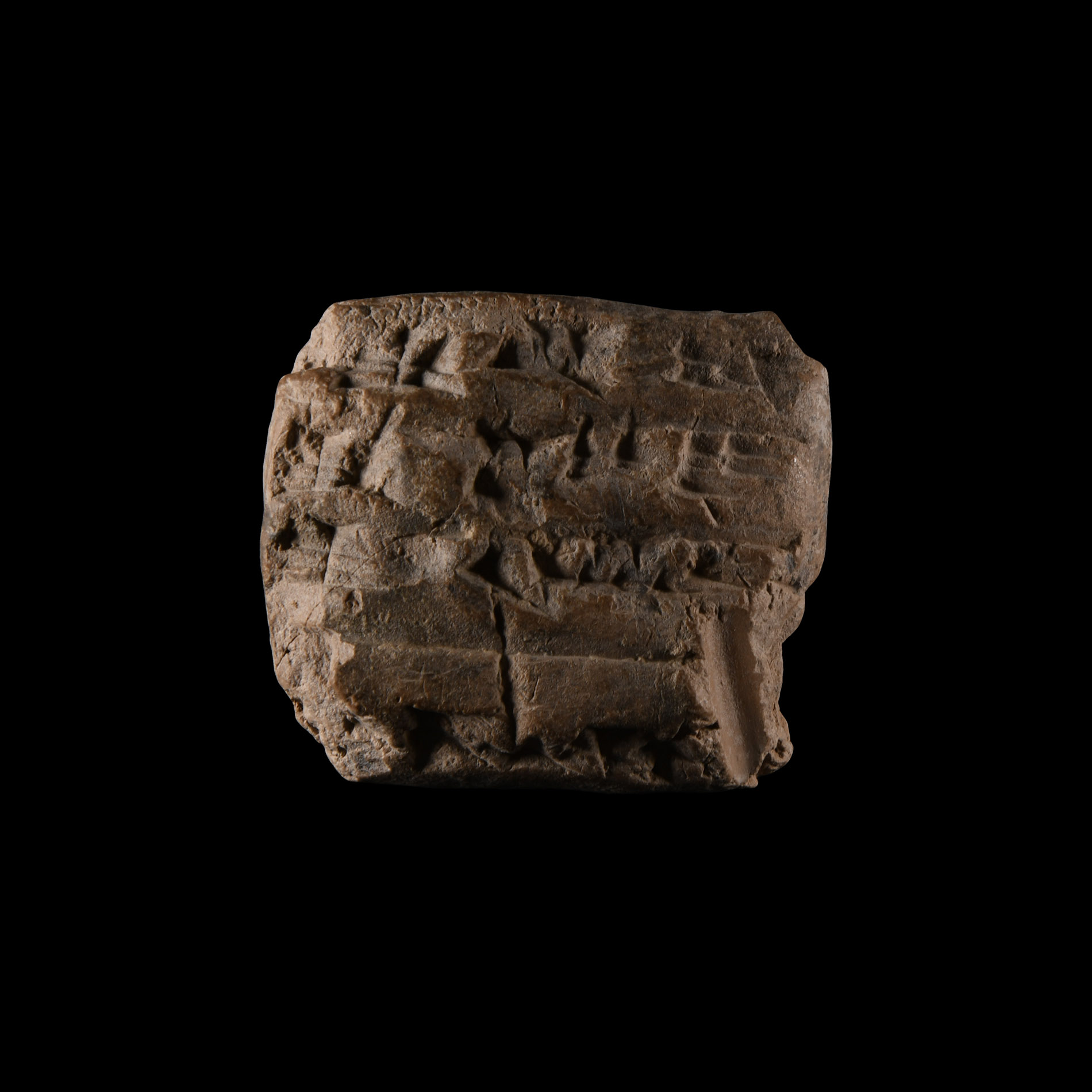
Mesopotamian Cuneiform Tablet
EARLY 2ND MILLENNIUM B.C.
1 1/2 in. (29.3 grams, 38 mm).
Fragment of a pillow-shaped tablet with impressed text to one brod face, one edge of the reverse. [No Reserve]
ProvenanceSpecialised collection of cuneiform texts, the property of a London gentleman and housed in London before 1992.
Thence by descent to family members.
Examined by Professor Wilfrid George Lambert FBA (1926-2011), historian, archaeologist, and specialist in Assyriology and Near Eastern archaeology, in the late 1980s and early 1990s.
This small collection is exceptional for the variety of types, including some very rare and well preserved examples.
TimeLine Auctions follows a vetting process to ensure the authenticity and legality of all items, reinforcing our commitment to integrity and responsible trading. Each antiquity, antique, and coin lot undergoes thorough examination by a vetting committee of at least ten external specialists, professional trade association members, scientists, and archaeologists: Our Vetting Process
AUCTIONS:
TimeLine is a leading auction house specialising in antiquities, ancient art, collectables, natural history, coins, medals, and books. Our auctions offer museums, collectors, historians, and enthusiasts the opportunity to acquire unique and historically significant pieces.
-
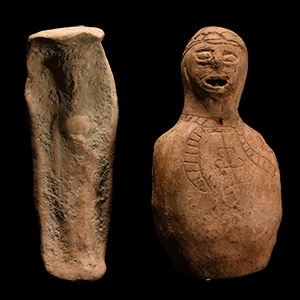
Western Asiatic Terracotta Idol Group
Circa 1st millennium B.C.Sold for (Inc. bp): £91
Comprising a stylised hollow form figure with open mouth and incised detailing, carrying a netted bag on his back with the wide straps going over his shoulders, a necklace(?) shown between the straps, an intricate headdress with small lappets covering most of his head; a votive figure of a nude woman on a tongue-shaped plaque with a raised lip above and below. 149 grams total, 90-95 mm
UK private collection. Acquired from Den of Antiquity, Cambridgeshire, UK, 2011. Property of a Nottinghamshire gentleman. -

Sumerian Terracotta 'Bulla Envelope' with Impressed Decoration
Uruk Period, circa 5500-3100 B.C.Sold for (Inc. bp): £2,210
Complete and of spherical form, containing clay 'tokens'; the outer face impressed with enigmatic motifs. 190 grams, 64 mm
Specialised collection of cuneiform texts, the property of a London gentleman and housed in London before 1988. Thence by descent to family members. Examined by Professor Wilfrid George Lambert FBA (1926-2011), historian, archaeologist, and specialist in Assyriology and Near Eastern archaeology, in the late 1980s and early 1990s. The collection is exceptional for the variety of types, including some very rare and well preserved examples. Accompanied by a copy of two previous illustrated and typed catalogue pages.
The tokens sealed within the bulla are believed to have been used as part of the accounting process in Sumerian or early Uruk agriculture. -
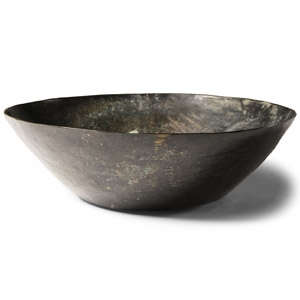
Achaemenid Bronze Bowl
Circa 6th-4th century B.C.Sold for (Inc. bp): £104
Comprising a deep dish with slightly convex bottom and outward sloping sides. 214 grams, 16.9 cm
UK private collection formed before 2000. Ex North London, UK, gallery.
