
Loading, please wait...


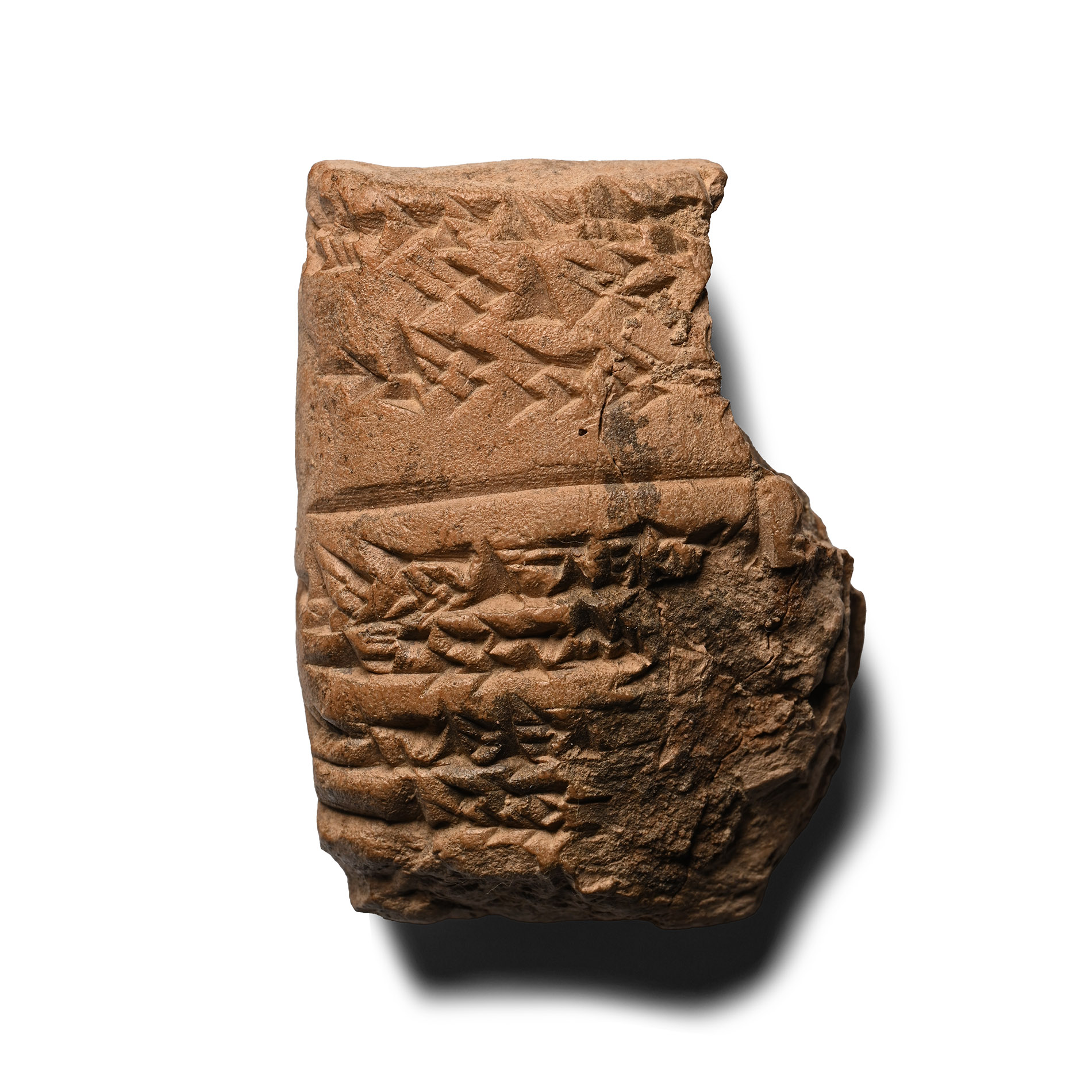
LOT 1244
Mesopotamian Cuneiform Tablet Fragment
EARLY 2ND MILLENNIUM B.C.
2 1/8 in. (47 grams, 53 mm).
Bifacial, pillow-shaped with cuneiform text to one face and one edge; one corner absent. [No Reserve]
ProvenanceSpecialised collection of cuneiform texts, the property of a London gentleman and housed in London before 1992.
Thence by descent to family members.
Examined by Professor Wilfrid George Lambert FBA (1926-2011), historian, archaeologist, and specialist in Assyriology and Near Eastern archaeology, in the late 1980s and early 1990s.
This small collection is exceptional for the variety of types, including some very rare and well preserved examples.
This lot has been cleared against the Art Loss Register database, and is accompanied by an illustrated lot declaration signed by the Head of the Antiquities Department, Dr Raffaele D'Amato.
Cf. cuneiform text tablet now in the Metropolitan Museum of Art, New York, under accession no.86.11.282.
CONDITIONTimeLine Auctions follows a vetting process to ensure the authenticity and legality of all items, reinforcing our commitment to integrity and responsible trading. Each antiquity, antique, and coin lot undergoes thorough examination by a vetting committee of at least ten external specialists, professional trade association members, scientists, and archaeologists: Our Vetting Process
AUCTIONS:
TimeLine is a leading auction house specialising in antiquities, ancient art, collectables, natural history, coins, medals, and books. Our auctions offer museums, collectors, historians, and enthusiasts the opportunity to acquire unique and historically significant pieces.
-
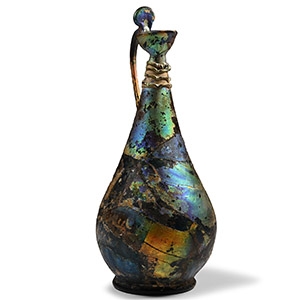
Large Western Asiatic Piriform Glass Jug with Iridescence
7th-9th century A.D.Sold for (Inc. bp): £1,053
Tall piriform body with applied basal ring and dimpled base, applied trails to neck, dished piriform mouth with strap handle and thumb-pad. 180 grams, 23.3 cm
Sotheby's, Islamic Art, London 28 March 1994, no.61. This lot has been cleared against the Art Loss Register database, and is accompanied by an illustrated lot declaration signed by the Head of the Antiquities Department, Dr Raffaele D'Amato. -
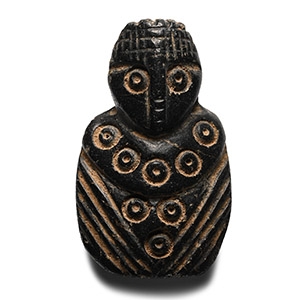
Western Asiatic Black Stone Idol
1st millennium B.C.Sold for (Inc. bp): £260
Carved in the half-round with stylised facial features and ring-and-dot eyes, wearing a striated headdress and long folded garment, wide neck-collar with ring-and-dot motifs. 13.7 grams, 40 mm
Mr F.D. collection, acquired on the European art market, 1975 to present. This lot has been cleared against the Art Loss Register database, and is accompanied by an illustrated lot declaration signed by the Head of the Antiquities Department, Dr Raffaele D'Amato. -
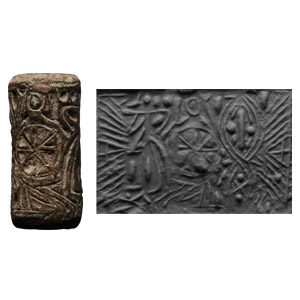
Sumerian Clay Cylinder Seal with Wheel Pattern
3rd millennium B.C.Sold for (Inc. bp): £390
With geometric pattern including a segmented octofoil, two vesica motifs with pellets to the centre and concentric bands outside, lozenge with parallel bands and others. 6.32 grams, 30 mm
From the 'S' collection, acquired 1970-1990s. The collection was seen and studied by W.G.Lambert, late Professor of Assyriology at the University of Birmingham, 1970-1993. This lot has been cleared against the Art Loss Register database, and is accompanied by an illustrated lot declaration signed by the Head of the Antiquities Department, Dr Raffaele D'Amato.
