
Loading, please wait...
LOT 0953
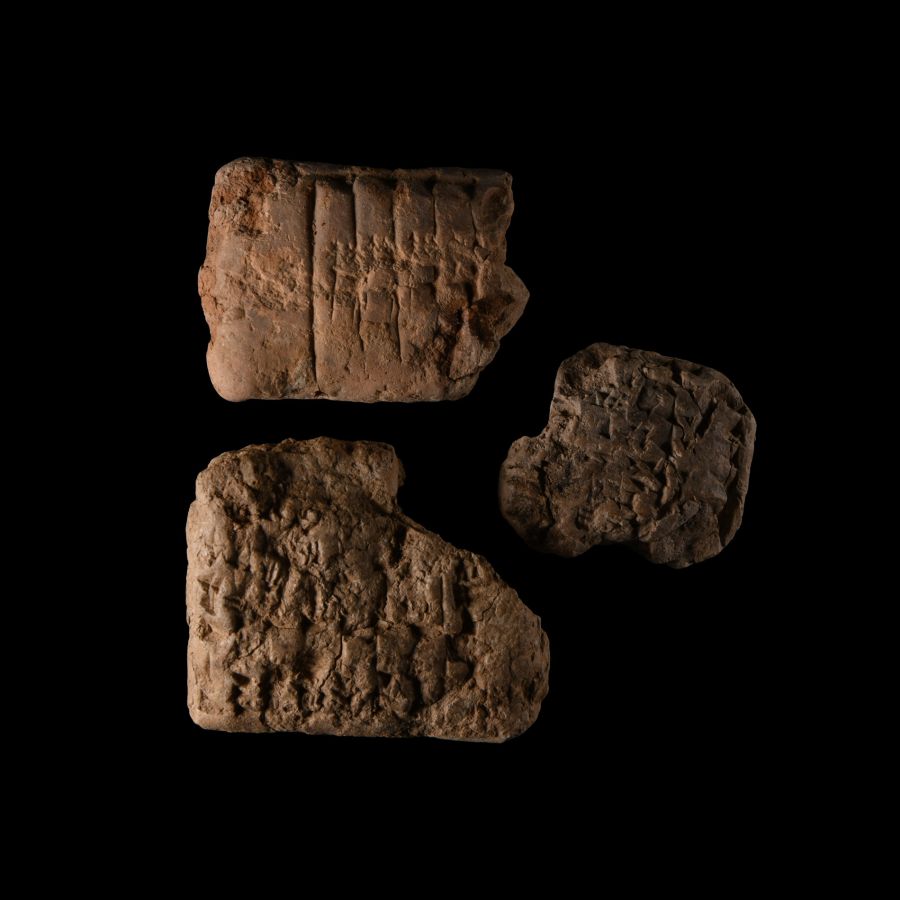
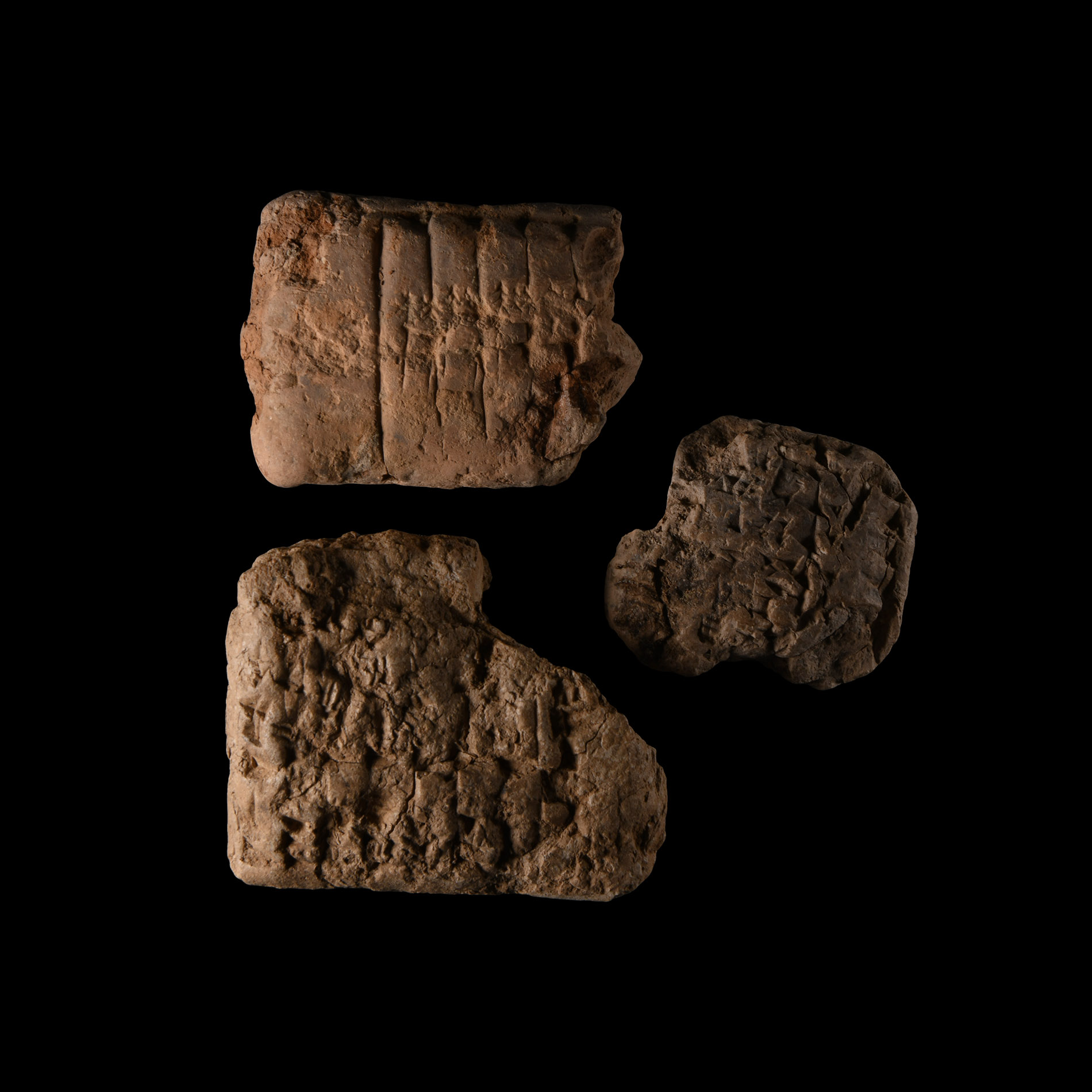
Mesopotamian Cuneiform Tablet Fragment Group
EARLY 2ND MILLENNIUM B.C.
1 3/4 - 2 3/8 in. (154 grams total, 43-60 mm).
Group of three fragments of pillow-shaped tablets with impressed cuneiform text. [3, No Reserve]
ProvenanceSpecialised collection of cuneiform texts, the property of a London gentleman and housed in London before 1992.
Thence by descent to family members.
Examined by Professor Wilfrid George Lambert FBA (1926-2011), historian, archaeologist, and specialist in Assyriology and Near Eastern archaeology, in the late 1980s and early 1990s.
This small collection is exceptional for the variety of types, including some very rare and well preserved examples.
TimeLine Auctions follows a vetting process to ensure the authenticity and legality of all items, reinforcing our commitment to integrity and responsible trading. Each antiquity, antique, and coin lot undergoes thorough examination by a vetting committee of at least ten external specialists, professional trade association members, scientists, and archaeologists: Our Vetting Process
AUCTIONS:
TimeLine is a leading auction house specialising in antiquities, ancient art, collectables, natural history, coins, medals, and books. Our auctions offer museums, collectors, historians, and enthusiasts the opportunity to acquire unique and historically significant pieces.
-
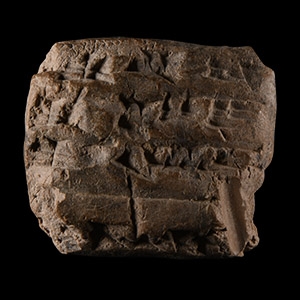
Mesopotamian Cuneiform Tablet
Early 2nd millennium B.C.Sold for (Inc. bp): £169
Fragment of a pillow-shaped tablet with impressed text to one brod face, one edge of the reverse. 29.3 grams, 38 mm
Specialised collection of cuneiform texts, the property of a London gentleman and housed in London before 1992. Thence by descent to family members. Examined by Professor Wilfrid George Lambert FBA (1926-2011), historian, archaeologist, and specialist in Assyriology and Near Eastern archaeology, in the late 1980s and early 1990s. This small collection is exceptional for the variety of types, including some very rare and well preserved examples. -
.jpg)
Old Babylonian Cuneiform Tablet
Sumerian, 3rd millennium B.C.Sold for (Inc. bp): £1,300
Of pillow-shape with lines of impressed cuneiform text to both principal faces, reading: 1) 1 wineskin suspended from a rope, 2) (for) Šu-Sîn the royal messenger 3-5) when he came <...>. 6) Intermediary Ašgi-tillassu, chief of the weavers. 7) Expense. 8) In the month šugargal, 9-10) the year bis when the priestess of Eridu was 'hired'. 24.2 grams, 36 mm
Specialised collection of cuneiform texts, the property of a London gentleman and housed in London before 1988. Thence by descent to family members. Examined by Professor Wilfrid George Lambert FBA (1926-2011), historian, archaeologist, and specialist in Assyriology and Near Eastern archaeology, in the late 1980s and early 1990s. The collection is exceptional for the variety of types, including some very rare and well preserved examples. -
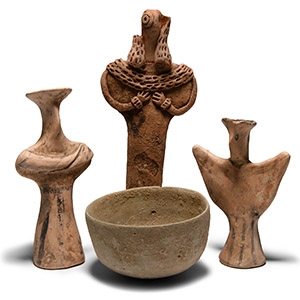
Western Asiatic and Other Terracotta Bowl and Fertility Figure Group
Circa 3000 B.C. and laterSold for (Inc. bp): £520
Comprising: Mycenaean standing terracotta figure with flared base, applied arms, collar, eyes and hair; standing figure with pinched features, applied collar, dished panel above the head, black and ochre paint detailing; Mycenaean psi-shaped standing figure with splayed 'wings' applied hair to reverse, black and red painted detailing; small bowl with rounded underside. 373 grams total, 8.4 - 17.5 cm
Some collected from 1970-1999. From the collection of the late Mr S.M., London, UK. Property of a North London gentleman.
