
Loading, please wait...
LOT 0990
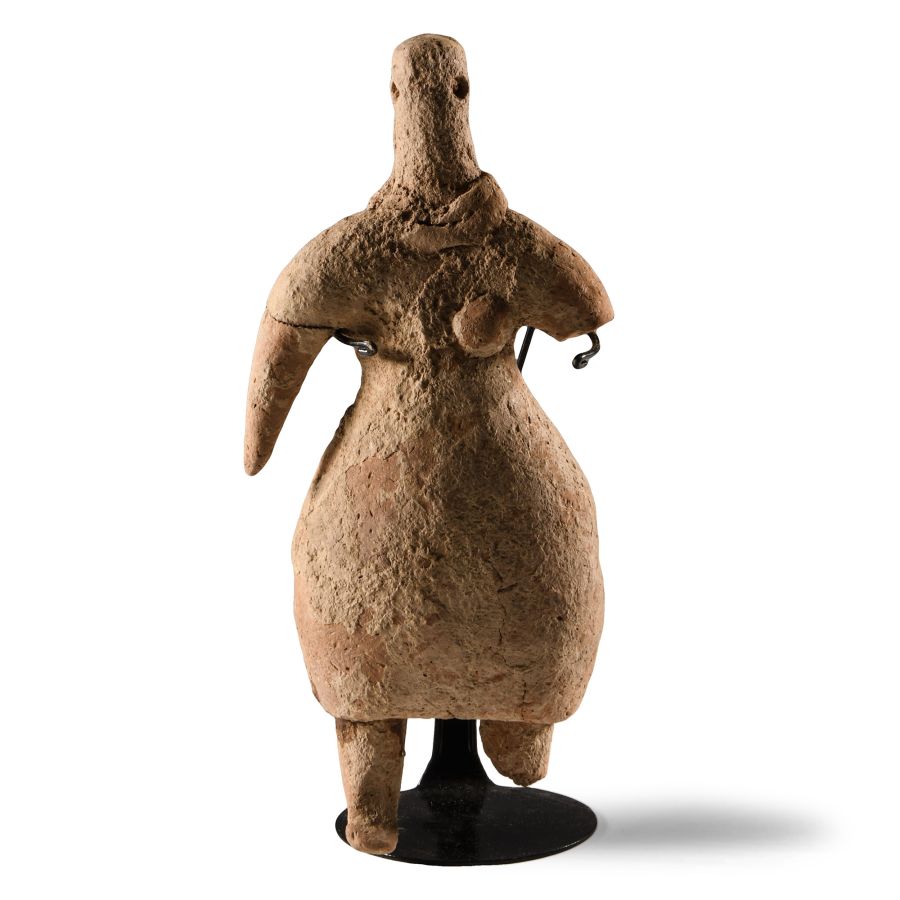
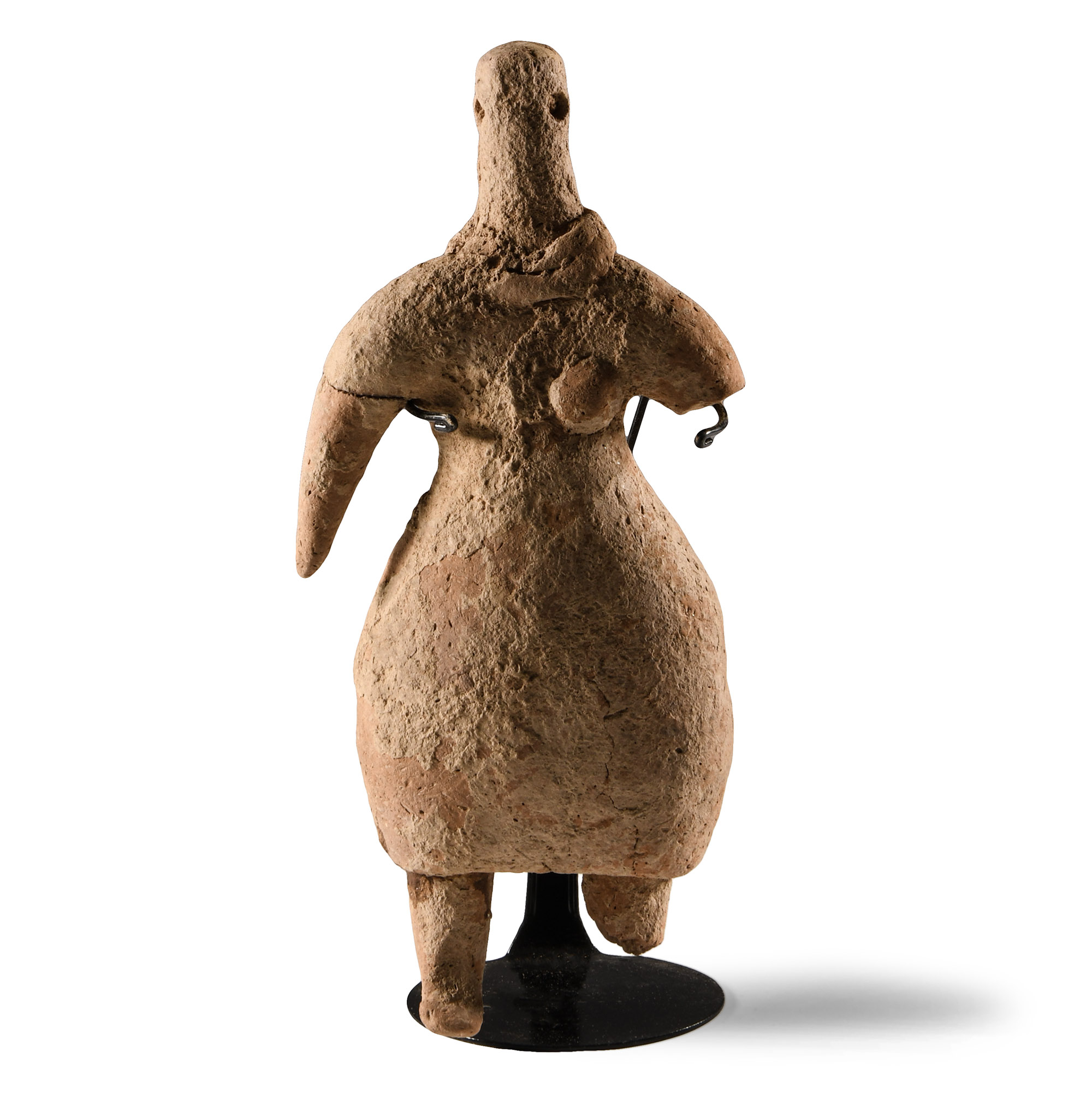
Mesopotamian Chalcolithic Fertility Idol
CIRCA 3RD MILLENNIUM B.C.
5 3/8 in. (129 grams total, 13.5 cm high including stand).
Displaying one remaining stub arm, an applied breast and a roughly cylindrical head and neck with recessed circular eyes; accompanied by a custom-made display stand.
ProvenanceAcquired 1979-1999.
From the collection of a deceased London gentleman, thence by descent.
TimeLine Auctions follows a vetting process to ensure the authenticity and legality of all items, reinforcing our commitment to integrity and responsible trading. Each antiquity, antique, and coin lot undergoes thorough examination by a vetting committee of at least ten external specialists, professional trade association members, scientists, and archaeologists: Our Vetting Process
AUCTIONS:
TimeLine is a leading auction house specialising in antiquities, ancient art, collectables, natural history, coins, medals, and books. Our auctions offer museums, collectors, historians, and enthusiasts the opportunity to acquire unique and historically significant pieces.
-
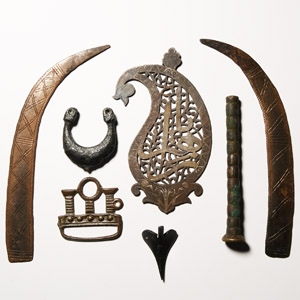
Western Asiatic Bronze Artefact Group
1st-2nd millennium A.D.Sold for (Inc. bp): £59
Comprising various decorative fittings and other artefacts, including a pierced calligraphic mount. 332 grams total, 4.2-19.5 cm
Ex old English collection. London art market, 1980s. -
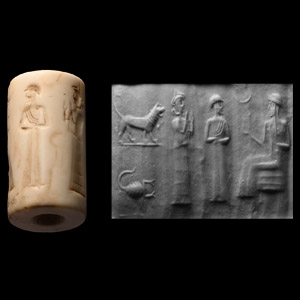
Western Asiatic Marble Cylinder Seal with Presentation Scene
2nd-1st millennium B.C.Sold for (Inc. bp): £845
With large central hole, incised frieze of a seated figure offering a cup to a figure in floor-length garment, second figure behind him in a tiered robe, canine and scorpion to the rear. 17 grams, 31 mm
Acquired 1970s-1996. Property of a North American collector; collection no.04. London collection, 2016. -
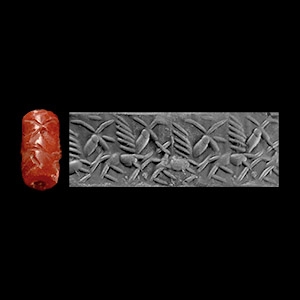
Western Asiatic Carnelian Cylinder Seal with Animals
Circa 1st millennium B.C.Sold for (Inc. bp): £131
Engraved with a frieze of advancing winged quadrupeds; drilled vertically for suspension; accompanied by a museum-quality impression. 1.88 grams, 16 mm
Acquired on the UK art market. Property of a Ruislip, UK, gentleman, by inheritance.
