
Loading, please wait...
LOT 1781
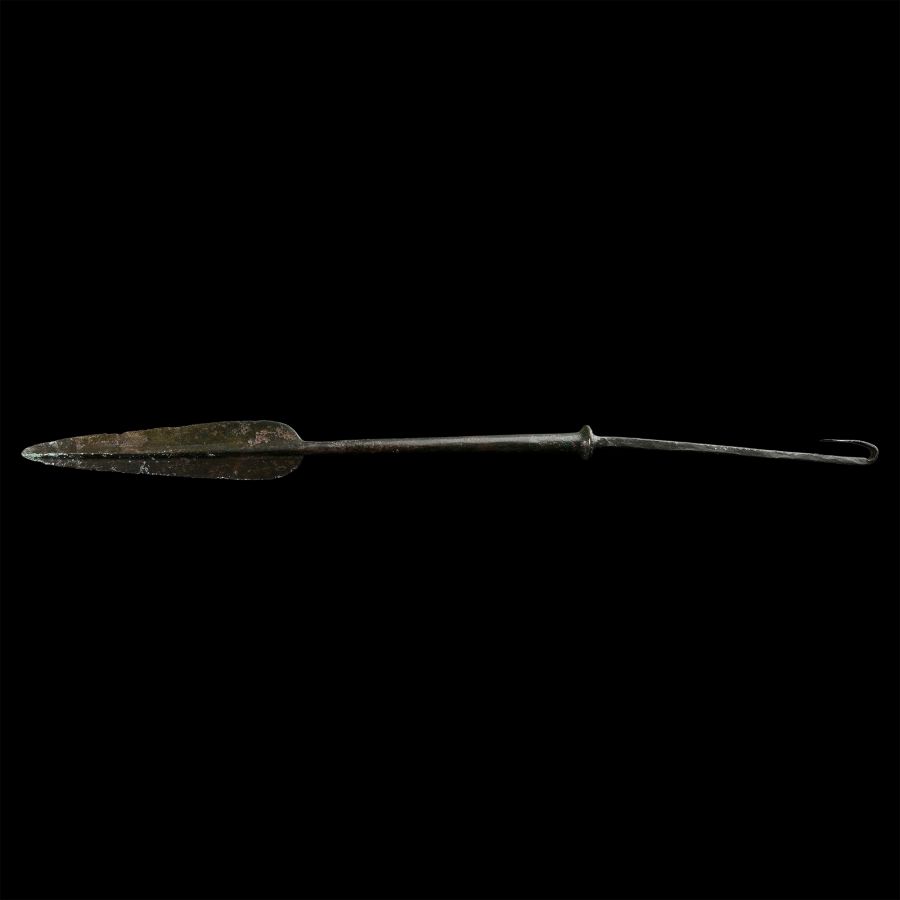
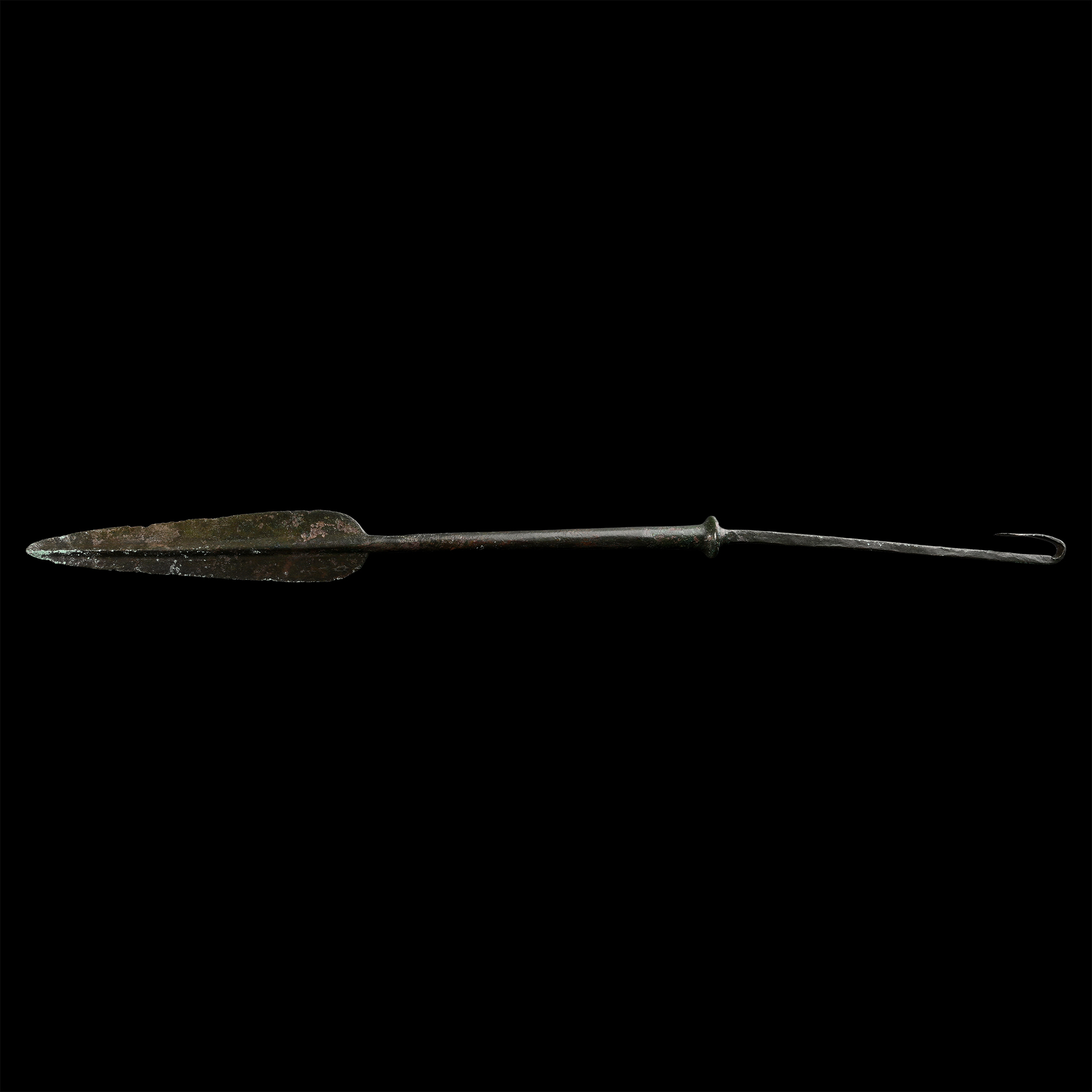
Mesopotamian Bronze Tanged Javelin
3RD-2ND MILLENNIUM B.C.
18 1/8 in. (194 grams, 46 cm).
With a foliate blade, rhomboidal in section, raised mid-rib, medium-length stem widening at its base and forming a small stop, rectangular-section tang with bent terminal.
ProvenanceEx Abelita family collection, 1980s-2000s.
LiteratureCf. Gorelik, M., Weapons of Ancient East, IV millennium BC-IV century BC, Saint Petersburg, 2003, in Russian, see pl.XXXIII, no.82, from Tepe Hissar; Gernez, G., L’armament en métal au Proche et Moyen-Orient: des origines a 1750 av. J.C., Paris, 2007, p.301, fig.2.88, subtype L2.B.b.
FootnotesThe specimen belongs to the category of tripartite spears with a long, pointed biconvex blade and a single bevelled tang. They seem to be a Mesopotamian and Susian (Elamite) variant, and this type also includes decorated blades, like the spear from Tello with the inscription 'King of Kish'.
CONDITIONTimeLine Auctions follows a vetting process to ensure the authenticity and legality of all items, reinforcing our commitment to integrity and responsible trading. Each antiquity, antique, and coin lot undergoes thorough examination by a vetting committee of at least ten external specialists, professional trade association members, scientists, and archaeologists: Our Vetting Process
AUCTIONS:
TimeLine is a leading auction house specialising in antiquities, ancient art, collectables, natural history, coins, medals, and books. Our auctions offer museums, collectors, historians, and enthusiasts the opportunity to acquire unique and historically significant pieces.
-
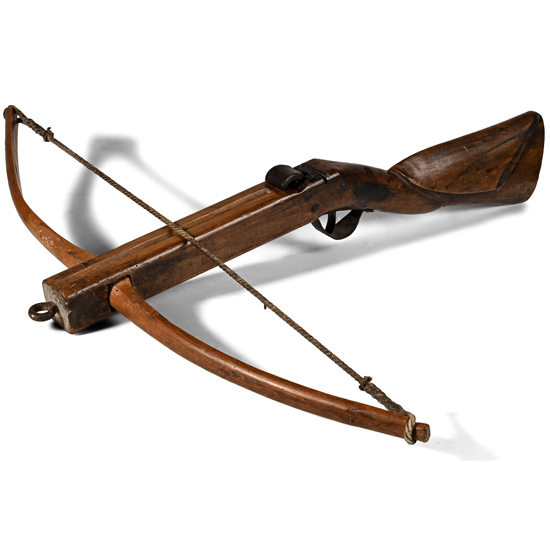
Antique Wooden Crossbow
19th century A.D.Sold for (Inc. bp): £78
Carved, stocky body with an iron suspension ring, rope cable and iron trigger. 1.38 kg, 75 cm wide
Private collection, London, UK. (For sale only to bidders of at least 18 years of age. UK buyers only.) -
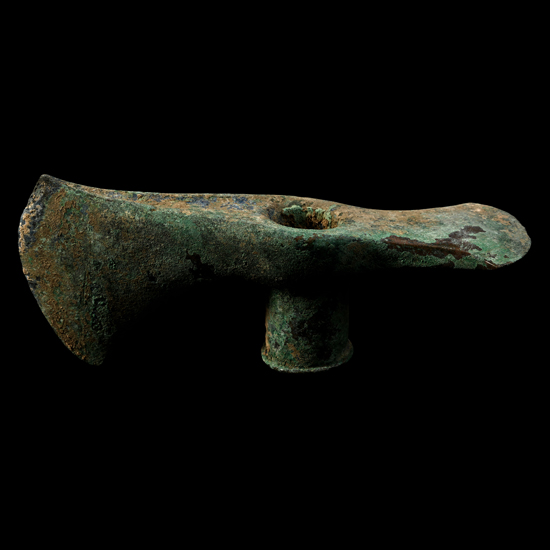
Luristan Bronze Socketted Adze-Axehead
2nd-1st millennium B.C.Sold for (Inc. bp): £117
Short tubular socket with thickened rim, perpendicular short blade with convex cutting edge to the rear, and a larger triangular-section blade with curving blade to the front. 675 grams, 16.5 cm
Ex Abelita family collection, 1980s-2000s.
The earliest axes-adzes from the 3rd millennium B.C. were weapons and tools furnished with socket holes. Usually, the socket is a more secure way of attaching the object to a wooden haft than having a simple tang. These weapons developed into a plethora of forms in the 2nd millennium B.C., and the numerous new forms were used until at least 800 B.C. -
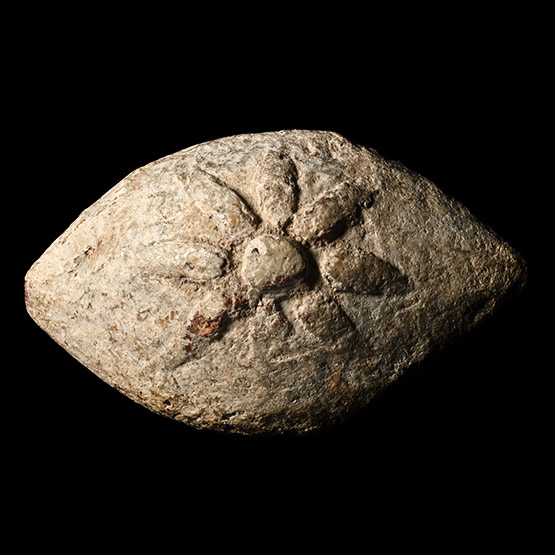
Greek Lead Slingshot with Macedonian Star
4th-3rd century B.C.Sold for (Inc. bp): £195
Biconical in profile with casting seam and the Macedonian Star on one side. 27.8 grams, 28 mm
Ex German art market, 2000s. Acquired from an EU collector living in London. From the collection of a Surrey, UK, gentleman.
In Greek warfare, slingers appear as psiloi, lightly equipped troops who skirmished ahead of a phalanx or alongside peltasts. Some city-states likely trained their own slingers; others were specialists. Rhodian slingers became famous in the 4th century B.C. because the islanders had a tradition of practice. In the Peloponnese, in mainland Greece, and along the Aegean coast, slingers fought in both field operations and sieges. The practice survived into the Roman period, during which specialist mercenaries, like the Rhodians or the Balearic slingers, were still in use.
