Loading, please wait...

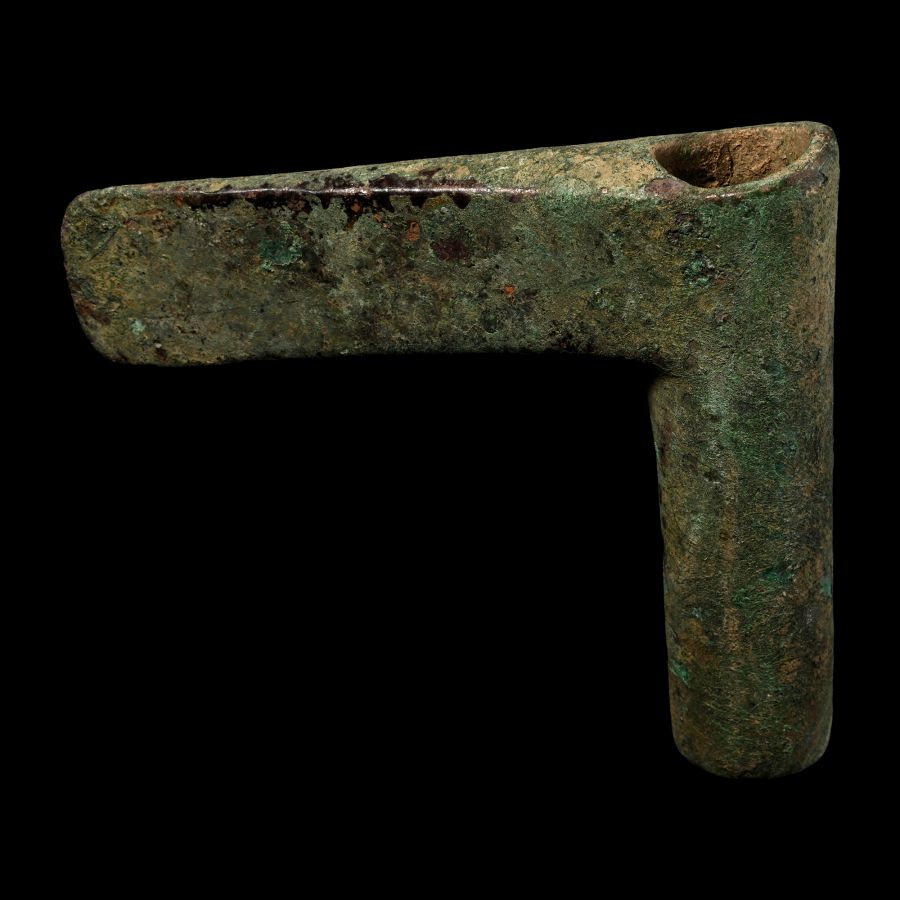
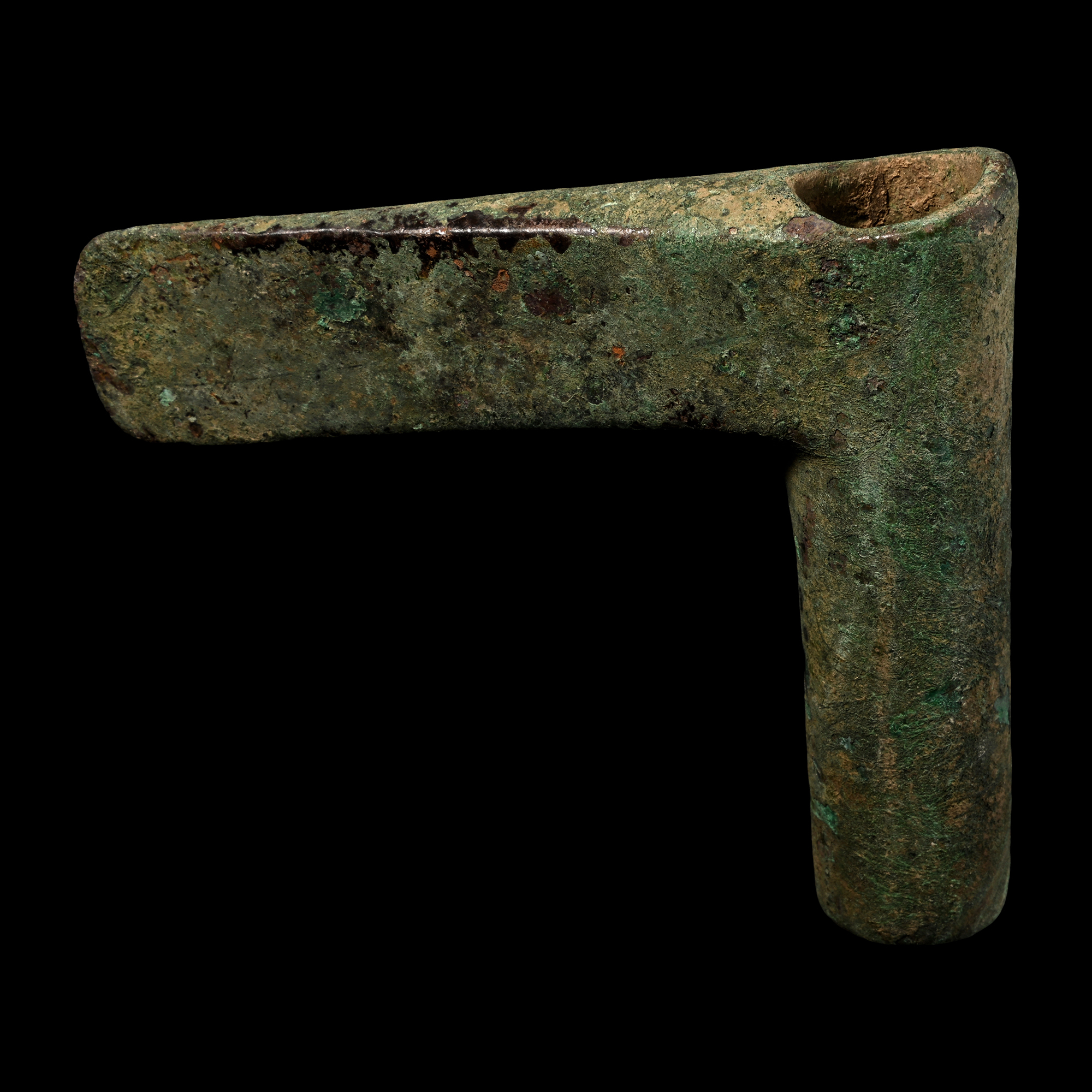
Mesopotamian Bronze Socketted Axehead Mesopotamian Bronze Socketted Axehead Mesopotamian Bronze Socketted Axehead
Use mousewheel to zoom in and out, click to enlarge
Details

LOT 1572

Mesopotamian Bronze Socketted Axehead

3RD MILLENNIUM B.C.

4 5/8 in. (320 grams, 11.7 cm).

Comprising a tubular socket and a slender triangular blade.

Provenance

Ex Abelita family collection, 1980s-2000s.

Literature

For a similar example see Gorelik, M., Weapons of Ancient East, IV millennium BC-IV century BC, Saint Petersburg (2003), pl.XIX, no.15, from Mesopotamia.

Footnotes

Similar axe is represented in hands of Akkadian warriors on the Stele of Victory of Naram-Sim, at the Louvre, dated at 23rd century B.C. It was a typology used by Sumerian and Akkadian warriors.

CONDITION
VETTING:

TimeLine Auctions follows a vetting process to ensure the authenticity and legality of all items, reinforcing our commitment to integrity and responsible trading. Each antiquity, antique, and coin lot undergoes thorough examination by a vetting committee of at least ten external specialists, professional trade association members, scientists, and archaeologists: Our Vetting Process


AUCTIONS:

TimeLine is a leading auction house specialising in antiquities, ancient art, collectables, natural history, coins, medals, and books. Our auctions offer museums, collectors, historians, and enthusiasts the opportunity to acquire unique and historically significant pieces.

Live Bidding

LOT 1572

Mesopotamian Bronze Socketted Axehead

Sold for (Inc. bp): £143

Print page

RELATED LOTS
  • Professor Erlenmeyer’s First Cylinder Seal A Neo-Sumerian Haematite Seal of Abbamu, Scribe, Son of Bazige
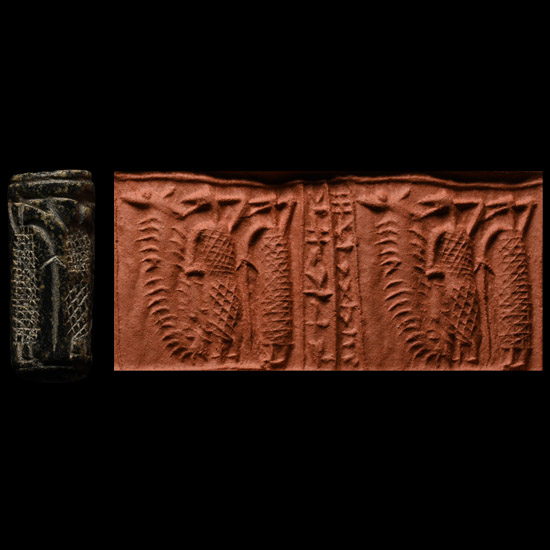
    'Professor Erlenmeyer’s First Cylinder Seal' A Neo-Sumerian Haematite Seal of Abbamu, Scribe, Son of Bazige
    Mesopotamia, Third Dynasty of Ur, circa 2100-2000 B.C.

    Sold for (Inc. bp): £8,450

    Finely carved in haematite with a formal presentation scene: a goddess sitting enthroned upon a dais, clad in a flounced robe and a multiple-horned tiara, her arm extended in reception; before her a similarly attired interceding goddess approaching, leading a robed worshipper into the divine presence; lunar crescent in the field, with three-line inscription within a panel: 'Abbamu, scribe, son of Bazige'; supplied with a museum-quality impression. 18 grams, 27 mm


    From the private collection of Professor Dr. Hans (1900-1967) and Mrs Erlenmeyer, Switzerland. The Erlenmeyer Foundation, Basel Switzerland, since 1981. with Sotheby's, Western Asiatic Cylinder Seals and Antiquities from the Erlenmeyer Collection (Part 1), London, 9 July 1992, no.109. Private collection, London, UK. Accompanied by copies of the relevant Sotheby's catalogue pages. This lot has been checked against the Interpol Database of stolen works of art and is accompanied by search certificate number no.13283-253486.

    Prof Hans Erlenmeyer was a noted Swiss collector from 1943 to circa 1960; he and his wife established the Erlenmeyer Foundation. This seal is of particular note as the first cylinder seal given to Professor and Mrs Erlenmeyer. Its imagery belongs to the religious and political language of the Third Dynasty of Ur, when order was restored after the collapse of the Akkadian dynasty. In the eyes of the ancient Mesopotamians, that earlier collapse could be understood as a sign of divine displeasure; under Ur III, renewed piety and correct devotion assumed central importance. The presentation scene seen here reflects that world precisely: the seal owner is led by a minor goddess, or Lamma, into the presence of his personal deity. Seals of this class are valued for their exacting workmanship and disciplined clarity of design. Though they lack the freer energy of the Akkadian age, they possess instead a ceremonial gravity and devotional precision that are wholly characteristic of Neo-Sumerian art.

    Lot Details

  • Mesopotamian Heavy Silver Bead Necklace
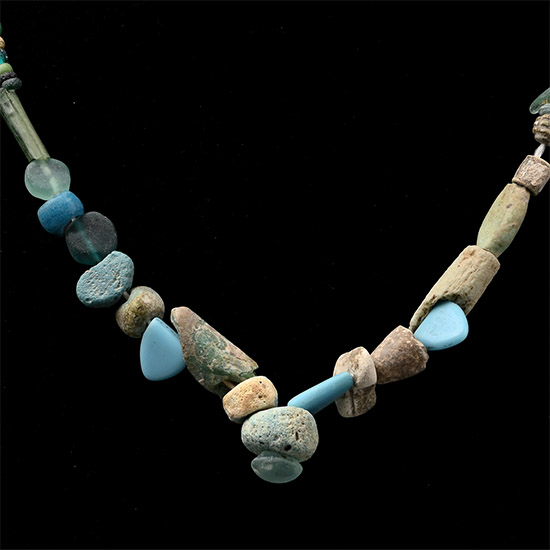
    Mesopotamian Heavy Silver Bead Necklace
    3rd-early 2nd millennium B.C.

    Estimate: £5,000 - 7,000 (+bp*)

    Opening Bid: £2,500

    Restrung and comprising mainly spherical, elongated ovals, oblates, and biconical shapes; accompanied by a custom-made lined display box. 224 grams, 56 cm


    Numismatic and Ancient Art Gallery AG, Ancient Art of the Mediterranean World, No 8, no.5, c.1982. Taisei Gallery, Gold & Silver Auction, Part II, Ancient to Renaissance, 5 November 1992, The Conrad Salon, The Waldorf-Astoria, New York, no.39. Private collection, London. This lot has been checked against the Interpol Database of stolen works of art and is accompanied by search certificate number no.13265-253358.

    The Sumerian word for silver is kú-babbar, which means ‘white metal’. Silver was mined from ores that contained significant amounts of other metals and impurities and therefore requires a great deal of further processing before it can be used. It was considered sacred and immutable, and an extremely high-status material, used for royal jewellery.

    Lot Details

  • Luristan Silver Bracelet
    Luristan Silver Bracelet
    1st millennium B.C.

    Sold for (Inc. bp): £117

    Penannular type with thick D-section shank, bulb finials. 66 grams, 95 mm


    From the collection of a gentleman, acquired on the London art market in the 1990s.

    Lot Details

Stay up-to-date with the latest from TimeLine Auctions by joining our mailing list